Tag Archives: Christmas season

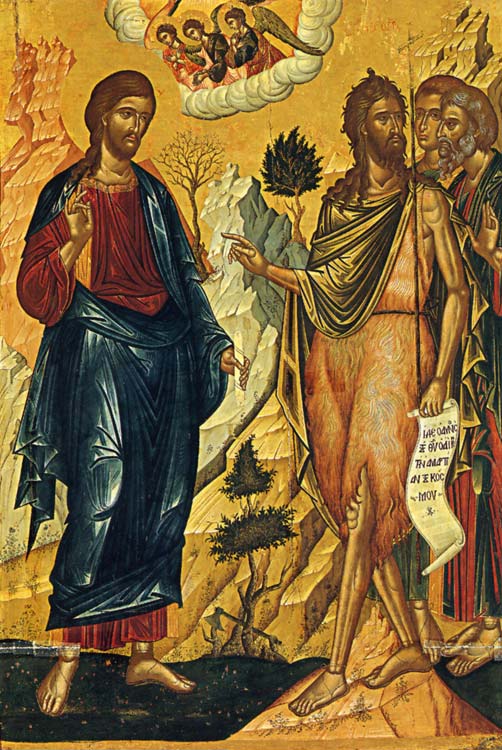
John the Baptist, “I am not the Christ”

 In the days before Christmas Luke’s gospel linked the birth of John the Baptist closely to the birth of Jesus, noting carefully Jesus’ superiority to John. At the same time Luke indicates that John had a privileged role in announcing Jesus as the Messiah. Luke alone mentions John and Jesus are related.

In these day’s after Christmas John’s gospel offers the Baptist’s testimony to Jesus. “I am not the Christ,” John responds to the Jewish leaders who question him about his ministry near the Jordan River. “I am the voice of one crying out in the desert,‘Make straight the way of the Lord.’”

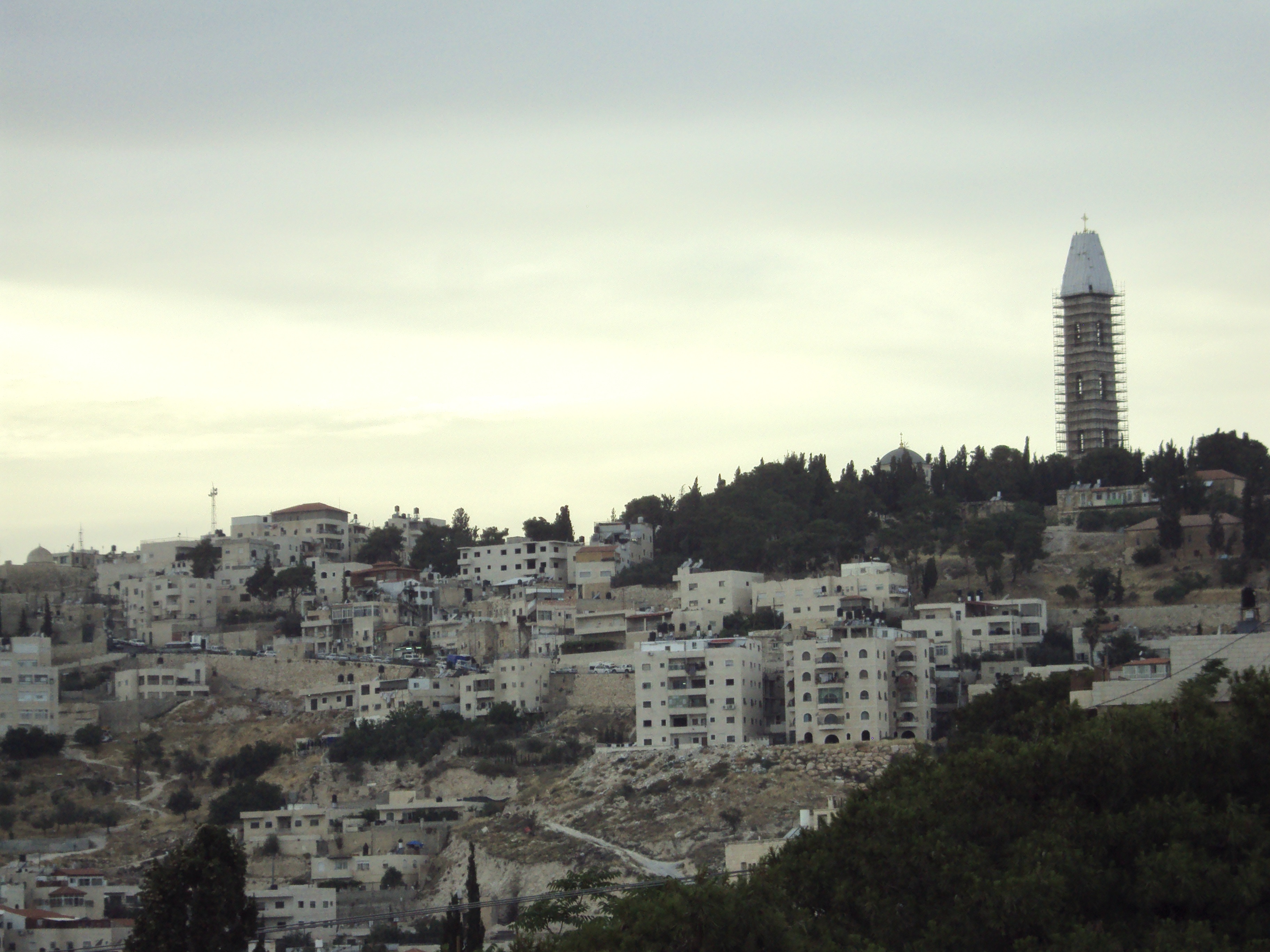
The lower Jordan valley where John preached and baptized was a place hallowed by heroic events and figures of the Jewish past. There, for example, Joshua led the Israelites over the Jordan to conquer the city of Jericho and enter the “land flowing with milk and honey.”

Late in the 8th century B.C., the prophet Elijah began preaching reform there as Israel turned to the false gods of the wicked Queen Jezebel. God sent ravens to the Wadi Cerith near the Jordan to feed Elijah in a terrible drought. Returning to the lower Jordan, Elijah disappeared mysteriously there at the end of his life,.

Later Jewish tradition said that Elijah would return – most likely to the Jordan valley – to announce the Day of the Lord, God’s final coming. And so, when John came dressed in a rough camel hair cloak, like Elijah of old, and preached with great power at this memorable place, people wondered: “Has Elijah returned?”

For the Jews the Jordan valley was a place to recapture the ancient faith of their forebears. The desert air was purer and life more simpler in that hard, memorable land that seemed to belong to God alone.

Strongly religious people, like the communities of Qumran, preferred living in the desert to Jerusalem, rejecting what they saw was the compromise and spiritual lukewarmness of smainstream Judaism. Living there, they hoped for a Messiah and Teacher to bring renewal to their people.

Besides the communities of Qumran, Jewish revolutionaries were also associated with the Judean wilderness. In 6 A.D. after the failure of a bloody revolt led by Judas the Galilean against Roman rule, bands of his followers waged a guerrilla campaign for Jewish independence from these barren hills.

And so, the Roman authorities and their local allies kept a wary eye on anyone like John the Baptist preaching in a place so significant, a major pilgrim road to Jerusalem.

Pilgrims from Galilee came this way. Jesus himself and some of his followers were among them, John’s gospel points out. I suspect the authorities watching John the Baptist also associated Jesus and his followers with him. They needed to be watched too.

The Word:December 31

Adoration of the Shepherds, Giorgone , National Gallery

We end the year reading from the 1st chapter of St. John’s Gospel: “In the beginning was the Word and the Word was with God and the Word was God.” The Word of God begins all things and in the Word all find their completion.

The responsorial psalm for today calls the heavens to sing and the earth to rejoice.

  Let the heavens be glad and the earth rejoice!
Let the heavens be glad and the earth rejoice;
    let the sea and what fills it resound;
    let the plains be joyful and all that is in them!
Then shall all the trees of the forest exult before the LORD.

Creation today needs the blessing of the Word, doesn’t it?

St. Bridget of Sweden influenced 15th century artists, like the one above, with her vision of the Nativity. Instead of in the stable, Mary places her Child on the earth outside so that the earth –all creation– might receive his blessing along with Joseph and the shepherds.

The Word, who made all things, became flesh to bring blessings to all that came to be.

Listen to Maximus, the Confessor, speak of the marvelous adaptability of the Word made flesh:

“The Word of God, born once in the flesh (such is his kindness and his goodness), is always willing to be born spiritually in those who desire him. In them he is born as an infant as he fashions himself in them by means of their virtues. He reveals himself to the extent that he knows someone is capable of receiving him. He diminishes the revelation of his glory not out of selfishness but because he recognizes the capacity and resources of those who desire to see him. Yet, in the transcendence of mystery, he always remains invisible to all.

For this reason the apostle Paul, reflecting on the power of the mystery, said: Jesus Christ, yesterday and today: he remains the same for ever. For he understood the mystery as ever new, never growing old through our understanding of it.”

God’s love is an adaptable, respectful love. That’s the way God loves us, that’s the way he loves all creation; that’s the way we should love.

Feast of St. John:December 27

John evangelist

The Feast of John the Apostle, like the feasts of Stephen and the Holy Innocents, immediately follows the birth of Jesus. The feasts help us understand the mystery of his Incarnation.

John’s Gospel is the earliest gospel read on the Christmas feast, answering the great question: Who is this Child? The Child is the Word of God. “In the beginning was the Word, and the Word was with God, and the Word became flesh and dwelt among us.”

John was one of the first disciples whom Jesus called. He knew Jesus from his early years in Nazareth; he knew his family; he accompanied Jesus on his ministry in Galilee and on his journey to Jerusalem. John saw him transfigured in glory on the mountain. he sat beside him at the Last Supper; he went into the Garden of Gethsemane with him, then he stood beside his cross with Mary, his mother. Jesus gave Mary into his care.

The gospel reading for his feast reminds us that John was a key witness to the resurrection of Jesus. At the empty tomb he recognized Jesus risen from the dead. “‘It is the Lord,’ he said to Peter”. At the Lake of Galilee he again recognized the Risen Christ.. (John 21, 7) John, “the disciple whom Jesus loved” knew Jesus, human and divine. 

The 1st Letter of John is our lectionary reading during the Christmas season. It tells us to know Jesus Christ through his humanity, just as the apostles did. The One we know in his humanity is also the Word of God, who is God.

“What was from the beginning, what we have heard, what we have seen with our eyes, what we looked upon and touched with our hands concerns the Word of life —for the life was made visible; we have seen it and testify to it and proclaim to you the eternal life that was with the Father and was made visible to us—what we have seen and heard we proclaim now to you.” 1 John 1-4

The feast of John the Apostle is a feast for exploring the mystery of the Incarnation.

God, our Father, you have revealed the mysteries of your Word through John the apostle. By prayer and reflection may we come to understand the wisdom he taught. Grant this through our Lord Jesus Christ, who lives and reigns with you and the Holy Spirit,  One God, forever and ever.

Mary, Mother of Jesus, Mother of God


Mary is an important figure in the events of Advent and Christmas Time. The angel visits her at Nazareth, she visits  her cousin Elizabeth, the birth of Jesus in Bethlehem, the coming of the Magi, the flight into Egypt, the presentation of the Child Jesus in the temple, the finding of the Child Jesus in the temple after his loss for three days. All events in Luke and Matthew’s gospels where Mary has a role.

We remember her especially on her feast during Christmas time:  the Feast of Mary, the Mother of God. (January 1st)

Because they focus on Jesus, the gospel writers touch lightly on Mary, but she is an important witness to his humanity and divinity just the same. “For us and our salvation he came down from heaven, and by the Holy Spirit was incarnate of the Virgin Mary and became man.” (Creed)

Through her, the Christmas liturgy reminds us, Jesus took “a body truly like our own.” (Collect, Monday of Christmas Time) Jesus “accepted from Mary the frailty of our flesh.” (Collect, Monday of Christmas Time) She’s the way the Word became flesh.  The First Letter of John, read in Christmas Time, calls this a fundamental truth of faith.

By taking a body “truly like our own” and accepting “from Mary the frailty of our flesh,” Jesus humbled himself, assuming the limitations that come from being human. Mary is his way, giving him birth, nursing him as a infant and raising him as a child.

“Can anything good come from Nazareth?” For 30 years Jesus led a silent hidden life in that small town in Galilee, and Mary was his mother. “I confess I did not recognize him,” John the Baptist says twice when Jesus comes to the Jordan to be baptized. (John 1,29-34) His own in Nazareth did not recognize him either.

He went unrecognized, and so did Mary, who shared his hidden life. She performed no miracles, did not publically teach; no angel came again after the first announcement to her.

We can pass over the Hidden Life that Jesus embraced too quickly, even though the Christmas mystery invites us to keep it in mind. We forget that to be transformed into glory means accepting “the frailty of our flesh,” which Jesus did.

“…though invisible in his divine nature, he has appeared visibly in ours;
and begotten before all ages, he has begun to exist in time;
so that, raising up in himself all that was cast down,
he might restore unity to all creation
and call straying humanity back to the heavenly kingdom.”
(Preface II of the Nativity)

St. Mary Major is the main church in Rome dedicated to Mary, the Mother of God. You can visit it in the video above. It was built in the 5th century to honor Mary’s role as witness to his divine and human natures. The church is also called “Bethlehem in Rome” because many of the Christmas mysteries were first celebrated there; relics from Bethlehem were brought there after the Moslem invasion in the 8th century.

SuperStock_1788-1275[1]

The great mosaic of Mary in heaven crowned by Jesus, her Son, stands over the altar in the church as its focal point. Companion in his hidden life, she was raised up by her Son, who was human and divine,  through the mystery of his resurrection.

The Long Christmas Season

1 Jn 5:5-13
Lk 5:12-16

The Christmas season closes with the Feast of the Baptism of Jesus on Sunday. The season’s already ended for most people, however. The decorations are away. Valentine’s Day is coming up.

But it takes time to celebrate mysteries of God; more than a day or an hour or two. It takes time for the mysteries of God to sink in. And so we prepare for the celebration through the days of Advent. Then on Christmas Day the poor shepherds come from the dark hills to see the Child announced by the angels. A Savior is born for us, a Child is given to us. Yet, as the ancient carol says, “We scarce can take it in.”

The Feast of the Epiphany is a further reminder that the Child is the savior of all nations. He came, not just for one people, but for all. The Magi represent people far away and they bring him their greetings and gifts. Then, they leave to bring back the good news of his birth. That colorful story isn’t over; it’s still unfolding.

The Feast of the Baptism of Jesus may seem like a poor way to end the Christmas season, so far removed from the days and events of Jesus’ birth as it is. But baptism is about birth too, a birth that conquers death.

Jesus Christ “came through water and Blood,” St. John says in his First Letter today. His Spirit is given to us. It’s not enough to just look upon the mystery of the Incarnation. We’re meant to share his life, and baptism is a sign of our union with him.

We need time to understand all this, however. So the Christmas season is a long season. And we’ll celebrate again next year.

Christmas: A Call to Baptism

Matthew’s gospel was the gospel most used for catechesis in the early church. It also plays an important role in the creation of our Christmas season. It gives us the Feast of the Epiphany, for example. Jesus Christ came for the gentiles as well as for the Jews.

I think Matthew’s gospel is also an important source for our upcoming Feast of the Baptism of Jesus which closes the Christmas season. Matthew sees baptism as a way of repentance. That’s how John the Baptist describes it in Matthew’s gospel: “In those days, John the Baptist appeared in the wilderness of Judea, proclaiming: ‘Repent, the kingdom of God is near.’” (Mt 3,1-2)

When Pharisee and Sadducees come for baptism, John calls them “a brood of vipers” because they presume they are saved as “children of Abraham.” “God is able to raise up from these stones children of Abraham, “ John says to them.

Baptism is not an entitlement. Baptism is a commitment to repentance. That’s important for us to realize too.

But repentance is a difficult path. Can we do it alone?  John continues in Matthew’s gospel with the promise that one more powerful than he is coming. “He will baptize you with the Holy Spirit and fire.” When we are baptized into Christ, we are given the Holy Spirit and his fire to continue on the path of repentance.

Christmas is not just for looking at the Child in a manger; it’s a call  to enter into the mystery of Jesus Christ.