Tag Archives: Catholic Church

June 30th

June 30th, following the Feast of Saints Peter and Paul, we celebrate the early Christian martyrs put to death by Nero after the disastrous fire that burned down much of the city July 19, 64 AD. If I were in Rome today I would go to the church of Saint Peter in Chains or to the gardens of Saints John and Paul on the Celian Hiill to remember them.

The two apostles were put to death around this time and many (we don’t know how many) followed them.

There’s a blog and a video on the church of St. Peter in Chains here and here.And a video on the Stations of the Cross in the gardens of Saints John and Paul here. There’s also a video on the Quo Vadis story here.

The persecution and martyrdom  in 64 throws light on the creation of the Gospel of Mark, which many think was written in Rome afterwards.

One thing I think this feast and the Gospel of Mark suggests: the Church of Rome did not flee from the uncertainty and persecution it faced then. I think the Quo Vadis story indicates that. It didn’t give up.

We pray today:

Father,

you sanctified the Church of Rome

with the blood of its first martyrs.

May we find strength from their courage

and rejoice in their triumph.

We ask this through our Lord, Jesus Christ, your Son.

Philip and James

We celebrate a feast of the apostles each month because they’re the foundation stones of our church. “Every family wants to find out how it began. We go back to the apostles because they were at the beginning of our church,” the early Christian writer Tertullian says. Today we have two together, Philip and James.

We celebrate the two together because their relics were placed side by side in the Church of the Twelve Apostles in Rome, which was built in the 6th century. Philip was called by Jesus to follow him the day after he called Andrew and Peter, St. John’s gospel says. James, who is also called James the Less to distinguish him from James, the brother of John, was a cousin of Jesus who later became head of the church in Jerusalem and was martyred there in the year 62.

“Don’t forget where you come from!” That’s a good thing for us to remember and that’s why the church remembers those who first heard and believed, and then went out to tell the whole world about Jesus risen from the dead. They handed the faith on to us and we now have their message and their task.

We’re meant to tag our names onto the list St. Paul sent to the church at Corinth long ago.

For I handed on to you as of first importance what I also received:
that Christ died for our sins ?in accordance with the Scriptures;
that he was buried;?that
he was raised on the third day
in accordance with the Scriptures;
that he appeared to Cephas, then to the Twelve.
After that, he appeared to more
than five hundred brothers and sisters at once,
most of whom are still living,
though some have fallen asleep.
After that he appeared to James,
then to all the Apostles.
Last of all, as to one born abnormally,
he appeared to me.

Peter Damian

DSCN0473

Last Wednesday the pope spoke of St. Peter Damian, the 11th century saint  from Ravenna, Italy, who was later named cardinal bishop of Ostia, the port of Rome.

Though Peter was drawn to the silence of the monastic life, he was called to work for the reform of the church, which suffered then from abuses resulting from lay investiture. In many places, bishops, abbots, pastors appointed by lay patrons weren’t fit for the job, and the church suffered from the immorality and lack of leadership the practice brought on.

Pope Benedict stressed Peter Damian’s dedication to the mystery of the cross. The hermitage that he loved was dedicated to Holy Cross. He wrote, “He does not love Christ who does not love the cross of Christ,” and he called himself: ” Peter servant of the servants of the cross of Christ.”

He saw the cosmic dimensions of this mystery in the  history of salvation.  “O blessed cross, you are venerated in the faith of patriarchs, the predictions of prophets, the assembly of the apostles, the victorious army of the martyrs and the multitudes of all the saints.”

Peter Damian also saw the cosmic dimensions of the cross in the struggles of his own time, it seems. He wanted a quiet, contemplative life. But he couldn’t just  lose himself in the beauty of contemplation, the pope says. He had “to assist in the work of renewal of the Church,” and the mystery of the cross gave him strength to do it.

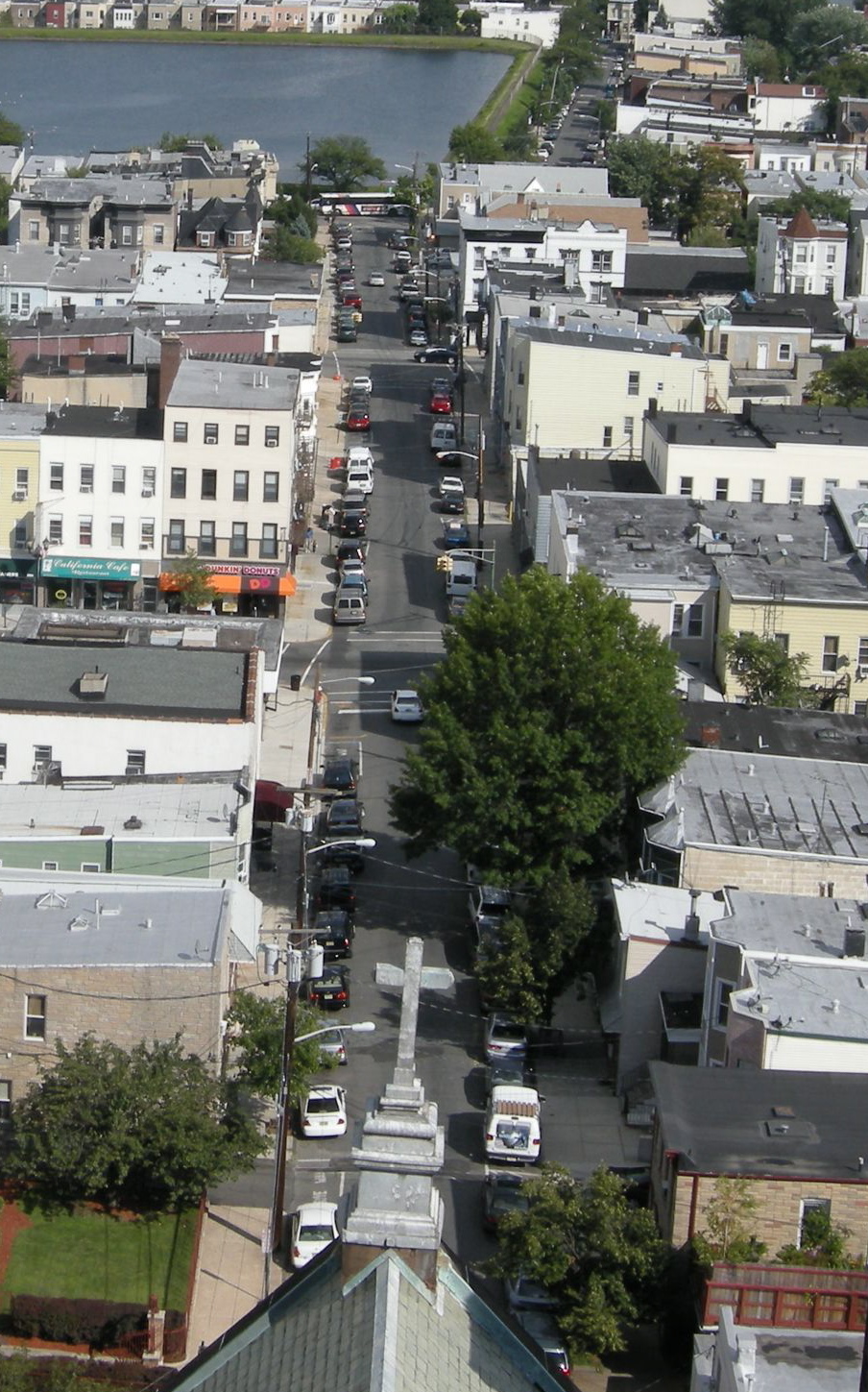
I was noticing the cross on top of the church across the way, looking down on the crowded streets below. The mystery’s here too.

Health Care and “Expressive Individualism”

Charles Taylor says that “expressive individualism” is the predominant trait of our time. Taylor doesn’t consider the trait without merits, I think, but when it takes over it causes havoc. That’s when it becomes “I gotta be me,” and everybody in the world has to know about it and listen to me.

I watched a meeting on CSpan recently on health care from Dartmouth, MA. Congressman Barney Frank, not known to shy away from a fight, was fielding questions from a contentious crowd.

“On what planet do you spend most of your time?” Frank responded to a woman who called the new government  health initiatives a “Nazi plan.”

“Expressive individualism” at its worst. No one seemed to be there to listen or learn; they were there to make their own point–loudly. So we should worry about the future of health care in this country.

St. Bernard, in a homily on Mary, said, “It was God’s will that Mary be meek and humble of heart, since Jesus was to become the outstanding example of these virtues, so necessary for the health of humanity.”

Humility necessary for the health of humanity?

Listening and learning are certainly part of it, and isn’t that what we all must do today? I like the sites of the Catholic Health Association http://www.chausa.org/ and the US Catholic Bishops at http://www.usccb.org/healthcare/

Our church has been at health care for a long time, and is a major provider of health care in this country.

Be good to listen and learn from her.

The Miracle of Belief

I ‘ve been doing some research recently on the life of Father Theodore Foley, CP, a native of Springfield, MA, whose cause for canonization is being considered in Rome. A relative of his, Bill Wendt, introduced me to historians at the Springfield Armory and the Springfield Historical Museum last week, who gave me a good overview of that city in the 1900‘s.

Why look at where someone grew up and the family he came from?  We’re influenced so much by these things. The gospels included information about Jesus’ early years so that we could know him better.

Interest in Father Theodore is strong in Springfield, a city that is going through hard times now. The local media and the diocese of Springfield have been particularly attentive to the news of his possible canonization.

Here’s an example from a story by Jack Farrell in the local paper from West Springfield from a few week ago:

“Father Foley died in Rome on Oct. 9, 1974 (the same day, incidentally, as Oskar Schindler, the German who saved hundreds of Jews in the Holocaust and who received a papal order of chivalry from Pope Paul VI as a result) from an apparent virus he’d contracted in his missionary travels around the world.

But shortly before his death, he came to West Springfield to visit his aunt and sister Marie, for whom he’d recently found a place to live – Marie Foley called West Springfield home until her death in 2002 at the age of 86.  On that visit, the priest told fellow Passionists that he wanted to be buried on the monastery grounds.  But in the 1990s, when the monastery closed, the cemetery, including Father Foley’s grave, was moved to Gate of Heaven in Springfield.

Father Foley’s original gravesite had an impact on at least one participant at a 1970s retreat, the late West Springfield resident Daniel Baldyga, who’d been having doubts about his faith.  When he began to pray at his grave, the result was life-altering.

“As I stood before Father Foley’s grave and prayed, I experienced a profound religious experience.  There’s no way to describe it,” he told the former Union-News in a 1989 interview tied to publications of his novel, “A Sailor Remembers.”

“But any doubt I had experienced was erased, and it’s never returned.”
Mr. Baldyga, who went on to become a Eucharistic minister and a church lector, said at the time that his life became more ordered.  “It’s as if it was by design,” he said.

Mr. Baldyga’s experience would likely be of interest to the Passionists and to the Vatican as the study of Father Foley continues and witnesses are called to testify regarding his sanctity.”

Is belief recovered a miracle? I think it is, and we need that kind of miracle today more than ever, don’t we?

Here’s a video on Fr. Theodore’s life, in case you missed it>

Prayer for the Canonization of Father Theodore Foley, C.P.
Lord Jesus Christ,
you called Father Theodore Foley to follow you as a Passionist Priest even to Calvary’s heights.
Through your Immaculate and Sorrowful Mother,
you taught him obedience to your Father’s will and the fulfillmentof your Commandment of loving God and neighbor.
Let the loving inspiration of your servant move us to live a more profound life of virtue.
We humbly ask that you glorify your servant Father Theodore Foley
according to the designs of your holy will.
Through his intercession, we ask you to grant the request I now present (mention your request).  Through Christ our Lord, Amen. (Our Father, Hail Mary, Glory Be to the Father).
Approved + Paul M. Boyle, CP, Bishop Emeritus of Mandeville.
To report favors received, please contact:
Rev. Fr. Vice Postulator, CP
Immaculate Conception Monastery
86-45 Edgerton Blvd.
Jamaica, NY 11432
718.739.8184

Prayer for the Canonization of Father Theodore Foley, C.P.

Lord Jesus Christ,

you called Father Theodore Foley to follow you as a Passionist Priest even to Calvary’s heights.

Through your Immaculate and Sorrowful Mother,

you taught him obedience to your Father’s will and the fulfillment of your Commandment to love God and neighbor.

Let the loving inspiration of your servant move us to live a more profound life of virtue.

We humbly ask that you glorify your servant Father Theodore Foley according to the designs of your holy will.

Through his intercession, grant the request I now present (mention your request).  Through Christ our Lord, Amen. (Our Father, Hail Mary, Glory Be to the Father).

Approved + Paul M. Boyle, CP, Bishop Emeritus of Mandeville.

To report favors received, please contact:

Rev. Fr. Vice Postulator, CP

Immaculate Conception Monastery

86-45 Edgerton Blvd.

Jamaica, NY 11432

718.739.8184

Let’s Go To Mass

I have been working on some simple explanations of the Mass in video form and here’s the latest. You can get it on Vimeo; it’s based on the miracle of the loaves and the fish.

The first video in the series you can also find on Vimeo, same place.  I reworked it lately. That’s what you have to do: work and rework.

In the future I hope to do instructions on how you pray at Mass, where do the scriptural readings come from, the Mass and the Cross of Jesus, its history, and so on.

Who knows, maybe they will get done.

Caritas in Veritate

I’m reading Pope Benedict’s encyclical “Caritas in Veritate” –Charity in Truth. Not easy going, because he’s trying to address something that’s not easy going–the situation of our world today.

The pope begins with love, not intimate, confined love, but love engaged with truth. A love found in Jesus, God’s gift made flesh, who engaged his world and gave his life to raise it up.

Jesus calls us to love our world and work for its development.

“Charity in truth, to which Jesus Christ bore witness by his earthly life and especially by his death and resurrection, is the principal driving force behind the authentic development of every person and of all humanity. Love — caritas — is an extraordinary force which leads people to opt for courageous and generous engagement in the field of justice and peace.

It is a force that has its origin in God, Eternal Love and Absolute Truth…To defend the truth, to articulate it with humility and conviction, and to bear witness to it in life are therefore exacting and indispensable forms of charity.” (1)

So love calls us to more than an intimate relationship with friends, family or small groups, the pope says; it must be part  of our personal relationship with God, and the “macro-relationships” of society, the economy and politics.

By its nature, love desires someone’s good and takes effective steps to secure it. Besides the good of individuals, “there is the good that is linked to living in society: the common good.

We must desire the good of “the earthly city,” not just through respect for rights and duties, but also by offering it gifts of “gratuitousness, mercy and communion.” We must love the world we live in.

Tight reasoning, long sentences, much content. The subject is large, like the world itself. Yet, as the pope says,  love’s “exacting” task is to take it on.

Corpus Christi

“I Love a Mystery” was a radio program I listened to as a young boy, long ago. It started, as all mysteries do, with something concealed. Someone, something was lost, someone was killed or was being hunted down and for the next half hour those who would solve the mystery followed various clues until the mystery was solved.

The Mass is a mystery we Christians love. A “mystery of faith,” we say, that reveals the great blessings of God’s love.  It’s a sacrament, a holy sign Jesus has given to his Church, and there are a number of ways to describe it.

One of the earliest terms describing the Mass is “the Lord’s Supper,” which refers to the supper when Jesus sat down with his disciples the night before he died and shared his life with them.  He spoke at the table that night of his love for them and then gave himself to them under the signs of bread and wine.

Whenever I go into a Catholic church or chapel I see how faithfully the church has kept Jesus’ command “Do this in memory of me.” Whether it’s St. Peter’s Basilica at the Vatican or a small chapel off a busy city street, there will be an altar, a table, at the center of the place. The Lord’s Supper is celebrated here in memory of him.

Readings from the Old and New Testaments will be read here, because Jesus spoke from the scriptures to his disciples. Then the priest who represents Jesus takes bread and wine, gives thanks to God for the gifts of creation and life itself, then repeats the words of Jesus, “This is my body” “This is my Blood.” Then we all receive these gifts.

We don’t just look at a picture from the past when we remember the Lord’s Supper or imagine it in our mind. It’s not enough to read about it in the bible. As Catholics we celebrate it again, by gathering together as Jesus’ own, “whom he loved till the end.” We are his people whom he calls to a table and feeds with his wisdom and life.

You may have seen one of the large Christian “mega-churches”  springing up in our country today. They’re usually large buildings to hold a big congregation gathered around a preaching platform where there’s also room for a choir and musical groups. The mega-churches stress preaching-usually by a well-known preacher- and stirring spiritual music.

But there is no altar in the mega-church, no celebration of the Lord’s Supper. Yes, the Catholic celebration of the Mass can be flawed by cold routine or lifeless participation. Those who take part in the Mass–priest and people – may not bring the lively faith or spirit of thanksgiving  that’s  “right and just” for this great act of worship. We certainly need better preaching and better efforts at celebration.

But still,  as a church we celebrate the Lord’s Supper. We have been celebrating it from the time of Jesus till now, and we will continue till its signs are replaced by the reality of the Kingdom they signify.

End of a Mission

Just finished conducting a parish mission at Immaculate Conception Parish Melbourne Beach, Florida. I’m always impressed with the people you meet in an ordinary parish like this. Here’s where believers meet.

How much power they have! Literally, those I talked to this week reach around the world. I tried to help them realize their potential by pointing out just one thing: they’re reaching out across the world already on the internet, which most of them use.

So I asked them to use their parish website and this blog as a way of thinking together about the gift of faith they’ve been given. We have to stir up the gift of faith we’ve been given, together. It will make us at home in the world we live in and thirst for the world still to come.

Some parishioners took me to a wonderful play on Sunday afternoon in the neighboring parish. It’s called “Miracles,” about the miracles of Jesus, told in gospel songs. Beautifully done, by hometown talent.

I hope they keep doing that kind of thing. We need artists to help us imagine our faith and point out its beauty. Wouldn’t it be a wonderful idea to combine a play like that with a parish mission, I thought. Maybe some day.

We need to think about our faith as well as approach it imaginatively.
For thinking about faith, I’ve found some books helpful. Here they are:

What Happened at Vatican II, John W. O’Malley, SJ, Cambridge, Mass, 2008
A fine explanation of Vatican II and its blueprint for the future of the Catholic Church.

The Faithful. A History of Catholics in America.  James M. O’Toole, Cambridge, Mass. 2008
A interesting look at the church in America from Colonial days till the present.

A Secular Age, Charles Taylor, Cambridge, Mass  2007
Hard to get into, maybe, but for me it’s the best explanation of the times we live in now.

United States Catholic Catechism for Adults, US Bishops, Washington, 2006
A good modern catechism. In the mission I used the catechism’s approach, which introduced doctrine through the lives of saints and people of faith.

Besides books, there are blogs. It’s getting harder to keep up on things as magazines and newspapers, both secular and religious, decline. Cable news is so often shallow. But here are a few blogs of Catholic interest that I follow. If you know any more let me know.

http://cnsblog.wordpress.com/ Catholic News Service
http://www.americamagazine.org/blog/ The Jesuits, God bless them
http://www.commonwealmagazine.org/blog/ Laypeople write this one
http://whispersintheloggia.blogspot.com/ Plenty of Roman stuff from Rocco

Mission: Wednesday Evening–Elizabeth Seton

St. Elizabeth Seton

Here’s a biography of Mother Seton: http://emmitsburg.net/setonshrine/

How can she help us see Jesus today?

1. She tells us to seek God faithfully day by day.

The United States Catholic Catechism for Adults (pages 1-8) offers her as an example of the human quest for God. “You have made us for yourself, and our hearts are restless till they rest in you.” (Augustine, Confessions)

In the changing times and circumstances of her 46 years of life, Elizabeth Seton followed God’s call, from the loneliness of her youth, to the prosperity of her life as a happily married woman with a good husband and five children, to the suffering of financial loss and her husband’s death, to the search to serve a small church that became her spiritual home. She thirsted for God and sought to do his will.

Life changes for us too. We face an unknown future, not only personally, but as a world and as a church. Elizabeth Seton says to us: find God as you go through life.

2. Find God in the world you live in.

Elizabeth Seton was born into a privileged world. Her father, Richard Bayley (1744-1801), was a distinguished physician who taught medicine at Kings College, later Columbia University, and was first Health Officer of the Port of New York.

Dedicated to medicine and medical research, he traveled back and forth to England to learn the latest in his field. He was a health-care crusader, who fought against diseases like yellow fever that regularly infested the city, especially its vulnerable immigrant population.

Her husband William Seton was part of a family that made its fortune in banking and shipping. Elizabeth and her husband belonged to a world that included Alexander Hamilton and other members of the America’s elite. She enjoyed the cultural and social benefits status brought her.

William’s shipping interests gained the family a fortune, but shipping was a risky business and just as easily could collapse and bring financial disaster. In 1802, it did.

From great wealth the Setons were plunged into bankruptcy. Elizabeth sought to bolster her husband, now failing in health, by a sea voyage to Italy to visit some business friends, the Filicchis, in Livorno.

Her husband died in the quarantine station in Livorno, with Elizabeth and her little daughter at his side; Elizabeth was left a widow with no financial resources.

What spiritual resources did she have to draw upon?

A childhood loneliness led her to look to God for support. She found God in the beauties of nature and in devotional books that she found comfort in.

The church to which she looked for support was Trinity Church in downtown New York City. The Bayleys and Setons were Anglicans, and Trinity Church, with its annex St. Paul’s Church, was the parish church of the city’s elite.

In her time the Anglican Church in America was strongly influenced by the Enlightenment, a movement that put its hopes in human reason and science.

By the later colonial period, writes Anglican historian, David L. Holmes “Following the lead of the left wing of the Enlightenment (of which Benjamin Franklin represents a prime example), large numbers of Anglican gentry came to believe that reason and science provided all-sufficient guides for believing in God and living morally; any special revelation that occurred through Scripture, they decided, was superfluous or in need of radical pruning. They were intent on returning humanity to a primitive natural religion consisting in belief in the existence of God and a simple morality.” (A Brief History of the Episcopal Church , Valley Forge, PA 1993 p 40)

Alexander Pope expressed the opinion famously:

Know thyself,
Presume not God to scan,
The proper study of mankind is man.

Elizabeth’s father and her husband were men of the Enlightenment, who were completely absorbed in their careers and their business. Revealed religion, prayer,  were not important to them.

Elizabeth said that the only time she heard her father mention the name of God was on his deathbed.  She complains that her husband Will never shared in her own religious insights, until he came to die in Italy.

The two men most dear to her belonged to the church, regularly attended its services, but saw it mainly as an institution for upholding moral principles rather than as a place of God’s revelation.

However, as a married woman, here in Trinity Church, Elizabeth’s spiritual life grew. A new assistant minister, John Henry Hobart, came to Trinity in 1800 and he brought a reforming movement that gradually influenced the Anglican church.  In the mid 1800’s it’s most prominent expression was the Oxford Movement, one of whose leaders was John Henry Newman.

Reverend Hobart lead Elizabeth to a life of daily prayer, the reading of scripture, a devotion to Jesus Christ, and a life of charity, helping widows and orphans from Trinity church.

Today we still experience the effects of the Enlightenment. Commentators say we living in an age of secularization. (Charles Taylor, An Age of Secularization, Harvard University, 2002) One of our greatest challenges today is to engage those who, like Richard Bayley and William Seton, are deeply involved in the world, but have little interest in any revelation of God or in church.

Elizabeth and Catholicism

After the death of her husband in Livorno the Filicchi family took Elizabeth and her little daughter into their home there and treated her with exquisite kindness. They were devout Catholics and invited their American guests to church with them. The liturgy of the church was a revelation to Elizabeth, especially the Mass. She wrote home to a friend:

“How happy we would be, if we believed what these dear souls believe–that they possess God in the Sacrament, and that He remains in their churches and is carried to them when they are sick…O God! How happy I would be…if I could find You in the church as they do…”

The Catholic Church, which was only a poor tiny congregation in her native New York, suddenly became for her a place that revealed Jesus Christ.

When she returned to New York City, she decided, against the strong objections of her friends and family, to become a Catholic.

In his history of the Catholic Church in the United States, “A Faithful People” (2008) James O’Toole describes the Catholic Church that Elizabeth Seton entered in 1805 as a “priestless, popeless” congregation, held together by believers who kept the Catholic faith alive in their homes and through occasional visits from the few priests that had come to the New World.

It was a “popeless church” because the popes of the late 18th and early 19th century struggled under the crushing control of Europe’s monarchs and could pay little attention to the faithful at the far ends of the earth.

It is extraordinary that Elizabeth Seton would enter the Catholic Church at this time, with few resources, few members and largely seen as a suspect religion in American eyes.

Can we in a declining American church today, as priests become fewer and parishes close, find her faith in the church an example?

After a few hard years as a Catholic in New York City, Elizabeth was invited by Bishop John Carroll to go to Maryland, where there were more Catholics to establish a school and support her family.

Elizabeth’s years in Maryland marked the beginning of a new period in American Catholic history. Not only did she establish a small school, but she began a community of religious women, the Sisters of Charity. Eventually her community, joined by others, would establish networks of schools, hospitals and social endeavors that became the backbone of the church in America.

As millions of Catholic immigrants arrived in America in the mid 1800’s  growing numbers of women religious welcomed them to the Catholic Church and formed the great immigrant church that became the face of Catholicism in America. American women religious were at the heart of a growing church. We owe them an enormous debt.

Elizabeth Seton invites us to look at our own role in the world we live in and in our church. She was a woman of prayer and we invites us to be people of prayer. So many of her decisions came through prayer. Ours must come through prayer too.

She reminds us that our quest for God takes place in the life and the world where God places us. We live in a secularized world; how do we engage it? We live in a changing church; how do we help it fulfill its divine destiny? As children of the church we must draw close to her .

This is our time to seek God.