Tag Archives: Capernaum

The Seed and the Sower (15th Sunday A)

In today’s gospel from Matthew 13, 1-23, Jesus offers a parable that interprets the mounting opposition he faces from many sides early in his ministry.  For one thing, people in Chorazin, Bethsaida, Capernaum–cites and towns along the Sea of Galilee that received him warmly for his miracles and his teaching– begin to turn away from him. (Matthew 11,16-24)) The Pharisees and scribes, the Jewish religious leaders, accuse him of breaking Jewish laws and being possessed by the devil. (Matthew 12,22-34) Some of his own family from Nazareth come to take him home because they think he’d out of his mind. (Matthew 12, 46-50) Finally, his own disciples don’t seem to understand him.

What explains the desertion, opposition, lack of understanding towards him and his  ministry that began with great acclaim?

The parable of the seed and the sower is Jesus‘ answer to what he faced, but also what the Word of God faces continually from humanity.  God’s Word is received by the human heart like seed received in the ground.

The seed is life-giving,  but if it falls on rocky ground it’s eaten right away by the birds of the air. If it falls on thin soil it fails after awhile because it has no roots; if it falls among thorns and weeds they choke it. But if it falls on good ground the seed produces fruit beyond anything you expect.

The parable first applies to the world Jesus faced, but it’s also a picture of how  humanity in every age receives the Word of God.  Our hearts can be hard, fickle, vain, proud, unheeding, but we can also accomplish great deeds. The seed’s not at fault, it’s the ground it falls on.

Still, the sower never stops sowing seed. life-giving seed. That’s also important to remember. God never withholds his grace.

In a poem called “Putting in the Seed”  Robert Frost describes a farmer’s love affair with the earth. It’s spring and getting dark, yet the farmer keeps working his field. Someone from the house goes to fetch him home. Supper’s on the table, yet he’s a

  “ Slave to a springtime passion for the earth.

   How Love burns through the Putting in the Seed

   On through the watching for that early birth

   When, just as the soil tarnishes with weed,

 The sturdy seedling with arched body comes

 Shouldering its way and shedding the earth crumbs.”

Is Frost’s farmer zestfully casting seed on the waiting earth an image of God, the Sower, casting saving grace onto the world, in season and out, because he loves it so ?

Jesus’ parable of the seed and the sower seems to suggest it. The land surrounding the Sea of Galilee where Jesus ministered is still a fruitful land where crops grow in abundance, as they did in his time. It’s a blessed place. In a place like that, the sower scatters his seed confidently, not afraid where it goes: on rocky ground, or amid thorns, or on the soil that gives a good return. Because of his love and trust of the land,  the sower keeps sowing.

Can we say that God the Sower sows blessed seed, no matter how badly our human world appears, or how badly it receives? Like the seasons that bring snow and rain, grace is never withheld.  God, who loves it so, blesses the earth and all of us.

The sower still sows; the snow and rain still fall. That brings us hope.

Reflecting on the Gospels


People came up yesterday after I gave my homily on the paralyzed man in church and said they liked to hear the scriptures, especially the gospels, explained in the light of archeology and the other historical sciences. I think this approach is a way of doing what older meditation methods called the “composition of place,” using one’s imagination and senses to enter the gospels and the scriptures.

Formerly, we would set a gospel scene as best we could, sometimes using the descriptions of mystics or artists who imagined the time and place as they would, often using the topography, the dress, the world they saw around them. Their depictions are still helpful, not so much because they accurately described things, but from the lessons they drew from their meditations.

The picture above from the 1500s or so of the beheading of John the Baptist is an example. Nothing like 1st century Palestine, but the little light in the distant sky tells us what the gospels say: God sees it all and will vindicate his prophet in the end.

Two engineers were listening to my talk yesterday. One said “There were two miracles in that story. Those fellows and the paralyzed man on the roof should have fallen through. No roof I know could have sustained that weight!”

And someone who knows insurance told me: “Peter wouldn’t have any worries if he had a good policy!”

I think we are on to something.

Capernaum, Tabgha, the Jordan

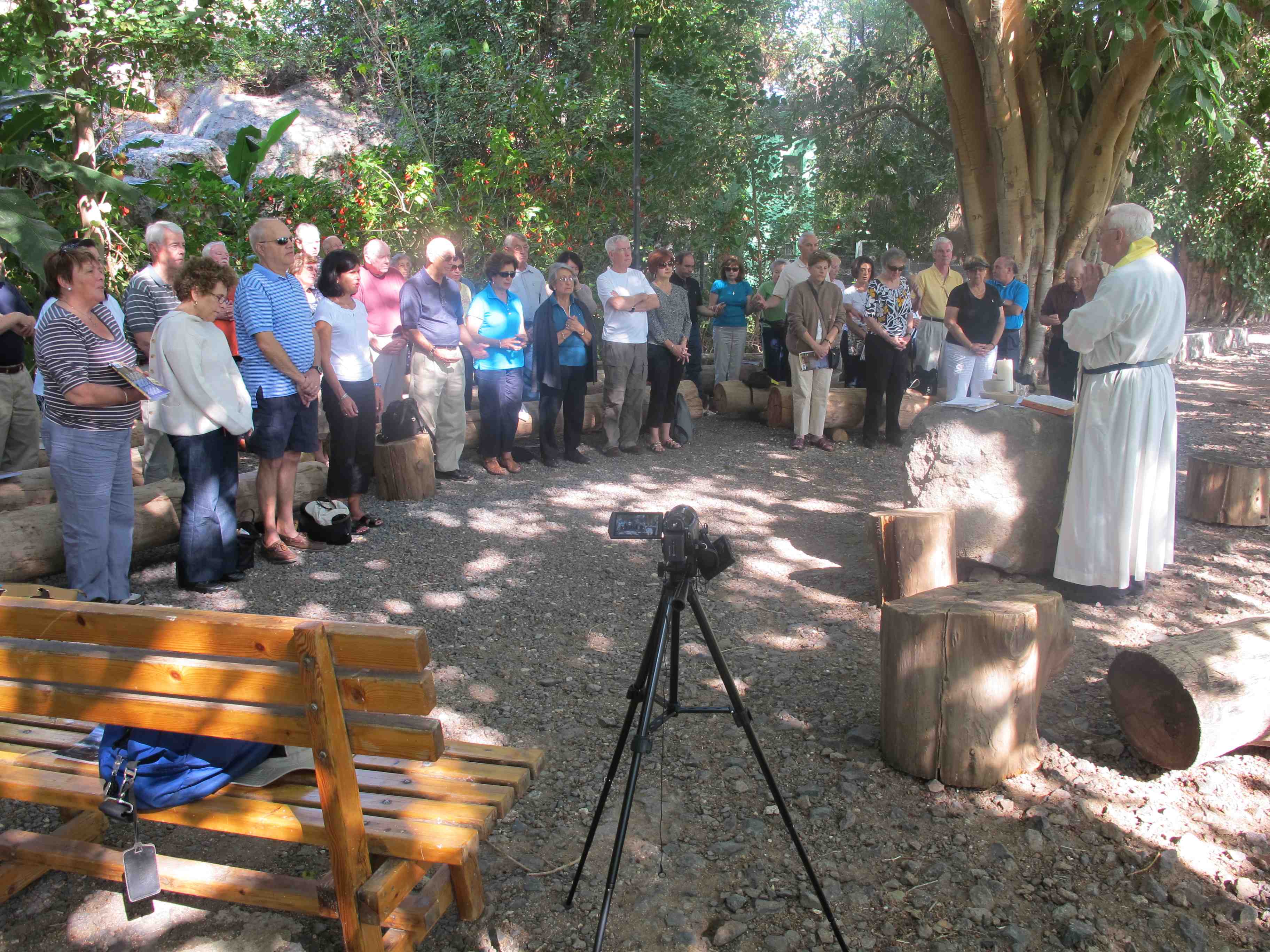
Today we went to a number of place closely connected with the ministry of Jesus: Capernaum, called “the Town of Jesus” because so many incidents recorded in the gospels took place here, and Tabgha where tradition says he fed the crowd with bread and met his disciples after his resurrection. We ended the day at the Jordan River where we renewed our baptismal vows and visited the church of the Beatitudes.

We began at Tabgha with morning Mass celebrated at a small wooded site along the Lake of Galilee and our reading was from John’s gospel which tells the story of Jesus meeting his disciples there after his resurrection. He provides them with a miraculous catch of fish, then Jesus questions Peter, “Do you love me?”

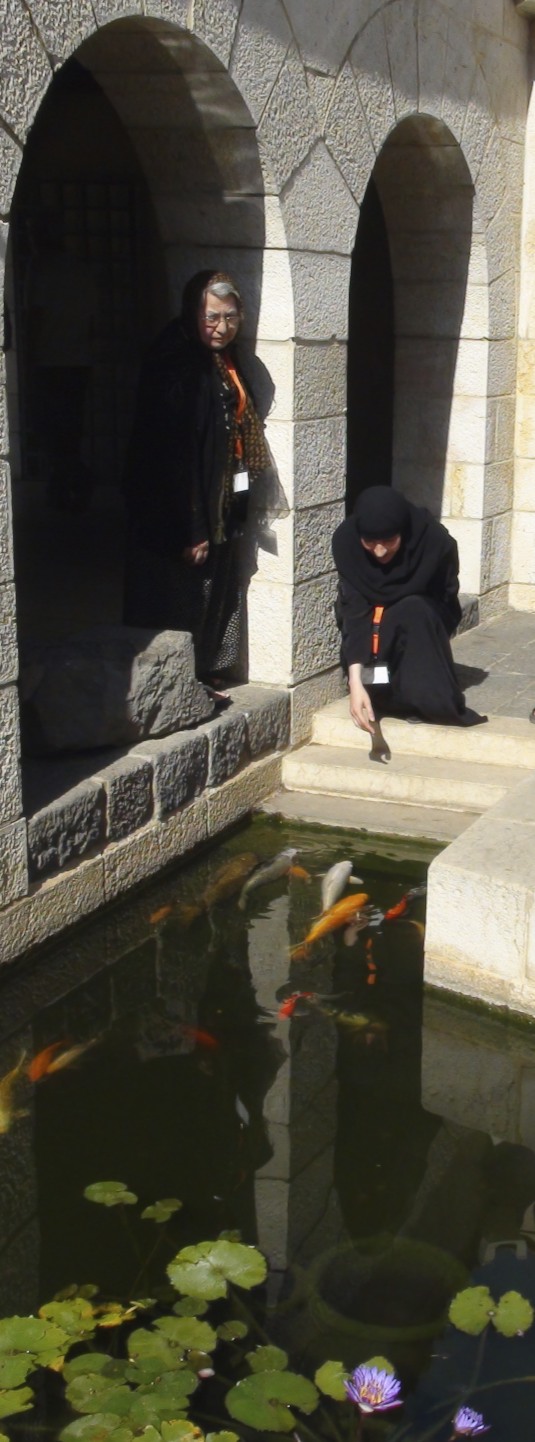
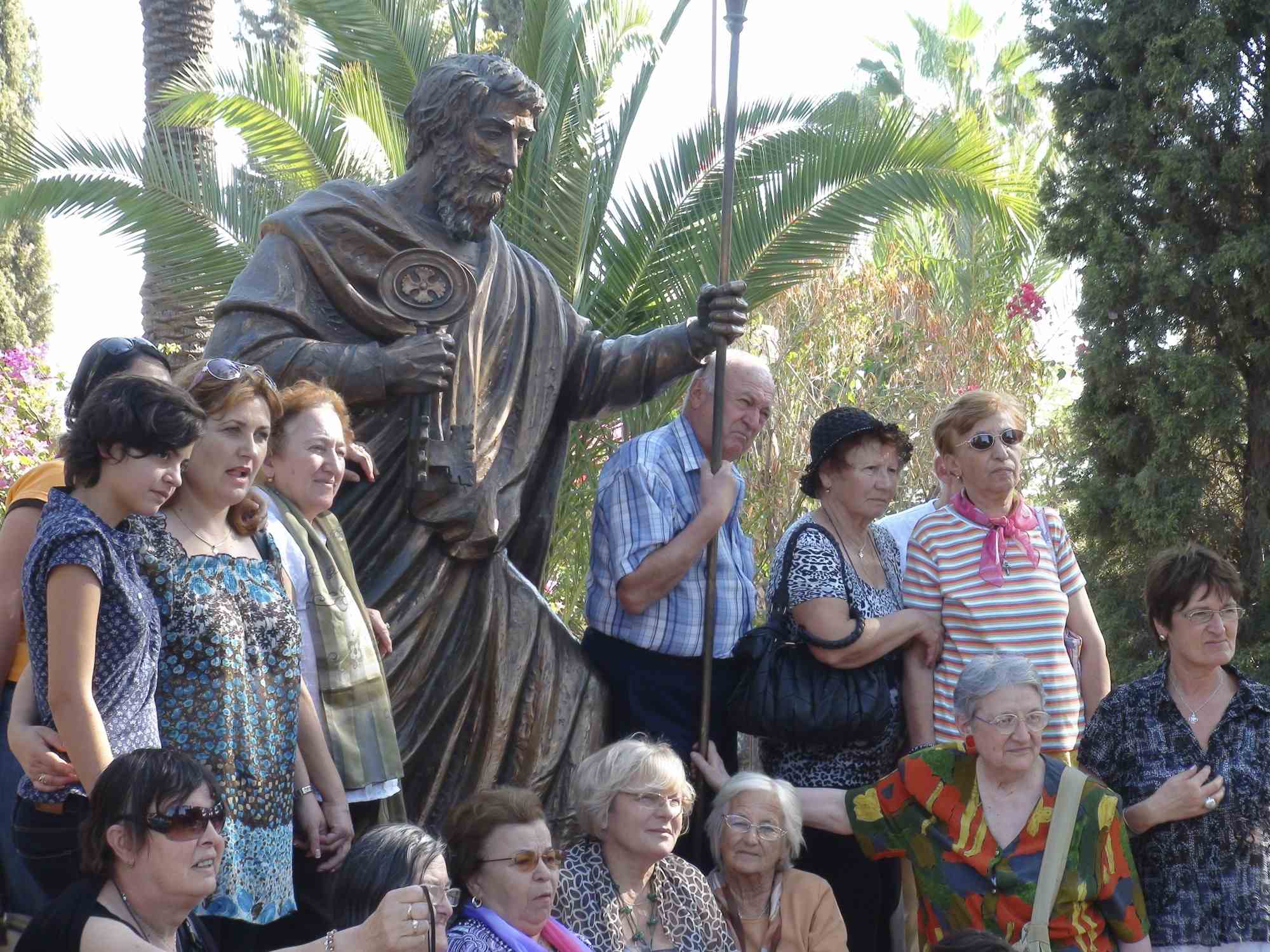
Then, we went to the Church of the Primacy, a short distance away and the Church that recalls the miracle of the loaves and fish. There are crowds of pilgrims in the Holy Land today. A large number seem to come from Russia, as well as from Goa, Korea, Houston, California. Here’s a Russian nun feeding fish at the Church of the Loaves and Fish. Also some friends of Peter holding on to his statue at Capternaum.

Capernaum is truly extraordinary. The ancient ruins from the time of Jesus present a striking indication of the place where he spent some of his most important years.

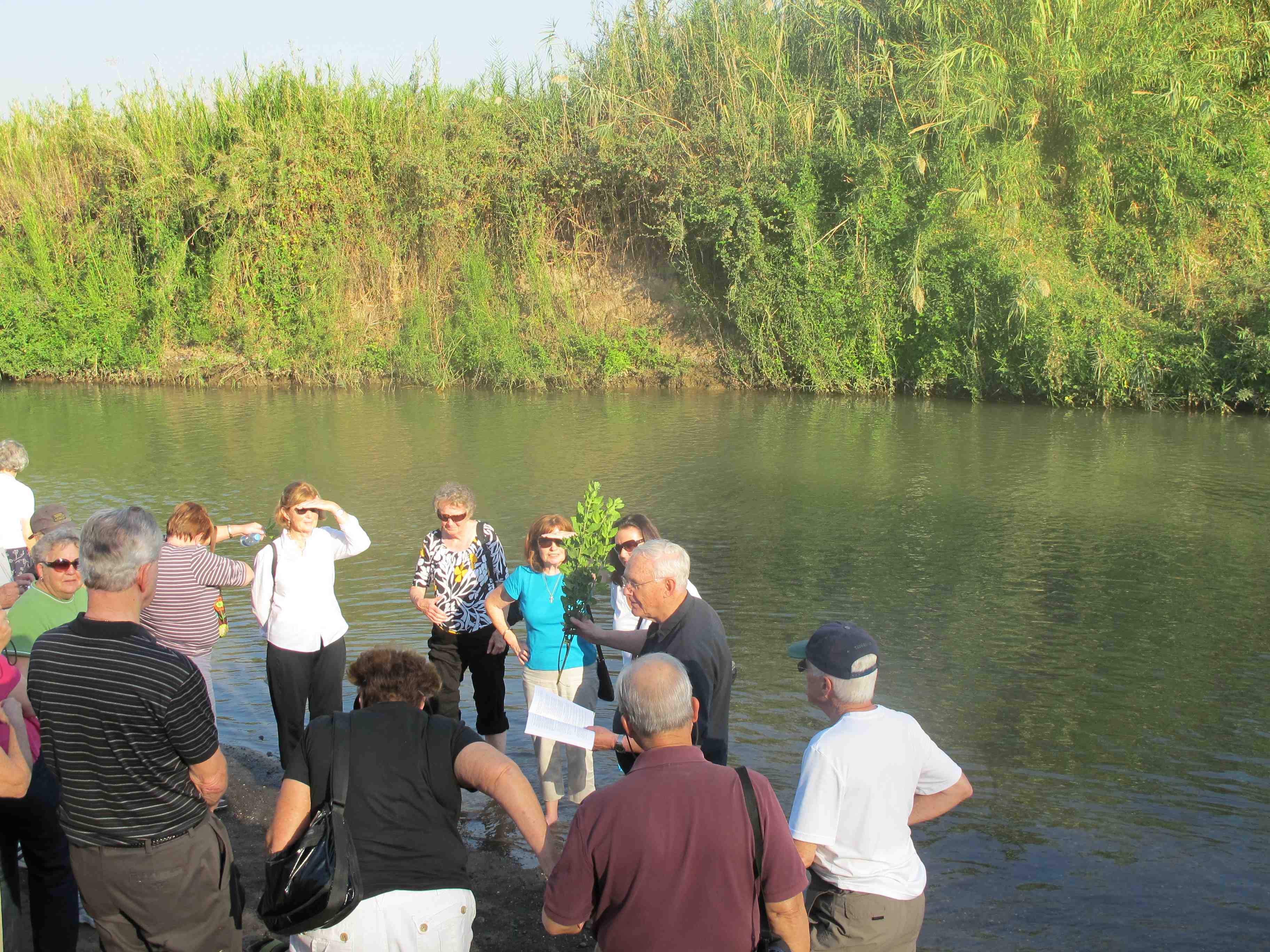
We went to the Jordan River to renew our baptismal vows, not at the spot that’s favored for baptisms these days at the southern end of the Lake of Galilee, but at a stretch of the river that feeds into the northern part of the lake.

Here we are at the Jordan getting sprinkled.


Tomorrow we pull up our tents and head to Mount Tabor, then south along the Jordan River, to Jericho and Qumran, then up to Jerusalem.  Joseph is taking us there.

Peter’s Mother-in-Law

The gospels tell the good news of Jesus Christ– what he did and said. They don’t tell it all.

We’d like to know more about him, of course, but how about some others the gospels mention in passing?

Like Peter’s mother-in-law, for example, whom Mark’s gospel recalls. After leaving the synagogue at Capernaum where he expelled an unclean spirit from a man, Jesus entered the house of Peter and Andrew where Peter’s mother-in-law has a fever. Not quite as bad as being possessed by an unclean spirit, we may think,  but most of us know a bout with the flu can take  a lot out of you too.

Jesus took her by the hand and helped her up. The fever left her and she waited on them.
That final phrase “and she waited on them” – says a lot.

She was one of those who cooked their meals, washed and mended their clothes, fussed over them when they came home, wanted to know what happened that day, tried to protect them when too many people were knocking on the door to see them. Cook, Cleaner, Advisor, Gatekeeper, Supporter, and much more.

We all know what it means when someone like her waits on us.

Peter’s mother-in-law not only received the blessing of Jesus but kept it alive in what she did. She welcomed Jesus in the way she alone could. Without what she did, do you think he and his disciples could have carried on?

The church exists on many levels. Paul used the analogy of a body. We tend to think it’s just a few that bring the gospel to the world, but it’s never been the work of a few. Many, like Peter’s mother-in-law, have a part in it too.

The church is not made up of “Lone Rangers.” The final chapter of Paul’s Letter to the Romans has a litany of people in the Roman church whom the apostle greets as friends and co-workers. Most of them we know nothing about. Some of them, like Peter’s mother-in-law, probably “waited on him.”