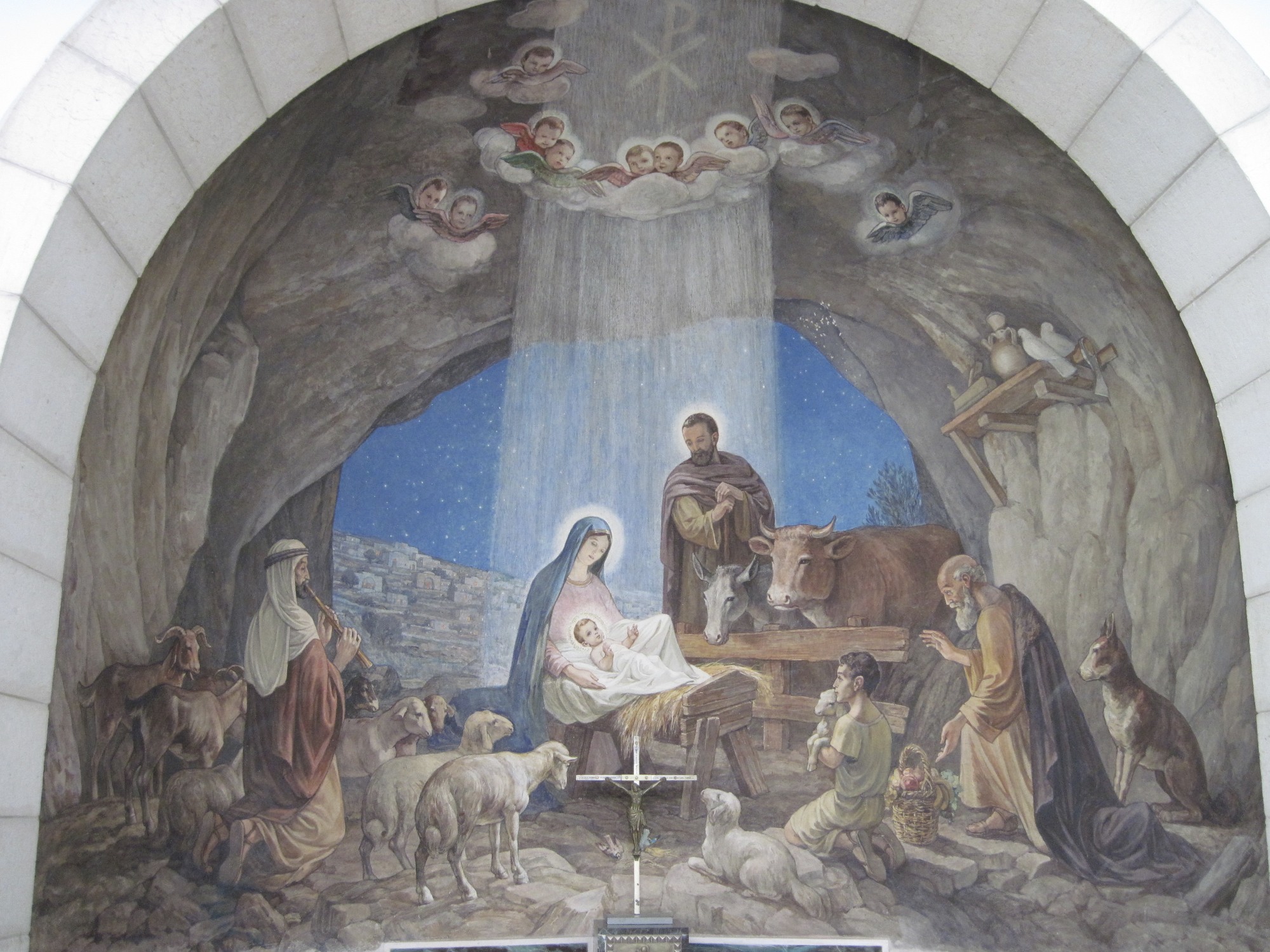
Tag Archives: Bethlehem

Saint Jerome: September 30

jerome

St. Jerome, whose feast is September 30, was a scripture scholar who helped western Christians understand the Bible better by his translations from the Greek and Hebrew. “Ignorance of the scriptures is ignorance of Christ,” he said.

Jerome was born in 340 in Stridon, a small town on the eastern Adriatic coast, and received an early education in Rome where he was baptized in 360 by Pope Liberius.

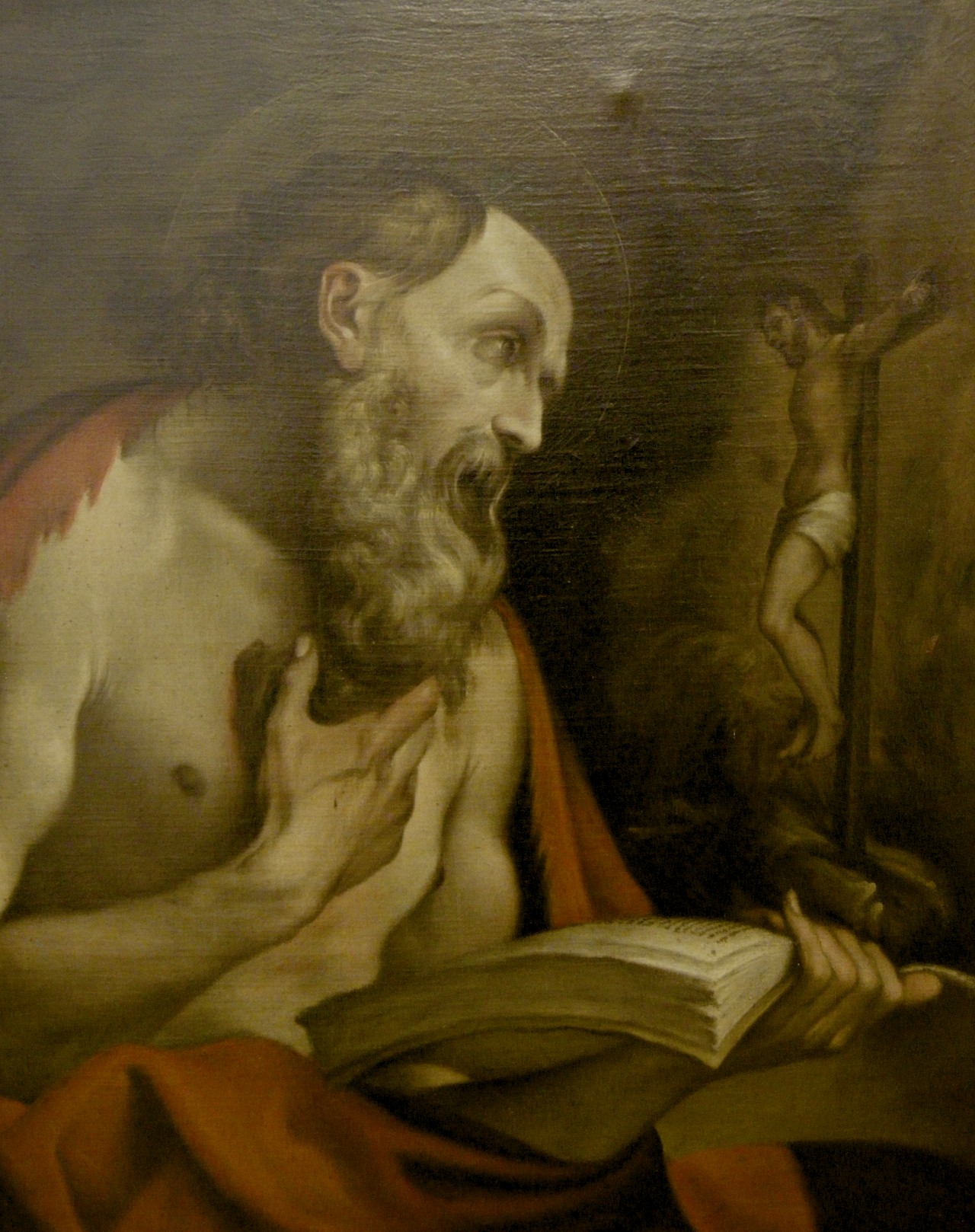
Brilliant and eager for knowledge,  Jerome traveled extensively. In Antioch in Syria he had a dream in which he saw himself rebuked by Christ for wasting his time on worldly knowledge. Moved by the dream, Jerome withdrew into the Syrian desert. There he said he was beset by temptations and “threw himself at the feet of Jesus, watering them with prayers and acts of penance.” In the picture above he’s praying to be delivered from temptation.

We usually think of penance as giving up things; Jerome reminds us it can also be taking on things.For penance Jerome threw himself into the study of scripture. He began by learning Hebrew from a Jewish teacher, which later helped him translate and comment on the Bible. 

Ordained a priest, Jerome arrived in Constantinople about 380 where he studied the scriptures under St. Gregory of Nazianzen. Two years later, he returned to Rome and was given the monumental task by Pope Damasus of revising the latin translations of the Bible. Jerome’s translation,  the Vulgate, along with his learned commentaries and sermons, sparked a flowering of spirituality in the western church. Jerome won a devoted following, especially among Rome’s prominent Christian women eager to understand the bible.

Jerome had a biting tongue and was quick to find enemies. Some in Rome resented his caustic criticism and abrasive style. Because of their opposition, he left Rome in 385 for the Holy Land where he established a community at Bethlehem near the cave where Christ was born to continue studying the scriptures. Besides Jewish scholars, he utilized the great Christian libraries at Jerusalem and nearby Caesarea Maritima.  Friends from Rome joined him, among them the noblewoman Paula and her daughter Eustochia, who founded a monastic community of women in Bethlehem.
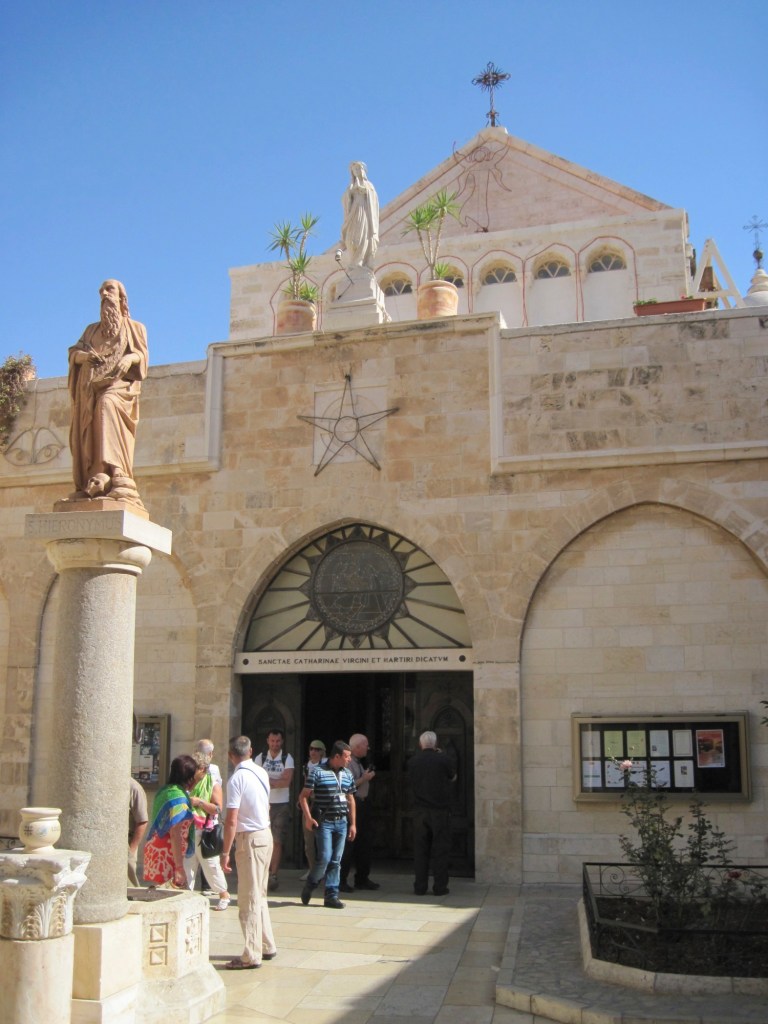
St. Catharine Church, Bethlehem

St. Catharine Church, Bethlehem. Remains of Jerome’s Monastery are under the church

Besides scripture studies, Jerome continued to engage in church controversies, sometimes harshly.

In 410 Alaric and his warriors sacked Rome.  Jerome, shocked by the invasion, provided shelter for Roman Christians fleeing to the safety of the Holy Land. “I have put aside my studies to help them,” he wrote. “Now we must translate the words of scripture into deeds, and instead of speaking holy words we must do them.”

He died in Bethlehem in 420. His remains were taken to the Basilica of St. Mary Major in Rome. A doctor and teacher of the church, he recognized in himsel need for God’s mercy. Jerome is an example that saints are not perfect.

Here are excerpts from his writings:

“Lord, show me your mercy and gladden my heart.
I am like the man going to Jericho, wounded by robbers.
Good Samaritan, come help me.
I am like a sheep gone astray.
Good Shepherd, come seek me and bring me home safe.
May I dwell in your house all my days and praise you forever.”

“I interpret as I should, following the command of Christ: Search the Scriptures, and Seek and you shall find. Christ will not say to me what he said to the Jews: You erred, not knowing the Scriptures and not knowing the power of God. For if, as Paul says, Christ is the power of God and the wisdom of God, and if the man who does not know Scripture does not know the power and wisdom of God, then ignorance of Scripture is ignorance of Christ.
 
Therefore, I will imitate the head of a household who brings out of his storehouse things both new and old, and says to his spouse in the Song of Songs: I have kept for you things new and old, my beloved. In this way permit me to explain Isaiah, showing that he was not only a prophet, but an evangelist and an apostle as well. For he says about himself and the other evangelists: How beautiful are the feet of those who preach good news, of those who announce peace.And God speaks to him as if he were an apostle: Whom shall I send, who will go to my people? And he answers: Here I am; send me.”

Let us glorify Christ In whatever sufferings are ours in this life.

O God, you yourself are both our crown and our shield: May we always follow only you and never depart from you!

Do not put your trust in your sword, or in your own strength; but rather, put your trust in the Lord!

Every day Christ stands at the door to our hearts, longing to enter. Let us open wide our hearts to him, then, that he might come in, and dwell with us always.

God can only speak peace to his people when they hope in him with all their hearts.

God protects us as a Father, and as a hen guarding her chicks, lest a hawk snatch them away.

The shield with which God protects us is spherical, for it keeps us safe on all sides.

All Creation serves God as God ordains: all in Heaven obeys, all on earth obeys, but it is only unhappy man who alone who disobeys.

Every day Christ is crucified in us, for we are crucified to the world. And so Christ is crucified in us.

Happy are those in whose hearts Christ rises from the dead daily. And he will rise in us every day, if we who are sinners will but repent.

Happy the soul in whom God is always enthroned!

Let us never trust in ourselves, but rather, let us always trust In the mercy of the Lord.

Greater by far are the wounds Inflicted by the tongue than those by the sword.

When we give to the poor, let us give thanks to Christ. More than the poor man gives thanks to us, for the poor unknowingly do us a great service. Almsgiving atones for sins.

Quotations selected by Brent Cruz, Confraternity of the Passion.

The Epiphany and Severa

Today, as we remember the mysterious visitors from afar who came seeking the new-born King of the Jews, I remember wandering years ago through the catacombs of Rome where early Roman Christians buried their dead. On the burial places of their loved ones they scratched the name of the deceased, little symbols and prayers, sometimes a picture from the bible.


In the catacombs of Priscilla is a 3rd century grave belongs to a Roman woman named Severa. Her simple profile appears with an inscription that reads, “Severa, may you live with God.” Severa points to the figures of the three Magi coming with their gifts to the little Child sitting on Mary’s lap. Over the Child is a star and the figure of a man, probably Balaam, the prophet who predicted a star would announce a new king in Judea. (Numbers 24,15-19)

What did this mean to Severa, you wonder? She lived in Rome, so many miles from where the Child was born, yet she believed in promise he made to those strangers who once brought him gifts. His gift to Severa was greater than gold, frankincense and myrrh. The Child promised her eternal life. She would live with God.

The theme of the three kings is common in early Christian art.

Severa’s faith, contained in the Apostles’ Creed, is the same as ours today. God made this world and guides it to its destiny. Jesus Christ is God’s Son, born of Mary, he suffered under Pontius Pilate, was crucified, died and was buried. On the third day he rose from the dead.

Severa believed in his promise: the resurrection of the body and life everlasting. She knew, too, the story of Herod, the powerful king, who threatened the life of the new born Child. Powerful emperors ruling then were like the ruthless king, but Severa knew the Child was more powerful than them all. He would bring her to another world, God’s world.

“Severa, may we live with you in God.”


The Wonder of Christmas

To listen to today’s homily, please select the audio file below:

“I wonder as I wander out under the sky,

why Jesus, our Savior, was born for to die,

for poor, orn’ry people like you and like I

I wonder as I wander out under the sky.”

Wonder is a Christmas word;  we hear it in the carols we sing and in the words we hear and in the prayers we say.  Wonder is our reaction to something  beyond what we expect, beyond our experience and our understanding,  so big it leaves us lost for words.

We need wonder these days to lift up our minds and hearts.

Listen to the gospel story from St. Luke:

‘In those days a decree went out from Caesar Augustus that the whole world should be enrolled.” Caesar Augustus, the ruler of the world gives an order. “Quirinius was governor of Syria.” Quirinius , Caesar’s enforcer for Palestine, orders his jurisdiction to be counted. The mighty and the powerful of this world have spoken.

But the high and mighty, the politicians, the generals, the money people don’t impress Luke. Rather, his eyes are drawn to a couple in the multitude being enrolled,  a couple from an insignificant town in Galilee called Nazareth– Joseph and  his betrothed wife Mary, who was with child. They’re  on their way to Bethlehem.

“While they were there, the time came for her to have her child, and she gave birth to her firstborn son. She wrapped him in swaddling clothes and laid him in a manger,because there was no room for them in the inn.”

Luke goes on in his gospel to tell about this child born in Bethlehem, who grows up in Nazareth, who begins to preach and work marvels in Galilee, who gathers excited followers and then goes up to Jerusalem where he’s arrested, sentenced to death, crucified, then  raised from the dead. Luke goes on to describe the followers of Jesus who take his message to the ends of the earth and to us today.

That marvelous story begins in Bethlehem,  where a Child in swaddling clothes is laid in a manger, because there’s no room in the inn. That marvelous story goes on. It changes the way we look at ourselves and the world in which we live. God is quietly at work in our world, unnoticed, unacknowledges, God is with us.

There’s wonder in this story, a wondrous love’s behind it. This Child is God become like us, like “poor, orn’ry creatures like you and like I.” So unexpected, so beyond our experience and understanding, beyond words.

Today’s a day that calls us to wonder. Let’s not lose that gift that takes us beyond where we are. Begin with the world in which we live, the world around us as we “wander out under the sky.”  However difficult and dark this world can be, there’s a wonder to it. We’ve been gifted with the wonderful gift of life, which we carry in the flesh and blood that is ours, the gift of life we have in our families and our friends and all of those around us. Let’s not take them for granted.

Then, there’s the gift of God we remember today, a God not distant but close, a God not removed from our experience but sharing it, a God who loves us so much that he wishes to become one with us, a God who would die for us and bring us the promise of life that never ends. Let’s not take God for granted.

“I wonder as I wander out under the sky, why Jesus our Savior was born for to  die, for poor orn’ry people like you and like I. I wonder as I wander out under the sky.”

1st Sunday of Advent: C Waiting for the Birth of a Child

Audio homily here:

We’re beginning the season of Advent, a season to get ready for the feast of Christmas and the birth of a Child. For four weeks we will light a candle reminding us of the Light to come. We will hear the Old Testament prophets who spoke of his coming, and John the Baptist and his mother Mary who welcomed him when he came.

But today’s readings seem to be getting us ready for the end of the world. And they are. How else can we read what Jesus says in Luke’s gospel?

“There will be signs in the sun, the moon, and the stars,
and on earth nations will be in dismay,
perplexed by the roaring of the sea and the waves.
People will die of fright
in anticipation of what is coming upon the world,
for the powers of the heavens will be shaken.”

Sounds like a nightmare. And it is.

Now, a nightmare’s the last thing we want as we prepare for Christmas and the birth of a Child.
Why read scary things today that seem to echo today’s grim headlines about terrorism, planes shot down, people killed for no reason at all, climate change? We want normal lives. Like the people from the days of Noah whom Jesus describes, we’re looking for good, safe lives “eating, drinking, buying, selling, planting, building” (Luke 17, 26-30) and seeing the birth of children. We’re looking for a peaceful world.

How shall we understand these readings that seem to describe, not only the reality of our world today, but a world in turmoil and falling apart? Is Jesus telling us, as we listen to them, that God is with us, not only when life is ordinary and good, but also when life holds wars, earthquakes, famines, plagues, and persecutions. God’s with us at all times, no matter what. God’s kingdom will come, no matter what. So don’t be afraid when you see signs like these, Jesus says. “Stand erect and raise your heads because your redemption is at hand.” (Luke 21,28)

Not a hair of our heads will be harmed; we will have the strength to endure whatever happens, we will have the wisdom to keep going, Jesus says.

At the same time, we’re told in the gospel not to live lives of denial or lives of escape. We can’t live unthinking lives, lives of “carousing and drunkenness.” Lives swallowed up by “the anxieties of daily life.“

In Luke’s gospel Jesus tells us to live each day as best we can and take up the cross we have to bear each day as best we can. He gives himself to us as an example. As a Child born in Bethlehem, he lived under threats of death and eventually faced death; he lived most of his days in ordinary Nazareth and brief days when he was recognized for powerful deeds. Live each day as it comes, he says, not swallowed up by “the anxieties of daily life,” trapped by small concerns. Live each day as you’re given it; God is there in the ordinary day.

We’re in Advent, getting reading for the birth of a Child, a powerful Child who holds in his hands our future and the future of our world. This same Child is with us each day. We welcome him as the Lord who lives with us each day. The Child we welcome at Christmas is also the Son of Man who will come on the clouds of heaven on the last day, bringing God’s kingdom and judging the living and the dead. He is our Savior and Lord.

Wherever you go, I will go

The story of Ruth, the Moabite woman, who stays with her mother-in-law after her own husband’s death and devotes herself to the older woman after she returns to her own people, is one of the most beautiful stories of the Old Testament. We read a portion of it today at Mass.

“Do not ask me to forsake you or abandon you,” Ruth says to her, “for wherever you go, I will go, wherever you lodge, I will lodge. Your people shall be my people, and your God will be my God.”

The Book of Ruth is more than a story of love and loyalty, however. The author of Ruth reminds us over and over that she’s a Moabite, from a people often enemies of the Jews. The tender story is placed among the books of Joshua and Judges which often call for fighting and exterminating foreigners. Be careful, this story says. Your enemies may be better and more loving than you. Don’t demonize outsiders. Admire and imitate what you see.

If we look, stories of love are found everywhere. What’s more, Ruth is among the ancestors of Jesus Christ, whose love extends to all. “Boaz became the father of Obed, whose mother was Ruth. Obed became the father of Jesse, the father of David,” Matthew writes, tracing his family roots. (Matthew 1, 5-6)

Like her, he never forsakes or abandons us. We are his people and he is our God.

St. Francis Center for Renewal

I’m preaching a retreat these days at St. Francis Center for Renewal in Bethlehem, PA, for a group of sisters from various communities. Surrounded by 108 acres of woodlands and meadows, the center belongs to and is staffed by the School Sisters of St. Francis. It’s a silent retreat for 7 days.

The center has some wonderful programs for Catholics and groups from other religious traditions. Its ecumenical reach is praiseworthy. True Franciscans, the sisters like the wide world God made.

Places like this need support because they meet the growing spiritual needs of so many today. In the balancing act that is our present church, I hope we keep retreat centers like St. Francis in play. We need them.

Go to Bethlehem.

I Love Christmas

I Love Christmas


I love Christmas – all about Christmas –

‘Tis the season to be jolly, and happy,

and light-hearted…

Oh, go away Spirit of Christmas Past,

You fill my eyes with tears,

You make my heart cry,

With a longing for loved ones.

And places and events which are no more.

But I do love Christmas – all about Christmas –

The gift wrapping, the “secrets,”

The beautifully decorated stores,

The choosing of the tree,

 Bringing out the “Christmas box,”

The carols, the parties and get-togethers…

Oh, Spirit of Christmas Present,

Why must you show me visions of starving children,

Of the homeless,

Of old people alone and lonely,

Of all those who have lost hope?

But I do love Christmas – all about Christmas –

The visit to Santa Claus,

The excitement as the day approaches,

The cookie baking,

The magic reflected in the children’s faces,

The joy and warmth of family and friends…

Oh, Spirit of Christmas Present,

You persist in showing me visions of those children

Who have never felt that warmth,

Whose eyes will never reflect that magic,

Who are already old and wise

In the harsh, unloving ways of our world.

But, I do love Christmas – all about Christmas –

For the treasures you have given us,

Oh, God, we thank you.

And we ask that you guide us

And teach us how to share them.

I love Christmas

Because through the tears and the glitter,

Shines the LIGHT!


Teresita J. Blake