Tag Archives: Advent

Jesus of Nazareth, The Infancy Narratives

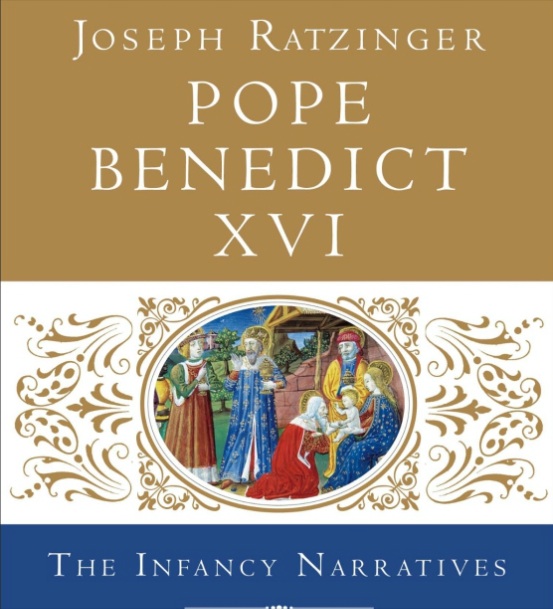
You wish they would read it instead of looking for a headline. I mean the pope’s new book “Jesus of Nazareth, the Infancy Narratives”  Image Books, 2012. From the headlines the last few days you would think all the pope said was that the ox and the donkey weren’t around the manger at Christ’s birth, and he’s joining others who question the historical reliability of this event.

The contrary is true. As in his previous books on Jesus of Nazareth, Pope Benedict engages what modern scriptural scholarship says about this section of the gospels. (True, he depends on German and French scholarship for the most part) But if anything, the pope sees a swing from not accepting a history behind the infancy narratives to a recognition of historical facts.

But he does more than affirm history. He sees meaning behind the facts. So the manger of Jesus to him is the Lord’s first throne, the humble temple where he comes to feed the poorest of the world.

“So the manger has in some sense become the Ark of the Covenant, in which God is mysteriously hidden among men, and before which the time has come for ‘ox and ass’–humanity made up of Jews and Gentiles–to acknowledge God.”

I downloaded the book yesterday. A good book to read in Advent. Here’s a theologian and mystic at work. I think his three volumes on Jesus of Nazareth will stand as his lasting contribution to the church.

A Christmas Crib

These days as we prepare for Christmas, why not offer some prayers at the crib?

St. Francis of Assisi first popularized the Christmas manger. He wanted to see how Christ was born with his own eyes, and so he had a stable and some images made before Christmas and then invited his neighbors and friends to come and join him at his “Bethlehem.”

As we look on our manger, may the Christmas story unfold before our eyes, too.

Some reflections from the Gospel according to Luke:

In those days a decree was issued by the emperor Augustus for a census to be taken throughout the Roman world. This was the first Registration of its kind; it took place when Quirinius was governor of Syria. Everyone made his way to his own town to be registered. Joseph went up to Judaea from the town of Nazareth in Galilee, to register in the city of David called Bethlehem, because he was of the house of David by descent; and with him went Mary, his betrothed, who was expecting her child.

The figures are then placed in the manger, and after a short period of quiet, the reading continues.

While they were there, the time came for her to have her baby, and she gave birth to a son, her first born. She wrapped him in swaddling clothes, and laid him in a manger, because there was no room for them in the inn.

Luke 2:1-7

O God,
whose mighty Son was born in Bethlehem
 long ago,

lead us to that same poor place 
where Mary laid her tiny Child,

a
nd as we look on in wonder and praise,

help us welcome him in all new life,

see him in the poor,

and care for his handiwork. 
the earth, the sky and the sea.

O God, bless us again in your great love.
We pray for this through Christ our Lord.
 Amen.


Tuesday, 4th Week of Advent

Annunciation

“In the days of King Herod,” six months after Elizabeth conceived, the “Angel Gabriel was sent by God to a town of Galilee called Nazareth, to a virgin betrothed to a man named Joseph, of the house of David, and the virgin’s name was Mary.”

One of St. Bernard’s most beautiful sermons reflects on this great moment:

“You have heard, O Virgin, that you will conceive and bear a son; you have heard that it will not be by man but by the Holy Spirit. The angel awaits an answer; it is time for him to return to God who sent him. We too are waiting, O Lady, for your word of compassion; the sentence of condemnation weighs heavily upon us.

“The price of our salvation is offered to you. We shall be set free at once if you consent. In the eternal Word of God we all came to be, and behold, we die. In your brief response we are to be remade in order to be recalled to life.

“Tearful Adam with his sorrowing family begs this of you, O loving Virgin, in their exile from Paradise. Abraham begs it, David begs it. All the other holy patriarchs, your ancestors, ask it of you, as they dwell in the country of the shadow of death. This is what the whole earth waits for, prostrate at your feet. It is right in doing so, for on your word depends comfort for the wretched, ransom for the captive, freedom for the condemned, indeed, salvation for all the sons of Adam, the whole of your race.

“Answer quickly, O Virgin. Reply in haste to the angel, or rather through the angel to the Lord. Answer with a word, receive the Word of God. Speak your own word, conceive the divine Word. Breathe a passing word, embrace the eternal Word.

” Why do you delay, why are you afraid? Believe, give praise, and receive. Let humility be bold, let modesty be confident. This is no time for virginal simplicity to forget prudence. In this matter alone, O prudent Virgin, do not fear to be presumptuous. Though modest silence is pleasing, dutiful speech is now more necessary. Open your heart to faith, O blessed Virgin, your lips to praise, your womb to the Creator.

“See, the desired of all nations is at your door, knocking to enter. If he should pass by because of your delay, in sorrow you would begin to seek him afresh, the One whom your soul loves. Arise, hasten, open. Arise in faith, hasten in devotion, open in praise and thanksgiving. Behold the handmaid of the Lord, she says, be it done to me according to your word.

Saturday, 3rd week of Advent

December 17th the Advent season begins to focus on the infancy narratives, New Testament readings taken from the gospels of Matthew and Luke that deal with events immediately leading to the birth of Jesus. For the next week, they’ll prepare us for the celebration of the Christmas feasts.

Matthew and Luke do more than trace his Jewish ancestry back as far as they can go. The evangelists want to show to their gentile and Jewish readers that Jesus has worldwide roots; he’s not just a Jewish Messiah, though David the King is there.  His ancestors were exiles in Babylon as well as part of successive Jewish dynasties in Palestine. He had foreign blood from women like Tamar, Ruth and Bathsheba, all of whom have something questionable about them. Tamar became a prostitute to win Judah’s favor; Ruth honored many gods, Bathsheba was sexually involved with King David.

In his humanity, Jesus did not come only from Jewish royalty; he’s rooted in all humanity;  he has the blood of saints and sinners. He shares our DNA. He has “taken to himself our humanity, may he be pleased to share with us his divinity.” (Collect)

“Behold, the Desired of all nations will come, and the house of the Lord will be filled with his glory.” (Communion antiphon)

Readings here.  Homily here.

Monday Night at the Mission


I spoke this evening at our mission at Holy Family Church. How can we know Jesus Christ? Through the Scriptures.

What version would I recommend? I like the New American Bible because it’s the version closest to what we use in our liturgy and it’s got great notes. It’s also been recently revised to benefit from new bible manuscripts come to light, new archeological discoveries, and new historical and biblical scholarship.

A drawback of a version like the King James is that it stands still and doesn’t benefit from these advances. Fundamentalists would say it’s the Word of God and doesn’t need updating. The Catholic Church, on the other hand, welcomes the advance in understanding  and new biblical knowledge as advancing our knowledge of Jesus Christ.

Biblical fundamentalism, by its nature, neglects the gifts of reason. It’s a step backward.

One thing I noticed in the hymns we sang tonight in Holy Family is their rich scriptural base. They’re words from the bible, which are a step towards a biblical spirituality.

I reflected on two sections of Isaiah, the great prophet of Advent. His promise of the kingdom coming on God’s holy mountain seems so unrealistic, given the circumstances Jerusalem, God’s holy mountain, faced in his day. But Isaiah spoke of  a promise that comes from God who is with us, who teaches us to pray and live in hope for what’s beyond human power to bring about.

I also spoke of the spirituality of childhood, which calls us to be free from crippling anxieties, forgetful of injuries, sociable, and wonder at all things. At the pinnacle of God’s holy mountain Isaiah, and Jesus after him, places a Child.

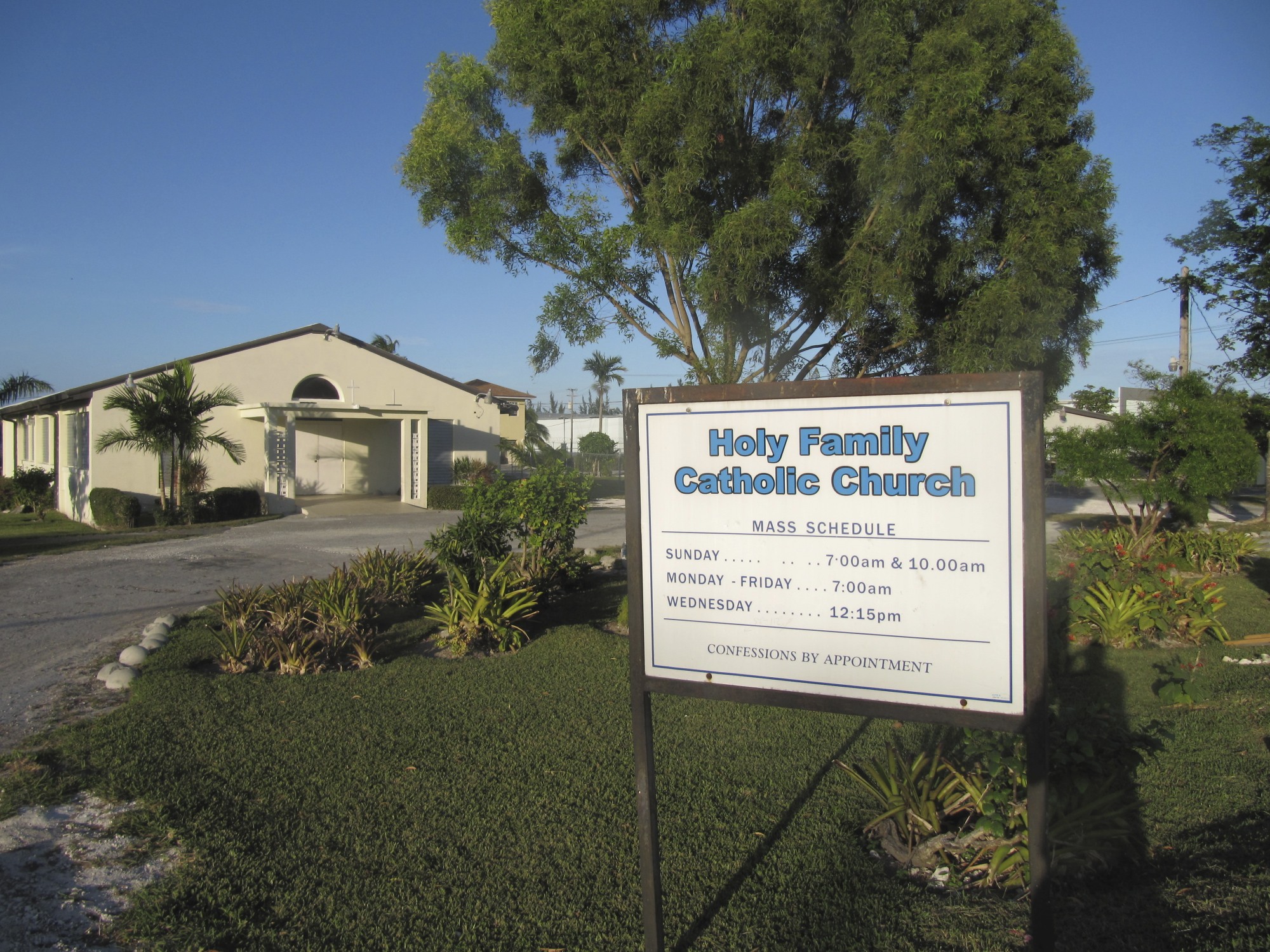
Holy Family Church, Nassau, Bahamas

Today I began a Parish Mission at Holy Family Church in Nassau, Bahamas, on Robinson Road, a few miles in from the tourist area and beaches along Bay Street.

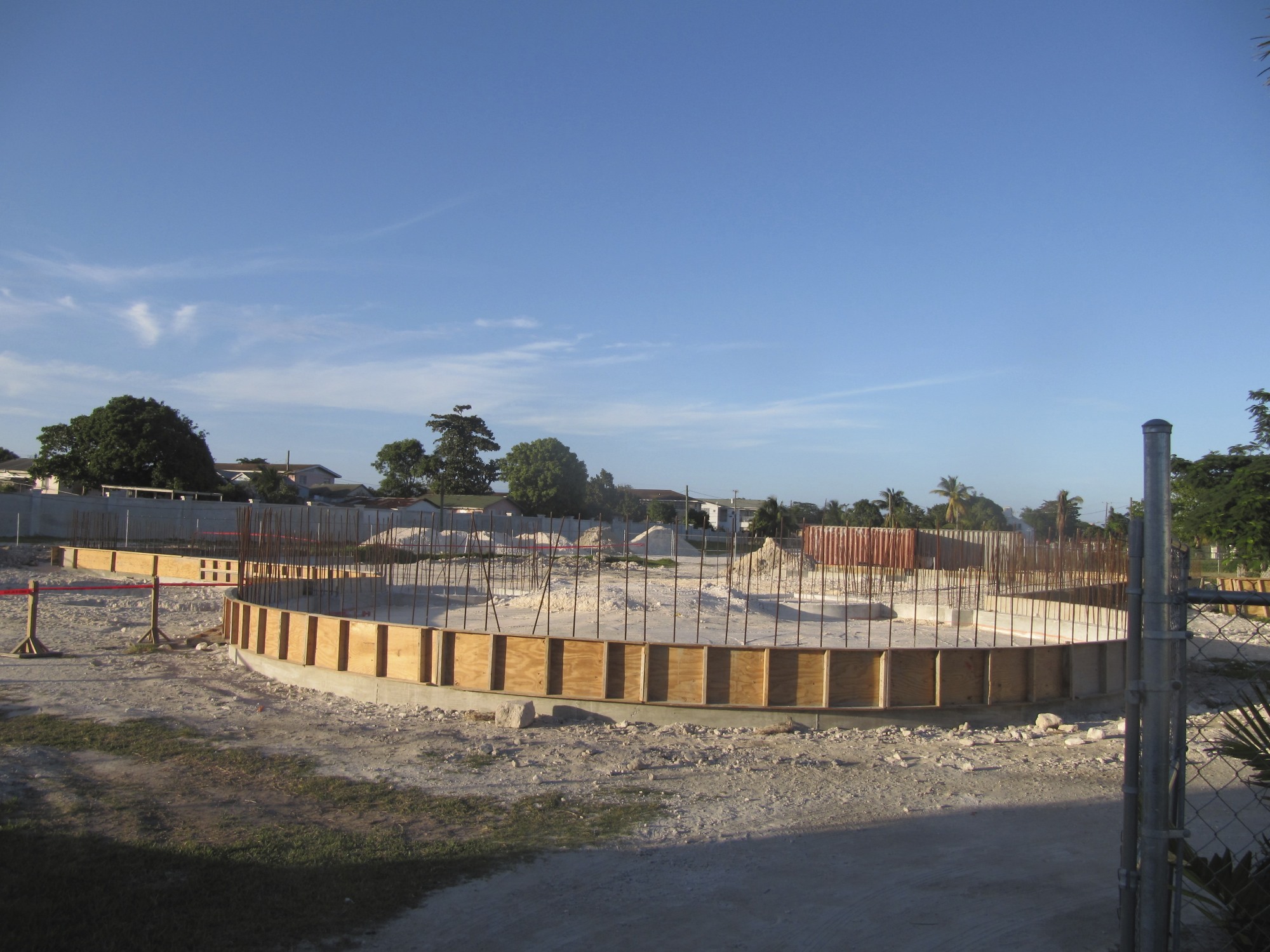
The two lively Masses this morning were filled and the singing was especially lively to my northern ears. It’s a growing area and Archbishop Pinder is planning a large new church here. Fr. Tom Brislin, CP, an American Passionist from my province is in charge of the building.

Holy Family Church


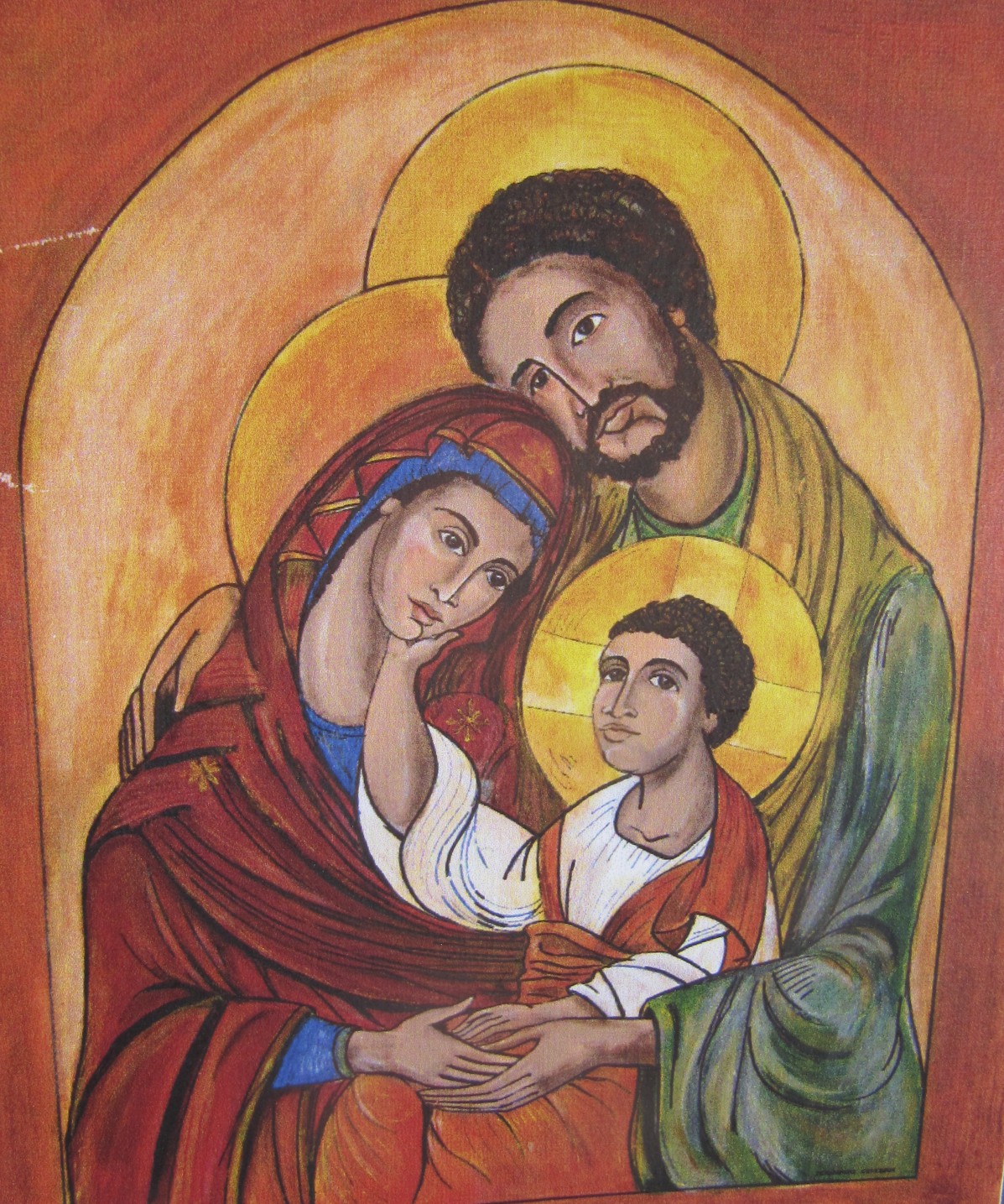
Here are some pictures of Holy Family. I include a beautiful painting given to Fr. Tom from an Argentinian painter who is working in the area.


I recommended this morning to the people at Mass that they  check out this blog because I’m going to preach on the great messengers of Advent: Isaiah, John the Baptist, and Mary of Nazareth.


The Benedictines from Collegeville, MN and the Sisters of Charity from New York were among the Catholic communities who worked in the Bahamas. I’ll put up some pictures of the churches and schools they built. The Catholic school system has been an important factor in the growth of these islands.

Ist Sunday of Advent


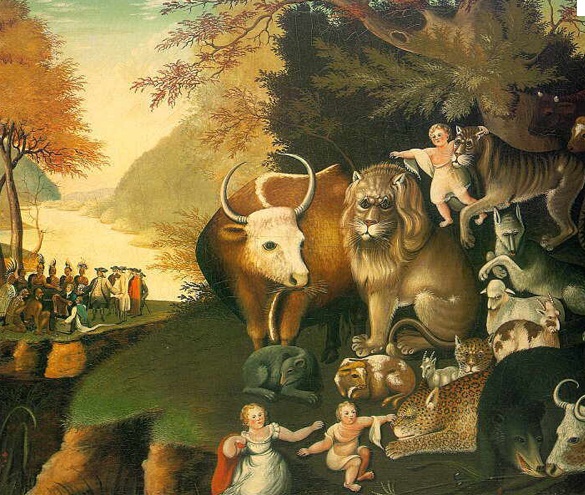
Edward Hicks (1780-1849), the Quaker painter, painted about 100 versions of the peaceable kingdom, based on the 11th chapter of Isaiah,  read on Tuesday of our 1st week of Advent.


1st Sunday Advent B

Lord, make us turn to you; let us see your face and we shall be saved.  Psalm  80

 Readings:

Isaiah 63, 16b-17,19b; 64:2-7

God is our Father, Isaiah says, but we wander off, as if we had no father. “Would that you might meet us doing right, that we were mindful of you in our ways.” But the people of his day are “like withered leaves, driven by the wind.”

1 Corinthians 1,3-9

A harmless looking selection of scripture, yet reading on you find that Paul is writing to a troubled church at Corinth, a seaport city filled with upwardly mobile people who want to get ahead in the world. There are factions in the church; people fighting for power and prestige. Some don’t believe in the resurrection of Jesus and their own resurrection.

Yet, Paul still loves them like a father.

Mark 13, 33-37

We are in charge of a house, but it’s not ours. God has a claim on our life, so don’t fall asleep where you live, in your own house, your own family, your own work, your own situation or condition of life. Don’t fall asleep even if everything looks like it’s falling apart. That’s where God comes to all of us–where we are now. That’s when God comes, when things look like they’re falling apart.

Cf. Passionist homilies at www.thepassionists.org

Questions:

What kind of world is God coming to now?

How are things in your house?


Advent’s Coming

We begin the season of Advent this Sunday. Jesus is Coming! He came over two thousand years ago in Bethlehem, of course, but he said he would come again, at the end of time.

“He will come again in glory to judge the living and the dead, and his kingdom will be without end.” In the Our Father, we pray: “Your kingdom come.” “We wait in joyful hope for the coming of our Savior Jesus Christ,” we say at Mass.

Joyful hope. Waiting in “joyful” hope means having a larger, long-term vision to sustain and strengthen us through our days. A joyful hope keeps dreams for something better for our world and ourselves alive.

A joyful hope saves us from small-mindedness, from being dragged down by failure, from being pulled a deadening present.

Deliver us from the days of Noah, this Sunday’s gospel says. “…In the days of Noah, so it will be at the coming of the Son of Man. In those days before the flood, they were eating and drinking, marrying and giving in marriage.” The days of Noah are “same old, same old” days, nothing’s happening, nothing’s going on. “Turn on the Television,” “Have a beer,” The days of Noah are days of blinding routine.

In the days of Noah we need to be lifted up:   “When you’re down and out, lift up your head and shout, there’s gonna be a great day!” That’s what Advent does, it proclaims a Great Day.

While I was staying at Bethany last week, I met some fundamentalist Protestants who support the establishment of the State of Israel so that Jesus will return and God’s kingdom will finally come. They believe God has given the Jews all the land of ancient Palestine by a solemn biblical decree and when they take possession of it, human history comes to a victorious end. They believe Christians have to do all they can to hasten this coming by prayer and political action.

I disagreed with them. I don’t think God’s kingdom will come because a people take over a piece of land. Jesus seems to say that  in Sunday’s gospel.

“Therefore, stay awake!

For you do not know on which day your Lord will come.”

Staying awake is what we have to do, and it’s harder to stay awake than to take over land.


The Call to All

We weren’t called on the shore of the Sea of Galilee as Peter and Andrew were, but St. Bernard says in today’s reading Jesus calls us as well. He speaks of the three comings of Christ.

“In his first coming the Lord was seen on earth and lived among men, who saw him and hated him. At his last coming All flesh shall see the salvation of our God, and They shall look on him whom they have pierced. In the middle, the hidden coming, only the chosen see him, and they see him within themselves; and so their souls are saved. The first coming was in flesh and weakness, the middle coming is in spirit and power, and the final coming will be in glory and majesty.”

Jesus said, “ If anyone loves me, he will keep my words, and the Father will love him, and we shall come to him,” and so as surely as he dwelt with his apostles who followed him from the boat will he dwell in the hearts of those who welcome him

Yet, Bernard speaks to a Christian community baptized into the Christian faith. What of those who do not welcome Christ, perhaps because they do not know him or misunderstand him? What of those nominal Christians who have all but forgotten their call? Bernard doesn’t say, but wouldn’t the Father still come to them and dwell with them until he chooses to reveal his Son?

There is a universal call to intimacy with God.

Called by God’s Word

Yesterday’s gospel for the feast of St. Andrew the Apostle says that Jesus called the two fisherman, Peter and Andrew, from their boat on the Sea of Galilee to follow him as his disciples. We easily picture the scene–the sea, the fishing boat, the smell of the nets, two men in a boat facing another on the shore.

Not so easily pictured is the mystery enveloping the scene. Who calls the two ordinary men from the shore?  Why are they called? They’re not just to accompany him for a few days, or a few years. Who is he?

“The very Son of God, older than the ages, the invisible, the incomprehensible, the incorporeal, the beginning of beginning, the light of light, the fountain of life and immortality, the image of the archetype, the immovable seal, the perfect likeness, the definition and word of the Father: he it is who comes to his own image and takes our nature for the good of our nature, and unites himself to an intelligent soul for the good of my soul, to purify like by like.

He who makes rich is made poor; he takes on the poverty of my flesh, that I may gain the riches of his divinity. He who is full is made empty; he is emptied for a brief space of his glory, that I may share in his fullness. What is this wealth of goodness? What is this mystery that surrounds me? I received the likeness of God, but failed to keep it. He takes on my flesh, to bring salvation to the image, immortality to the flesh. He enters into a second union with us, a union far more wonderful than the first.”  (St. Gregory Nazianzen)