Tag Archives: 3rd Sunday

3rd and 4th Sunday C; His Own Turn Against Him

Audio homily here:

Luke begins his account of Jesus’ public life by recalling his return to Nazareth after his baptism by John in the Jordan. This Sunday and next Sunday we read from Luke’s long account of that event.

Mark and Matthew tell this story later in their gospels, but Luke, who concentrates more on Jesus’ early life than the other evangelists, puts the beginning of Jesus’  public life in Nazareth, in the synagogue where he worshipped, among those who knew him best. (Luke 4, 14-21)

Luke paints the coming of Jesus into this world in broad, sweeping terms in his gospel. Caesar Augustus was the world’s ruler, Herod ruled in Palestine, others ruled under them. At the same time, he focuses on Jesus’ own personal history. Born in Bethlehem, Jesus’ first home is an obscure village in northern Galilee– Nazareth, where he grows “in wisdom and age and grace, before God and man.” There he was brought up.

The synagogue at Nazareth was probably like other synagogues in the towns of Galilee. Some, like that at Magdala on the Sea of Galilee, have been excavated in recent times. It was a small one story rectangular building, with two tiers of seating all around its walls, made for a town of no more than 500 people. In the middle of the synagogue was a stand holding copies of the various books of the scriptures. The synagogue was the center of life in those towns.

Jesus has returned to Nazareth after beginning his ministry “all through Galilee, teaching in their synagogues and praised by all. (Luke 4, 14-15) Now, back home, he goes into the synagogue on the Sabbath, “as he was accustomed to do.”

He gets up from his place to read the scriptures. (From the same place where he sat for years? Was Mary his mother there with him?) He’s “ handed a scroll of the prophet Isaiah.

He unrolled the scroll and found the passage where it was written:

The Spirit of the Lord is upon me,

because he has anointed me

to bring glad tidings to the poor.

He has sent me to proclaim liberty to captives

and recovery of sight to the blind,

to let the oppressed go free,

and to proclaim a year acceptable to the Lord.

Rolling up the scroll, he handed it back to the attendant and sat down,

and the eyes of all in the synagogue looked intently at him.

He said to them,

“Today this Scripture passage is fulfilled in your hearing.”

A short sermon, and a powerful statement. “This scripture passage is fulfilled in your hearing.” The Spirit of the Lord is upon me, Jesus says. I’m anointed to bring glad tiding to the poor. Jesus claims a messianic calling.

His neighbors, who have known him for years, are first impressed, then question him, then deny his claims, then threaten to put him to death.

In their gospels, Mark and Matthew describe opposition to Jesus coming first from the scribes and Pharisees, the leaders from Jerusalem, but Luke sees opposition to Jesus coming first from his own hometown, from family, neighbors and friends. He knows how important this rejection is.

It’s true, isn’t it? When we enter this world, we enter the small unit of human life, a family, and beyond the family, the people and places that shape us early in life. We’re subject to this important smallness, our “Nazareths” where we grow “in wisdom and grace.” We’re first nourished there; we look for lasting love and support there. It means so much to us.

Throughout his ministry, Jesus will know opposition. Leaders of the people, public officials will oppose him.  In his final days, his own disciples will abandon him. Only a few will stand by his cross. The physical sufferings he endured were great. He was scourged, his head was crowned with thorns, his hands were nailed to a cross, he died hanging there long hours alone.

But rejection from his own at Nazareth will weigh heavily on him. It was a big part of the mystery of his cross. “He was amazed at their unbelief.” Yet, Jesus who embraced humanity with love, embraced Nazareth too. He loved it with God’s great love.

We have to pay a lot of attention to where we’re born, where we’re brought up, our families, the people we live and work with. Nazareth is important to us.
 

Cleansing the Temple

3rd Sunday of Lent

John 2,13-25

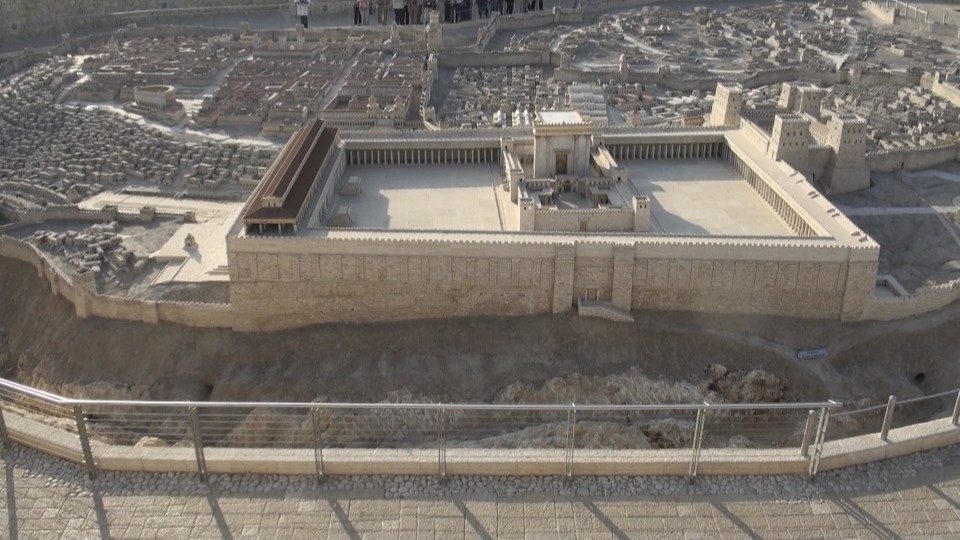
All four gospels report this key incident in the temple of Jerusalem when Jesus drives out those who buy and sell things there. Keep in mind how important the temple was to the Jews and their spirituality at that time.

It was the center of Judaism. You can see how important the temple was by reading psalms like Psalm 27, one of many psalms that spoke of it:

There is one thing I ask of the Lord,

This I seek:

To dwell in the house of the Lord

all my days.

To gaze on the loveliness of the Lord,

to inquire in his temple.”

Psalm 27,1-4

The loveliness of God was in the temple; God was present there. You inquired about God in the temple precincts where the learned Jewish teachers taught.

John’s gospel, our reading today, says that Jesus went into the temple and drove out those who were buying and selling there, and unlike the other gospels that say it happened just before Jesus was arrested and tried and crucified, John’s gospel places it early on in Jesus’ ministry, some years before his passion and death.

John’s gospel may be more historically correct and it certainly explains an opposition to Jesus at the highest levels that began early in his ministry. If he came into the temple, the center of Jewish worship, and overturned the tables of those buying and selling in the Court of the Gentiles, what would he do next? As he became more popular, could he destroy this great building? The alarms went off; Jerusalem’s leaders were going to keep an eye on this troublemaker from Galilee.

When Jesus was finally put on trial, remember, one of the key charges against him was he said he was going to destroy the temple.

The question comes up: why did Jesus overturn the tables of the money changers and drive out those selling sheep and doves and oxen? Was it because there was a lot of corruption there. Someone was stealing the bingo money. But that reason doesn’t seem adequate. The temple was a place of sacrifice, you needed sheep and doves and to exchange money, especially tainted Roman money.

A few scholars say that Jesus secretly belonged to the Zealot party. The Zealots wanted to overthrow the existing order by violence.  In other words, Jesus was a terrorist. But that picture doesn’t match the picture the gospels give. On Palm Sunday he enters Jerusalem, not as an armed warrior in a chariot, but riding in a  humble donkey, unarmed, unprotected.

The most likely reason behind this incident is a symbolic reason. As so many of the prophets did before him, Jesus used prophetic gestures in his ministry. Here in the temple he turned over the tables to say “there’s a change coming! A radical change!”He turned the tables over in the Court of the Gentiles, that large expanse in the Jewish temple where gentiles, outsiders, non-Jews were permitted to come, to say “the gentiles are coming.”

The prophet Isaiah and other prophets before him had said, “all the nations shall come to this holy mountain. God wants all his people together, to know him and to live in peace. Jesus says “This is the time. All the nations are coming. Get ready for this great change. I am the new temple of God.”

In his recent book, “Jesus of Nazareth,” Pope Benedict chooses this explanation for Jesus cleansing of the temple. A wonderful book on Jesus, by the way.

Drawing on that explanation, the pope urged recently that all of our churches have a Court of the Gentiles, where we welcome others, outsiders, to our church. We need that openness to others that Jesus had when he said “Come to me, all you who labor and are burdened, and I will refresh you.”

So if we are looking for a practical lesson from this gospel today, how about this:: Is the church we belong to open to everyone? Are strangers welcomed here? People who are different than we are, of a different race, a different culture, a different economic background?

The scriptures are challenging, aren’t they? Following Jesus Christ through Lent means being challenged by him again.

This week we’re beginning a Passionist Mission at St. Thomas More Parish, Sarasota, Florida.

.