St. Ambrose, born in the 4th century into a Christian family, was a lawyer and high official in the Roman government in northern Italy until he was called by popular acclaim to be bishop of Milan. He had not yet been baptized! Eight days after his baptism he was ordained bishop, becoming one of the church’s great bishops and teachers. Ambrose was a leader in a critical time.
He found wisdom and joy studying the scriptures and preaching the word of God, and he recommended that same source to a bishop who faced troubles in his own church. “Whoever reads much and understands much, is filled. And whoever is full, refreshes others…Drink, then, from Christ, so that your voice may also be heard.”
Ambrose told the bishop, overwhelmed by problems, God’s graces increase when storms beat upon us. Good thing to remember today.
“You pilot the ship against the waves. Take firm hold of the rudder of faith so that the severe storms of this world cannot disturb you. The sea is mighty and vast, but do not be afraid, for as Scripture says: he has founded it upon the seas, and established it upon the waters.”
Ambrose saw and example of strong faith in Mary, who was energized by the angel’s message and set out “in haste” to visit Elizabeth. She goes “in haste” because she has a mission. Faith was not a burden, it empowered her. She’s blessed.
“You too, my people, are blessed,” comments Ambrose, “ you who have heard and who believe. Every soul that believes — that soul both conceives and gives birth to the Word of God and recognizes his works.
Let the soul of Mary be in each one of you, to proclaim the greatness of the Lord. Let the spirit of Mary be in each one of you, to rejoice in God. According to the flesh only one woman can be the mother of Christ, but in the world of faith Christ is the fruit of all of us.”
Let the soul of Mary be in each of us. A beautiful Advent prayer.
The Advent wreath and its four candles, for the four Advent weeks, is a traditional devotion for this season. It originated in the folk practices of the pre-Christian Germanic peoples who gathered wreaths of evergreen and lit fires during the cold December darkness as a sign of hope for spring and new light.
Christians kept these popular traditions. By the 16th century Catholics and Protestants throughout Germany used these symbols to celebrate their Advent hope in Christ, the everlasting Light. From there, the Advent wreath spread to other parts of the Christian world.
Traditionally, the wreath consists of four candles in a circle of evergreens. Each day at home, the candles are lighted, perhaps before the evening meal– one candle the first week, and then another each succeeding week until December 25th. A short prayer may accompany the lighting.
Prayers for an Advent Wreath
The day the wreath is lit the leader may say:
Our nights grow longer and our days grow shorter. We look at this candle and green branches– and remember God’s promise to our world: Christ, our Light and our Hope, will come.
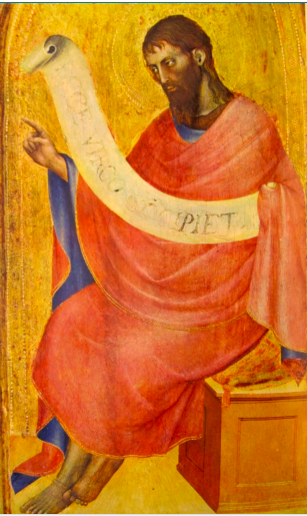
Here are the words of Isaiah the prophet:
The people that walked in darkness have seen a great light; on those who lived in a land as dark as deatha light has dawned. You have increased their joy and given them gladness; We rejoice in your presence.
Let us pray:
O God, we rejoice as we remember the promise of your Son,
Jesus Christ,
His light shines on us,
brightening our way, guiding us by his truth.
May Christ our Savior bring light into the darkness of our world,
The Prophet Isaiah, speaking for waiting generations, invites us to the season of Advent. Listen to him during this first week. Almost half of our Advent lectionary readings from the Jewish scriptures come from him.
All nations will come to God’s mountain for instruction, he says: “They will beat their swords into plowshares and their spears into pruning hooks.” Wars will be over; all will be one. Salvation will come, not just for some, but for all. All nations, all creatures, all creation is called. ( Isaiah 2:1-5 ) We read Isaiah’s message every Monday in Advent at morning prayer in the Liturgy of the Hours.
It’s a message we hope for, though seemingly unattainable, broken and fragmented as our world is today. But our hope rests in God and not in ourselves.
For Isaiah, the mountain of the Lord, where the Jewish temple stood in Jerusalem, was a place of revelation. Listen to his words this week: All nations will banquet on that mountain (Monday). On this rock people dwell in safety, children play around a cobra’s den, and the lion and the lamb lie down together. (Tuesday) There the poor triumph (Thursday), the blind will see (Friday). The Teacher will guide all there.(Saturday) Isaiah’s imagery embraces all creation in the readings for the 1st week of Advent.
This first week’s gospels point to the fulfillment of Isaiah’s prophecies in Jesus Christ. The Roman centurion humbly approaching Jesus in Capernaum (Monday) represents all the nations that will come to him. Jesus feeds a multitude on the mountain.(Wednesday) He affirms that his kingdom will be built on rock.(Thursday) He gives sight to blind men. (Friday) He sends his disciples to call the lost sheep. (Saturday)
Many of our Advent readings are from Matthew’s Gospel, where Jesus teaches from a mountain, Isaiah’s favorite symbol, and works great miracles for all who come. Jesus Emmanuel, God with us.
In the church calendar revised after the Second Vatican Council saints’ feast days were reduced in seasons like Advent and Lent in order to concentrate on the mysteries of Christ. There are still celebrations of the saints in Advent, for example, St. Francis Xavier (Dec 3), St. John Damascene (Dec 4), St. Nicholas (Dec 6), St. Ambrose (Dec 7) and the Feast of the Immaculate Conception of Mary (Dec 8).
Saints are signs of holiness, and holiness is not found only in biblical times, but in every age. They reveal God’s plan unfolding in time. Expressing the mystery of Christ in their time and place, saints ask us to do the same in our time and place.
St. Francis Xavier (December 3) in his time fulfilled a message powerfully proclaimed in Advent, especially by the Prophet Isaiah– God wills his saving message be brought to all nations. Francis says to us “Portuguese merchants and officials brought me to the Indies in the 16th century. How are you bringing the gospel to all nations today?”
St. John Damascene (December 4) is an 8th century saint of the Eastern church whom the Roman church included in its calendar as a doctor of the church in 1890 during the pontificate of Leo XIII. By recognizing him and his teaching, the Roman church recognized the holiness and teaching of the Orthodox churches. John Damascene is a sign that God works, not just through one church, but through other churches as well. He asks us now: “How do you recognize God’s teaching in churches other than your own?”
John Damascene defended the use of images against those who saw them as impediments to knowing a transcendent God. He validated the work of Michelangelo and Bach and generations of Christian artists. We might not have Christmas creches today without him.
There’s probably not a saint more closely connected to Christmas in the popular mind than St. Nicholas, Santa Claus (December 6). The delightful story of Nicholas throwing pieces of gold into a house where three poor girls are threatened with slavery is a story that mirrors the story of the Incarnation. Jesus, the Word made flesh, a gift of God’s mercy, comes hidden as an infant into our poor world and quietly gives us eternal life, humbly asking nothing in return.
Nicholas, Santa Claus, asks us to give quietly, humbly, in our time, as Jesus did.
St. Ambrose (December 7) was born in the 4th century into a Christian family and became a lawyer and high official of the Roman government in northern Italy. He was called by popular acclaim to be bishop, though not yet baptized! Eight days after his baptism he was ordained bishop and became one of the great Christian bishops of our church
He immersed himself in the scriptures and preached God’s word. He wrote once to another bishop: “Drink from Christ, so that your voice may be heard…He who reads much and understands much, is filled. He who is full refreshes others.”
One of those Ambrose refreshed with his preaching was St. Augustine, whom he awakened to the beauty of God’s word. He baptized Augustine and his friends and was an example to them. His voice was heard, the voice of Christ.
Mary, the mother of Jesus, is remembered in a number of feasts in Advent and she has an important role in Luke’s Gospel which we read towards the end of Advent. She helps us understand so much about the coming of Jesus Christ. That’s the reason to celebrate her in Advent and Christmas.
Saints are signs of Christ, yesterday, today and forever. They tell us to be signs of Christ in our time.
Statue of Christ the King at the Passionist Monastery in Jamaica, NY (Photo: Gloria M. Chang)
Christ the King Reigns Forever
“On the last Sunday of each liturgical year, the Church celebrates the Solemnity of Our Lord Jesus Christ, King of the Universe, or Christ the King.
Pope Pius XI instituted this feast in 1925 with his encyclical Quas primas (“In the first”) to respond to growing secularism and atheism. He recognized that attempting to ‘thrust Jesus Christ and his holy law’ out of public life would result in continuing discord among people and nations. This solemnity reminds us that while governments come and go, Christ reigns as King forever.”
“No future without history.” Don’t omit faith in that history.
I remember a guide explaining the Black Forest in Germany to visitors years ago. The Romans called it “black”, he said, because it was such a forbidding, dark land. Now, of course, it’s one of the loveliest spots in Europe, where visitors enjoy nature and its farms provide some of the best produce on the continent. It’s become a model for environmental planning in northern Europe.
Monks fleeing from dangerous conditions in the towns along the Rhine River were the first settlers here, our guide said.
Were they just fearful escapees, I asked, or did a vision of faith bring them here? Were they inspired by the Book of Genesis to create a new garden here, where they would live close to the earth, their buildings and lifestyle taking on the rhythms of nature, in the Benedictine tradition. Or were they just refugees?
I wondered too if the many small chapels found in the Black Forest today (see above) suggest that the people coming after the monks absorbed that same ideal?
Europe and North America have become increasingly secularized. It’s not just that people aren’t going to church; it’s evident also in a way people today see and understand things– past, present and future– without reference to the spiritual. I notice it in the documentaries, like Ken Burns’ new documentary on Leonardo DaVinci. A spark of wonder with him started it all.
Our guides on our trip along the Rhine some years ago were polished, informed, personable presenters, but spiritual realities didn’t have much of a place in their explanations.
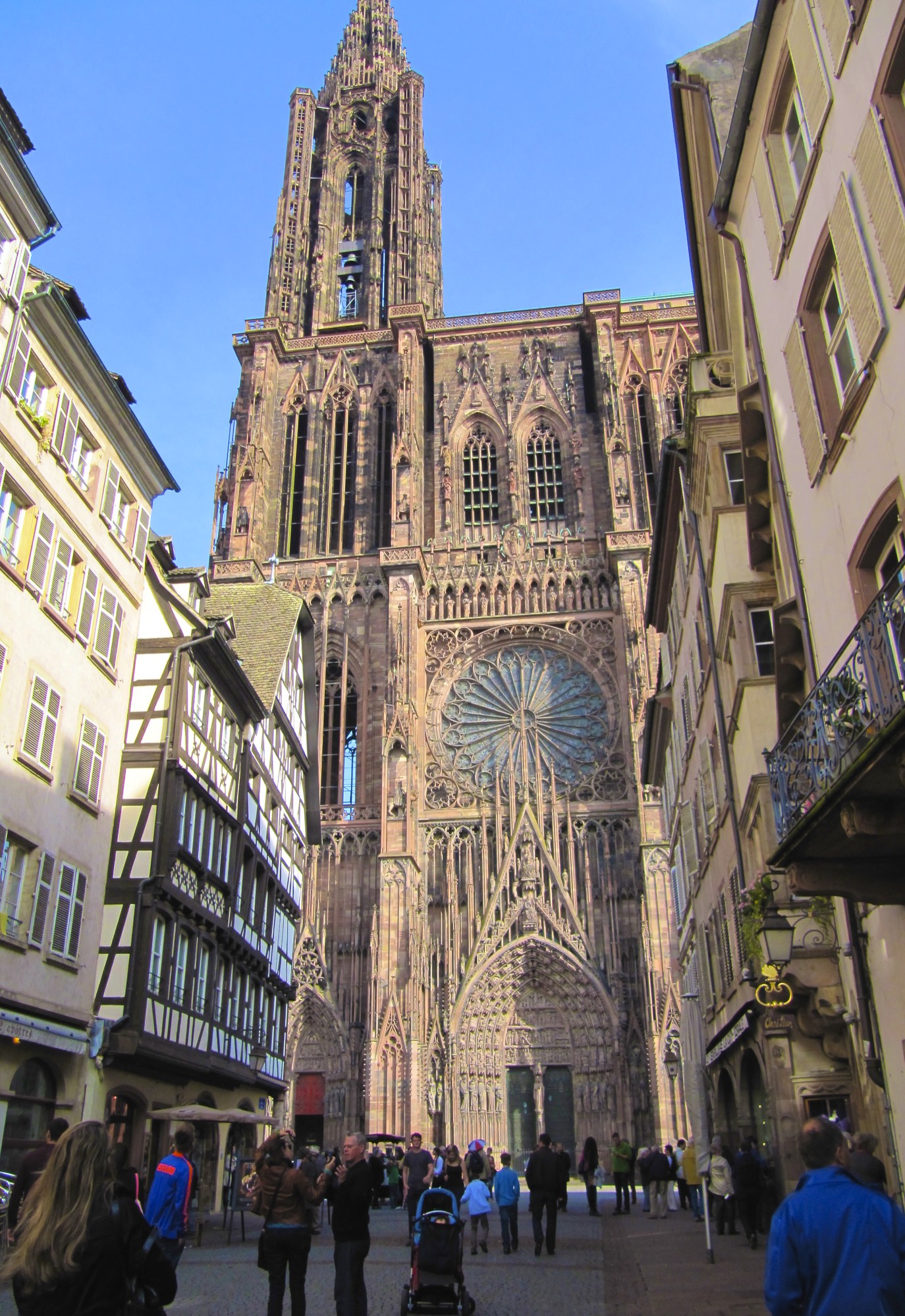
An example? Our guide in Strasbourg on the way to the cathedral through the maze of shops and colorful streets suggested that the great cathedral with its exquisite spire was a beacon drawing shoppers to the city’s abundant bazaars. A medieval version of MacDonald’s Golden Arches?
Medieval planners of the cathedral would be jolted by a suggestion like that. They built their great churches as places of splendor for relieving the monotony, squalor and hardships people experienced in their cities. Seeing them, people walking the streets saw beauty pointing to the heavens. Within them people knew themselves as the people of God.
A billboard for Donald’s? We have no future without history.




 The Victor's Place