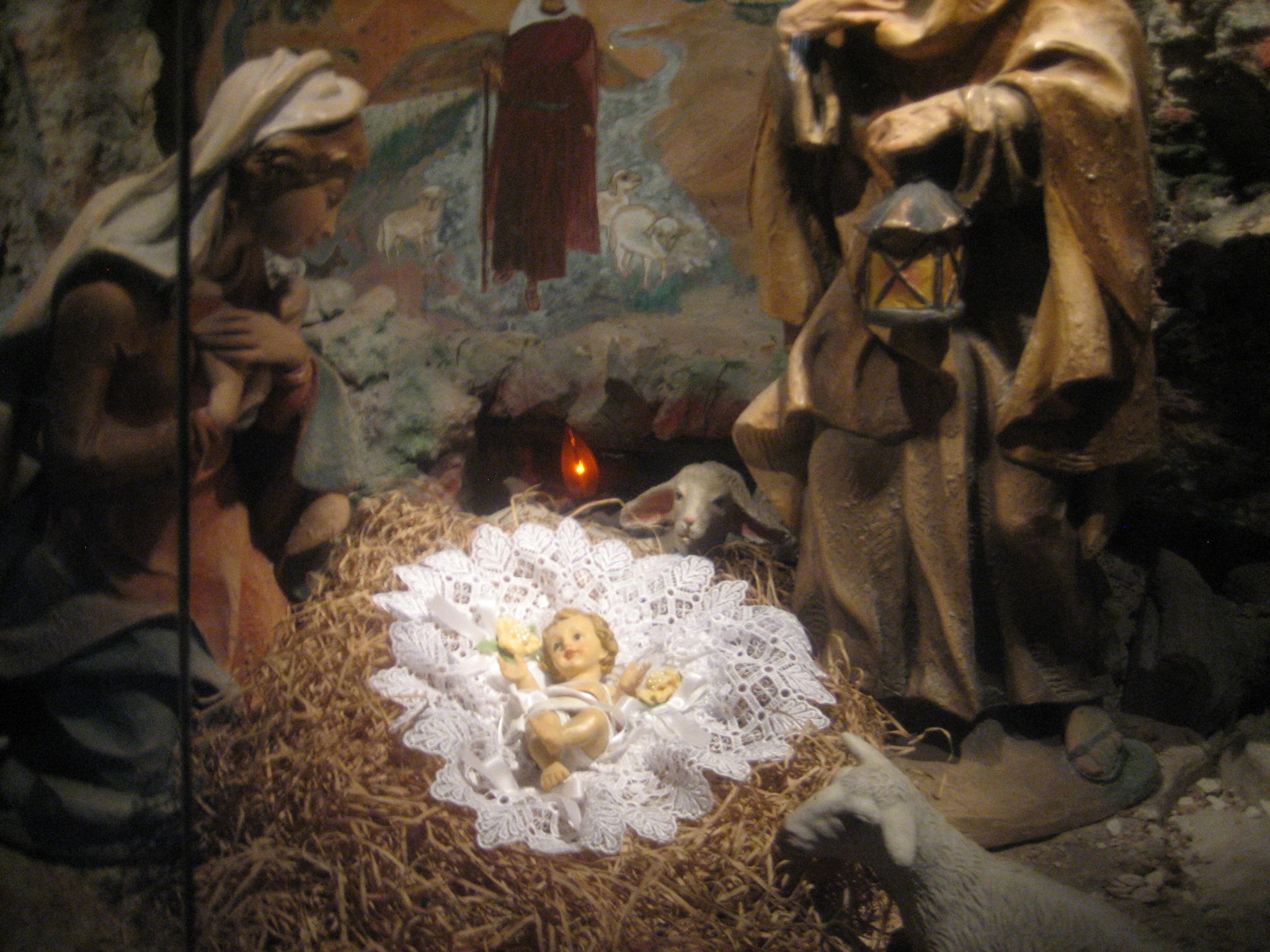
We are God’s Children Now

We’re reading the First Letter of John at the end of the Christmas season.The letter challenges some early Christians who thought it was completely beneath God’s nature to assume our lowly humanity and so they claimed Jesus was not truly divine; the Word did not become flesh. Mary could not possibly be “Mother of God.” Maybe God could come in a perfect world, but not the world of “now.”

John’s letter insists on the mystery of the Incarnation. That mystery happens, not just when Mary accepts the angel’s invitation, not just at the birth of Christ and the events that took place around it. That mystery happens now..

“Beloved, we are God’s children now; what we shall be has not yet been revealed. We do know that when it is revealed we shall be like him, for we shall see him as he is.”

“We are God’s children now,” in our time and place. We live the mystery of the Incarnation, like the mystery of his death and resurrection, now in our time and place. Its a challenging mystery for the time and place that’s ours now, that can seem so unworthy of God’s presence.  

The saints help us appreciatete the mystery of the Incarnation because they lived that mystery in their time and place. This week in the Christmas season we celebrate a number of saints. St.Basil the Great  and St. Gregory Nazianzen, 4th century Christian bishops.  St. Elizabeth Seton and St. John Neumann, from the early years in our American church. On January 5, the Passionists remember St. Charles Houben, CP.

St. Basil the Great was a learned teacher, a brilliant philosopher and theologian who   knew the philosophers and sciences of his day. He also was a man of action. He founded religious communities, hospitals, homes for the poor. He was an outstanding bishop of church in Asia Minor, known throughout the Christian world.

But the church then was tightly controlled by an emperor who believed and demanded others  believe what the Letter of John condemned– that Jesus was a godly man, but not God. Basil, a strong believer in the divinity of Christ, was not afraid to confront those who said otherwise, even the powerful political establishment . 

His letters reveal how he struggled with the now of his times and place. He was falsely accused, undermined, threatened with exile. He bemoaned the division of Christians caused by too many controversies. He was hurt by suspicions of his own orthodoxy. He felt alone and outnumbered.

Each of the saints we celebrate this week did what he did. They lived the mystery of the Incarnation of Jesus, inseparable from the mystery of his death and resurrection, in their own time and place. They proclaimed the gospel they received – the Word became flesh.
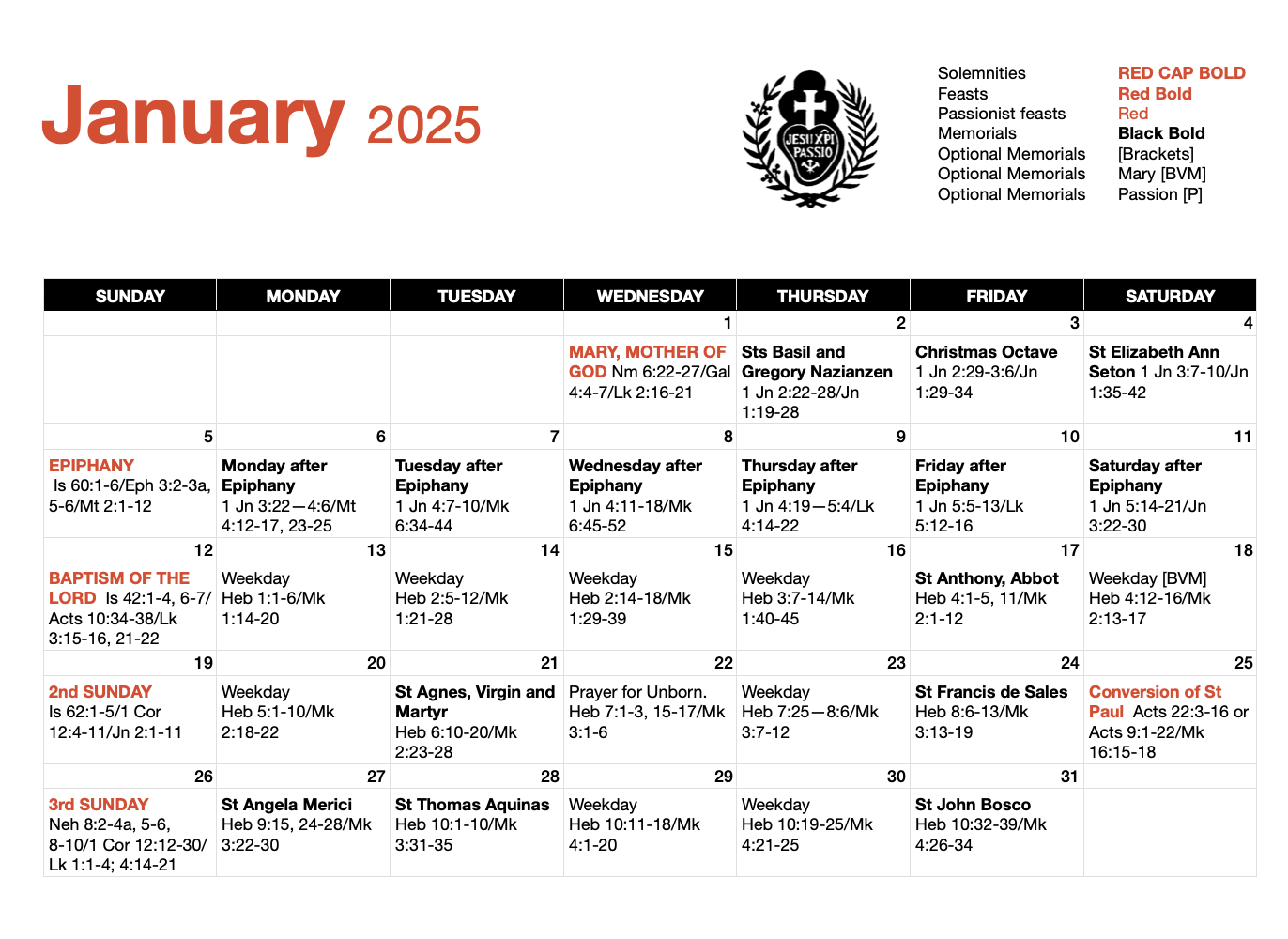

Jubilee 2025

Pope Francis opened the Holy Year of 2025 in Rome December 25th. A Holy Year occurs ordinarily every 25 year since the year 1300. A painting in the Lateran Basilica in Rome shows Pope Boniface VIII opening the Holy Year of 1300.

Announcing the Holy Year Pope Francis said the year is not an automatic calendar celebration; a Holy Year meets a need. The theme for this Holy Year is taken from St. Paul’s Letter to the Romans.  “ Hope Does Not Disappoint” (Romans 5:5) Our need today is hope.

We’re living in disappointing times, the pope writes. We see that, don’t we? Many parts of our world are engulfed in wars and political struggles. The Ukraine, Gaza, the Sudan in Africa, Haiti,  now Lebanon and Syria in the Middle East. Millions of people are trying to escape conditions of poverty, looking for a safe place for themselves and their families. We’re experiencing floods, fire, unusual weather. Our cities, our schools, our churches, all our institutions seem weaker rather than stronger. 

We need hope, Pope Francis says, “ the hope that springs from the pierced heart of Jesus on the Cross.” We hope in “our Lord Jesus Christ, through whom we have obtained access to this grace in which we stand; and we boast in our hope of sharing in the glory of God… Hope does not disappoint, because God’s love has been poured into our hearts through the Holy Spirit that has been given to us” (Rom 5:1-2.5).

Historians say the Holy Year did not originate 700 years ago as an idea of the popes;  it                                                                                                                                                                                                                                                                                                                            began with ordinary people of the time. Maybe the great uncertainty then — the Black Plague struck that century — prompted Christians to journey to Rome looking for the roots of their faith in the churches and shrines of the city. Inspired by the Holy Spirit, they believed Peter and Paul, Mary the Mother of Jesus, the early martyrs were there in the churches and catacombs to teach and strengthen them. They went to Rome, not primarily to see the pope, but to strengthen their faith. 

One of the graces we should pray for and expect in the Holy Year is the grace of a pilgrim spirit, a pilgrim mind, leading us to revisit our spiritual roots. A pilgrim spirit doesn’t come easily in disappointing times like ours when the best advice seems to be to stay where you are and don’t go anywhere. 

 The Holy Year is a time for revisiting our spiritual roots. A pilgrimage to Rome is not the only journey the pope recommends.  Go back to your roots in the scriptures, he says. Leave the technological world of television and the internet and listen to the story of creation.  Go back to the stories of your saints and visit your churches and shrines. They have graces to give us.

We may not make a pilgrimage to Rome this Holy Year,  but pilgrimage takes many forms, a  Pope Francis points out.  As Christians we’re pilgrims, and pilgrimage is intimately connected to “our human quest for meaning in life”.

We hope to reflect on the Holy Year 2025 in this blog throughout the year.  Keep following us.

The Holy Family

Each year Jesus’ parents went to Jerusalem for the feast of Passover, and when he was twelve years old, they went up according to festival custom. After they had completed its days, as they were returning, the boy Jesus remained behind in Jerusalem, but his parents did not know it. Thinking that he was in the caravan, they journeyed for a day and looked for him among their relatives and acquaintances, but not finding him, they returned to Jerusalem to look for him. After three days they found him in the temple, sitting in the midst of the teachers, listening to them and asking them questions, and all who heard him were astounded at his understanding and his answers. When his parents saw him, they were astonished, and his mother said to him, “Son, why have you done this to us? Your father and I have been looking for you with great anxiety.” And he said to them, “Why were you looking for me? Did you not know that I must be in my Father’s house?” But they did not understand what he said to them. He went down with them and came to Nazareth, and was obedient to them; and his mother kept all these things in her heart. And Jesus advanced in wisdom and age and favor before God and man. Luke 2:41-52

Ever wonder where the story in today’s gospel from Luke comes from, the finding of the boy Jesus in the temple?  Luke may tell us when he writes:  “Mary kept all these things in her heart.”


Mary and Joseph are our key witnesses to the early life of Jesus. Wouldn’t  people after the resurrection of Jesus ask Mary, “How was he born, what was he like growing up?”  They must have asked her questions.


Mary must have been the one who told them of God’s invitation to bear his Son. From Mary we learn of his birth in Bethlehem; the shepherds, the strangers from the east, Herod’s attempt to kill her child, the old people in the temple who recognize him, their flight into Egypt. 


She would tells us “He grew up like other children. We brought him up. We were mother and father to him.  We held him in our arms, we fed  him, we clothed him, we taught him his first words, we helped him take his first steps, we brought him to the synagogue, we instructed him in our tradition, we taught him to pray, we listened to his questions. Angels didn’t bring him up. We did. “ The story of their journey to Jerusalem when he was twelve to celebrate Passover must come from Mary.  The words we hear in that story are surely hers: “Son, why have you done this to us? Your father and I have been looking for you.”

We call that period in Jesus’ life his “Hidden Life.” Did God choose those hidden years as a sign of God’s hidden presence in our lives and the life of our world? A hidden presence is God’s usual presence with us. 

Today’s Feast of the Holy Family is a celebration of the hidden presence of God in our families. “The child grew in wisdom and age and grace before God and man. “ Just as God gave Mary and Joseph an important role in raising Jesus, families are called to make  their homes a place for growing in wisdom and grace. 


Like Mary and Joseph  parents and grandparents, brothers and sisters, uncles and aunts, cousins and friends do this in thousands of seemingly automatic, simple ways. Family life is a life of undramatic love, that waits for the future to be revealed. As St. John says:  “We are God’s children now; what we shall be has not yet been revealed. We do know that when it is revealed we shall be like him, for we shall see him as he is.”

CHRISTMAS Eve

The Advent season closes today December 24th. The Christmas season begins with the vigil Mass this evening. 

Advent is a season rich in the scriptures. Isaiah speaks strongly throughout the season, calling Jewish exiles and all nations to the holy mountain and God’s banquet with his people and all creation. “Swords will be turned into plowshares and spears will be turned into pruning hooks and they will not train for war again.” 

John the Baptist and his parents Zachariah and Elizabeth have important roles in the coming of the Child born of Mary.  Of course, Mary and Joseph are key figures responding to the messengers of God. 

Faith and hope do not come easily, the Advent season tells us. Political unbelief appears in Ahaz who “will not tempt the Lord.” Zachariah, a priest, is struck dumb for his unbelief. John the Baptist asks if Jesus is really “the one who is to come.” Mary wonders “how can this be?”

The gospel reading today, Zachariah’s song of belief, seems to promise faith and hope conquers in the end. 

“Blessed be the Lord God of Israel, he has come to his people and set them free.

Christmas carols, more than the scriptures seem to dominate the Christmas season. They bring the shepherds from the dark hills and magi from the east  to the Child. They also speak of those who not believe, like Herod who goes in search of the Child. But people of faith, like Simeon and Anna, welcome the Child in the temple and take him into their arms. 

Advent and Christmas are seasons rich in the wisdom of faith. A faith that leads to great truths, as the feast of John the Apostle reminds us. A faith one should  die for, as we are reminded by the feasts of the Holy Innocents and Stephen the first of many martyrs.  

MERRY CHRISTMAS

St. John of the Cross: December 14

Toledo, El Greco New York Metropolitan Museum

Thomas Merton wrote a wonderful article on St. John of the Cross, his favorite saint, and begins by recommending a look at El Greco’s view of Toledo (above), where the artist lived as a contemporary of John of the Cross. Somewhere in that city John was imprisoned in a dark cell by fellow religious angered by his work for his community’s reform. 

Toledo “is full of spiritual implications. It looks like a portrait of the heavenly Jerusalem wearing an iron mask. Yet there is nothing inert about these buildings. The dark city built on its mountain seems to be entirely alive. It surges with life, coordinated by some mysterious, providential upheaval which drives all these masses of stone upward toward heaven, in the clouds of a blue disaster that foreshadows the end of the world.”

Toledo “wearing an iron mask” was filled with God’s life-giving grace.   Did Isaiah, Jeremiah and other Advent prophets we’re reading these days see Jerusalem in these same terms? Are our cities now like Toledo “wearing an iron mask” also filled with God’s grace?

Certainly John of the Cross found nothing humanly life-giving in his small prison room in the city.  But he emerged from it carrying a canticle of praise he wrote there, which became one of the greatest poems in the Spanish language. 

Merton translated a portion of the poem:

My Beloved is like the mountains.
Like the lonely valleys full of woods
The strange islands
The rivers with their sound
The whisper of the lovely air!

The night, appeased and hushed
About the rising of the dawn
The music stilled
The sounding solitude
The supper that rebuilds my life.
And brings me love.

Our bed of flowers
Surrounded by the lions’ dens
Makes us a purple tent,
Is built of peace.
Our bed is crowned with a thousand shields of gold!

Fast-flying birds
Lions, harts and leaping does*
Mountains, banks and vales
Streams, breezes, heats of day
And terrors watching in the night:

By the sweet lyres and by the siren’s song
I conjure you: let angers end!
And do not touch the wall
But let the bride be safe: let her sleep on!

John found himself safe in God’s presence.  “But let the bride be safe: let her sleep on!” 

In his study, Merton recognizes that “St. John of the Cross is not everybody’s food. Even in a contemplative monastery there will be some who will never get along with him—and others who, though they think they know what he is about, would do better to let him alone. He upsets everyone who thinks that his doctrine is supposed to lead one by a way that is exalted. On the contrary, his way is so humble that it ends up by being no way at all, for John of the Cross is unfriendly to systems and a bitter enemy of all exaltation.”

At the same time John “ is one of the few saints who can gain a hearing in the most surprising recesses of an impure world. John of the Cross, who seems at first sight to be a saint for the most pure of the Christian elite, may very well prove to be the last hope of harlots and publicans.”

You can find the Merton’s masterful study of the spirituality of a great saint here. The Wixipedia article on John of the Cross gives details of his life.

John of the Cross is an important teacher of the spirituality of the Incarnation. “Jesus did not deem equality with God something to be grasped. Rather he emptied himself and took on the form of a slave, being born in the likeness of men, and it was thus that he humbled himself , obediently accepting even death, death on a cross.”  Philippians 2

Advent: Saturday, 2nd Week

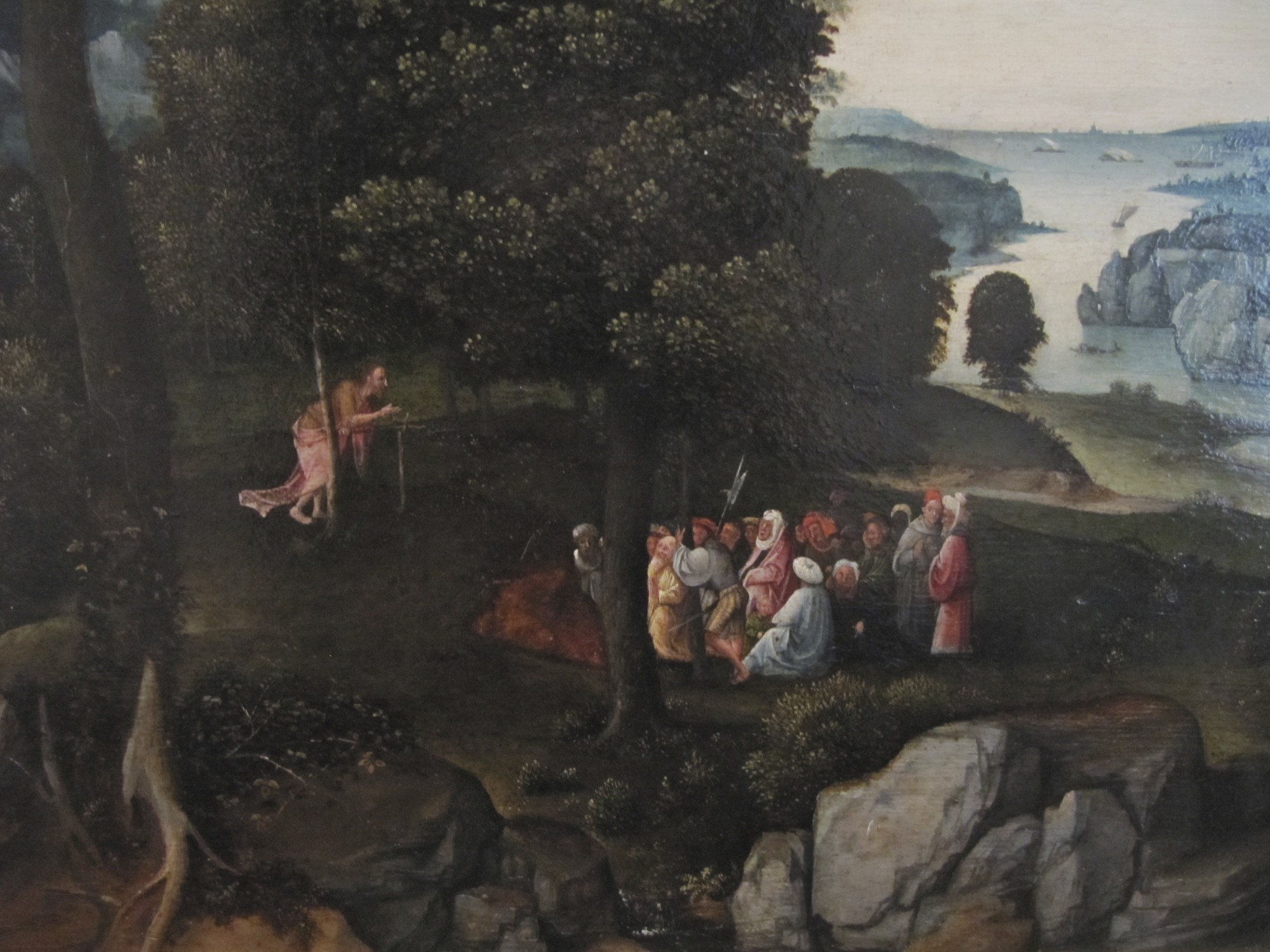
The artist who painted John the Baptist preaching near the Jordan river obviously had no idea what Palestine and the place of John’s ministry looked like, but he gets the story right anyway, I think.

The people listening to John are surrounded by an over-powering wilderness. They’re on their way to Jerusalem, but will they ever get there? There are no well marked trails in sight, no civilized world close by for food and lodging. Only a man preaching to them.

Our readings today from the Old and New Testament point out Elijah and John the Baptist as guides God sent to care for his people, the vine he planted. There were guides then and there will always be guides.

John sent those who listened to him in the wilderness on their way. He baptized them with water and pointed out the path. His words were food for their spirits and brought joy to their hearts. He gave them hope. They’ll find their way.

We’ll have guides too.

Readings