Easter Saturday: We’re Slow, like the Apostles


Like the apostles we’re slow to understand the mystery of the death and resurrection of Jesus. The two disciples going to Emmaus are not the only ones slow to understand– we’re slow too.

Peter, who preaches to the crowds in Jerusalem at Pentecost, certainly was slow to understand. He speaks forcefully at Pentecost, forty days after the Passover when Jesus died and rose from the dead, but the days before he’s speechless. It took awhile for him and for the others who came up with Jesus from Galilee to learn and be enlightened about this great mystery..

Mark’s accounts of Jesus resurrection appearances, read on the  Saturday of Easter week, stresses the unbelief of his disciples. They were not easily persuaded.

For this reason, each year the Lord refreshes our faith in the resurrection, but it’s not done in a day. We need time to take it in, like the first followers of. Jesus, and for that we have an easter season of forty days. Just for starters.

The disciples are slow to understand the mission they’re to carry out because it’s God plan not theirs, a plan that outruns human understanding. A new age had come, the age of the Holy Spirit, and they didn’t understand it. The fiery winds of Pentecost had to move them to go beyond what they see, beyond Jerusalem and Galilee to the ends of the earth.

The Holy Spirit also moves us to a mission beyond our understanding. Luke says that in the Acts of the Apostles. “The mission is willed, initiated, impelled and guided by God through the Holy Spirit. God moves ahead of the other characters. At a human level, Luke shows how difficult it is for the church to keep up with God’s action, follow God’s initiative, understand the precedents being established.” (Luke Timothy Johnson, The Acts of the Apostles)

“You judge things as human beings do, not as God does,” Jesus says to Peter elsewhere in the gospel. We see things that way too.

Peter’s slowness to follow God’s plan remained even after Jesus is raised from the dead. He doesn’t see why he must go to Caesaria Maritima to baptize the gentile Cornelius and his household. (Acts 10,1-49) It’s completely unexpected. Only gradually does he embrace a mission to the gentiles and its implications. The other disciples are like him; God’s plan unfolds but they are hardly aware of it.

One thing they all learned quickly, though, as is evident in the Acts of the Apostles. Like Jesus, they experience the mystery of his cross, and in that experience they find wisdom.

Readings here

The Easter Tree

san clemente copy

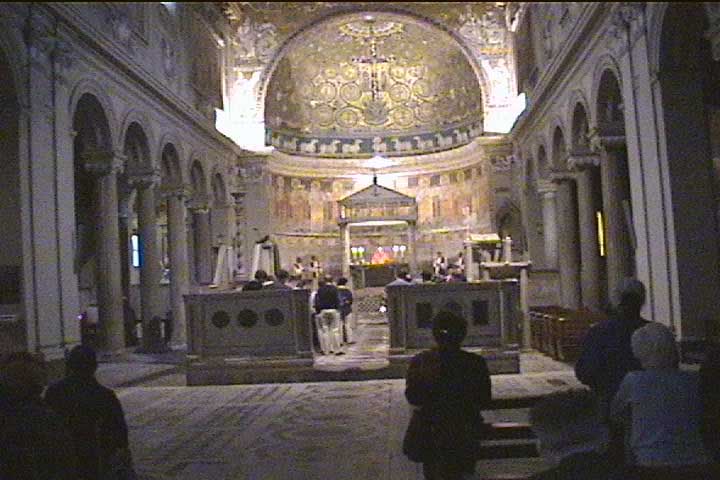
The Cross  flowers at Easter time. There’s a flowering cross brimming with life  in the great apse of the church of San Clemente in Rome. Its branches swirl with the gifts God gives. It brings life, not death. Humanity is there, signified in Mary and the disciple John. We are there in the doves resting on it. Creation itself is there, drawing new life from it. The hand of God makes it so.

The sacraments offered in this sacred place bring life-giving graces to us.

An early preacher Theodore the Studite  praises the mystery of the cross:.

“How precious the gift of the cross, how splendid to contemplate! In the cross there is no mingling of good and evil, as in the tree of paradise: it is wholly beautiful to behold and good to taste. The fruit of this tree is not death but life, not darkness but light. This tree does not cast us out of paradise, but opens the way for our return.

“This was the tree on which Christ, like a king on a chariot, destroyed the devil, the Lord of death, and freed the human race from his tyranny. This was the tree upon which the Lord, like a brave warrior wounded in his hands, feet and side, healed the wounds of sin that the evil serpent had inflicted on our nature. A tree once caused our death, but now a tree brings life. Once deceived by a tree, we have now repelled the cunning serpent by a tree.

“What an astonishing transformation! That death should become life, that decay should become immortality, that shame should become glory! Well might the holy Apostle exclaim: Far be it from me to glory except in the cross of our Lord Jesus Christ, by which the world has been crucified to me, and I to the world!”

San Clemente, Rome

See Children’s Prayers here for a children’s version of the Easter Tree.

Easter Friday: Tabgha

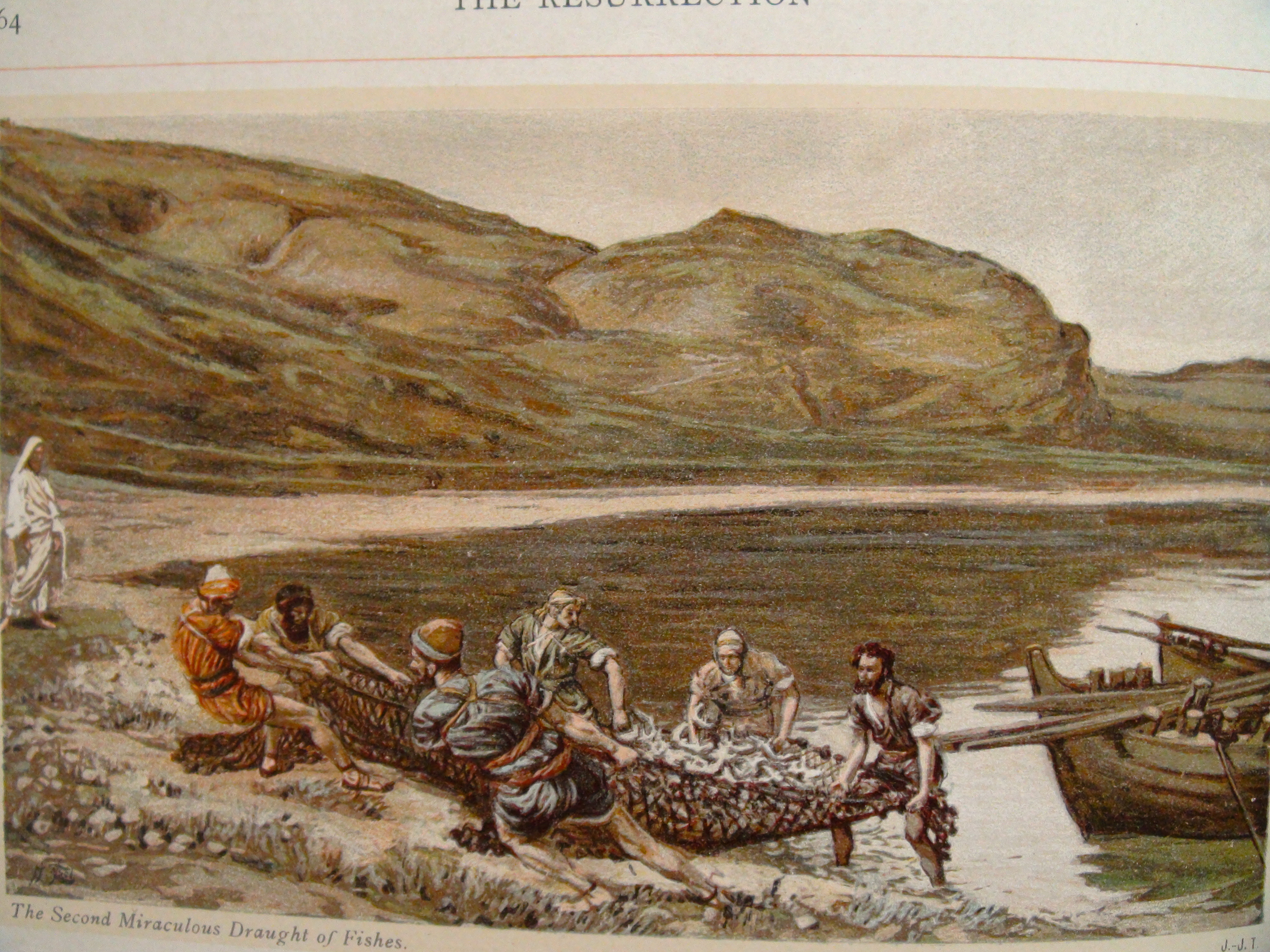
Tabgha. James Tissot

Our gospel story s today ( John 21, 1-14) must have taken place at Tabgha, the quiet stretch of wooded land on the Sea of Galilee just south of ancient Capernaum, the center of Jesus’ ministry in Galilee. Seven springs of water flow into the lake there. Some years ago, during an early morning visit I made to the place, birds were singing in the trees and drinking from the streams of fresh water.

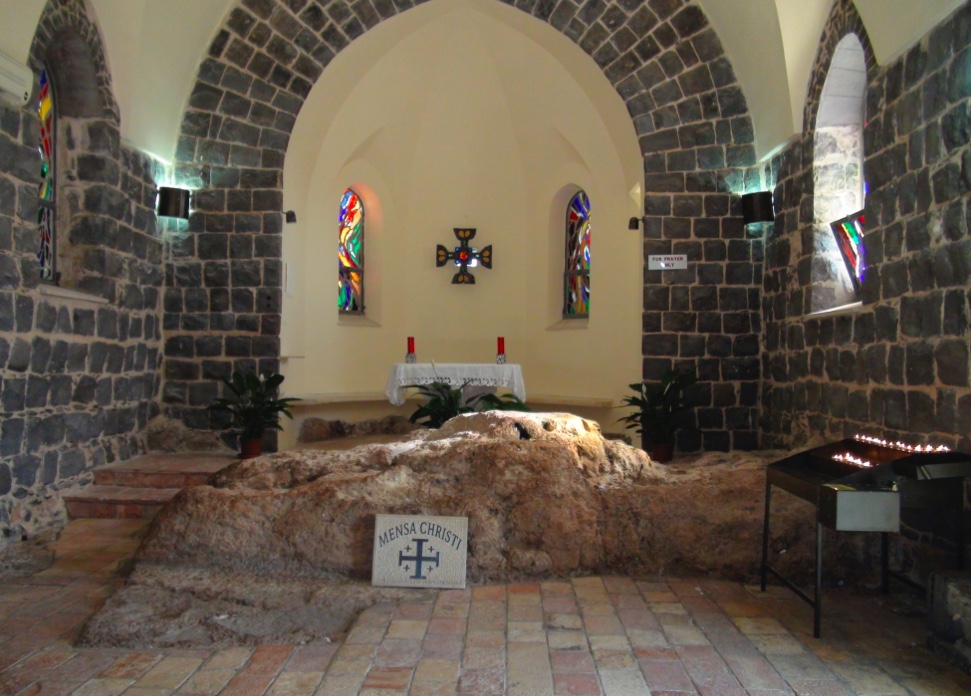
Fishermen would surely draw into Tabgha after a night’s fishing for fresh water from the springs and maybe fry some fish over a fire on the beach. It’s a likely place where Jesus would meet with his disciples. Two ancient churches are on the site. He met his disciples here after his resurrection, tradition says.

Peter and the others returned to Galilee after the Lord’s death and resurrection and went fishing, John’s gospel says. They caught nothing through the night, but at dawn they heard a call from the shore to cast out their nets again.
“… Jesus was standing on the shore; but the disciples did not realize that it was Jesus.”

They caught a large catch– 153 fish. Jesus then called from the shore to come eat some fish at a fire he had started and he gave them bread and some fish to eat and revealed himself to them.

Peter figures prominently in this story. He jumped into the water to get to the shore. Then after they ate, Jesus took him aside and asks the disciple who denied him three times, “Do you love me?”

Three times the apostle cursed and swore he did not know Jesus. Three times he answers “Yes, I do. I love you.” And Jesus tells him “Feed my lambs. Feed my sheep.” Peter isn’t alone in this encounter, the other disciples and all of us are with him.

A statue at Tabgha marks that beautiful meeting, an example of God’s forgiveness! No scolding words or recriminations. No “I told you so.” No warning, “You do that again and …” No demotion, no putting on parole. Rather, Jesus gives Peter new responsibility. “Feed my lambs” as I do. God’s mercy does not take away, but gives more.

Tabgha– the memory of Jesus lingers at this lovely place besides the Sea of Galilee. Jesus, risen, brings us mercy and a mission.

The church and rock table at Tagbha

Recognizing the Risen Christ

One of the great French scripture scholars, Xavier Leon Dufour, wrote a book on the accounts of  Jesus’ Resurrection in the four gospels which he began by recalling how he first understood the Resurrection as a child from the stained glass window in his parish church.

Jesus was pictured in shining light coming out of the tomb,  the soldiers with hands up high in fear at the sight. It’s a common portrayal found in many of our churches.

Dufour writes of his surprise that this picture can’t be found anywhere in the gospels. The gospel accounts of the appearances of the Risen Christ are much more complex, which is one reason we read them all through Easter week, the “Long Day” of Easter.

In today’s reading,  the two Emmaus disciples returning to Jerusalem are greeted with cries, “he is risen, he had appeared to Simon.” Then they report how he appeared to them on the road, how he opened the scriptures and how they recognized him in the breaking of bread.

Then Jesus appeared to them. Luke says his appearance causes them “fear and panic”; they think he is a ghost. His appearance seems to be different than that of Lazarus who, when raised from the dead, was the same as before. The Risen Jesus is different. He doesn’t come back from the dead the same as Lazarus did. 

To assure them who is is, Jesus tells them to touch him, to eat with him. Only after he assures them does Jesus recall the scriptures that speak of a Messiah who dies and is raised from the dead. He tells them a message of forgiveness is to be preached in his name. They are witnesses of him. They’re to wait in the city for power from on high to come upon them: “The promise of the Father.”

Then Jesus takes them out to Bethany and ascends into heaven.  This all happens on Easter Sunday, according to Luke’s gospel. He ends his gospel there. After that he begins the second part, Acts of the Apostles, the story of the coming of the Spirit and the spread of the message of Jesus through his. church.

Luke’s gospel would have us recognize the Risen Jesus– we who are on the way —-   especially in the scriptures and the breaking of the bread.

Easter Thursday

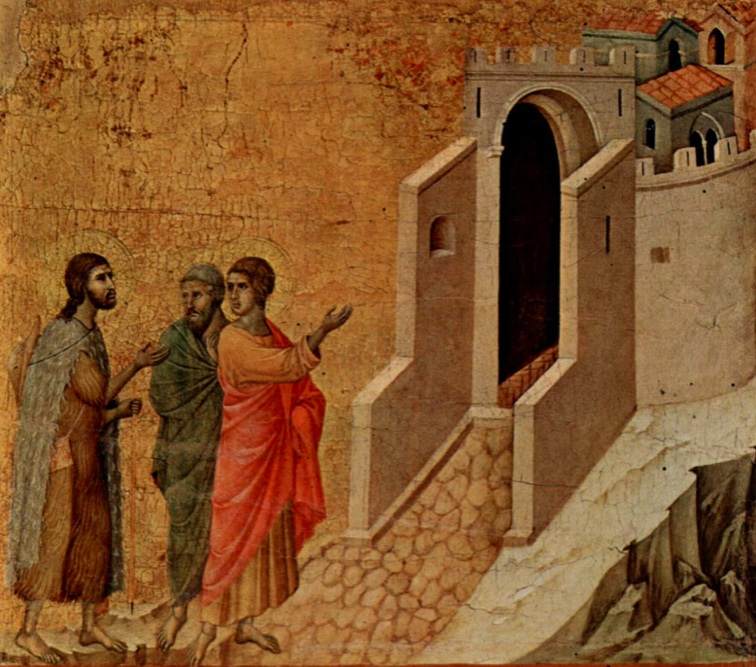
Emmaus Disciples: Duccio

On Easter Thursday, a week after Holy Thursday, the traditional day we celebrate the institution of the Eucharist, we read the account from Luke’s Gospel of the two Emmaus disciples who, after recognizing Jesus in the breaking of the bread and in the scriptures, return to Jerusalem, to the Eleven and his other followers.

They’re told: “The Lord has truly been raised and has appeared to Simon.” The two recount their experience “on the road”, and their message is affirmed. They take their place among the witnesses.

Jesus then appears to all of them, the Eleven, the others who have come up from Galilee, the Emmaus disciples – all are “startled and terrified”, wondering if they’re seeing a ghost. Jesus then shows them the wounds in his hands and side.  He takes some fish and eats; then, “opening their minds”, he explains the scriptures to them. 

Are we like the Emmaus disciples who meet the Risen Jesus “on the way” and know him through the breaking of the bread and the scriptures? We are not like the Eleven who knew Jesus in the flesh, the Galileans who were with him in Galilee as he taught and worked wonders. Now, though, we join them in witnessing that “the Christ had to suffer and rise from the dead on the Third Day, and that repentance, for the forgiveness of sins, would be preached in his name to all nations, beginning with Jerusalem. “  (Luke 24:35-48) 

Each Resurrection account from the gospels this week adds its own dimension to the mystery of the Risen Jesus. Luke’s account seems to emphasize the role of those who meet him “on the way,”  and know him through the scriptures and the breaking of the Bread. Luke’s church was made up increasingly of gentiles, who live far from the places where Jesus lived and died and rose again.

They have the same mission as the Eleven from Galilee. Like us.

Readings here

Earth Day and the Long Day of Easter

We celebrate Earth Day, appropriately,  during the Long Day of Easter. 

How slowly do his disciples understand the mystery of the Resurrection of Jesus ! Some at first,  like Thomas, need hard evidence he is alive. For them life ends in death.  Some, like Peter and John,  see at first only the burial cloths in the tomb and wonder if he, like Lazarus, has come back from the dead.  Most of them, like the disappointed disciples on the way to Emmaus, had limited hope in him. They saw him restoring Israel to a place among the nations. A Secular Messiah.

As he appeared to them and ate with them and spoke with them their hopes grew.  He  broke bread with them and explained the scriptures.  Go to Galilee and meet him there, they were told. At the lake, according to John’s gospel, Jesus commanded them to bring his message to a wider world. In Mark’s gospel, he gave his command from a mountain. 

Their understanding of the mystery of the Resurrection grew. “He rose from the dead, according to the scriptures.” He brings the promise of  life to generations before and generations ahead. As Lord of all ages, his message of eternal life goes out to the heavens and the earth.  

 Jesus Christ is not just a solitary man brought back to life. He is, “the image of the invisible God.” In him all things have their being. He brings the promise of life to a broken world. Not just to one, or a few, but all. Not just to one nation, or a few, but all. Not just to the human race, but to all creation.

The opening prayer for Mass today recognizes the mysteries we celebrate this Long Week of Easter as “paschal remedies”, medicine for our weakness, healing for our blindness, hope for our doubt, new understanding. We are meant to grow through them.

How like the first disciples we are in our limited understanding of the mysteries of God. Yet God expands our knowledge. Is God expanding our understanding of the Resurrection now, calling our attention to his creature, our Earth. As we reflect on the death of Pope Francis, we recognize his challenge to care from the poor and the marginalized of our world. But let’s not forget his challenge to care for the earth that he made in his great encyclical “Laudato si’ “

Earth Day belongs in the Long Day of Easter.

Easter Tuesday

Most people think that Easter is over, but we celebrate Easter for more than one day. For 50 days we celebrate the Easter season, from the Easter vigil till the feast of Pentecost. Over and over in that time we pray: “This is the day the Lord has made.” 

The reason we celebrate Easter over this long period is because it takes time to grasp a mystery like this. It’s hard to take it in. It’s beyond us. Jesus spent 40 days with his apostles helping them understand. We see them struggling with this mystery in the gospels and readings for this week. In these days we believe the Lord helps us as we try to understand. 

We can see it today in Mary Magdalene searching for the One she thought was taken away, then finding him and wanting to hold him, then being told by Jesus “Stop holding on to me, for I have not yet ascended to the Father. Go tell my brothers, ‘ I am going to my Father and your Father, to my God and your God.”

Jesus had taken on a new existence. He does not return to his ordinary life, as she knew him. He has changed and become the first to enter a new life and a new world. He is “the first fruits” of those who die; others will follow him. Mary is told to go tell the others.

It will take Mary more than a day to grasp this and it takes us more than a day to grasp it too.

In one of his sermons Cardinal Newman has a beautiful meditation on the Day when God did his greatest work.

 “Let us rejoice in the Day that He has made… the Day of His Power. This is Easter Day. Let us say this again and again to ourselves with fear and great joy. As children say to themselves, ‘This is the spring,’ or ‘This is the sea,’ trying to grasp the thought, and not let it go; as travellers in a foreign land say, ‘This is that great city,’ or ‘This is that famous building,’ knowing it has a long history through centuries, and vexed with themselves that they know so little about it; so let us say, This is the Day of Days, the Royal Day, the Lord’s Day. 

s“This is the Day on which Christ arose from the dead; the Day which brought us salvation. It is a Day which has made us greater than we know. It is our Day of rest, the true Sabbath. Christ entered into His rest, and so do we. It brings us, in figure, through the grave and gate of death to our season of refreshment in Abraham’s bosom. We have had enough of weariness, and dreariness, and listlessness… 

“May we grow in grace, and in the knowledge of our Lord and Saviour, season after season, year after year, till He takes to Himself, first one, then another, in the order He thinks fit, to be separated from each other for a little while, to be united together for ever, in the kingdom of His Father and our Father, His God and our God.”

John Henry Newman, “Difficulty of Realizing Sacred Privileges,”

Morning and Evening Prayer here.

Children’s Prayer here.

Pope Francis

God give him that rest the scriptures promise a servant who had done well.

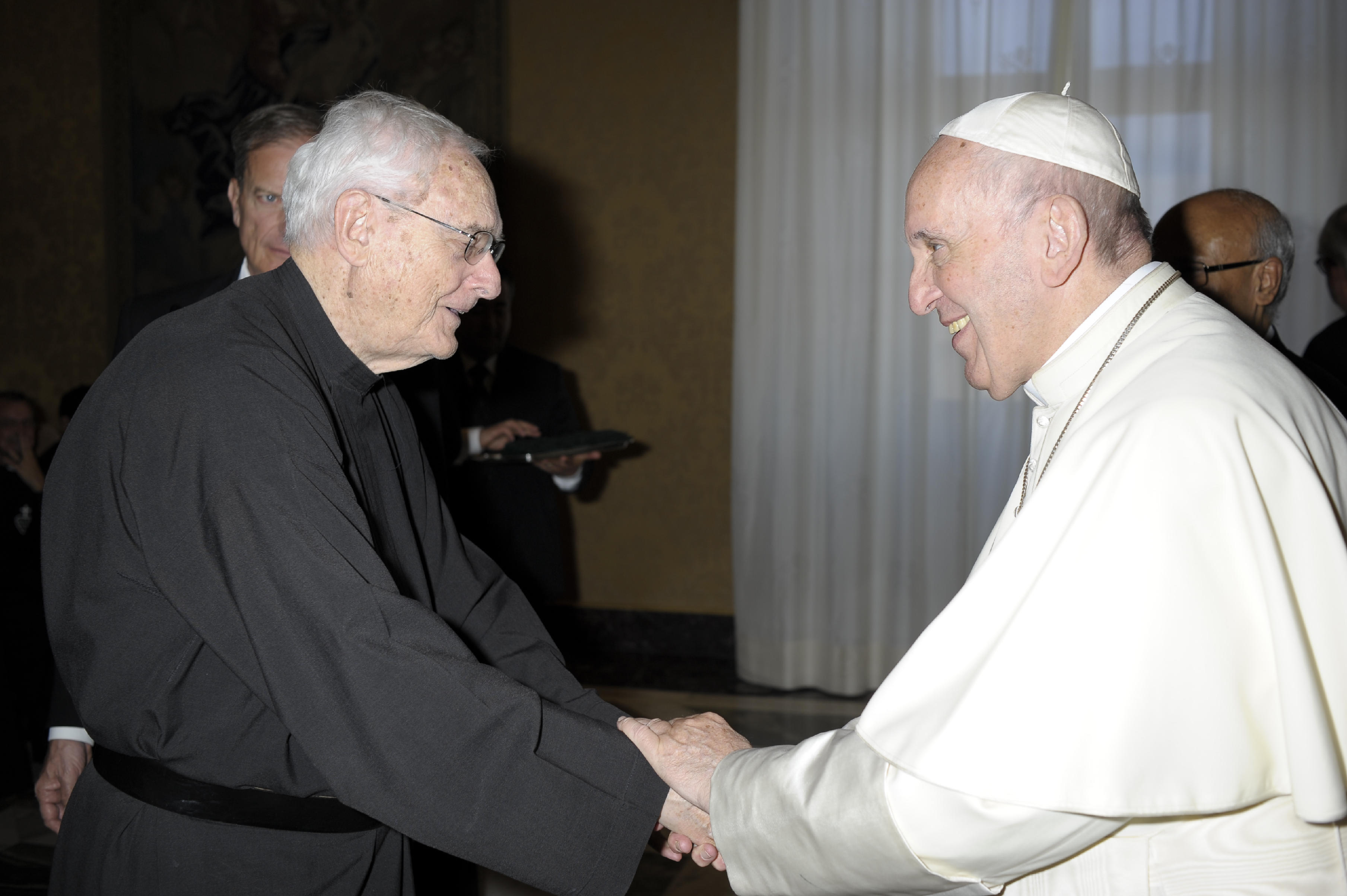
I remember his greeting four years ago, when he met Passionists taking part in their general chapter in Rome. He had come from a busy morning yet instead of going for lunch he spoke to us and greeted each of us.

He greeted about forty of us, each with the same attentiveness that he greeted me. Like Mary Magdalen, I want to cling to him as our leader and pope, but like Jesus he has to “go to the Father.”

He passes on during the long day of Easter.

https://www.vaticannews.va/en/pope/news/2025-04/twelve-years-of-new-paths-processes-and-open-doors.html

Easter Sacraments

Easter Week is an extension of Easter Day. The whole week is considered one day. Risen from the dead, Jesus made us one with him this day. We remember this week the signs of our union with him, baptism, the Eucharist and the other sacraments.  

As he did with the two disciples on the way to Emmaus, Jesus walks with us and breaks bread with us. The Paschal Candle next to the scriptures are a sign his light never fails.  The water blessed for baptism on the side of the altar reminds us we have been reborn of water and the Holy Spirit. 

The water has been blessed by Christ himself, for it comes from his pierced side when the soldier’s spear pierced his heart. It was blessed at the Easter vigil  with the sign of the Cross.

This week the those newly baptized are led into the mysterious world of sacraments and saints This week St. Cyril of Jerusalem and  St. Ambrose of Milan, preaching on the sacraments, often pointed out how insignificant the signs seem to be.  Only faith reveals their power.  

We need to remember newly baptized Christians, for we received the same gift as they have. An early sermon describes the gift given to the newly baptized at Easter: 

“Remember the newly formed: children born from the life-giving font of holy Church… As they emerge from the grace-giving womb of the font, a blaze of candles burns brightly beneath the tree of faith. The Easter festival brings grace from heaven to us. Through the repeated celebration of the sacred mysteries we receive the spiritual nourishment of the sacraments. We worship  the one God, adoring the triple name of his essential holiness, and together with the prophet sing the psalm which belongs to this yearly festival: This is the day the Lord has made; let us rejoice and be glad. 

And what is this day? It is the Lord Jesus Christ himself, the author of light, who brings the sunrise and the beginning of life, saying of himself: I am the light of day; whoever walks in daylight does not stumble. That is to say, whoever follows Christ in all things will come by this path to the throne of eternal light.” (Office of Readings, Wednesday of Easter Week.)