Seedtime in Our Mary Garden

Springtime is a busy time in our Mary Garden. Birds fly in to the fountain to drink, a stray cat wanders through occasionally ready to pounce on one of them. Insects, a solitary butterfly, flit through the spring flowers. But seeds are our main visitors these days, seeds in abundance, mostly from the Norway Maples, oaks and conifers, but there are others. Small seedlings we didn’t plant and don’t recognize are showing up all over our garden floor.

“We live in a world of seeds. From our morning coffee or bagel to the cotton clothes we wear and the cup of cocoa we might drink before bed, seeds surround us all the day long.” Thor Hanson writes in his delightful book, “Seeds” (New York, 2016) 

Seeds are the way plants reproduce, and this is that time. Hanson describes a seed as “a baby in a box with its lunch.” They come in all shapes and sizes. Seeds from our Norway Maples have wings; the conifers send our their seeds in armored cars. They come in abundance. Some of these babies will be grow to be maples and conifers.

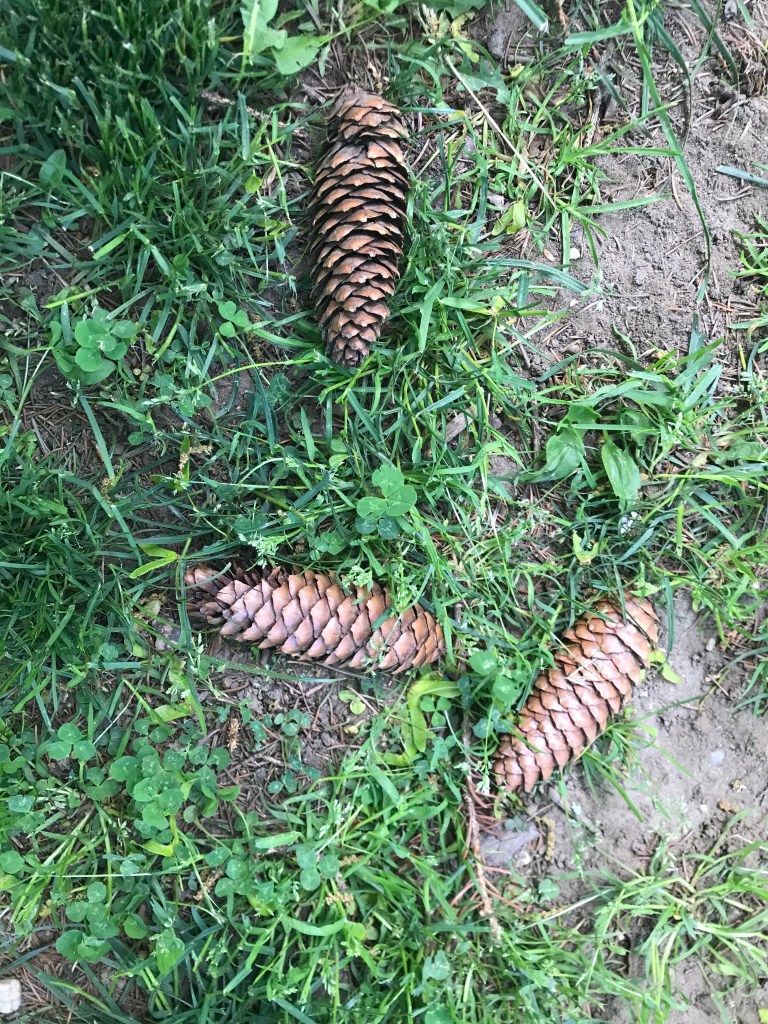
 

Here we are in spring, seed time, an abundant time. The seeds tell us that. Do we also learn from them about God, a Springtime God, a Seedtime God? 

Seeds nourish, unite, endure, defend, travel, Hanson says in his book. They’re traveling now. Grasses, like wheat and rye and others, travel most. They’re built to travel far, every where.

Early Christian commentaries often speak of the Bread of the Eucharist made up of so many grains of wheat. They’re seeds gathered into Jesus Christ, and then scattered again to bring life wherever they go, everywhere. Our gardens and the earth at springtime are a book to learn from.

These days were rogation days in our previous church calendar. Today we shouldn’t forget to ask for God’s blessing by blessing our fields, our gardens, our backyards. There’s a beautiful blessing prayer in the church’s Book of Blessings, which begins by recalling scripture readings, like the parables of Jesus- the sower, the mustard seed, etc…

From despair in time of drought… Deliver us, O Lord.

From wastefulness in times of plenty…Deliver us, O Lord.

From neglect of those in need…Deliver us, O Lord.

From blindness to your presence in our world…Deliver us, O Lord.

From hunger and thirst…Deliver us, O Lord.

Lord of the harvest, you placed the gift of creation in our hands and called us to till the earth and make it fruitful, We ask your blessings as we place these seeds and plants in the earth, May the care we show them remind us of the tender care you give your people. Amen.

Vine and Branches

The Jesus Seminar, a group of scripture scholars formed about 30 years ago, aimed at discovering the authentic words of Jesus. They claimed the words of Jesus in this part of John’s gospel are so different from his words in other gospels that they are not his, but were created by a later disciple.  New Testament scholarship has moved on since then and the Jesus Seminar doesn’t have much support these days. 

Many New Testament scholars, among them Raymond Brown,  see the Last Supper Discourse as an example of the way many ancient writers summarized the teachings and mission of  great figures as they leave their disciples in death. John’s gospel summarizes Jesus’ teaching and mission at the Last Supper, the night before he died. It’s a Passover celebration. Jesus addresses them as “little children”,  as a father might address his children during Passover, explaining to them the message of that saving feast. 

Jesus announces his glorification. He is going to the Father.  His disciples will participate in his glory.  “ I am the vine, you are the branches.” (John 15:1-8)  They are to love one another as he has loved them. Loving one another is his supreme command to them. If they keep his commandments Jesus promises them a joy that no one can take from them. 

Yet, they will not see him for “a little while.”

The Last Supper Discourse is a summary of Jesus’ teaching and mission, but it  also reveals how he is with them and with us during the “little while.”  “I will not leave you orphans. “ In sacraments, especially the Eucharist. Jesus promises his disciples he will remain with them. He fulfilled that promise in sending them the Paraclete; he also promised he and his Father will come and dwell with them.

We can hear in the Last Supper Discourse words Jesus spoke to his disciples then, words he  spoke during his mission, and also words he spoke in the days after his resurrection. After Jesus rose from the dead, Paul tells his hearers in Antioch in Pisidia, “for many days he appeared to those who had come up with him from Galilee to Jerusalem. These are now his witnesses before the people.” ( Acts 13:30-32) In the “many days” he appeared to those who  came up with him from Galilee to Jerusalem  Jesus prepared them for his sacramental  presence among them in signs.  We can imagine they questioned him like Thomas and Philip and the others did. They were unsure and uncertain. As he ate with them and drank with them he assured them he would remain with them in signs in that period of time, ”a little while.”  

“A little while” is our time now.  He is with us in this “little while.” 

his icon, Christ the Vine, was painted by a famous fifteenth-century Cretan iconographer Angelos Akotantos (d.1450) before the Byzantine Empire collapsed, leading to the separation of Eastern and Western churches. The icon is a call for unity of the churches.  

Our Mary Garden

We take for granted the ground we stand on. We live at 86-45 Edgerton Boulevard, Queens, Long Island, New York, USA, but the ground we stand on goes deeper than that. 

The monastery we live in stands on the highest point of a spine of volcanic rock that goes back at least 400 million years, when the continent was being formed. 

About 22,000 years ago the last glacier, the height of a skyscraper, came down from Canada and stopped here. Our monastery stands where the glacier stopped. As it receded and melted the glacier gave us the land we stand on now. 

Southeast of us the glacier formed clay flatlands and sandy beaches facing the Atlantic Ocean. The winding depressions in our area, like Midland Parkway next to us, were streams from the glacier bringing sand and clay and rocks to the flatlands east of us. 

North of us the last glacier left the waters that became Long Island Sound. The glaciers also left water in the aquifer that still provides drinking water for most of Long Island today.

About 12,000 years ago, the first humans arrived here. Small bands of Indians lived in settlements near streams and waterways where they fished and hunted for game.Then, we came here.

Pope Francis says in his encyclical Laudato Si that we need a long view of life for the days ahead, because we’re facing a world that will be radically transformed by climate change. To prepare, Pope Francis says, we need “an ecological conversion.” 

That certainly means knowing more about the physical world we live in, so that we can understand it and care for it. Some say since the time of the Enlightenment in the 17th century we have concentrated too much on the human world and prioritized it too much. We’ve neglected creation and the ground we stand on. 

That means also remembering that God created the heavens and the earth and God has a plan for the world. God must remain in the picture of the changing physical world, otherwise life becomes chaotic. We can’t depend on science alone.

Pope Francis, in Laudato Si, while accepting science and its findings, said that besides scientific knowledge, we should mine our own religious traditions for the wisdom and hope they give and he said to look at the Book of Genesis and our spiritual and sacramental traditions to face the future.  

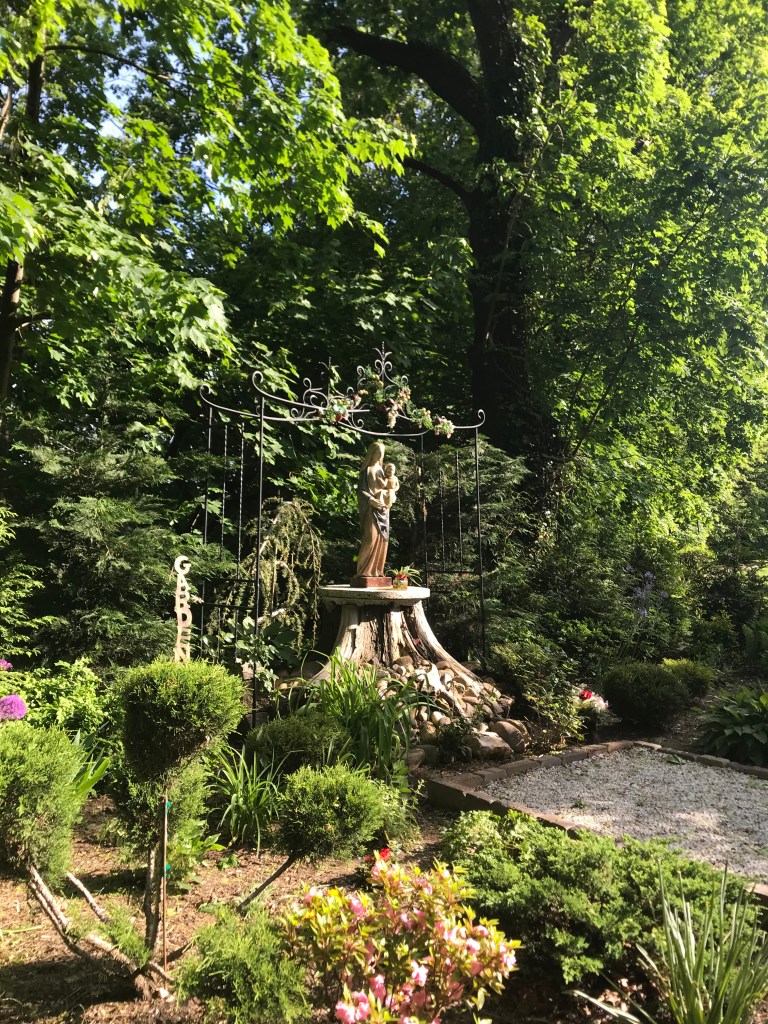
Our location here in Queens, particularly our garden, on the edge of a spine of volcanic rock, offers a valuable place for cosmic reflection. Our Mary Garden, based on the garden of Genesis, sees creation with eyes of faith and also with eyes of earthy experience. Water creates the garden, bringing life to everything else. Four rivers flow to the four corners of the earth. The plants in the four quadrants of the garden represent the staples of life– beauty, medicine and food. 

Mary stands in our garden as the representative of redeemed humanity, holding in her arms Christ, the Redeemer. She rejoices in creation before her and presents the one, “through whom all things were made,” who blesses the world with hope. Mary also, as a witness to the resurrection of Jesus, knows he has promised a new heaven and a new earth. “Behold, I make all things new,” 

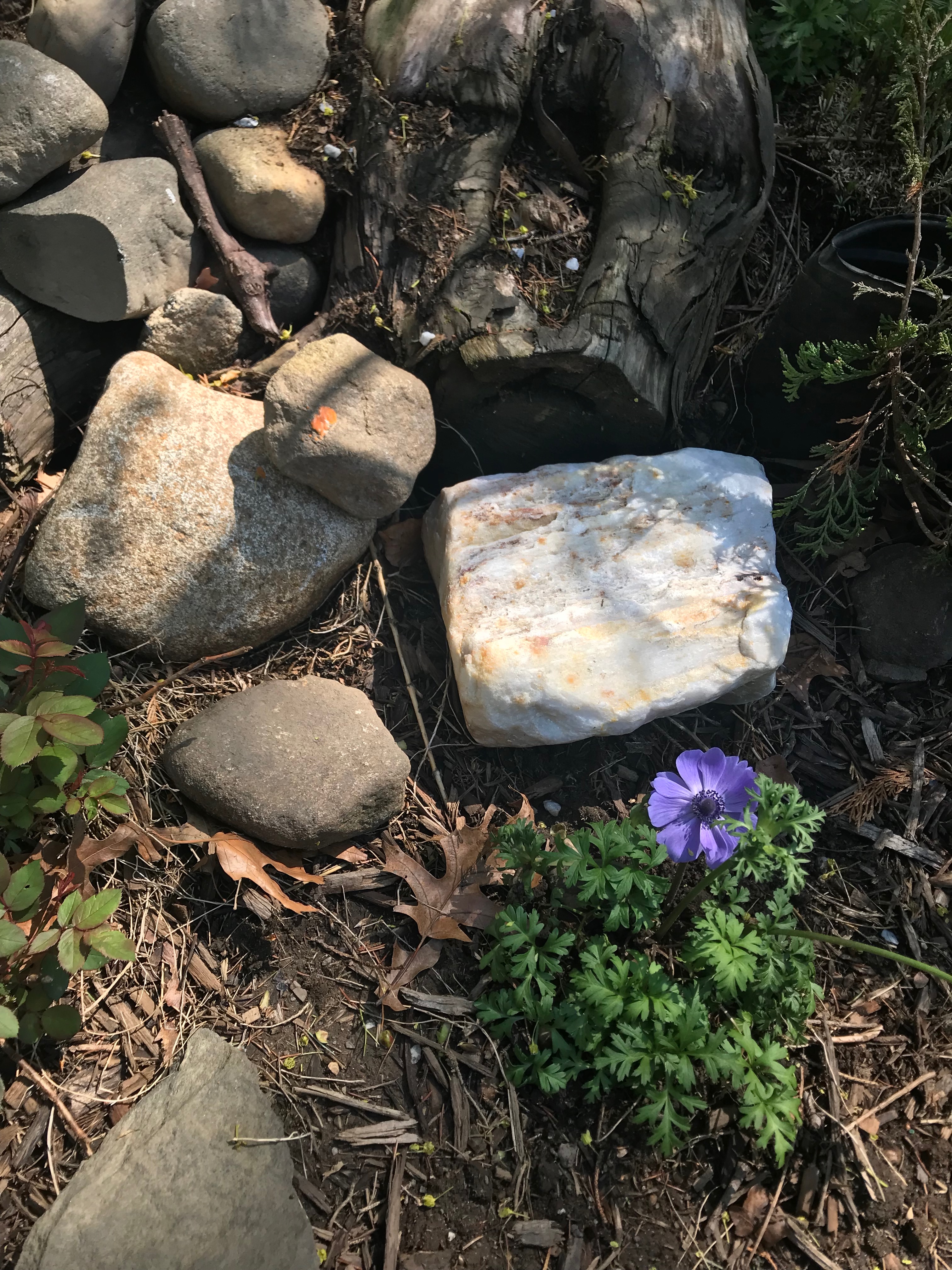
Mary’s statue stands on the stump of a large cedar tree, a tree whose roots reach deepest into the earth. At the base of the stump are rocks; most come from parts of our continent swept up by the ancient glacier and deposited here. We put some rocks from the Holy Land there, and a friend recently gave us a rock from Ireland to add to it.

The flowers in the Mary Garden bring the various colors and shapes of the world’s plant life here. Flowers are perhaps the most popular “immigrants” of the plant world, coming from everywhere, welcomed everywhere. Many of them, like the marigold, “Mary’s Gold”, are particularly associated with the Mother of Jesus.

Our Mary garden stands next to a grotto recalling Mary’s appearance at Lourdes in the 19th century when faith in France was eroding in an age of skepticism. Her appearances later at Fatima and the strong devotion to her that persists today remind us she is a permanent witness to Jesus Christ, who promised to remain with us “all days”, even days when the foundations of the earth are shaken. Mary’s a witness who comes when times are bad.

The concept of the Mary Garden developed in 13th century Europe when, during the “Black Death”,  people believed a cursed earth caused millions to die. Today as the earth enters its own “passion” the Mary Garden offers a rich resource of Christian wisdom and hope for the days ahead. 

God loves the world. It is good. 

May, the Month of Mary

Mary Garden, Immaculate Conception Monastery, Jamaica, NY

We celebrate Easter through the month of May. The Risen Lord stays with his church on her pilgrim way and walks with her step by step. Jesus is with us; he won’t leave us orphans. He gives us his gifts.

One gift is Mary, his Mother. We honor her in May and ask her to guide us into the mysteries of Jesus, her Son. She knew him better than any of his creatures.

In the Acts of the Apostles, our primary scriptural source for knowing how the church developed, Luke describes that development mainly through the missionary journeys of Peter and Paul. But let’s not forget Mary, a key figure in that development. She’s “embedded” in the story of Jesus’ life and in the development of the church. I like that word to describe her–”embedded.”  

After Jesus ascends into heaven, forty days after his resurrection, a group of his followers, whom we already know from Luke’s gospel, go back to the upper room in Jerusalem.  Luke describes them:

“Then they returned to Jerusalem from the mount called Olivet, which is near Jerusalem, a sabbath day’s journey away. When they entered the city they went to the upper room where they were staying, Peter and John and James and Andrew, Philip and Thomas, Bartholomew and Matthew, James son of Alphaeus, Simon the Zealot, and Judas son of James. All these devoted themselves with one accord to prayer, together with some women, and Mary the mother of Jesus, and his brothers.” 

As he says earlier in his gospel, Luke depends on eyewitnesses who not only have seen and heard what Jesus said and did, but also are given prophetic gifts for preaching and teaching in the church. They tell us Jesus rose from the dead but, inspired by the Holy Spirit, they also tell us what that mystery means for the world. 

Luke’s eyewitnesses are the eleven apostles, paired up two by two as Jesus told them for  preaching the gospel. There are also women, like Mary Magdalen, followers of Jesus during his ministry and important witnesses of his resurrection. And finally Mary, the mother of Jesus, and his brothers, his relations, who knew him from the beginning.

Mary, who kept all these things in her heart, is the chief eyewitness.

5th Week of Easter: Readings and Feasts

Spanish

The Acts of the Apostles, read this week, describes  the church’s growth after the Resurrection of Jesus as Paul and Barnabas bring the gospel tos the gentiles in the Asia Minor cities of Lystra, Derbe, and Pisidia. Yet, the mission raised questions in the Jewish Christian community at Jerusalem. Are the gentiles taking over?

To meet what some considered a threat,  a council was called in Jerusalem, which had enormous consequences . Councils are usually important events in the life of the church. The Second Vatican Council that took place in the 1960s was an important event for the church in our time.

The Council of Jerusalem is described on Wednesday to Saturday of this week.

The gospel readings for the remainder of the Easter season are from the Farewell Discourse from John’s gospel. They help us understand the presence of Jesus in the Eucharist and the other sacraments.

“I will not leave you orphans,” Jesus says, yet he will not be with them as he was before. The Paraclete, the Spirit of truth, will teach them all things; Jesus will be present to them –and to us– in signs.

5th Sunday of Easter c: New Heavens, New Earth

For this week’s homily please watch the video below.

The Farewell Discourse of Jesus

From this Thursday until the end of the Easter Season, our gospel readings are from the Farewell Discourse of Jesus at the Last Supper. (John 15-17) His disciples experienced him when they ate and drank with him at the Last Supper and after his resurrection. Their experience indicates how we meet Jesus in the Eucharist and the other sacraments. We know him in signs.

His disciples were troubled when told he would leave them physically. They feared becoming orphans. Now they were to know him in another way. “Do not let your hearts be troubled and afraid… I go and prepare a place for you, I will come back again and take you to myself, so that where I am you also may be.” (John 14:1-6)

 “A little while and you will no longer see me, and again a little while later and you will see me,” Jesus told them. ”So they said, “What is this ‘little while’ [of which he speaks]? We do not know what he means.” (John 15:17)

Our experience of Jesus is similar to theirs, a “little while” experience. We know him in signs like bread and wine, through a faith that accepts his presence in signs. He called us blessed, who believe and do not see.

“In the sacraments Christ himself is at work” the catechism says, “ it is he who baptizes, he who acts in his sacraments in order to communicate the grace that each sacrament signifies.” (Cat. 1127)  Yet it’s the Christ of faith at work. “Although you have not seen him you love him; even though you do not see him now yet believe in him,” Peter says. (1 Peter 1:3-9)

John’s Farewell Discourse became the church’s basic source for learning about the world of signs that Jesus left his disciples after his resurrection. We read from it the next weeks of the Easter season. Reflecting on it refreshes our faith. He assured them. He is the Vine, we are the branches. He will strengthen us.

Readings here

St. Gemma Galgani

SONY DSC

Gemma Umberta Pia Galgani
(1878-1903)

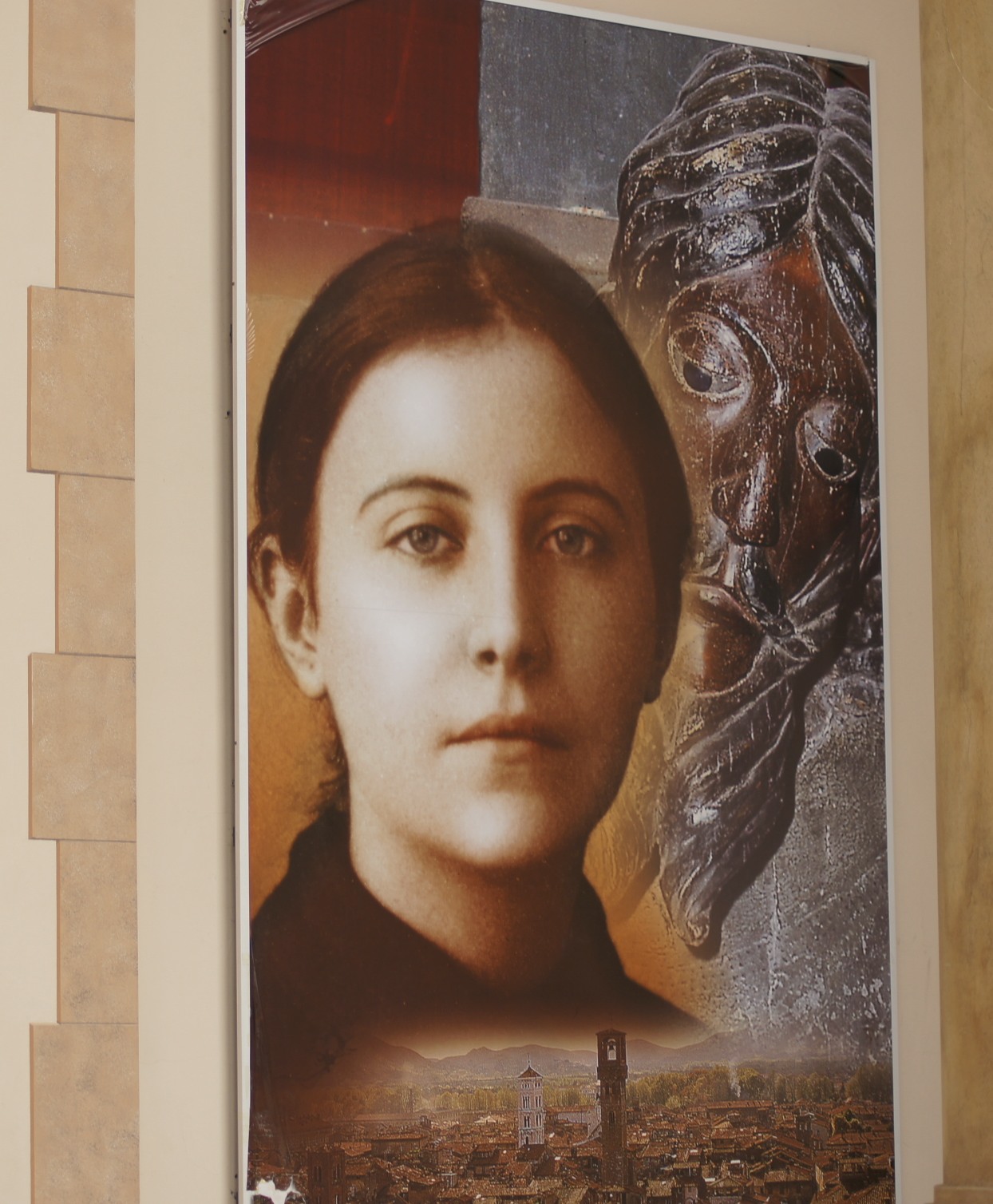
Gemma Galgani died on Holy Saturday, 1903 in Lucca, Italy. Her death should have been completely unnoticed. She was often sickly in her 25 years of life and had to be taken care of. She left no children or family/. No hospitals, schools or any human achievement bear her name. Disappointments marked her life at every turn. She never got her wish to enter the Passionist Nuns or any other religious community.

Yet, at the news of her death on Holy Saturday, her neighbors gathered quickly in the Lucca’s ancient streets proclaiming “A saint has died.” Today in the Easter season we’re celebrating her feast.

Holy Saturday, the day after Jesus suffered and died, is the day before Jesus rose from the dead and appeared to his disciples. They report that he ate and drank with them for some days before ascending into heaven. He showed them the wounds in his hands and his side. He appeared to them, not just to prove he was alive, but affirm his love for them and for the whole world. He promised life. 

Gemma knew the mysteries of Jesus’ death and resurrection in a special way. She spoke familiarly with the Risen Jesus, as we see from her writings, and in a unique way she bore his wounds in her body.

“Poor Gemma”, she called herself; but she was’t poor. Frail in body and mind, she wasn’t a  failure. In declaring her a saint, Pope Pius XII said that Gemma experienced what the great apostle Paul experienced: “I have been crucified with Christ and the life that I live is not my own: Christ lives in me.

The stigmata, the bodily experience of the wounds of Christ, is a rare experience. It was not reason Gemma was declared a saint. Her heroic life of faith, patience and humility revealed her union with Christ, living in her.

The stigmata is a rare experience given to individuals, but it’s not meant for individuals themselves; it’s given to strengthen the belief of many. In Gemma’s time, “enlightened” thinkers like Freud and Jung were beginning to explore the human person. They were little concerned with God’s presence in human life. They would likely have dismissed Gemma’s spiritual experiences as delusional. A number of  Lucca’s “enlightened” people had that opinion of her.

Gemma’s Passionist spiritual director, Father Germano, was introduced to her while preaching in Lucca. He saw God working in her. The church concurred in his judgment by declaring Gemma a saint in 1940.

Many today still define humanity in human terms and sees success here on earth as our ultimate goal. Gemma is a strong reminder of God’s presence in humanity, in ordinary people, even in unsuccessful, imperfect people. Her devotion to the Passion of Jesus gave her a deep sense that Jesus loved her and lived in her.  She saw her life fulfilled in him and she believed his promise of life beyond this. 

Many today think the spiritual world faraway; for Gemma it wasn’t faraway at all– saints and angels, Jesus himself, were ever at her side. She once wrote: “Often I seem to be alone; but really I have Jesus as my companion…I am the fruit of your passion, Jesus, born of your wounds. O Jesus, seek me in love; I no longer possess anything; you have stolen my heart.”

Lucca Streets
SONY DSC
Lucca St. Michael 3

We’re not alone. Jesus Christ is our companion as well.

You can get St. Gemma’s Autobiography or a The Life of St. Gemma Galgani by writing to the Passionist Nuns, 1151 Donaldson Highway, Erlanger, Kentucky 41018
(859)371 8568

“Then one day I became very discouraged because I saw that it was impossible for me to become a Passionist, because I have nothing at alI: all I have is a great desire to be one. I suffer much seeing myself so far from realizing my desires. No one will be able to take this desire away from me. But when will it come about?” Letter to Germano

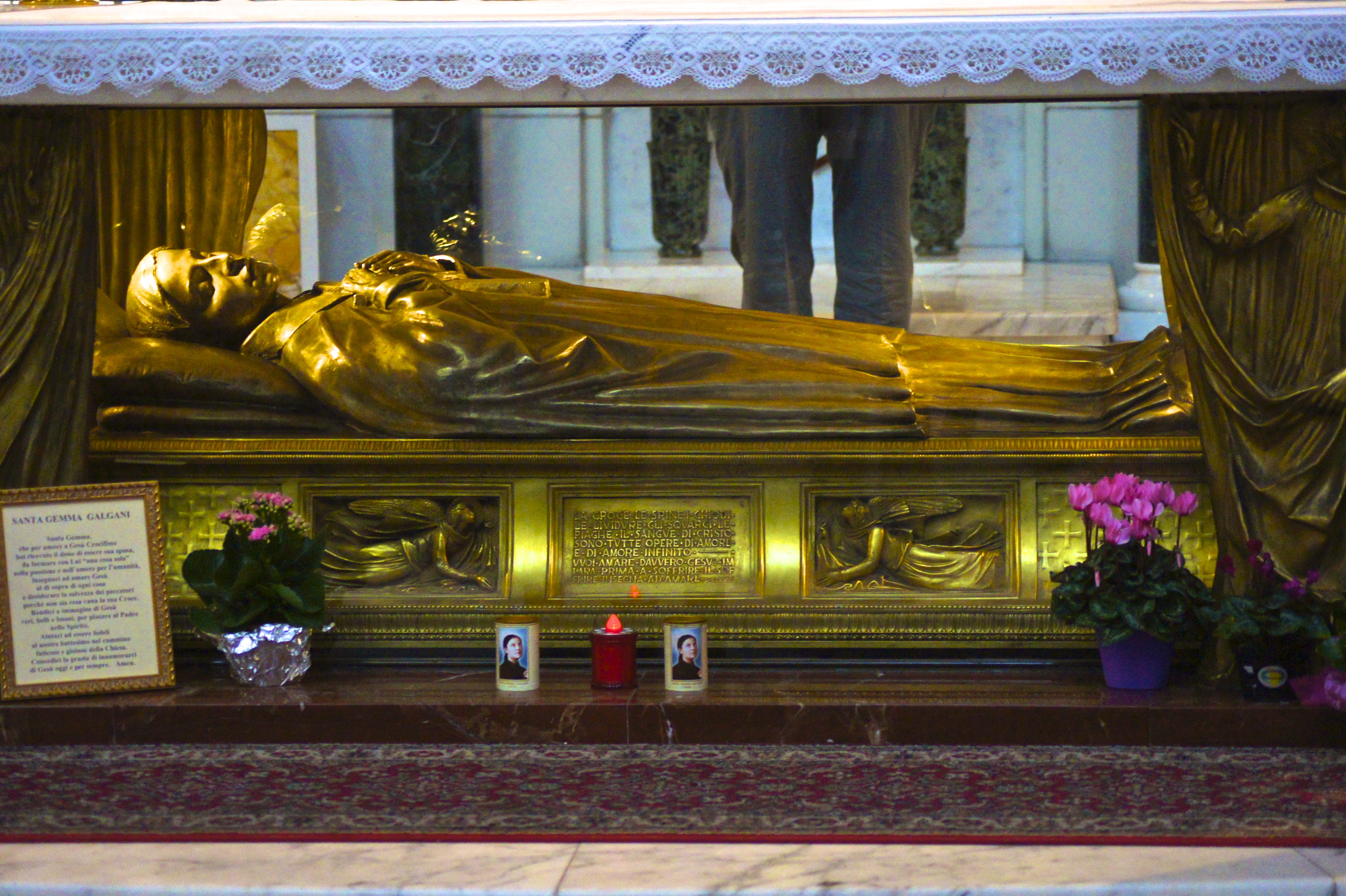
Gemm’a buried at the Convent of the Passionist Nuns in Lucca, Italy. The house where she lived before she died has been turned into a museum honoring her. Both places worth a visit.

Her feast day is May 16th.

How Does the Church Grow?

The Easter Season is dominated by the mystery of the resurrection of Jesus from the dead. He ascends into heaven and we no longer see him physically, but in signs. His Spirit causes his church to spread.

A cursory reading of the Acts of the Apostles may give the impression that the church spreads like wild fire. “The word of God continued to spread and grow.” (Acts 12,24) Leaving the church at Antioch, fearless missionaries like Paul and Barnabas, blessed by the Holy Spirit, set out for other towns and places and brought the gospel to the gentiles. 

It seems like a lively church, confident, joyful, united, focused on saving the world, with no doubts or questions. “O God, let all the nations praise you,” our psalm for today says. Yet, a careful reading the Acts reveals confusion, division, uncertainty in this church. In Antioch in Pisidia Paul remarks “It is necessary for us to undergo many hardships
to enter the kingdom of God.”( Acts 14) The church then was more like our own church today than we suspect. The church grows only through the mystery of the passion and resurrection of Jesus.

The recent election of Pope Leo XIV seems to me to be a surprising promise of resurrection.

We pray:

“May God have pity on us and bless us;
may he let his face shine upon us.
So may your way be known upon earth;
among all nations, your salvation.”

The face of the Risen Christ is always a surprise.

“Merciful God, Word come into a dark world, 

remember us and bless us.

 Jesus Christ, son of Mary, turn your face towards us and enlighten us. 

 You came into the world as light, so that we might not remain in our darkness. 

Now turn your face and shine on us,

so that we may make your way known upon earth, among all nations.”

Voice from the Supper Room

We’re reading about the missionary journeys of Paul from the Acts of the Apostles and the Last Supper discourse of Jesus with his disciples from the Gospel of John these final weeks of the Easter Season, readings so different in tone. The Acts of the Apostles follows Paul on his fast-paced, adventurous mission to bring the gospel to the ends of the earth. John’s Gospel takes us to the hushed Supper Room where Jesus speaks his final words to his disciples. 

We need to listen to the Voice from the Supper Room.Maybe we’re not getting thrown into prison or confronted by shouting crowds like Paul, but our daily journey and our duties in life can try us just the same, some days more than others.  

Jesus describes himself as Bread, Shepherd, Vine, and Friend in the Easter readings from John’s Gospel.  He wasn’t speaking only to his followers then, he’s speaking to us now. He also said “the Father and I are one.”

The world too receives daily bread, a shepherd’s care and the friendship of God. The Spirit has been sent to teach all truth. The voice speaks to more than believers.

Glory to the Father and to the Son and to the Holy Spirit. As it was in the beginning is now and ever shall be, world with end. Amen.