Saint Jerome: September 30

jerome

St. Jerome, whose feast is September 30, was a scripture scholar who helped western Christians understand the Bible better by his translations from the Greek and Hebrew. “Ignorance of the scriptures is ignorance of Christ,” he said.

Jerome was born in 340 in Stridon, a small town on the eastern Adriatic coast, and received an early education in Rome where he was baptized in 360 by Pope Liberius.

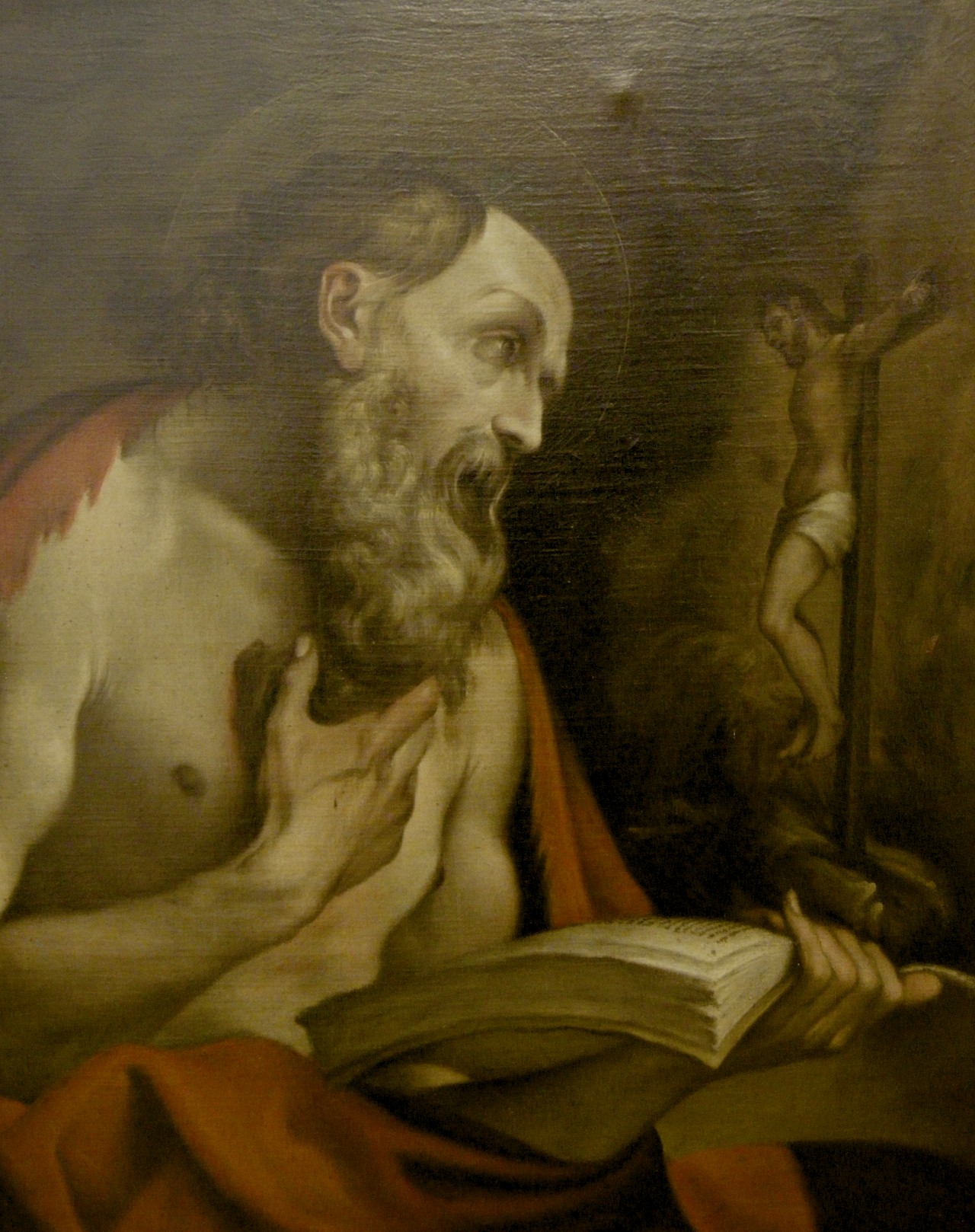
Brilliant and eager for knowledge,  Jerome traveled extensively. In Antioch in Syria he had a dream in which he saw himself rebuked by Christ for wasting his time on worldly knowledge. Moved by the dream, Jerome withdrew into the Syrian desert. There he said he was beset by temptations and “threw himself at the feet of Jesus, watering them with prayers and acts of penance.” In the picture above he’s praying to be delivered from temptation.

We usually think of penance as giving up things; Jerome reminds us it can also be taking on things.For penance Jerome threw himself into the study of scripture. He began by learning Hebrew from a Jewish teacher, which later helped him translate and comment on the Bible. 

Ordained a priest, Jerome arrived in Constantinople about 380 where he studied the scriptures under St. Gregory of Nazianzen. Two years later, he returned to Rome and was given the monumental task by Pope Damasus of revising the latin translations of the Bible. Jerome’s translation,  the Vulgate, along with his learned commentaries and sermons, sparked a flowering of spirituality in the western church. Jerome won a devoted following, especially among Rome’s prominent Christian women eager to understand the bible.

Jerome had a biting tongue and was quick to find enemies. Some in Rome resented his caustic criticism and abrasive style. Because of their opposition, he left Rome in 385 for the Holy Land where he established a community at Bethlehem near the cave where Christ was born to continue studying the scriptures. Besides Jewish scholars, he utilized the great Christian libraries at Jerusalem and nearby Caesarea Maritima.  Friends from Rome joined him, among them the noblewoman Paula and her daughter Eustochia, who founded a monastic community of women in Bethlehem.
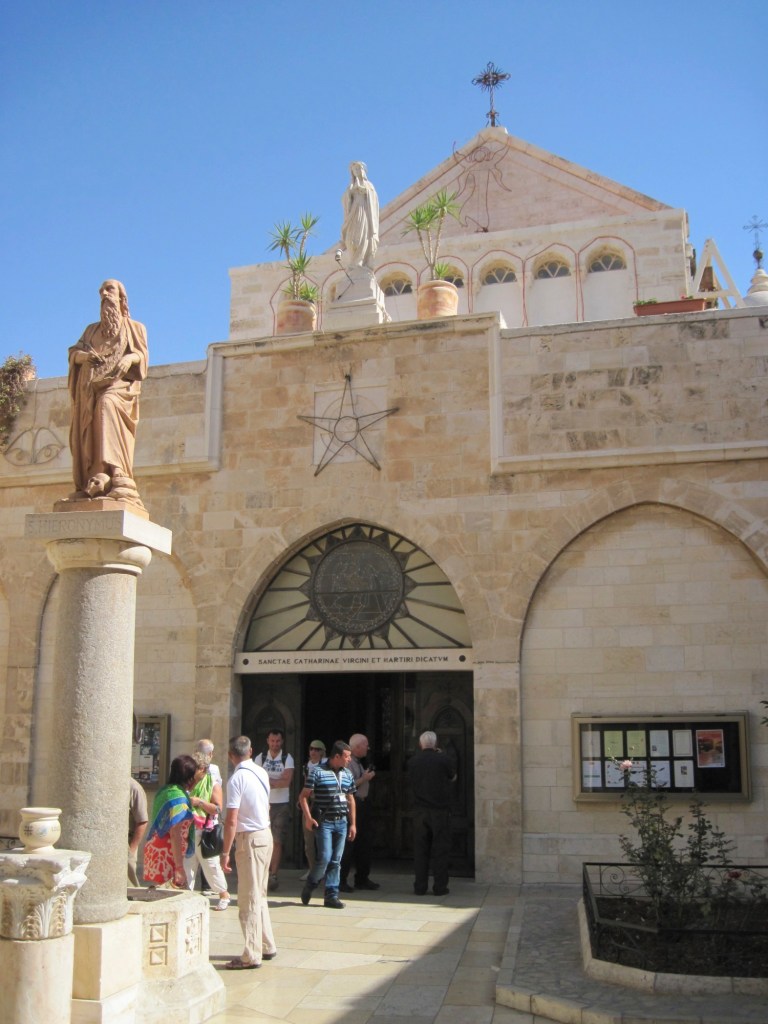
St. Catharine Church, Bethlehem

St. Catharine Church, Bethlehem. Remains of Jerome’s Monastery are under the church

Besides scripture studies, Jerome continued to engage in church controversies, sometimes harshly.

In 410 Alaric and his warriors sacked Rome.  Jerome, shocked by the invasion, provided shelter for Roman Christians fleeing to the safety of the Holy Land. “I have put aside my studies to help them,” he wrote. “Now we must translate the words of scripture into deeds, and instead of speaking holy words we must do them.”

He died in Bethlehem in 420. His remains were taken to the Basilica of St. Mary Major in Rome. A doctor and teacher of the church, he recognized in himsel need for God’s mercy. Jerome is an example that saints are not perfect.

Here are excerpts from his writings:

“Lord, show me your mercy and gladden my heart.
I am like the man going to Jericho, wounded by robbers.
Good Samaritan, come help me.
I am like a sheep gone astray.
Good Shepherd, come seek me and bring me home safe.
May I dwell in your house all my days and praise you forever.”

“I interpret as I should, following the command of Christ: Search the Scriptures, and Seek and you shall find. Christ will not say to me what he said to the Jews: You erred, not knowing the Scriptures and not knowing the power of God. For if, as Paul says, Christ is the power of God and the wisdom of God, and if the man who does not know Scripture does not know the power and wisdom of God, then ignorance of Scripture is ignorance of Christ.
 
Therefore, I will imitate the head of a household who brings out of his storehouse things both new and old, and says to his spouse in the Song of Songs: I have kept for you things new and old, my beloved. In this way permit me to explain Isaiah, showing that he was not only a prophet, but an evangelist and an apostle as well. For he says about himself and the other evangelists: How beautiful are the feet of those who preach good news, of those who announce peace.And God speaks to him as if he were an apostle: Whom shall I send, who will go to my people? And he answers: Here I am; send me.”

Let us glorify Christ In whatever sufferings are ours in this life.

O God, you yourself are both our crown and our shield: May we always follow only you and never depart from you!

Do not put your trust in your sword, or in your own strength; but rather, put your trust in the Lord!

Every day Christ stands at the door to our hearts, longing to enter. Let us open wide our hearts to him, then, that he might come in, and dwell with us always.

God can only speak peace to his people when they hope in him with all their hearts.

God protects us as a Father, and as a hen guarding her chicks, lest a hawk snatch them away.

The shield with which God protects us is spherical, for it keeps us safe on all sides.

All Creation serves God as God ordains: all in Heaven obeys, all on earth obeys, but it is only unhappy man who alone who disobeys.

Every day Christ is crucified in us, for we are crucified to the world. And so Christ is crucified in us.

Happy are those in whose hearts Christ rises from the dead daily. And he will rise in us every day, if we who are sinners will but repent.

Happy the soul in whom God is always enthroned!

Let us never trust in ourselves, but rather, let us always trust In the mercy of the Lord.

Greater by far are the wounds Inflicted by the tongue than those by the sword.

When we give to the poor, let us give thanks to Christ. More than the poor man gives thanks to us, for the poor unknowingly do us a great service. Almsgiving atones for sins.

Quotations selected by Brent Cruz, Confraternity of the Passion.

Sitting Under a Fig Tree

H.V. Morton in his classic “A Traveler in Rome” (NY,1958) called our monastery garden at Saints John and Paul “one of the unknown glories of Rome”.  The Temple of Claudius stood here. This was once part of Nero’s gardens. Water was stored here for naval battles in the Colosseum nearby, animals for display in that  great arena were kept here. It offers a glimpse of history.

Walking there this morning, it offered a glimpse into the Gospel of John we read today where Jesus tells Nathaniel, “a true child of Israel”,

 “ I saw you under the fig tree.
You will see greater things. Amen, amen, I say to you, you will see heaven opened
and the angels of God ascending and descending on the Son of Man.”

There are two chairs under the tree in this garden.. We never sit there alone.

Saints Michael, Gabriel and Raphael, Archangels

Michael

St.Michael, Lucca, Italy

We celebrate the feast of three archangels today, September 29th. St. Gregory the Great says of the angels: “There are many spirits in heaven, but only the spirits who deliver a message are called angels.” Archangels like Michael, Gabriel and Raphael, “are those who proclaim messages of supreme importance…And so it was that not merely an angel but the archangel Gabriel was sent to the Virgin Mary. It was only fitting that the highest angel should come to announce the greatest of all messages.”

Their names, Gregory says, tell the service they perform. “Thus, Michael means “Who is like God”; Gabriel is “The Strength of God”; and Raphael is “God’s Remedy.

“Whenever some act of wondrous power must be performed, Michael is sent, so that his action and his name may make it clear that no one can do what God does by his superior power…So too Gabriel, who is called God’s strength, was sent to Mary. He came to announce the One who appeared as a humble man to quell the cosmic powers. Thus God’s strength announced the coming of the Lord of the heavenly powers, mighty in battle. Raphael means, as I have said, God’s remedy, for when he touched Tobit’s eyes in order to cure him, he banished the darkness of his blindness. Thus, since he is to heal, he is rightly called God’s remedy.”

St. Paul of the Cross, the founder of the Passionists, dedicated his first foundation on Monte Argentario in Italy to St. Michael and he said the archangel preserved his community from harm. Paul was a Lombard. Historians say the Lombards believed the Saracens were stopped from invading Lombardy in the 6th century by Michael, which fostered devotion to the archangel afterwards.

In a world so convinced that human power is the only power, it’s comforting to have another level of power to look towards.

“St. Michael the Archangel, defend us in battle…”

The Pines of Rome

Our garden here in Rome was once part of Nero’s extensive gardens that surrounded his Golden Palace. It’s filled with majestic pines, the pines of Rome. They’re trees that beg for a musical tribute, and Respighi did it with his musical masterpiece.

I’ll add a small tribute of my own, from our garden today:

St. Vincent de Paul: September 27

The opening Mass prayer for St. Vincent’s feast day describes succinctly what made him a great saint:

O God, for the relief of the poor

and the formation of the clergy

you endowed the priest St.Vincent De Paul

with apostolic virtues.

grant, that afire with the same spirit

we may love what he loved

and put into practice what he taught.

God gave Vincent de Paul grace to reach out to the poor and form the clergy. Both the poor and the clergy in France needed the grace of God.

Vincent as a young priest, met a Protestant once whom he invited to convert to Catholicism. The Protestant said:

“You told me, Monsieur, that the Church of Rome is led by the Holy Spirit, but I find that hard to believe because, on the one hand, we see Catholics in the countryside abandoned to pastors who are ignorant and given over to vice, with so little instruction in their duties that most of them hardly know what the Christian religion is. On the other, we see towns filled with priests and monks who are doing nothing; there are perhaps ten thousand of them in Paris, yet they leave the poor country people in this appalling state of ignorance in which they are lost. And you want to convince me that all this is being guided by the Holy Spirit! I’ll never believe it.”

That’s a picture of the French church in Vincent’s time. One reason for its sad condition was that the French crown appointed bishops and they, in turn, appointed men from important French families who supported them. Political considerations largely influenced church appointments.

As a result, the priesthood in France was badly off, priests had little education, some could hardly read or write. For financial support, they looked for benefices, usually found in the larger cities among rich families, where they could say Mass and celebrate the sacraments. As a young priest, Vincent himself was chaplain for a wealthy family in Paris.

The decision to become a priest was mostly a family’s decision, which might designate one of its sons as its “offering” to God. The priesthood became a way  to get a son some education and some social standing. Vincent’s own family, who were peasants, were influenced by motives like these. For many the priesthood was a job and not a call.

What Vincent did was to appeal to priests, religious, and even bishops, to begin to look at their roles spiritually. They were called by God to a vocation, not a job or career,  They had a  sacred mission to follow Jesus Christ. Vincent, in fact, called the community he founded the Congregation of the Mission (Vincentians), because they were to go to those neglected. He encouraged, not only priests, but communities of women to care for the poor, without living the usual cloistered life of that time. Vincent’s network embraced laypeople too, who worked for those Jesus called “the least.”

Through the efforts of this saint communities of Daughters of Charity,  Societies of St. Vincent de Paul, are found throughout the world today.

The following reading for Vincent’s feast captures his powerful message:

Although in his passion he almost lost the appearance of a man and was considered a fool by the Gentiles and a stumbling block by the Jews, Jesus showed them that his mission was to preach to the poor: He sent me to preach the good news to the poor. We also ought to have this same spirit and imitate Christ’s actions, that is, we must take care of the poor, console them, help them, support their cause.Even though the poor are often rough and unrefined, we must not judge them from external appearances nor from the mental gifts they seem to have received. On the contrary, if you consider the poor in the light of faith, then you will observe that they are taking the place of the Son of God who chose to be poor.

Since Christ willed to be born poor, he chose for himself disciples who were poor. He made himself the servant of the poor and shared their poverty. He went so far as to say that he would consider every deed which either helps or harms the poor as done for or against himself. Since God surely loves the poor, he also loves those who love the poor. For when one person holds another dear, he also includes in his affection anyone who loves or serves the one he loves. That is why we hope that God will love us for the sake of the poor. So when we visit the poor and needy, we try to understand the poor and weak. We sympathise with them so fully that we can echo Paul’s words: I have become all things to all men. Therefore, we must try to be stirred by our neighbours’ worries and distress. We must beg God to pour into our hearts sentiments of pity and compassion and to fill them again and again with these dispositions.

It is our duty to prefer the service of the poor to everything else and to offer such service as quickly as possible. If a needy person requires medicine or other help during prayer time, do whatever has to be done with peace of mind. Offer the deed to God as your prayer. Do not become upset or feel guilty because you interrupted your prayer to serve the poor. God is not neglected if you leave him for such service. One of God’s works is merely interrupted so that another can be carried out. So when you leave prayer to serve some poor person, remember that this very service is performed for God. Charity is certainly greater than any rule. Moreover, all rules must lead to charity. Since she is a noble mistress, we must do whatever she commands. With renewed devotion, then, we must serve the poor, especially outcasts and beggars. They have been given to us as our masters and patrons.”

More on St. Vincent de Paul

A Roman Mary Garden

I wasn’t expecting to see a Mary Garden in Rome, but there it was in our monastery garden of Saints John and Paul on the Celian Hill. The garden, originally belonging to the impious Emperor Nero, faces the Colosseum and the Roman Forum below. Now it’s a monastery garden.

Today, a statue of Mary rests on an ancient Roman capital, surrounded by pines and plants that must have grown here centuries ago. A blanket of Shepherd’s Purses, known for medicinal benefits, covers the earth she stands on. Mary looks out over the centuries, claiming this place for her Son.

Just below here from the edge of the garden, you can see long lines of tourists on guided tours wending their way through the Colosseum. I wish they could find some of the wisdom found in this small quiet place, a wisdom Mary found and offers to us.

Pray for us, O holy Mother of God, that we may be made worthy of the promises of Christ.

Saints Cosmas and Damian: September 26

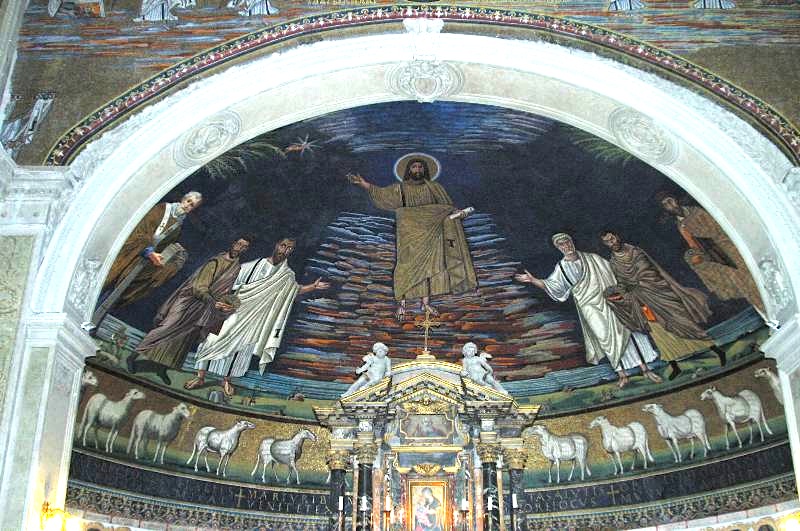
Church of Saints Cosmas and Damian, Rome

We remember Saints Cosmas and Damian September 26th. Tradition says the two brothers practiced medicine in Syria in the fourth century and were martyred during the reign of Diocletian. They gave their medical services freely to anyone in need, and so followed Jesus’ teaching, “Freely you have been given, freely give. “ (Matthew 10:8)  Besides caring for bodily needs they prayed for those they cared for.

The brothers were honored widely from earliest times in the Christian churches of the east and west. In the  7th century mosaic in the church of Saints Cosmas and Damian in the Roman Forum they’re shown as good and faithful physicians being presented to Christ holding their medicine boxes in their hands. A reward waits for them.They’re patrons of doctors, pharmacists, nurses, barbers. 

Though there is no exact historical information about them, Cosmas and Damian are examples of holiness. Care for the sick and suffering were an important part of the ministry of Jesus, who often cured them and returned them to their families and communities. In his ministry, Jesus had special care for the sick and suffering. He often showed his concern in miraculous cures that restored them to their families and communities. Those who heal and care for the sick and suffering– whether doctors, nurses, people involved in medical research, caregivers of every kind– follow him in what they do.

Cosmas and Damian remind us health care  is more than a job you may– or may not – get paid for. It’s sharing in the divine power to heal. “I was sick and you visited me,” Jesus says at judgment time. Health care is vital to every society and culture.

The scant historical evidence about Saints Cosmas and Damian is more than compensated by their early popularity in the churches of the east and west. Why were they and the churches built to honor them, like that in Rome, so popular?

The church of Saints Cosmas and Damian in Rome stands a few hundred yards away from the Roman Senate, replacing a basilica honoring one of the gods of Rome. It was built in the 6th century by Pope Felix II, a relative of Gregory the Great, at a time when Rome’s economy plunged because of barbarian invasions. Hard times often affect the poor and the sick most.

Was the church a reminder to Rome’s leaders nearby that health care is a basic human right to be prioritized and supported. I think so. Health care is still a burning issue today as we expand our military budgets and pull away from our care of the planet and its poor.

Saints Cosmas and Damian, pray for us.    

The Dawn from on High

A few days ago, I prayed  the Benedictus, Zachariah’s prayer announcing the “Dawn from on high, breaking upon us”, not in a chapel, but looking from a plane window over the Alps on its way to Rome. Zachariah, like many people of old, experienced the dawn better than we do. We seldom look out the window as we awake, but prefer to listen to some device announcing news of the day. .

Zachariah saw the dawn announcing more than a day’s news. So many of the psalms prayed each morning do the same. God is present today, sure as the dawn. The dawn “from on high” takes possession of our day. God comes into our dark world. God has come in Jesus Christ. 

We have to announce that too, like John the Baptist did. The Light has come.

Here’s his prayer and some pictures from a plane. 

Blessed be the Lord, the God of Israel;

  he has come to his people and set them free.

He has raised up for us a mighty savior,

  born of the house of his servant David.

Through his holy prophets he promised of old,

that he would save us from our enemies,

  from the hands of all who hate us.

He promised to show mercy to our fathers

  and to remember his holy covenant.

This was the oath he swore to our father Abraham,

  to set us free from the hands of our enemies,

free to worship him without fear,

  holy and righteous in his sight

  all the days of our life.

You, my child, shall be called the prophet of the Most High,

  for you will go before the Lord to prepare his way,

to give his people knowledge of salvation

  by the forgiveness of their sins.

In the tender compassion of our God

  the dawn from on high shall break upon us,

to shine on those who dwell in darkness and the shadow of death,

and to guide our feet into the way of peace.

Glory to the Father and to the Son,

  and to the Holy Spirit:

as it was in the beginning, is now,

  and will be for ever. Amen.

Hold On To Dreams: The Prophet Haggai

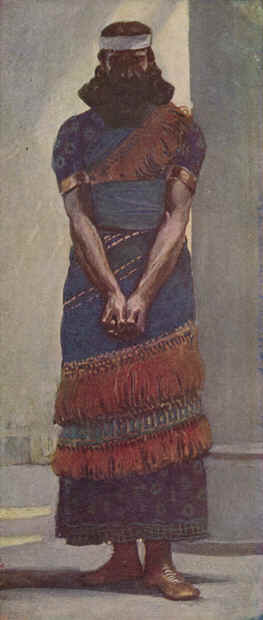
The Prophet Haggai, James Tissot

Not much optimism in our world today. Too many signs of bad days ahead; in fact, are they already here? 

We’re reading in our lectionary this week about the Period of Restoration, when some Jews returned to Judea and Jerusalem to restore Judaism, about 520 BC. Their dreams were fed by prophets like Jeremiah who promised: “Shouting, they shall mount the heights of Zion, they shall come streaming to the Lord’s blessings: the grain, the wine, and the oil, the sheep and the oxen; they themselves shall be like watered gardens, never again shall they languish.” (Jer. 31)

But their dreams were dashed by what they found, a city in ruins and some of their own people there wanted no part of them. The Prophet Haggai speaks to them:

“Thus says the LORD of hosts: This people says:“The time has not yet come to rebuild the house of the LORD.”(Then this word of the LORD came through Haggai, the prophet:) Is it time for you to dwell in your own paneled houses, while this house lies in ruins?Thus says the LORD of hosts: Consider your ways! Go up into the hill country; bring timber, and build the house that I may take pleasure in it and receive my glory, says the LORD.” (Haggai 1:1-8)

We’re a people too who were promised so much. World wars we fought would bring peace to our country and the world. Science promised a cure for everything and unlimited treasures from technology. I remember the heady days after the Second Vatican Council and the promise of a renewed church. Who expected Covid 19 and Climate Change, a fractious country and church, a world that’s a mess?  

Yet, there’s more than Covid 19 and Climate Change going on in our world. God’s kingdom is coming, being built even now. Not a time for building paneled houses for ourselves. Time to “Go up into the hill country; bring timber, and build the house that I may take pleasure in it and receive my glory, says the LORD.” 

We have to hold on to our dreams.