Ecological Conversion

The other day I was looking through our Passionist liturgical calendar for the feasts ahead and came to a section at the end that I never paid much attention to before. “Notices.”  It’s a list from the Vatican and the United Nations of important issues facing our world today,  issues to keep before us in our liturgy. Liturgy is not just feasts and readings of the day; we need to bring current issues into our prayer and reflection lest liturgy becomes an “archeological dig.”

Each month the pope asks that we reflect and pray about some important issue.  For example, all of September and until the feast of St. Francis of Assisi, we’re asked to pray and reflect on the care of creation. It’s a “Season of Creation”; the Orthodox Church began it, I believe, and Roman Catholics and other religious groups have joined in.  

A timely issue. 

All this week there were demonstrations and conferences throughout the world on climate change. About 4 million young people demonstrated in cities globally to pressure world leaders meeting at the UN to decrease the world’s dependence on fossil fuel. The UN meeting was disappointing. My own country, the United States, along with China and Russia, did nothing. 

A reporter asked leaders of the youth demonstrations why did young people  demonstrate. They said that young people are terrified of the future. Terrified. And if the young Swedish girl who has been speaking at the UN and throughout the US is any indication, the younger generation is angry at an older generation, particularly politicians,  that doesn’t want to do anything. 

My own church here in the US hasn’t responded well to the issue of climate change, which leads me to wonder if that may be a factor for so many young people finding church irrelevant. 

Pope Francis is aware of the crisis the world is facing. Besides urging action by the United Nations, (see previous blog), he’s invited leaders from the religious and educational worlds to meet at the Vatican to see how we can change our educational systems worldwide, so that we can look at the world differently. In Laudato si he speaks of an “ecological conversion”. It’s not a matter of changing technology; it’s changing our mentality.  

I’ve been reading recently an article by the Jesuit historian, John W. O Malley, “How We Were: Life in a Jesuit Novitiate, 1946-48” That’s around the time I made my own novitiate with the Passionists. O’Malley describes the day by day novitiate experience thoroughly, but he also indicates new influences affecting Jesuit formation then– a new historical sense about the past and the scriptures. a greater attention to human sciences like psychology. They were making their way slowly into religious formation structures. They were making their way into the formation structure of my community as well.

It seems to me a new cosmology is making its way into our society now. Yes, the historical sciences are important and we have to know as much as we can know about ourselves. But we have to go beyond humanity now.

We have to reflect on creation and keep it in our prayers. It’s there every day as we bring bread and wine and water to the altar in the Eucharist. It’s our home. It’s endangered. We need to care for it.
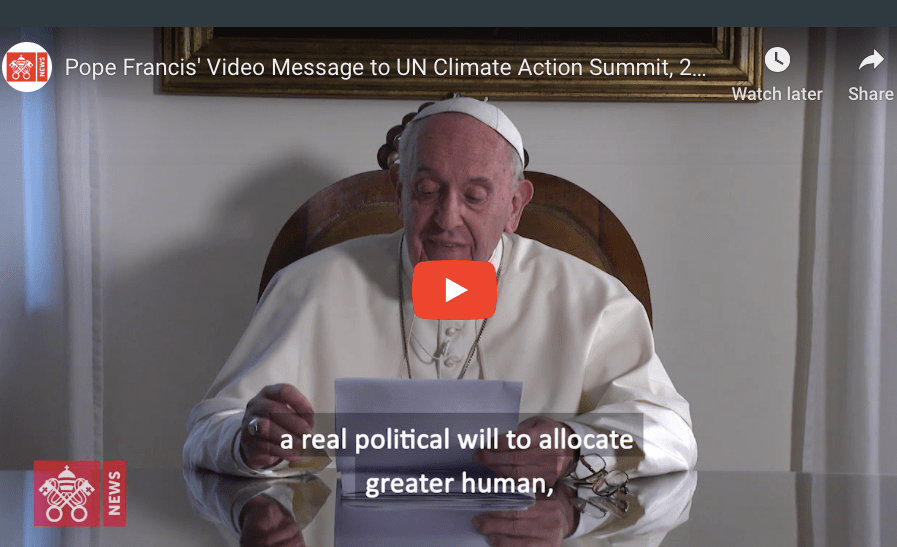
Pope Francis to UN Climate Change Conference

It was a disappointing meeting. Major countries like the USA, China, Russia presented no new initiatives.

The Pope sent a message. Take a look at it. You can get it at the Vatican site;

https://www.vaticannews.va/en/pope/news/2019-09/pope-francis-videomessage-climate-action-summit-united-nations.html#play

Readings for the 25th Week

SEPTEMBER 23 Mon Saint Pius of Pietrelcina Memorial

Ezr 1:1-6/Lk 8:16-18 

24 Tue St. Vincent Strambi, CP, bishop

Ezr 6:7-8, 12b, 14-20/Lk 8:19-21 

25 Wed weekday

Ezr 9:5-9/Lk 9:1-6 

26 Thu Weekday

[Saints Cosmas and Damian, Martyrs]

Hg 1:1-8/Lk 9:7-9 

27 Fri Saint Vincent de Paul,  Memorial

Hg 2:1-9/Lk 9:18-22 

28 Sat Weekday

[Saint Wenceslaus, Martyr; Saint Lawrence Ruiz and Companions, Martyrs;)

Zec 2:5-9, 14-15a/Lk 9:43b-45 

29 SUN TWENTY-SIXTH SUNDAY IN ORDINARY TIME

Am 6:1a, 4-7/1 Tm 6:11-16/Lk 16:19-31 

This week will see worldwide demonstrations leading to the Climate Action Summit on 23 September at the United Nations in New York City, where representatives of the nations of the world will gather to consider plans to address the global climate emergency.

September 21th saw Youth Climate Summit, an historic event that brought together young activists, innovators, entrepreneurs, and change-makers who are committed to addressing the global climate emergency.

Pope Francis has encouraged Catholics throughout the world to join in this effort: “In this ecological crisis affecting everyone, we should also feel close to all other men and women of good will, called to promote stewardship of the network of life of which we are part.”

See his message for the World Day of Prayer for the Care of Creation, September 1. 

http://w2.vatican.va/content/francesco/en/messages/pont-messages/2019/documents/papa-francesco_20190901_messaggio-giornata-cura-creato.html

24th Sunday c: Mercy

The technology team would like you to join us in
Congratulating Father Victor Hoagland on 60 Years of Priestly Ministry!
A Celebratory Mass will be held at 10 am on Sunday September 15th
at the Parish of Sainty Mary in Colts Neck with refreshments to follow.
Thank You Father Victor! Much Love from us all!

For this week’s homily please play the video below.

Readings for the 23rd Week of the Year c

SEPTEMBER 9 Mon USA: Saint Peter Claver, Priest Memorial

Col 1:24—2:3/Lk 6:6-11 

10 Tue Weekday

Col 2:6-15/Lk 6:12-19 (438)

11 Wed Weekday

Col 3:1-11/Lk 6:20-26 (439)

12 Thu Weekday

[The Most Holy Name of Mary]

Col 3:12-17/Lk 6:27-38 (440)

Pss III

13 Fri Saint John Chrysostom, Bishop and Doctor of the Church

Memorial

1 Tm 1:1-2, 12-14/Lk 6:39-42 (441)

14 Sat The Exaltation of the Holy Cross

Feast

Nm 21:4b-9/Phil 2:6-11/Jn 3:13-17 (638) Pss Prop

15 SUN TWENTY-FOURTH SUNDAY IN ORDINARY TIME

Ex 32:7-11, 13-14/1 Tm 1:12-17/Lk 15:1-32 or 15:1-10 (132) Pss IV

If you look at our church calendar this week, St. Peter Claver, the Jesuit who ministered to African slaves in Columbia, South America, in the 17th century, is listed as a saint who is to be remembered in all the churches of the United States on September 9.  His feast is an obligatory memorial in our country. We have to remember him. 

When the Roman calendar was revised in 1975 there were 95 optional memorials–saints and feasts that can be celebrated at the discretion of the local church or community and 

63 obligatory memorials, saints and feasts that are more important for the universal church and should be celebrated by the universal church. 

This week, for example, the Feast of the Most Holy Name of Mary, September 12,  is an optional memorial. The Feast of John Chrysostom, September 13, is an obligatory memorial.  

In the church in the United States, Peter Claver is to be remembered. The reason, of course, is that he dealt with an issue that not only affected the world he lived in, but also still affects the world we live in, the issue of racism. 

23rd Sunday c: Going to School

For this week’s homily please watch the video below.


Our Bodies Through Time

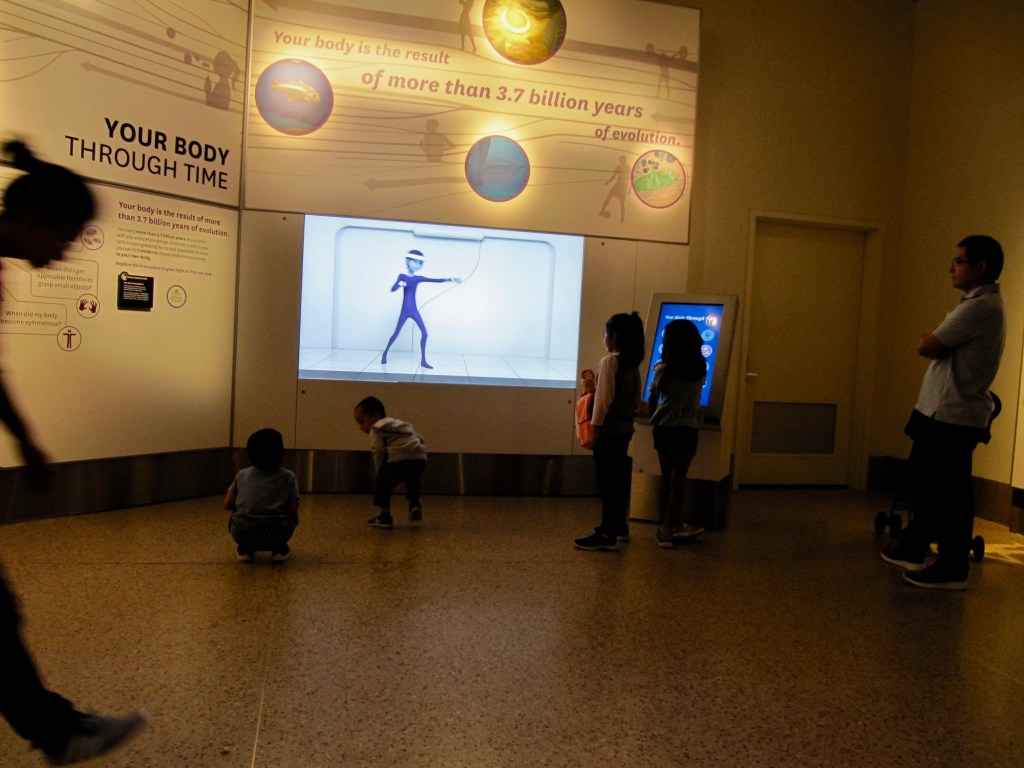
One of the exhibits at the “Deep Time” exhibit, currently at the Smithsonian in Washington, DC, is called “Your body through time: Your body is the result of more than 3.7 billion years of evolution.”

So we didn’t just come from Mommy and Daddy, our favorite human way to say it; 3.7 billion years has been at work bringing us to where we are, and we’re not the only ones. A vast tree of created beings has come to be in deep time.  

The Book of Genesis says in its creation story we come from “the dust of the earth”. All of us. The story we know now is much more complex, and we still don’t know it all .  

I’m sure the young children and an adult viewing the exhibit in the photo above went away, like me, wondering at the mystery it presented. “ Too wonderful for me, this knowledge, too high, beyond my reach.” (Psalm 139)

The same can said of St. Paul’s words to the Colossians read today in our liturgy: 

“In Jesus Christ, everything in heaven and on earth has been created, things visible and invisible.” (Colossians 1,12-20) 

Yet, this knowledge tells us who we are and what we are to do. We need to keep it in mind.

Colossians and Deep Time

We begin reading the Letter to the Colossians today in our liturgy. Paul never visited this church near Ephesus. Commentators don’t agree about the situation Paul addresses in the letter. It’s not about problems of human behavior and morality as the letters to the Corinthians are. The Colossians have faith in Christ; they love for one another. But some of them here are trying to figure out the cosmos. What’s this world beyond our human world all about? 

Don’t leave Jesus Christ out of that larger world, Paul says. He speaks to the Colossians about the Cosmic Christ. 

“Jesus is the image of the invisible God, the firstborn of all creation. For in him were created all things in heaven and on earth, the visible and the invisible, whether thrones or dominions or principalities or powers; all things were created through him and for him.He is before all things, and in him all things hold together. He is the head of the Body, the Church.He is the beginning, the firstborn from the dead, that in all things he himself might be preeminent. For in him all the fullness was pleased to dwell, and through him to reconcile all things for him, making peace by the Blood of his cross through him, whether those on earth or those in heaven.”  (Colossians 1, 15-20)

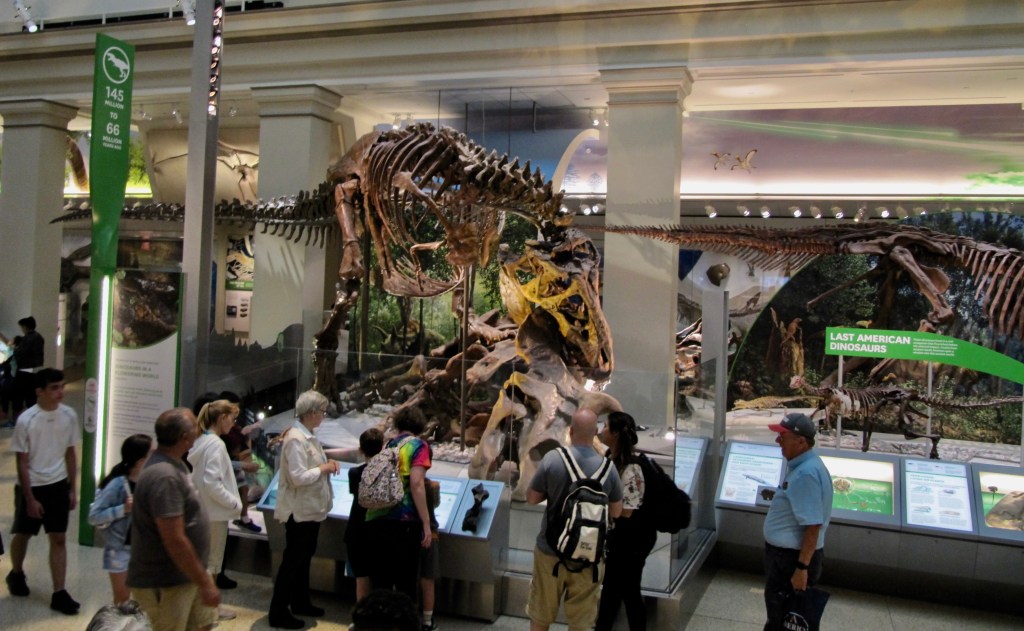
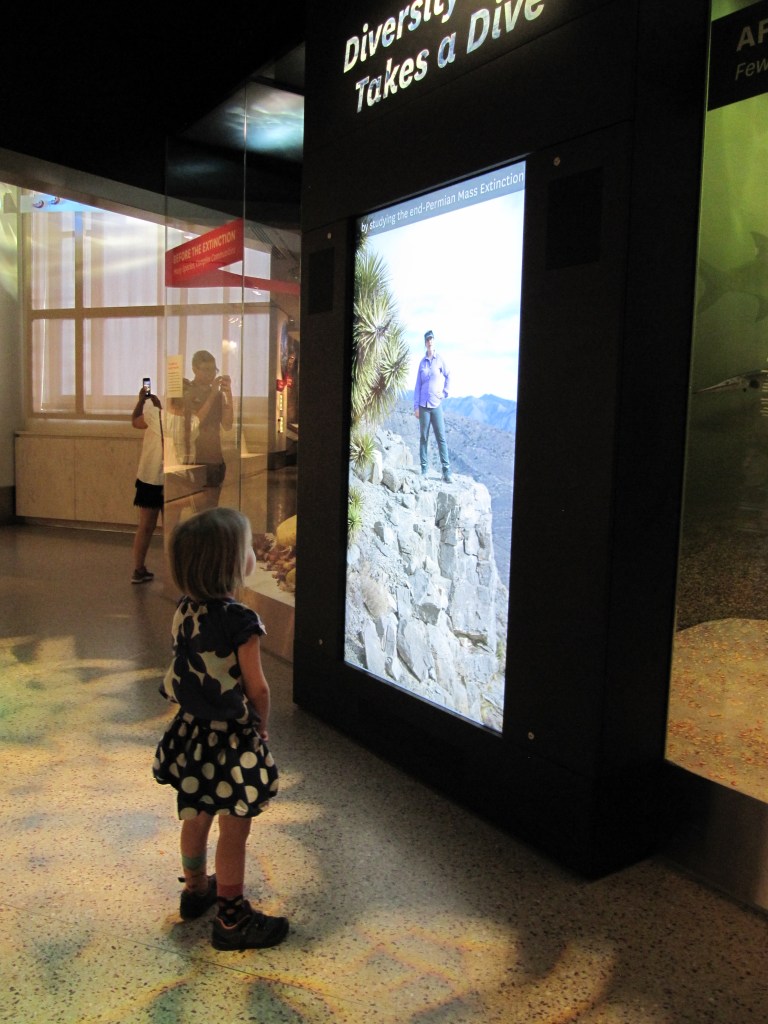
Last week after a family wedding in southern New Jersey, I went with a cousin of mine to the Smithsonian in Washington, DC, to see an exhibit called “Deep Time” about the 4.5 billion years it took the universe to arrive at where it is now. It’s a wonderful exhibit, but it was really hard to take it all in. No matter how clever the presentations, our minds find it hard to grasp what happened in 4.5 billion years.. 

It hasn’t been 4.5 billion years without troubles, either. The exhibit made clear that our earth was almost destroyed a number of times, and it offers a strong warning about what might happen as our climate changes now.

The exhibit was about what we know from science; there was no reference to religious knowledge here. But maybe Paul’s letter to the Colossians is a timely message our age needs to hear. Jesus Christ was not just Jesus of Nazareth, rejected by his own people in a little corner of the Middle East long ago. He was not just a teacher who tells us how to get along with one other.

“Jesus is the image of the invisible God…in him were created all things in heaven and on earth.” “He holds all things together” for 4.5 billion years and beyond.. He brings peace through the blood of his cross. He lives and reigns with Father and the Holy Spirit, now and forever.  

Like the Colossians, we need to hear this, today.  

Visiting Gregory the Great; September 3

Church of St. Gregory the Great, lower left, off Via di San Gregorio (google maps)