The Feast of Stephen: December 26

We follow Christmas Day with the feasts of St. Stephen and St. John. The two saints seem to interrupt the Christmas narrative, but actually they help us understand the Christmas mystery.

The martyr Stephen, whose death St. Luke describes in the 6th chapter of the Acts of the Apostles, faithfully followed Jesus into the mystery of his death and resurrection. He is the first of many faithful followers to come, imitating Jesus, the Savior, who prayed and gave his life to save his people from their sins. Stephen points to the destiny of the Child born of Mary.

St. Fulgentius explains his place in the Christmas mystery:

“Yesterday we celebrated the birth in time of our eternal King. Today we celebrate the triumphant suffering of his soldier.  Yesterday our king, clothed in his robe of flesh, left his place in the virgin’s womb and graciously visited the world. Today his soldier leaves the tabernacle of his body and goes triumphantly to heaven.  

” Our king, despite his exalted majesty, came in humility for our sake; yet he did not come empty-handed. He brought his soldiers a great gift that not only enriched them but also made them unconquerable in battle, for it was the gift of love, which was to bring men to share in his divinity. He gave of his bounty, yet without any loss to himself. In a marvellous way he changed into wealth the poverty of his faithful followers while remaining in full possession of his own inexhaustible riches.   

“And so the love that brought Christ from heaven to earth raised Stephen from earth to heaven; shown first in the king, it later shone forth in his soldier. Love was Stephen’s weapon by which he gained every battle, and so won the crown signified by his name. His love of God kept him from yielding to the ferocious mob; his love for his neighbour made him pray for those who were stoning him. Love inspired him to reprove those who erred, to make them amend; love led him to pray for those who stoned him, to save them from punishment. Strengthened by the power of his love, he overcame the raging cruelty of Saul and won his persecutor on earth as his companion in heaven.

( St. Fulgentius of Ruspe, on the Feast of St. Stephen)

The Feast of Stephen and other martyrs were listed after the Feast of Christmas in the Roman calendar of 336, the earliest calendar mentioning the Christmas feast. The first feast days celebrated by the church were Sundays and Easter. Then, the feasts of martyrs, like Stephen, appear; then the Christmas feast was introduced.

The martyrs offer and important dimension to the Christmas feast. They tell us that the Messiah came to take on the burden of a suffering world. He would experience the mystery of the Cross. Martys, like Stephen and the Holy Innocents, witness to him.

In the Church of San Stephano Rotondo in Rome, pictures of the death of Jesus and Stephen are placed side by side. The church also honors martyrs like Stephen in paintings on its walls.

December 25-January 2: Feasts and Readings

Christmas is over this week for many people: the tree taken down and decorations put away. But the mystery of incarnation is too big for a one day celebration. The church celebrates this mystery through the four weeks of Advent and continues through the days of the Christmas season till the Feast of the Epiphany. 

The celebration of the day of Jesus’ birth may be over, but the mystery of his Incarnation is never over. We are reminded of that in the feasts following Christmas day.

December 26. From earliest times, the church celebrated the Feast of Stephen, the first Christian martyr on this day. Stephen imitated Jesus who came in human likeness and took the form of a slave, enduring death, even death on a Cross. ( Philippians 2) (Acts 6,8 ff). “The love that brought Christ from heaven to earth raised Stephen from earth to heaven,” St. Fulgentius says of Stephen.

December 27. The feast of St. John, the apostle, is another feast celebrated by  the church from earliest times as part of the Christmas mystery. The Word became flesh and dwelt amongst us, John’s Gospel proclaims. Through the Son of God, the new Adam, we became children of God, made to share in God’s glory.

The shepherds heard angels bringing tidings of great joy to all the people at the birth of Jesus. (December 28) we hear cries of the Innocents put to death by Herod the Great so no rivals challenge his power and throne. The shepherds returned to the dark hills after seeings the Child in the arms of Mary. Evil persists after Jesus is born, but the mystery of the Incarnation promises sorrow turned into joy.

January 1, we celebrate the Solemnity of Mary, the Holy Mother of God,. Like Mary, we need to keep reflecting on this mystery in our hearts.

Was Jesus Born in Bethlehem?

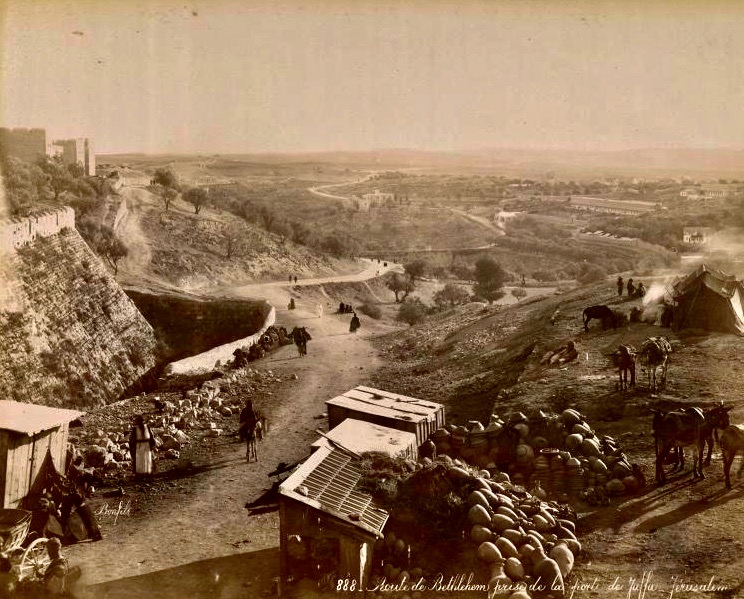
Road to Bethlehem from Jerusalem, 18th century

Luke begins his story of Jesus’ birth (Luke 2) with important historical dates. Jesus was born as Caesar Augustus, ruler of the Roman world, ordered a census of the whole world. The Romans saw Augustus a  “savior,” a “god,” who brought peace and prosperity to the Roman world during his long reign. It was a “Golden Age,” the Roman Poet Virgil said.

For Luke, Jesus is the real savior who brings peace to the earth and a greater “Golden Age.”  Augustus, for all the honors paid him, was only an agent in God’s plan preparing for the coming of the Son of God. 

Jesus was born in Bethlehem during“…the first enrollment, when Quirinius was governor of Syria.” (Luke 2:2) See the notes to Luke’s Gospel in the New American Bible. https://bible.usccb.org/bible/luke/2?1 . Early Christian sources like Justin Martyr  and Origen– and the evangelists themselves – uphold Bethehem as his birthplace.  

The historic reliability of the gospels is important. Just as important is their theology. God comes humbly into our world, Luke’s Gospel says. That’ s the lesson Jesus’ birth teaches.

Mary, who was with child, and Joseph come to Bethlehem from Nazareth, at least a three day’s journey away, to take part in a government census. They’re ordinary people among many others.  When they get to Bethlehem, there’s no room for them except a stable that’s been carved out from a hillside cave, and there Jesus is born.

Angels announce his birth and sing his praises in Luke’s story, but Jesus is born in the humblest way. “There is nothing glorious about the circumstances of the Messiah’s birth,” a recent commentator on Luke’s gospels says, and that’s what Luke wants to show. “God’s fidelity is worked out in human events, even when appearances seem to deny his presence and power.” ( Luke Timothy Johnson, The Gospel of Luke, Sacra Pagina, Collegeville, Minn. 1991, p 52.) 

“Even when appearances seem to deny his presence and power,” even when there are no angels singing in the night, God is with us. That’s what the mystery of the Incarnation teaches. No angels sang when Jesus spent years living unknown in Nazareth . No angels sang when he was opposed and rejected and shunned in his ministry, when he was arrested and cruelly put to death on Calvary. Jesus took human form, the form of a slave, and went to death on a Cross. And from death God raised him to life.

The shepherds go in search of the sign, not a “sign” in the sense that God’s glory is visible and one might say unequivocally: this is the true Lord of the world. Far from it. In this sense, the sign is also a non-sign. God’s poverty is his real sign. But for the shepherds, who had seen God’s glory shining in their fields, this is sign enough. They see inwardly. They see that the angel’s words are true. So the shepherds return home with joy. They glorify God and praise him for what they have heard and seen (cf. Lk 2:20).” (Pope Benedict XVI. Jesus of Nazareth: The Infancy Narratives . The Crown Publishing Group. Kindle Edition.) 

We share this mystery with the shepherds. We may not see his power and his presence, but he is with us and we are with him. The mystery of his birth, the mystery of his Incarnation, is our mystery too.

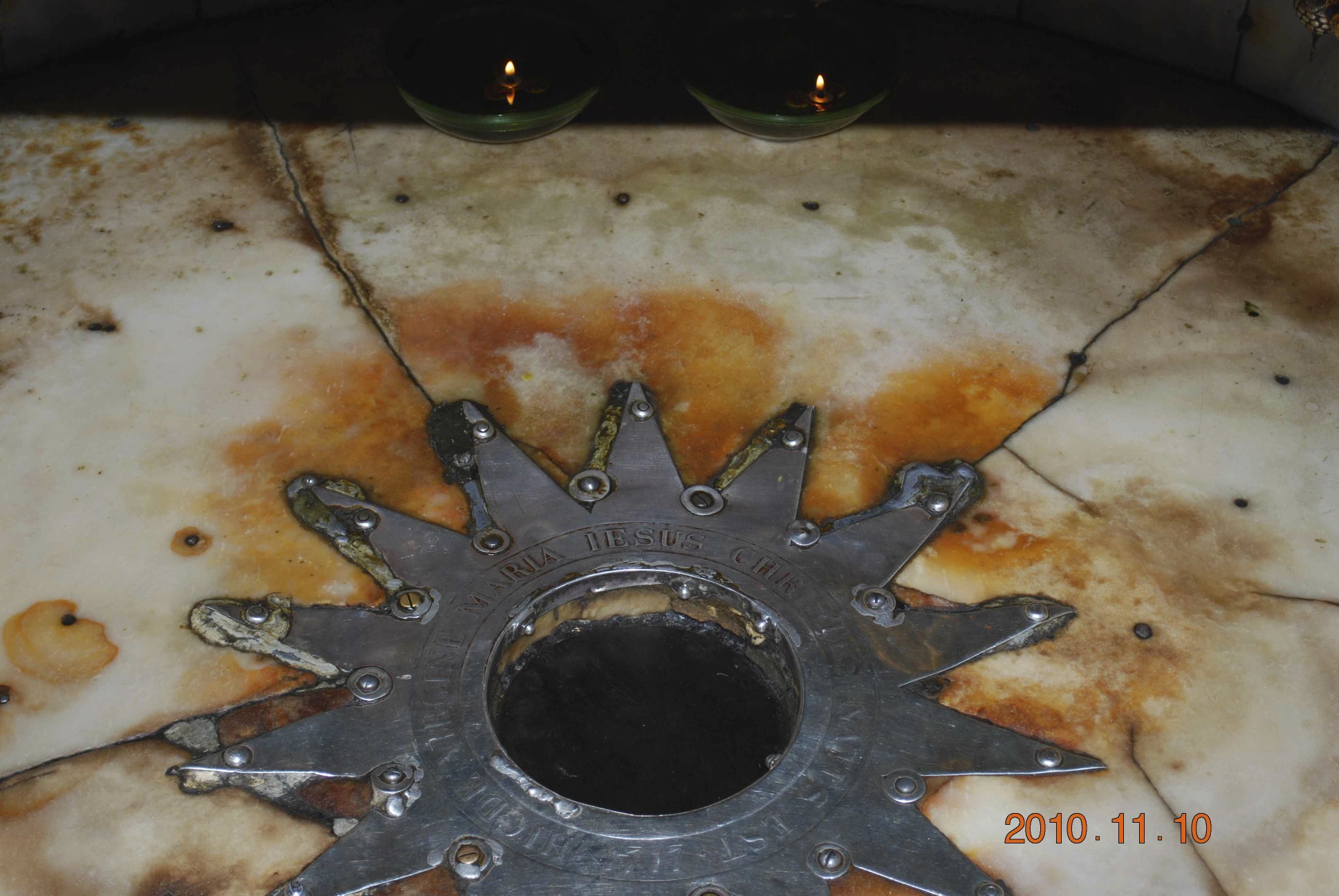
For the history of Bethlehem, the caves where Jesus was born, the ancient church of the Nativity,  see  The Holy Land. An Oxford Archeological Guide.  Jerome Murphy-O’Connor, OP. New York 2008)

Mary’s Story

We’re reading the last of the Advent gospels from the Infancy Narratives of the gospel of Luke. The song of Zachariah after he names his new born child John. 

Blessed be the Lord, the God of Israel, He has come to his people and set the free. He has raised up for us a mighty Savior, Born of the house of his servant David, Through his prophets he promised of old, That he save us from our enemies, From the hands of those who hate us.

Scholars are very careful what they say when they comment on the gospels. So if we ask “Where do these stories come from?” they usually point to what Luke says at the beginning of his gospel: He consulted eyewitnesses and sources that were available to him, and he wrote about what took place then in an orderly way.

If we ask who are the eyewitnesses for this part of the gospel, scholars venture that Mary, the mother of Jesus, may be Luke’s  principal source. But scholars are cautious and that’s about all they will say.

We ordinary people can take more chances as we look at the scriptures.  In meditating on the scriptures we can go where scholars won’t go.  Of course, we can be wrong.

Suppose we imagine Luke interviewing Mary about Elizabeth and Zachariah. “Did you have any idea before the angel came to you, Mary, that Elizabeth, your cousin, had become pregnant? “

“No”, Mary said, “No, I had no idea. After the angel came to me and told me about Elizabeth I  went down  to  see her in the hill country as quickly as I could. She was six months pregnant. Zachariah was there. He couldn’t speak. He had to write down what had happened in the temple in the days he was there. “

“ I spent three months with them there. We turned to the scriptures to see what God was doing with us. We’re Jewish women, where else would we turn? We went through God’s promises to Abraham, Jacob and David that one of their descendants would come and lead his people. We remembered the mother of Samson, and Anna, the mother of Samuel. They brought children into the world in a way that could not be explained. We read the Prophet: Isaiah and Jeremiah. They spoke of God’s kingdom coming.

When I returned to Nazareth, Joseph told me of his meeting with the angel in a dream. I told him what happened to me. We didn’t understand it all, but we believed that God was about something great, something beyond us. Holy is his name. 

No angel spoke to me after that. “

As we look at the readings for these last days of Advent, can we say that they’re likely the Old Testament readings that Mary and Elizabeth and Zachariah and Joseph looked at when they came together and faced the mystery of God.

As we look at the New Testament readings from the Infancy Narrative, can we say that they came from Luke’s conversations with Mary? I think we can. I may be wrong, but I believe they are.

In the Infancy Narratives we are listening to Mary’s story. There are real people behind these stories and we know who they are.

December 24: Jesus, Son of David

BYVANCKB_mimi_74g39_080r_min

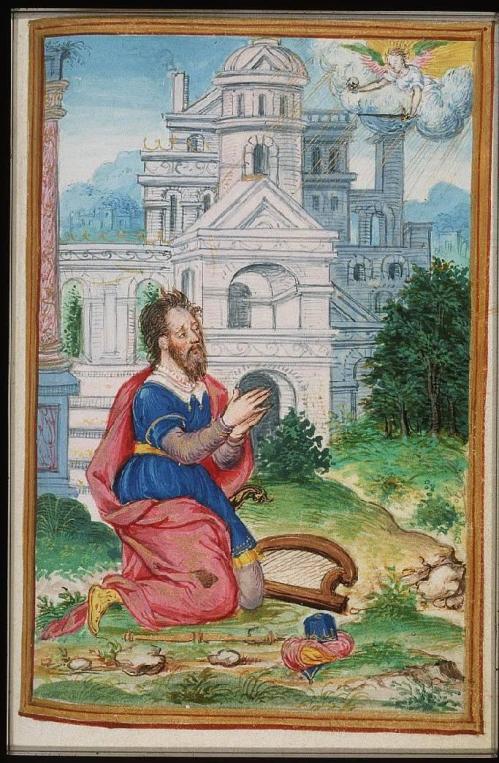
What does our reading today from the Book of Samuel say about the birth of Jesus Christ? King David tells the Prophet Nathan that he’s going to build God a kingly palace like his own. The grand palace in our picture above is what he plans to build.

In reply God says: “Should you build me a house to dwell in? I took you from the pasture and from the care of the flock to be commander of my people Israel.I have been with you wherever you went.” There is no way you can match the love of a God who humbles himself to come in a stable, David is told, A stable door, always open, is more easily entered than the door to a palace..

“The LORD also reveals to you

that he will establish a house for you.

And when your time comes and you rest with your ancestors,

I will raise up your heir after you, sprung from your loins,

and I will make his Kingdom firm.

I will be a father to him,

and he shall be a son to me.

Your house and your Kingdom shall endure forever before me;

your throne shall stand firm forever.’” (2 Samuel 7)

In this great prophecy, called the “Dynastic Oracle,” God promises to be with David and his descendants forever. God will give him an heir whose kingdom will be firm. “I will be a father to him and he a son to me.” Even if his descendants  are unworthy, sinful, God will not turn away, as God did with Saul. His promise stands unbroken, forever.

How often in the gospels Jesus is called “Son of David.” No passing visitor, who come and goes, his kingdom endures; his throne stands forever. He will never turn away. His door is always open. Each morning at prayer we hear Zachariah’s canticle.” The tender compassion of our God. like the dawn, is ours each day.

December 23: Birth of John the Baptist

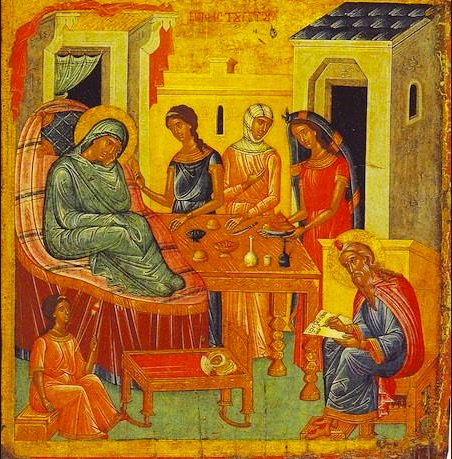
birth john


Luke’s gospel today recalls in detail the birth of John the Baptist . “The hand of the Lord was with him. The child grew and became strong in spirit, and he was in the desert until the day of his manifestation to Israel.” (Luke 1:80)

Just as Luke recognizes the role of Mary and Joseph in the birth and raising of Jesus, he recognizes the role of Elizabeth and Zechariah in the birth and raising of John. Each help John grow and become strong in spirit. However lonely and independent he appears later in the gospels, John was influenced by them and the extended family that surrounded him from his birth.

Luke’s gospel often see one person’s fidelity influencing another. “The hand of the Lord was with him,” Luke writes, but human hands were on him as well.

John had faith like his mother Elizabeth who recognized the Spirit’s presence in her pregnant relation Mary visiting from Nazareth. John later would point out the Lamb of God among all those who came to the Jordan River for baptism.

He had faith like his father Zechariah who devoutly celebrated the mysteries of God in the temple of Jerusalem as a priest. At his birth, Zechariah signs away the gift of his name– and probably his hope that his son would follow in his steps. John would have a different calling. At the Jordan River, John called pilgrims to prepare the way of the Lord as they made their way to the temple and the Holy City, Jerusalem.

Undoubtedly, John was a unique figure, a messenger from God, a voice in the desert preparing the Lord’s way. But there were faithful people behind him, as they are behind us.

Don’t forget his relative, Mary of Nazareth. At the end of his account of her visit with Elizabeth, Luke mentions “Mary stayed with her for three months, then returned to her home.” (Luke 1:56) That would mean she stayed on till the birth of John, wouldn’t it?

I don’t see Mary in the icon of John’s birth (above), but was she there? Were there other times too these families met? Artists portray the children playing together later. They could be right. We influence one another more than we think.

December 22: The Magnificat and the Benedictus

Mary concludes her visit to Elizabeth praising God, who is “mighty and has done great things to me.” Her Magnificat is part of St. Luke’s beautifully crafted narrative preparing for the Christmas feast.

After John the Baptist’s birth, his father Zechariah also praises God. “Blessed be the Lord, God of Israel. He has come to his people and set them free.”–his Benedictus. (Luke, 1:67-79)

We pray Mary’s “Magnificat” each day in the church’s evening prayer, thanking God for the blessings of the day. “My soul proclaims the greatness of the Lord and my spirit rejoices in God my Savior.God has come to the help of his servant Israel, remembering his promise of mercy, the promise he made to our fathers, to Abraham and his children forever.” Like Mary, we rejoice in God’s promises and wait for their fulfillment.

In the church’s morning prayers each day we pray Zechariah’s Benedictus, which ends the silence and darkness of night and welcomes a blessed day.  “In the tender compassion of our God, the dawn from on high shall break upon us, to shine on those who dwell in darkness and the shadow of death and to guide our feet in the way of peace.”

The gospel mysteries become our mysteries. No matter what the day, we end it singing God’s praises with Mary. No matter what the day, the Dawn which is Jesus Christ blesses our world and guides our steps, even if we come slowly to belief, like Zechariah.

Commentators on Luke’s gospel say that Luke probably uses Jewish Christian prayers, applying them to Zechariah and Mary. The New American Bible says: “ Because there is no specific connection of the canticle to the context of Mary’s pregnancy and her visit to Elizabeth, the Magnificat (with the possible exception of v 48) may have been a Jewish Christian hymn that Luke found appropriate at this point in his story.”

The Magnificat and the Benedictus, attributed appropriately to Mary and Zechariah, are our prayers too. Daily prayers.

Gracious God,

Let me not doubt your promises, your tender mercies, but let me rejoice in them as Mary and Zechariah did, and look for their fulfillment, through Christ, our Lord. Amen.

December 21: The Visitation

Visitation

We’re fortunate these last days of Advent to read St. Luke’s entire Infancy Narrative with its rich description of the birth of John the Baptist and the birth of Jesus.

Today  Mary visits her cousin Elizabeth after the angel’s great announcement. She travels to the hill country, to a town of Judah “in haste,” Luke says. She goes “in haste” not in panic or fear.  She visits Elizabeth to share the mysterious gift of God, hastening for joy.  The Visitation is one of the joyful mysteries of the rosary.

In the first reading for Mass today Mary speaks to the Child in her womb in the joyful words of the Song of Songs:

“Arise, my beloved, my dove, my beautiful one,
and come!
“For see, the winter is past,
the rains are over and gone.
The flowers appear on the earth,
the time of pruning the vines has come,
and the song of the dove is heard in our land.
The fig tree puts forth its figs,
and the vines, in bloom, give forth fragrance.
Arise, my beloved, my beautiful one,
and come!

“O my dove in the clefts of the rock,
in the secret recesses of the cliff,
Let me see you,
let me hear your voice, 
For your voice is sweet,
and you are lovely.”


As they come together to share what they have been given, Mary and Elizabeth are believers, rejoicing.  “Blessed are you who believed that what was spoken to you by the Lord would be fulfilled,” Elizabeth says to Mary.

The two women tell us about faith in their simple meeting. Faith is something to rejoice in. It’s meant to be shared and shared eagerly. The two women are pregnant and don’t yet see the life they carry within them. Like faith, the life within them is hidden from their eyes. And so it is with us.

Their meeting is a communion of saints. They share gifts of God not yet seen. 

“The women speak of the grace they received,” St. Ambrose says, “ while the children are active in secret, unfolding the mystery of love…”  As the women speak to each other, another meeting goes on within them as the infants in their wombs meet.

Is that true with us too? God works within us, beyond our understanding, as we live by faith.  St. Ambrose describes our share in this mystery:  “Christ has only one mother in the flesh, but we all bring forth Christ in faith,” St. Ambrose says, “You also are blessed because you have heard and believed. A soul that believes both conceives and brings forth the Word of God… Let Mary’s soul be in each of you to proclaim the greatness of the Lord.”

Pray for us, O Holy Mother of God, that we may be made worthy of the promises of Christ.

The World Waits for Mary’s Reply

St. Bernard describes a world waiting for Mary’s reply:

You have heard, O Virgin, that you will conceive and bear a son; you have heard that it will not be by man but by the Holy Spirit. The angel awaits an answer; it is time for him to return to God who sent him. We too are waiting, O Lady, for your word of compassion; the sentence of condemnation weighs heavily upon us. 

  The price of our salvation is offered to you. We shall be set free at once if you consent. In the eternal Word of God we all came to be, and behold, we die. In your brief response we are to be remade in order to be recalled to life. 

  Tearful Adam with his sorrowing family begs this of you, O loving Virgin, in their exile from Paradise. Abraham begs it, David begs it. All the other holy patriarchs, your ancestors, ask it of you, as they dwell in the country of the shadow of death. This is what the whole earth waits for, prostrate at your feet. It is right in doing so, for on your word depends comfort for the wretched, ransom for the captive, freedom for the condemned, indeed, salvation for all the sons of Adam, the whole of your race. 

  Answer quickly, O Virgin. Reply in haste to the angel, or rather through the angel to the Lord. Answer with a word, receive the Word of God. Speak your own word, conceive the divine Word. Breathe a passing word, embrace the eternal Word. 

  Why do you delay, why are you afraid? Believe, give praise, and receive. Let humility be bold, let modesty be confident. This is no time for virginal simplicity to forget prudence. In this matter alone, O prudent Virgin, do not fear to be presumptuous. Though modest silence is pleasing, dutiful speech is now more necessary. Open your heart to faith, O blessed Virgin, your lips to praise, your womb to the Creator. See, the desired of all nations is at your door, knocking to enter. If he should pass by because of your delay, in sorrow you would begin to seek him afresh, the One whom your soul loves. Arise, hasten, open. Arise in faith, hasten in devotion, open in praise and thanksgiving. Behold the handmaid of the Lord, she says, be it done to me according to your word.