Readings for the 31st Week

NOVEMBER 4 Mon Saint Charles Borromeo, Bishop

Memorial

Rom 11:29-36/Lk 14:12-14 

5 Tue Weekday

Rom 12:5-16b/Lk 14:15-24 

6 Wed Weekday

Rom 13:8-10/Lk 14:25-33 

7 Thu Weekday

Rom 14:7-12/Lk 15:1-10

8 Fri Weekday

Rom 15:14-21/Lk 16:1-8 

9 Sat The Dedication of the Lateran Basilica

Feast

Ez 47:1-2, 8-9, 12/1 Cor 3:9c-11, 16-17/Jn 2:13-22

We’re coming to the end of Paul’s Letter to the Romans this week, the longest and most theological of his letters. In chapter 15 he speaks about his mission to Spain, (Friday) assuring the Romans he’s coming to Rome as a visitor, not to be part of their church. He hopes they’ll support him on his Spanish mission, so that he can bring the gospel to the whole world. 

But Paul never gets to Spain; he will die in Rome.

We may find it strange that Paul in his letters doesn’t offer extensive references to incidents in Jesus’ life, such as his miracles, or quotations from his teaching or his parables. We do that as a matter of course in teaching or preaching about faith. 

True, the gospels were not written when Paul wrote, likely in 56 to 58 from Corinth, but certainly the stories of Jesus’ life and summaries of his teaching were important in Christian preaching at the time. Why doesn’t Paul utilize them?

Does he see the gospel, especially the mystery of the death and resurrection of Jesus, as an immediate mystery, taking place now? The gospels bring us back to the time of Jesus, the events of his life and the words of his teaching. Paul saw them, not just as events and words of the past, but a mystery happening now. Jesus was not dead, but living in the world and in him. Now.  

Is that why Paul’s letters are read with the gospels? So that we may understand they are happening now, in our time, in us?
31st Sunday c: The Tax Collector

For this week’s homily please play the video below.

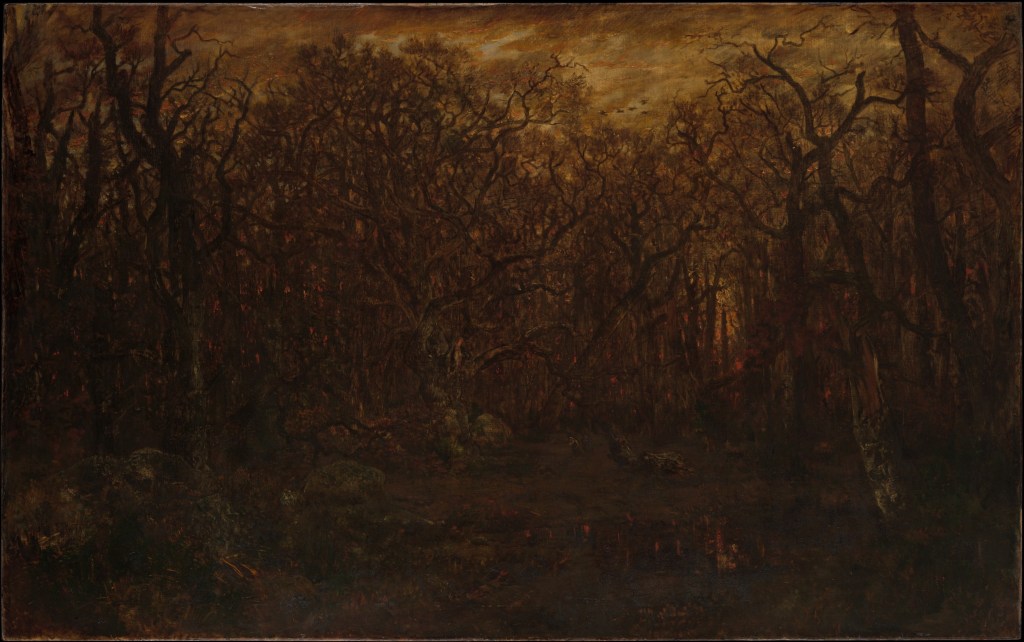
Théodore Rousseau: The Forest in Winter at Sunset


Little Red Riding Hood square in the frame

Placed last it’s only her who must remain

Level the trees, clean the brush, desert stays

Basket of goodies the virgin displays

She too exits the scene, swaddled alive

A gilded wood frame, white Sahara light


—Howard Hain


https://www.metmuseum.org/art/collection/search/438816


All Saints Day


Christ alpha om

We usually think of Mary, the mother of Jesus, apostles like Peter and Paul, or extraordinary individuals like Mother Teresa when we think of saints. True friends of God.

Besides  them, the Feast of Saints reminds us of unnumbered others in God’s company. In a vision of heaven, St. John saw “a great multitude, which no one could count, from every nation, race, people, and tongue.” {Revelations 7, 9-13} We hope we will join them one day.

Our hope rests on a promise Jesus made:

“See what love the Father has bestowed on us
that we may be called the children of God.
Yet so we are…
Beloved, we are God’s children now;
what we shall be has not yet been revealed.” (1 John 3,1-3)

How shall we reach that place where we’ll be revealed as children of God? Jesus says to follow him and live as he taught. He shows the way in his Sermon on the Mount, our gospel reading for this feast. He will be the way, the truth and the life.

We haven’t seen yet that promised  life. We haven’t completed our lives here yet. This feast reminds us of the hope God reveals.

Extraordinary saints are not the only ones in heaven. There is a multitude of others, not a few. God welcomes countless others, saints unnoticed here on earth, saints with little to show, saints who were sinners. People like us.

Celebrating  this feast, remember your destiny, St. Bernard says:

“Rise again with Christ and seek the world above and set your mind on heaven. Long for those who are longing for us; hasten to those who are waiting for us, ask those who are looking for our coming to intercede for us. Desire their company and seek a share in their glory. There’s no harm in being ambitious for this. No danger in setting your heart on such glory.

“Remembering the saints inflames us with a yearning that Christ our life may appear to us as he appeared to them and that one day we may share in his glory.”

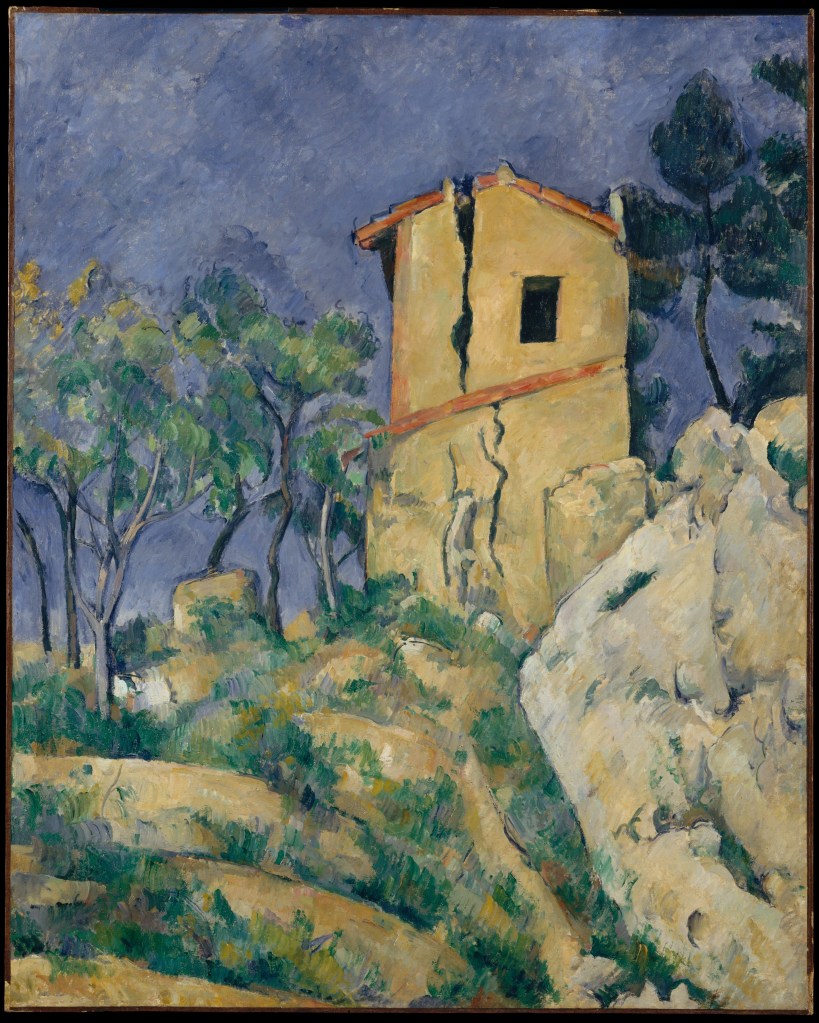
Cézanne: The House with the Cracked Walls


Boulder upon boulder, earth upon earth

Vessel holding water despite its cracks

Life, life, filling voids, flailing to support

Even the black lines stretch toward the light blue

Tiny dark threads turned shades of ever green

And beneath it all a man lives and breathes

He exhales thru the stone, crying “Mother!”

Look, listen, nose hair like bearded stubble

He inhales, right before balance crumbles


—Howard Hain


https://www.metmuseum.org/art/collection/search/435874

Docile Before the Spirit

Father Amedeo Cencini, an Italian priest frequently consulted by dioceses and religious communities, spoke at the Passionist General Chapter in Rome, October 2018 on the issue of formation. 

I expected his presentation to touch on academic matters. What schools to go to, what books to read, how should we form new members. 

He didn’t speak on those issues at all, instead he spoke on learning in the school of daily life. Learning day by day, where you are, every day of your life. Daily life is our basic school.

For the school of daily life we need “docibilitas”, a Latin word we might translate as “docility”, but docility can be understood too negatively today– someone easily led, easily trained, like a trained animal.

In its original Latin meaning, to be docile means to be open to what one hears and willing to follow that truth. It’s brave and daring, not weak and compliant.

In the Letter to the Romans, which we’re reading these days in our liturgy, Paul calls for a docility to the Holy Spirit. Don’t be led by the world, he says, be led by the Spirit of God, and “the Spirit comes to the aid of our weakness; for we do not know how to pray as we ought,” (Romans 8,26)

We don’t know how to live as we ought either. Docility means we listen to more than ourselves or the accepted wisdom of our world.

Prayer is a way of being docile to the Spirit, who is there in our weakness.  Daily prayer brings us wisdom for daily life.

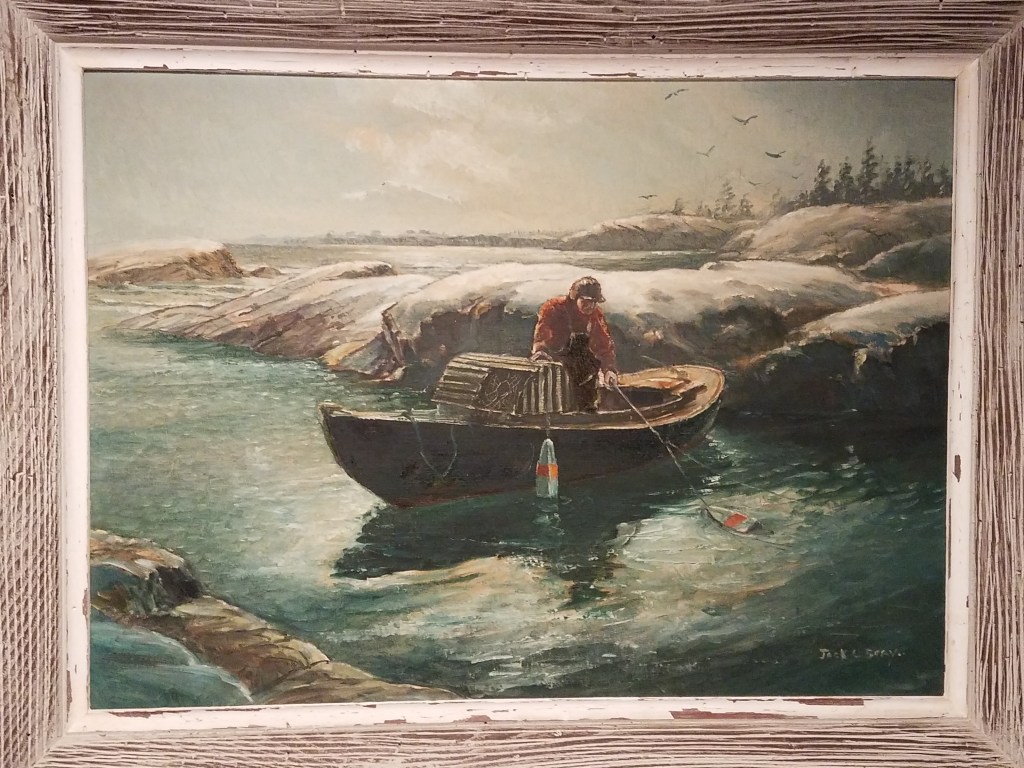
Jack L. Gray: Untitled (ca. 1955-58)

A lone lobsterman in a frozen cove

A pit of fog, pulling up empty nets

Examining closely the emptiness

Once again lowering the well worn rope


—Howard Hain


Painting by Jack L. Gray

READINGS FOR THE 30TH WEEK

October 28 Mon Saints Simon and Jude, Apostles Feast

Eph 2:19-22/Lk 6:12-16

29 Tue Weekday

Rom 8:18-25/Lk 13:18-21

30 Wed Weekday

Rom 8:26-30/Lk 13:22-30

31 Thu Weekday

Rom 8:31b-39/Lk 13:31-35

November 1 Fri ALL SAINTS

Solemnity [Holyday of Obligation]

Rv 7:2-4, 9-14/1 Jn 3:1-3/Mt 5:1-12a

2 Sat The Commemoration of All the Faithful Departed (All Souls’ Day)

 Wis 3:1-9/Rom 5:5-11 or Rom 6:3-9/Jn 6:37-40 (668)

30th Sunday c: Be Merciful to Me, A Sinner

For this week’s homily, please watch the video below.

How Do We Pray?

In his Letter to Proba, in our liturgy this week, Augustine sees  the desire for God at the heart of prayer. Prayer’s not a litany of needs (God knows what we need) or a search for new knowledge. We need to “pray always with unwearied desire.”

We pray to increase our desire for God.

“ At set times and seasons we also pray to God in words, so that by these signs we may instruct ourselves and mark the progress we have made in our desire, and spur ourselves on to deepen it.”

Words help us pray,  Jesus taught and he gave his disciples words of prayer. Much of Augustine’s Letter to Proba is a commentary on the words of the Our Father.  One of his greatest works is his “Commentary on the Psalms.” We need to pray with words at set times. They’re essential in our liturgy.

Augustine also recognized the need for short, frequent prayers. “The monks in Egypt are said to offer frequent prayers, but these are very short and hurled like swift javelins.” They’re quick reminders of God’s presence.

There’s another kind of prayer Augustine addresses in his letter– lengthy prayer. Jesus spent whole nights in prayer; he prayed at great length, giving us an example to follow. 

It’s not necessary to use words in long prayer, Augustine writes. In lengthy prayer, it’s the attitude of persistence that counts, knocking at the door of the One we’re seeking.

 “This task is generally accomplished more through sighs than words, more through weeping than speech. God places our tears in his sight, and our sighs are not hidden from him.”

Long prayer with sighs more than words, weeping more than speech. Not much is said about this kind of prayer today, I think.

In my community, the Passionists, it was a prayer that was recommended. It still is.