One of the New York Times’ political columnists in the 1960s, Walter Lippmann, once wrote “We’re living through a revolution nobody understands.” That was true in the 1960s and it’s still true today. We’re living through times we hardly understand. Who could predict a Covid Epidemic, a war in Ukraine, a changing climate, a fractured political system, an endangered economy? Who could predict the changes in our church?
Yesterday, I went over to Union City, New Jersey, to celebrate Mass at the Church of St. Joseph and Michael. Originally it was St. Joseph’s Parish, founded by the Passionists. Just up the street from St. Joseph’s was the Monastery and parish of St. Michael. St. Michael’s monastery was the center for the Passionist community for over a hundred years.
Cardinal Tobin, the bishop of Newark, celebrant of the Mass yesterday, decribed the union of the two parishes through the image of two streams of water, each bringing life, uniting in one body. He spoke of the water that came from side of Christ on the Cross that brings life to our world.
But water can also bring death. St. Michael’s monastery, church and parish were closed by 1982. Just up the street from the present St. Joseph and Michael the massive monastery church stands empty and deteriorating. Hard to understand.
I wrote about St. Michael’s in 2012 when we left Union City. The contribution of the Passionists to the city and the surrounding area, yes even to the American church, is hard to measure. As we experience this “revolution nobody understands” we search to understand the plan of God. It’s there, hidden, small, confusing, like mustard seed slowly growing. As we hear in our readings from Luke, Jesus says to look for the signs of the times.
In our morning prayer from Isaiah today, God says:
Ez 47:1-2, 8-9, 12/1 Cor 3:9c-11, 16-17/Jn 2:13-22
10 Thu St Leo the Great, Pope Doctor Memorial
Phlm 7-20/Lk 17:20-25
11 Fri St Martin of Tours, Bishop Memorial 2 Jn 4-9/Lk 17:26-37
12 Sat St Josaphat, Bishop Martyr Memorial 3 Jn 5-8/Lk 18:1-8
13 SUN THIRTY-THIRD SUNDAY IN ORDINARY TIME
Mal 3:19-20a/2 Thes 3:7-12/Lk 21:5-19
The weekly readings and feasts are a wonderful way to explore our faith. We’re reading from St. Luke’s Gospel most days this week. The scriptures are our first catechism.
Then, the feasts and saints this week. The Dedication of the Lateran Basilica in Rome (Nov 9), the first of the great churches built after Constantine brought an end to Christian persecutions in the 4th century. Why do we have churches anyway? This feast offers some reasons.
Pope Leo (Nov 10) is called great because he led a church threatened with destruction by barbarian armies. God always provides the leaders we need.
Martin of Tours(Nov 11), the soldier who gave half of his cloak to a freezing beggar, later revealed to be Christ. What are we doing for the poor? November 11 was chosen for his feast because it was when European farmers were butchering their cattle, getting ready for the winter. Martin reminded them to put aside something for the poor. Are we doing that?
Josephat (Nov 12) was a bishop seeking the unity of Orthodox and Roman Catholic Churches. He suffered martyrdom for his efforts. Keeping our church together is a big task that concerns us all. Pope Francis was in Bahrain last week in dialogue with Moslem leaders. The religions of the world need to be in dialogue. Pope Francis is promoting that dialogue.
The readings and feasts are our catechism. Study them day by day.
NOVEMBER 1 Tue ALL SAINTS Solemnity Rv 7:2-4, 9-14/1 Jn 3:1-3/Mt 5:1-12a
2 Wed ALL SOULS Wis 3:1-9/Ro 6:3-9/Jn 6:37-40
3 Thu Weekday [St Martin de Porres, Religious] Phil 3:3-8a/Lk 15:1-10
4 Fri St Charles Borromeo, Bishop Memorial Phil 3:17—4:1/Lk 16:1-8
5 Sat Weekday [BVM] Phil 4:10-19/Lk 16:9-15
6 SUN 32ND SUNDAY IN ORDINARY TIME
2 Mc 7:1-2, 9-14/2 Thes 2:16—3:5/Lk 20:27-38 or 20:27, 34-38
Two important feasts are celebrated this week: All Saints and All Souls. What lies ahead? Where does this life end? Is there anything beyond this? Important questions these feasts address.
First reading most of this week is from Paul’s Letter to the Philippians, another letter he writes from prison. Our gospel reading continues Jesus’ journey, as he draws near to Jerusalem.
St. Martin de Porres and St. Charles Borromeo, two saints from vastly different backgrounds. One a Dominica lay brother who worked caring for the poor, the other a learned theologian who was an leading figure at the Council of Trent. Bless them all.
“Slaves, be obedient to your human masters with fear and trembling, in sincerity of heart, as to Christ, not only when being watched, as currying favor, but as slaves of Christ, doing the will of God from the heart.” (Ephesians 6:1-9)
St. Paul wrote those words as a prisoner in Rome. He wasn’t justifying slavery nor was he justifying his own unjust imprisonment. Slave or free, male or female, whatever our condition, whether it’s from an unjust structure of society like slavery or imprisonment, or from some natural cause, we are children of God.
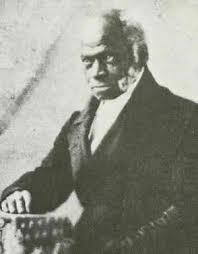
I think that’s how Pierre Toussaint lived, a Haitian slave brought to New York City late in 18th century. He died in 1853. Toussaint had a profound love of Jesus Christ. When he died, a New York newspaper recognized him as “ a man of the warmest and most active benevolence.” His goodness was legendary.
Toussaint came to New York City with his French owners, the Berard family, shortly before the Haitian revolution in 1789. He lived in the city almost 66 years. A successful hair-dresser, confidante to some of New York’s most prestigious Protestant families, extraordinarily generous and faithful to the poor, a devout parishioner of St. Peter’s Catholic church on Barley Street, at Mass each morning at 6 AM. He was acclaimed one of New York’s finest citizens at his death.
St. Peter’s Church
His first biographer was Hannah Farnham Sawyer Lee, a Protestant who wrote about him shortly after his death. It’s a lovely biography, based on memories she and others had of him. She admired his character, his good deeds, his genuine love for people, black or white:
“He never felt degraded by being a black man, or even a slave…he was to serve God and his fellow men, and so fulfill the duties of the situation in which he was placed…. He was deeply impressed with the character of Christ; he heard a sermon from Dr. Channing, which he often quoted. “My friends,” said Channing, “Jesus can give you nothing so precious as himself, as his own mind. May this mind be in you.”
Those last words come from Paul’s Letter to the Philippians: “Have this mind in you which was in Christ Jesus, Who, though he was in the form of God, did not regard equality with God something to be grasped. Rather, he emptied himself, taking the form of a slave, coming in human likeness; and found human in appearance, he humbled himself, becoming obedient to death, even death on a cross.…Philippians 2, 6-9
Toussaint made the mind of Jesus his own. His body now lies in the crypt under the main altar of New York’s St. Patrick’s Cathedral and his cause for canonization has begun.
Some question why Toussaint wasn’t more aggressive in the struggle against slavery. He could have easily won his own freedom well before 1807, when Madame Berard emancipated him before her death. Why didn’t he? Why wasn’t he active in the abolitionist movement against slavery then?
African American Museum
For one thing, Toussaint feared violence would erupt in the United States, like the violence destroying Haiti then.
But he was influenced most of all by the teachings of the gospel and the example of Jesus Christ who insisted on loving God and your neighbor. Loving and serving others is his great commandment, more important than the color of your skin, or your status in life or even fighting for a cause.
‘What will we do if the whites continue to discriminate and mistreat us?’ someone once asked Doctor Martin Luther King ‘We will continue to love them to the point that they can’t do anything else but love in return, ’’ he said.
Toussaint understood that. Doctor Martin Luther King did too.
A fellow Passionist, Bishop Norbert Dorsey, CP who died in 2013, wrote his doctoral thesis at the Gregorian University in Rome on Pierre Toussaint. It’s available in digital form, thanks principally to Lynn Ballas, who so competently and generously edited and formatted the bishop’s work. It’s available at
October 24 we remember Anthony Mary Claret, founder of the Claretians, who served in Spain and Cuba in tumultuous years of the 19th century. He was a zealous writer and preacher.
October 28 the Apostles Simon and Jude are remembered.



 The Victor's Place