4th Sunday of Advent a: Joseph speaks

For this week’s homily please watch the video below.

Like many you, I guess, I have favorite Christmas pictures I take out these days.  Artists through the centuries have given us a treasure of pictures for this holy season. I see many of my favorites online now; I have some of them on my IPhone.
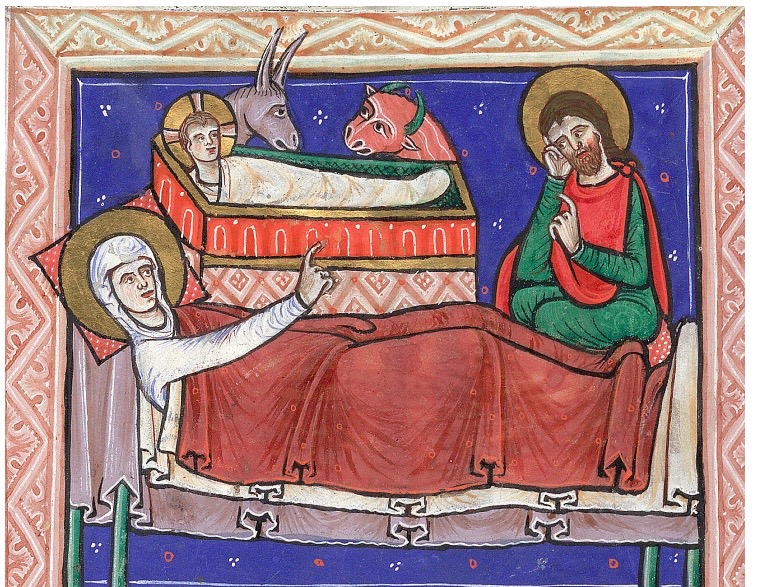
This one’s from a medieval artist– we don’t have his name– picturing Mary after the birth of Jesus lying down on a bed. Jesus is lying above her in a beautiful crib and two animals, an ox and a donkey are at his side. From her bed Mary points firmly to Joseph, as if to say “He will tell you about this.”

Joseph, his part, has his hand on his head, as if signifying his dream and his hand points upward as if to say, “An angel told me this.”

The whole composition points to Joseph. Even Jesus from his crib looks intently at the man. He will tell you about this. The two animals seem to be looking at each other amazed at the story.

That’s what today’s gospel from Matthew does. It tells us the story of Jesus’ birth as we have it from Joseph.

Matthew’s account of how the birth of Jesus came about draws its story from Joseph of Nazareth, whom he describes as “a righteous man.”  Joseph is a moral and law-abiding Jew who practices his religion and lives by its principles. Now, he’s caught in a painful situation.  

His wife Mary is pregnant and the child is not his. They have not even lived together, in fact; they are only betrothed, which in Jewish practice of the time was considered part of being married. According to Jewish law, he should divorce her, but that seems so harsh.

An angel appears to Joseph in a dream and tells him three things: Don’t be afraid to take Mary into your home as your wife. The son she is carrying has been conceived through the power of the Holy Spirit. Joseph is to name him Jesus, because he will save his people from their sins. 

It’s an announcement appropriately made by a messenger from heaven because it’s beyond human expectations and human reasoning. It’s also an announcement heard by a man attuned to voices from a higher world. Joseph does what the angel directs him to do.

Ordinary believers like us are attracted to this ordinary man, Joseph of Nazareth, because he passes on so simply the tremendous mysteries revealed to him: The Child born of Mary is “God with us.” He is our Savior. Don’t be afraid to believe in him.
Friday, 3rd Week of Advent


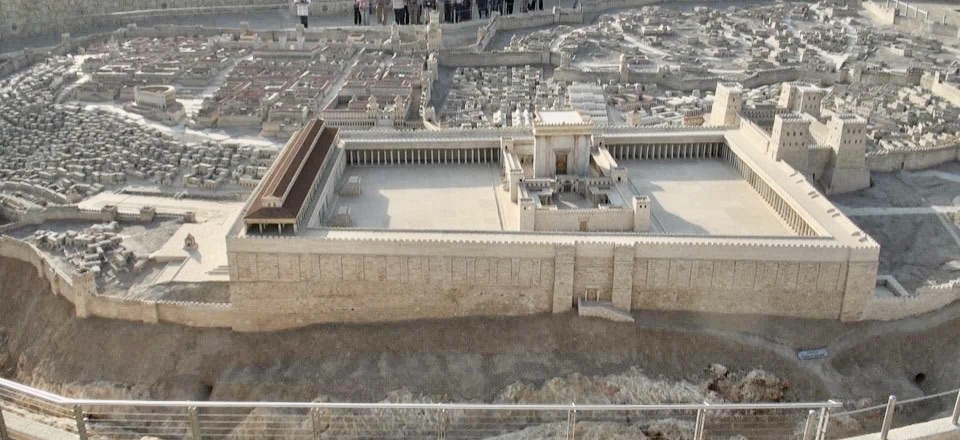
Prophets like Isaiah promised that all nations would come to Jerusalem, to the house of the Lord. And so the temple in Jerusalem provided a Court of the Gentiles, an extensive place surrounding the Holy of Holies (above) where foreigners as well as Jews could come to hear the word of God,

Them I will bring to my holy mountain
and make joyful in my house of prayer;
Their burnt offerings and sacrifices
will be acceptable on my altar,
For my house shall be called
a house of prayer for all peoples.
Thus says the Lord GOD,
who gathers the dispersed of Israel:
Others will I gather to him
besides those already gathered. (Isaiah 56)

It’s significant that Jesus in a symbolic act when he arrives in Jerusalem at the end of his public life cleanses the temple as a sign that that time had come. The Gentiles are called; he calls them to himself. In John’s gospel, read today, Jesus speaks from the temple, most likely from the Court of the Gentiles. He’s the One whom John the Baptist has pointed out and his mission will be confirmed by his Father who will glorify him in his Kingdom.

The Advent and Christmas seasons are not only celebrations for believers, confined to a church or the homes of believers. They take place in the “Court of the Gentiles”, they bring light to the world beyond Christianity. We may not realize it, but the world listens and sees, however dimly that may be. The light of our celebrations shine in a dark world that needs hope.

In the Advent and Christmas seasons, Jesus speaks in the “Court of the Gentiles”.

Readings here.

Why December 25th?

Why do we celebrate December 25th as the day of Jesus’ birth? A popular theory  says December 25th was a Christian attempt to replace a pagan festival honoring the Unconquerable Sun. More likely, December 25 was chosen because it was tied to March 25th, the day some early Christian sources say Jesus was conceived and crucified.

Andrew McGowan advocates that theory in Biblical Archeology.

“ There is another way to account for the origins of Christmas on December 25: Strange as it may seem, the key to dating Jesus’ birth may lie in the dating of Jesus’ death at Passover. This view was first suggested to the modern world by French scholar Louis Duchesne in the early 20th century and fully developed by American Thomas Talley in more recent years. But they were certainly not the first to note a connection between the traditional date of Jesus’ death and his birth.

“Around 200 C.E. Tertullian of Carthage reported the calculation that the 14th of Nisan (the day of the crucifixion according to the Gospel of John) in the year Jesus died was equivalent to March 25 in the Roman (solar) calendar. March 25 is, of course, nine months before December 25; it was later recognized as the Feast of the Annunciation—the commemoration of Jesus’ conception. Thus, Jesus was believed to have been conceived and crucified on the same day of the year. Exactly nine months later, Jesus was born, on December 25.

The mysteries of Christ are joined together. We celebrate his birth, but we also keep in mind his death and resurrection– mysteries  never far apart, in Jesus and in us.

3rd Sunday of Advent a: John the Baptist

For this week’s homily, please watch the video below:

Friday, 2nd Week of Advent

Too strict, not strict enough. That’s the judgment in public opinion Jesus and disciples faced in their day, today’s Advent reading from Matthews’ gospel seems to say. That’s often the way our church is looked on in the marketplace today. 

Public opinion then– Jesus likens it to “children in the marketplace”– saw him and his disciples in two derogatory ways. For some, Jesus and his followers were not strict enough. Jesus ate too many meals with the wrong kind of people, among other things.  Others saw this movement as too strict. Like John the Baptist, they were crazy eccentrics, out of step with the real world, the world of the marketplace.

Too strict, not strict enough. We would like to answer that criticism of our church with a better public relations campaign and all that goes with it –better catechesis, better homilies, better media, but those responses don’t seem to be on the horizon. 

But listen to the promise our Old Testament readings offer:

“Those who follow you will have the light of life, O Lord.”

Thus says the LORD, your redeemer, the Holy One of Israel:
I, the LORD, your God, teach you what is for your good,
and lead you on the way you should go. If you would hearken to my commandments, your prosperity would be like a river,
and your vindication like the waves of the sea. (Isaiah 48:17-19) 

John the Baptist

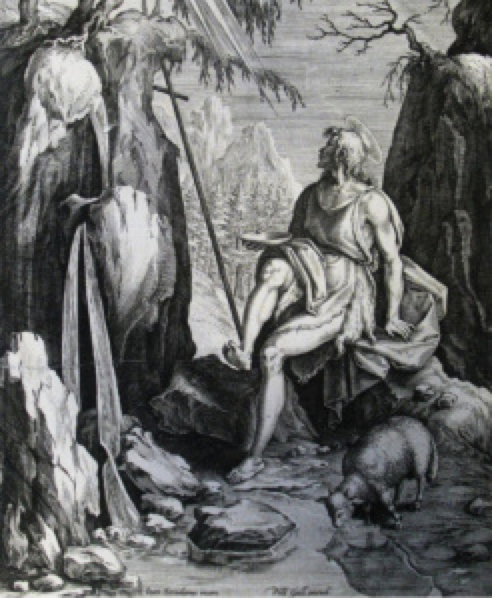
John the Baptist in wilderness of the Jordan Valley as he preaches and baptizes pilgrims on their way to Jerusalem. Someone to learn from in Advent. Son of Zachariah and Elizabeth, John is six months older than Jesus, as Luke reckons it in his gospel. Were they close as children growing up?

John baptized Jesus in the Jordan River at the beginning of his ministry, but they seem to part ways. Even as they do, John offers Jesus two of his own disciples, Peter and Andrew. Their only contact afterwards only seems to be through messengers.

Both preach a message of repentance, “Repent, for the kingdom of God is at hand.” (Matthew 3.2; 4,17). Both call for people to change, but Jesus’ message contains a surprising mercy not found in John’s preaching:

“When John speaks of the One who is to come, he is thinking of an executor of divine judgment, not so much of him through whom God’s mercy and love are made visible. He expects the kingdom of God to arrive in a storm of violence, in the immediate future, with the Messiah’s first appearance… From what we know of his preaching, he seems transfixed by the vision of the judgment and finds nothing to say about the salvation the Messiah will bring.” ( Rudolf Schnackenberg Christian Existence in the New Testament, Volume 1, University of Notre Dame 1968, p 39)

“The ax is ready to cut down the tree that bears no fruit,” John says. Repentance dominates his message. But does Schnackenberg’s appraisal of John miss the comfort he brings? He’s a follower of the Prophet Isaiah. He’s like a drill sergeant readying troops for an upcoming battle. He’s a preacher of tough love to pilgrims climbing the holy way leading to Jerusalem.

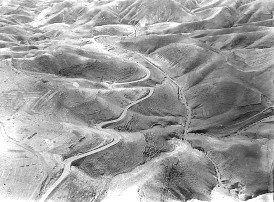
Road to Jerusalem, Air view, 1932

Jesus urges repentance too, but with a tenderness and compassion not found in John. “Go tell John what you hear and see…” he says to messengers John sends.  The blind see, the lame walk, the deaf hear, the dumb speak, the dead are raised. 

Jesus reveals God’s mercy, not only in through his many miracles, but also in his teaching. Think of the stories of the prodigal son, the lost sheep, the thief on the Cross– signs of God’s mercy, God’s patient mercy.

You must take a desert road, John says in his preaching. You must take up your cross and follow me, Jesus says, but again, the way’s not hard–his yoke is easy, his burden light. 

Jesus doesn’t dismiss John. There’s none born of woman greater that he, Jesus says. John has integrity, he’s not swayed by what other people think or say, not swayed by public opinion or the fear of failure, or sickness, or deprivation. He’s not swayed by winds good or bad. His face is turned to God, his ears hear God’s word, his voice speaks what he hears.

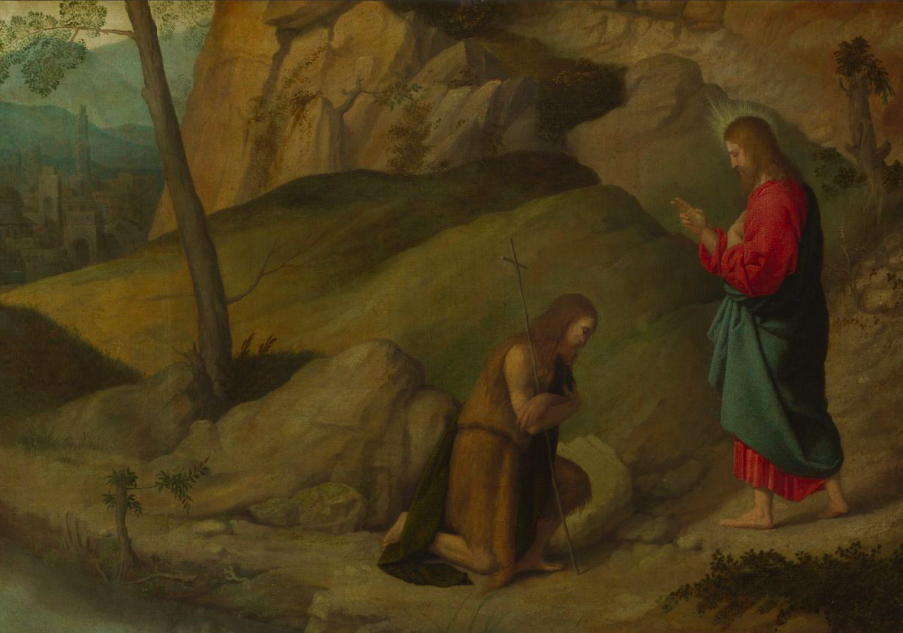
Jesus Blessing John, Moretto Da Brescia, VAMuseum


2nd Week of Advent: Readings and Feasts

DECEMBER 5 Mon Advent Weekday Is 35:1-10/Lk 5:17-26 

6 Tue Advent Weekday [St Nicholas, Bishop} Is 40:1-11/Mt 18:12-14 

7 Wed St Ambrose, Bishop Doctor Memorial Is 40:25-31/Mt 11:28-30 

8 Thu IMMACULATE CONCEPTION OF THE BLESSED VIRGIN MARY

(Patronal Feastday of the United States of America) Solemnity

Gn 3:9-15, 20/Eph 1:3-6, 11-12/Lk 1:26-38 

9 Fri Advent Weekday [St Juan Diego Cuauhtlatoatzin]

Is 48:17-19/Mt 11:16-19

10 Sat Advent Weekday [Our Lady of Loreto] Sir 48:1-4, 9-11/Mt 17:9a, 10-13

11 SUN THIRD SUNDAY OF ADVENT Is 35:1-6a, 10/Jas 5:7-10/Mt 11:2-11 

The journey to God’s holy mountain will not be by way of the sea, the easiest road to Jerusalem from Babylon, Isaiah told Jewish exiles in Babylon. (Isaiah 40 ff)  God will bring you over mountains and through a wilderness, but the valleys will be filled, the mountains made low, the crooked ways straight. You’ll have guides and graces; God himself will shepherd you.

John the Baptist preached Isaiah’s message in the Jordan Valley where the winding road up to Jerusalem began. He is the messenger God sends to announce the coming of Jesus Christ.

This week’s Old Testament readings, mostly from Isaiah, recognize how hard the wilderness journey can be, but the desert will bloom and a highway will be there, a holy way. (Monday) God speaks tender, comforting words to his people on the way. (Tuesday)  Those who hope in him will renew their strength, soaring on eagle’s wings. (Wednesday) Though we’re as insignificant as a worm, God grasps our hand and says: “Fear not; I am with you.” (Thursday) God, our teacher, shows us the way to go. (Friday) Prophets like Elijah also accompany us. (Saturday)

The readings this week are for our encouragement, as Sunday’s reading from the Letter to the Romans reminds us. Jesus is with us on the way, the Gospel readings say. He forgave and healed a paralyzed man, symbol of a paralyzed humanity, who was lowered through the roof into the house in Capernaum. (Monday)  Like a good shepherd Jesus searches for and finds the stray sheep. (Tuesday)  “Come to me all who are weary…” he says. (Wednesday) He sends prophets and guides like John the Baptist and Elijah.   (Thursday) Though rejected like John the Baptist, Jesus still teaches. (Friday) He will save us, though he is unrecognized like John and Elijah. (Saturday)

Feasts

THE IMMACULATE CONCEPTION OF THE BLESSED VIRGIN MARY, the patronal feast day of the United States of America, is celebrated on Wednesday of this week.

We have also feasts of St. Ambrose, St. Juan Diego and–how can we forget–St. Nicholas.

Readings Online: http://www.usccb.org

2nd Sunday Advent a: A Voice in the Desert

For this week’s homily please play the video file below.

Isaiah, An Advent Prophet

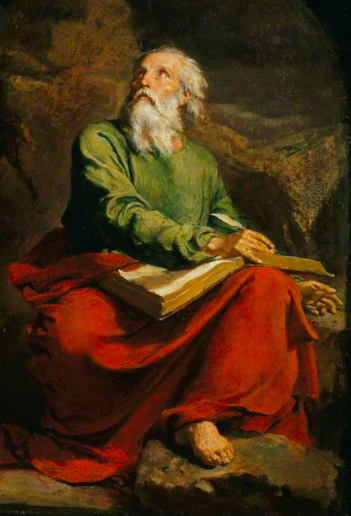
Isaiah, Jean Louis Ernest Meissonier (1815-1891)

 Advent is a season of four weeks preparing for the feast of Christmas welcoming Jesus Christ, God with us. During the four weeks four figures prepare us for the coming of our Lord: the Prophet Isaiah, John the Baptist, Mary of Nazareth and Joseph of Nazareth. 

This first week in our Advent liturgy the Prophet Isaiah is the strong voice to listen to. The Book of Isaiah, some say, is our 5th Gospel.

Isaiah served as a priest in the temple of Jerusalem in the eighth century before Christ.While engaged in the daily worship in the temple Isaiah was also deeply engaged in what was happening in the world of his day. He was concerned with  every move the Jewish leaders were making, from the king on down.  He scolded them, encouraged them, and warned them. He was never afraid to speak what was on his mind, and what was on his mind was often far from theirs.

He lived in difficult times. Assyria, the great kingdom to the north was expanding its empire, and they were intent on absorbing Israel. 

But Israel wanted independence and from the king on down they were intent on resisting  the Assyrians. The king at this time was Ahaz, a consumate realist who was ready to take whatever political or military steps he could take to stop the Assyrians. That meant reinforcing the defenses of the city, establishing alliances with allies, like the Egyptians, assembling and training the best army to fight them. Ahaz was a realist who thought only of political, or military, or economic realities. 

The reality was a large Assyrian army was coming down from the north, destroying everything in its path. 

And so Isaiah speaks words we often hear this season:

In days to come, the mountain of the LORD’s house shall be established as the highest mountain and raised above the hills. All nations shall stream toward it; many peoples shall come and say: “Come, let us climb the LORD’s mountain, to the house of the God of Jacob, that he may instruct us in his ways, and we may walk in his paths.” For from Zion shall go forth instruction,and the word of the LORD from Jerusalem. He shall judge between the nations, and impose terms on many peoples. They shall beat their swords into plowshares and their spears into pruning hooks; one nation shall not raise the sword against another, nor shall they train for war again.O house of Jacob, come, let us walk in the light of the Lord!

How foolish those words must have sounded to Ahaz and those like him.  How impractical.  More swords and spears were needed, more armies, more alliances had to be marshaled. Isaiah’s words were an impossible dream.  

Yet, Isaiah was not unaware of the real world. He wanted the king and those like him to hold on to the vision of God, a vision beyond politics and military and economic means. God’s vision is for a world that’s one, where all nations stream towards the Lord’s mountain. God’s vision is for a peaceable world, where swords are beaten into plowshares and spears into pruning hooks. God’s vision is for a just world where all are fed, especially the poor and the weak. God’s vision is for a world like a rock where all, even the natural world itself, is secure.

Impractical, the realists like Ahaz–and maybe us– say. But Isaiah’s message came, not from the “real” world–  but from God, Emmanuel, God with us. Your kingdom come.

In times like ours, we need to listen  to prophets like Isaiah speaking of God’s vision, lest we get trapped in the thinking of the “real” world. God’s vision is real, more real than we can imagine, greater than we can hope for.  We need to rely on more than what we see. In Advent, we need to keep company with prophets like Isaiah, asking to see what they saw. Emmanuel. God is with us.

1st Week of Advent: Readings and Feasts

NOVEMBER 27 SUN FIRST SUNDAY OF ADVENT

Is 2:1-5/Rom 13:11-14/Mt 24:37-44

28 Mon Advent Weekday Is 4:2-6/Mt 8:5-11

29 Tue Advent Weekday Is 11:1-10/Lk 10:21-24 

30 Wed Saint Andrew, Apostle Feast Rom 10:9-18/Mt 4:18-22 

DECEMBER 1 Thu Advent Weekday Is 26:1-6/Mt 7:21, 24-27

2 Fri Advent Weekday Is 29:17-24/Mt 9:27-31 

3 Sat St Francis Xavier, Priest Memorial Is 30:19-21, 23-26/Mt 9:35—10:1, 5a, 6-8 

4 SUN SECOND SUNDAY OF ADVENT Is 11:1-10/Rom 15:4-9/Mt 3:1-

The daily readings at Mass for the first week of Advent are beautifully arranged.

The Prophet Isaiah speaks in the Old Testament readings as a fierce Assyrian army heads towards Jerusalem. Bad times ahead, but the prophet sees something else. All nations are streaming to God’s mountain.

The nations will come to God’s mountain, Jerusalem, where the temple stands, the prophet says.  They’ll be fed a rich banquet (Wednesday),  the poor will triumph (Thursday),  the blind will see (Friday). Safe on this rock, children play around the cobra’s den, and the lion and the lamb lie down together (Tuesday). The prophet  challenges us to see our world in another way.

In the gospels  Jesus Christ fulfills the Isaian prophecies. The Roman centurion, humbly approaching Jesus in Capernaum, represents all nations approaching him. (Monday)  Jesus praises the childlike;  they will enter the kingdom of heaven.(Tuesday)  He feeds a multitude on the mountain.(Wednesday) His kingdom is built on rock.(Thursday)  He gives sight to the blind to find their way.  (Friday)

Many Advent readings in these early weeks of Advent are from the gospel of Matthew, who portrays Jesus teaching on a mountain (Isaiah’s favorite symbol). His miracles affect all. Jesus is the new temple, the Presence of God, Emmanuel, God with us. He brings hope beyond human hope, beyond our hope.

Lord, help us see what you and the prophets see.