As we read extensively from John’s gospel these last weeks of Lent, we wonder why his gospel, unlike the synoptic gospels, has much of Jesus’ ministry take place in Jerusalem during the Jewish feasts of the Sabbath, Pentecost, Tabernacles and the Dedication of the Temple. (John 5:1-10:32) During the celebration of the Passover–John11:1-20:29 – John presents Jesus fulfilling the feast in his passion, death and resurrection.
Feasts were special signs of God’s presence for the Jews and so they were appropriate signs for the Word of God to make himself known.
Commentators also say that the Jewish-Christian communities John writes for, like their Jewish neighbors, were struggling to stabilize their way of worship after Jerusalem and the temple were destroyed in 70 AD, causing a critical disruption in their life of prayer.
Can we say that John’s Gospel wishes to affirm the celebration of feasts in his communities, beginning with the Sabbath? Jesus appears on this day to his disciples, even to doubting disciples like Thomas, and renews them in faith.
It seems to me we are experiencing as a church today a similar disruption in our life of prayer, due to the steady trend of secularization and events like the Covid pandemic. Our days are becoming faithless. We need to redeem them from becoming insignificant, beginning with the Sabbath.
Besides Sunday– if we can take a clue from John’s Gospel– we need to make our everyday calendar a sign of God’s presence. That’s why I post a calendar on this blog every month.
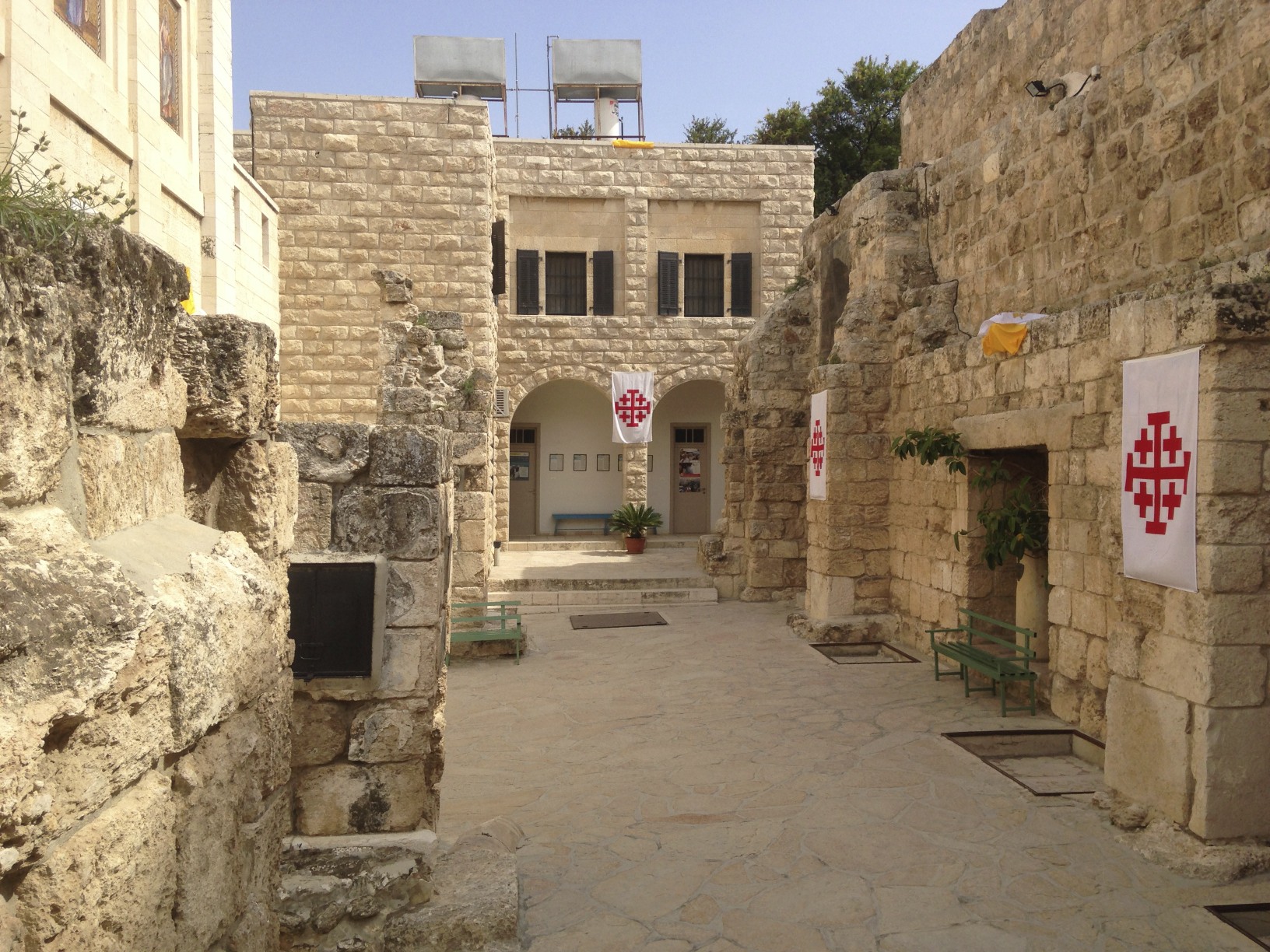
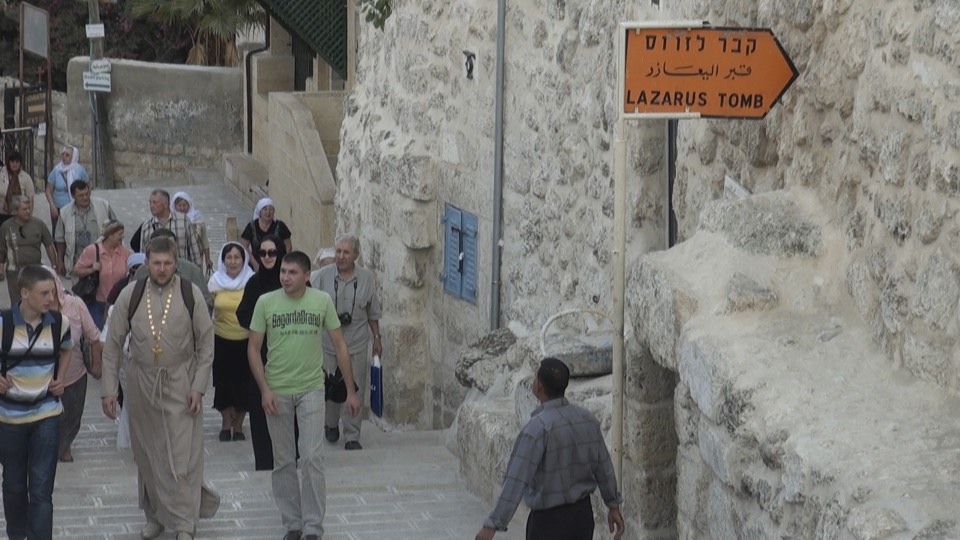
The tomb of Lazarus is only a short distance from the Passionist Retreat House in Bethany, but the Israeli security wall prevents you from going directly there. In 2014, when I visited there, you had to take a taxi and travel ten miles to the check point to get to this important sign in John’s gospel, pointing to the power of Jesus to give life to the dead.
The Franciscan church adjacent to the shrine is beautiful. Ruins of the ancient Byzantine church lie next to it. Martha and Mary, Lazarus their brother, are all remembered pictorially in the new church.
As I approached the tomb in 2014 a group of about 30 pilgrims with their priest was ahead of me. They were obviously from Eastern Europe and I guessed they might have been from the Ukraine or Lithuania or Russia. I stayed outside as they went down into the tomb.
During the 2nd World War over 40 million people were killed by Hitler and Stalin in what’s been called “The Bloodlands,” parts of Eastern Europe that were fought over so viciously. That part of the world is “The Bloodlands” again. Were these people going down to the tomb from that part of the world, bringing memories of “The Bloodlands,” I wondered?
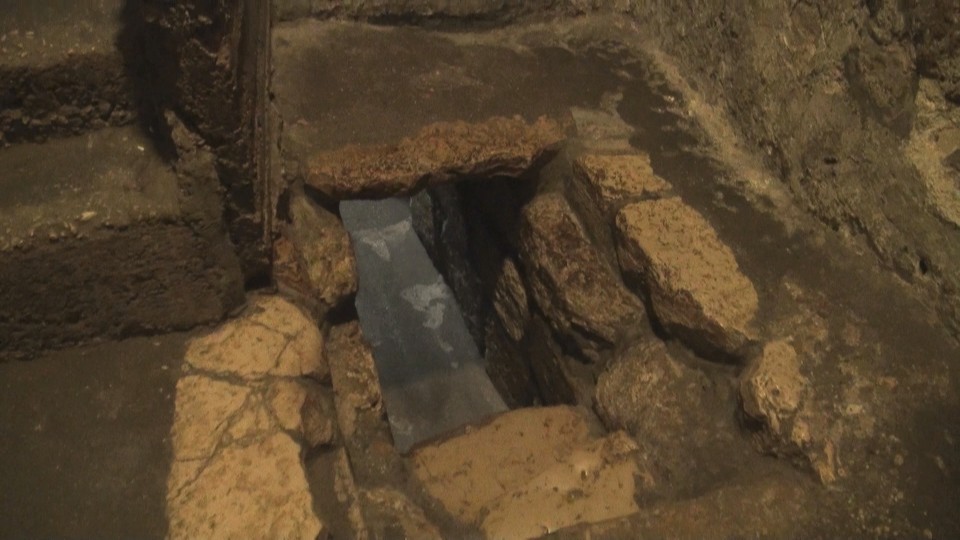
They started to sing in harmony a beautiful eastern chant and the haunting, glorious music came up from the dark cavern below. Lazarus was being celebrated again and his tomb rang with their joyful song.
The dark tomb was still ringing with their singing when I went in. A joyful song from a tomb. That’s the powerful message from our gospel today which prepares us for the life-giving death of Jesus. “Lazarus, come out!” A promise to us all.
For this week’s homily please watch the video below.
Some years ago I visited Bethany where Lazarus was raised from the dead. My community, the Passionists, has a retreat house there, called appropriately, St. Martha. I visited the tomb of Lazarus, which is not far from there. As I approached there was a group of about 30 pilgrims with their priest ahead of me. They were obviously from Eastern Europe. I guessed they might have been from the Ukraine or Lithuania or Russia. I stayed outside as they went down into the tomb.
During the 2nd World War over 40 million people were killed by Hitler and Stalin in what’s been called “The Bloodlands,” parts of Eastern Europe that were fought over so viciously. That part of the world is “The Bloodlands” again. Were these people going down to the tomb from that part of the world, bringing memories of “The Bloodlands,” I wondered?
They started to sing in harmony their beautiful eastern chants and the haunting, glorious music came up from the dark cavern below. Lazarus was being celebrated again and his tomb rang with their joyful song.
The dark tomb was still ringing with their singing when I went in. A joyful song from a tomb. That’s the powerful message from our gospel today which prepares us for the life-giving death of Jesus. “Lazarus, come out!” A promise to us.
Jesus was born of Mary. She was his mother, and she also was his disciple when he began his mission. From the time the angel spoke to her in Nazareth, a sword pierced her heart.
“How can this be?” Mary asked the angel who announced his birth. It would not be the last time she asked that question. Mary did not know what lay ahead. She could only trust, and trust is hard when you face the unknown as she did.
Tradition describes seven of Mary’s sorrows: The Prophecy of Simeon (Luke 2:34-35) The Flight into Egypt (Matthew 2:13-21 The Loss of Jesus for Three Days (Luke 2:41-50) The Carrying of the Cross (John 19:17) The Crucifixion of Jesus (John 19:18-30) Jesus Taken Down from the Cross (John 19:39-40) The Burial of Jesus. (John 41-42)
“Your own soul a sword shall pierce, “ the old man Simeon told her in the Temple as he held her newborn Son in his arms. His prophecy was fulfilled in the events of Jesus’ birth. The poor stable he was born in was hardly something Mary would have wanted. Exile in Egypt, with the threats and deaths that took place, was hardly something she ever planned for. When Jesus at twelve years stayed behind in the temple after a Passover celebration, it was a sign of his future mission, but what would Mary, his mother, know of that? She only knew then what it meant to lose him.
And what was Nazareth like? The Jews who settled in the mountain villages of Galilee were strong believers that God’s kingdom would come as the prophets promised. How would it come? The mother of James and John – relatives of Jesus and Mary– believed it would come through a powerful revolution; they were willing to fight for it. Even before Jesus rose in the synagogue at Nazareth to proclaim his mission, Mary knew that would not to be his way. His rejections caused her sorrow.
Luke says that Mary, his mother “ kept all these things in her heart.“ (Luke 2:51) She remembered sorrows as well as joys.
The last four of Mary’s sorrows came when the sword of Jesus’ Passion pierced her heart. She followed her Son to Jerusalem with the others and was there when he was arrested and sentenced. She stood at the cross when he died; she took part in his burial in a garden tomb.
Some of this information we have from the gospels, some from tradition. The Stations of the Cross presents Mary meeting her Son as he went to Calvary carrying his cross; she then held him in her arms as he was taken down from the Cross.
Tradition is a general word. The gospels rest on multiple sources.Is one of them, perhaps the most important source – Mary, who “kept these things in her heart.” How much of what we have in the gospels and from tradition are her memories?
Devotion to the Seven Sorrows, like the Stations of the Cross, is a meditational prayer. Words and pictures lead us to reflect and imagine the mystery of God found in Mary’s sorrows. They lead us on to the mystery of the Passion and Resurrection of Jesus.
7 Tue Lenten Weekday [Sts Perpetua and Felicity, Martyrs] Is 1:10, 16-20/Mt 23:1-12
8 Wed Lenten Weekday [St John of God, Religious] Jer 18:18-20/Mt 20:17-28
9 Thu Lenten Weekday [St Frances of Rome, Religious] Jer 17:5-10/Lk 16:19-31
10 Fri Lenten Weekday Gn 37:3-4, 12-13a, 17b-28a/Mt 21:33-43, 45-46
11 Sat Lenten Weekday Mi 7:14-15, 18-20/Lk 15:1-3, 11-32
12 SUN 3rd SUNDAY OF LENT Ex 17:3-7/Rom 5:1-2, 5-8/Jn 4:5-42
Our readings for this week, beginning with the Old Testament reading from Isaiah, proclaim the mercy of God. The New Testament readings on Monday, Thursday and Saturday are from St. Luke– a gospel of mercy. Jesus proclaims God’s mercy, especially extended to the poor. The story of the Prodigal Son, Luke’s great parable of God’s mercy, is read on Saturday,
Matthew’s Gospel for Wednesday reminds us that temptations about power, so obvious in the story of Jesus’ temptations, also occur in his disciples, like James and John. Can we see it too in the elder brother from the Parable of the Prodigal Son?
The readings from the Old and New Testaments complement each other during Lent. Celebrations of the saints are fewer and often become optional memorials, as is the case of the saints this week. .
The mercy Jesus calls for is not just acceptable or normal; it’s Godlike. Can any of us be as merciful as God? But there’s no watering down the challenging, radical words we hear in our lenten readings.
Lent’s not meant to make us comfortable; it sets our sights on loving more, and it sets the bar higher than we like. Like the Olympic games, lent calls for our best, and more. A bigger prize than a gold medal is at stake.
For this week’s homily please watch the video below.
“The Lord reveals his glory in the presence of chosen witnesses. His body is like that of the rest of mankind, but he makes it shine with such splendour that his face becomes like the sun in glory, and his garments as white as snow.
The great reason for this transfiguration was to remove the scandal of the cross from the hearts of his disciples, and to prevent the humiliation of his voluntary suffering from disturbing the faith of those who had witnessed the surpassing glory that lay concealed.
With no less forethought he was also providing a firm foundation for the hope of holy Church. The whole body of Christ was to understand the kind of transformation that it would receive as his gift: the members of that body were to look forward to a share in that glory which first blazed out in Christ their head.
The Lord had himself spoken of this when he foretold the splendour of his coming: Then the just will shine like the sun in the kingdom of their Father. Saint Paul the apostle bore witness to this same truth when he said: I consider that the sufferings of the present time are not to be compared to the future glory that is to be revealed in us. In another place he says: You are dead, and your life is hidden with Christ in God. When Christ, your life, is revealed, then you also will be revealed with him in glory.
This marvel of the transfiguration contains another lesson for the apostles, to strengthen them and lead them into the fullness of knowledge. Moses and Elijah, the law and the prophets, appeared with the Lord in conversation with him. This was in order to fulfil exactly, through the presence of these five men, the text which says: Before two or three witnesses every word is ratified. What word could be more firmly established, more securely based, than the word which is proclaimed by the trumpets of both old and new testaments, sounding in harmony, and by the utterances of ancient prophecy and the teaching of the Gospel, in full agreement with each other?” (St. Leo the Great )
For this week’s homily please watch the video below.
“Our pilgrimage on earth cannot be exempt from trial. We progress by means of trial. No one knows himself except through trial, or receives a crown except after victory, or strives except against an enemy or temptations.
But we are not left on our own. Christ chose to foreshadow us, who are his body, by means of his body, in which he has died, risen and ascended into heaven, so that the members of his body may hope to follow where their head has gone before.
He made us one with him when he chose to be tempted by Satan. We have heard in the gospel how the Lord Jesus Christ was tempted by the devil in the wilderness. Certainly Christ was tempted by the devil. In Christ you were tempted, for Christ received his flesh from your nature, but by his own power gained salvation for you; he suffered death in your nature, but by his own power gained glory for you; therefore, he suffered temptation in your nature, but by his own power gained victory for you.
If in Christ we have been tempted, in him we overcome the devil. Do you think only of Christ’s temptations and fail to think of his victory? See yourself as tempted in him, and see yourself as victorious in him. He could have kept the devil from himself; but if he were not tempted he could not teach you how to triumph over temptation.”
Lent is a time to look for God’s wisdom, our reading today from the Book of Sirach seems to say. God’s wisdom is unknowable, Job proclaimed. “As for wisdom—where can she be found Where is the place of understanding? Mortals do not know her path, nor is she to be found in the land of the living.” (Job 28: 12-13)
But Sirach says “God has poured her forth upon all his works, upon every living thing according to his bounty; he has lavished her upon his friends” ( Sirach 1:10)
“The sand of the seashore, the drops of rain, the days of eternity: who can number these? Heaven’s height, earth’s breadth, the depths of the abyss: who can explore these?” Yet creation is meant to be explored, because as a work of God it leads us to uncreated Wisdom.
Lent is a time to follow the gospels that speak of Jesus, the wisdom of God. But let’s not forget creation that also reveals him.
Father John O’Brien, a liturgist from my community, wrote an essay in 2004 entitled: “Thomas Berry, the Easter Vigil and the Greening of the Liturgy”
“This essay”, he wrote, “ argues that the next horizon of liturgical development will require a paradigm shift in understanding and spirituality. This is a shift from a present anthropocentrism to a new role and placement for creation. Although the liturgy has used the stuff of creation to celebrate the magnalia Dei, it has emphasized that water and food, bread and wine, soil and oil, rocks and rivers are at the service of the human community. Creation exists for human use and the promotion of human redemption. If this redemptive motif prevails, humankind may flourish into the immediate future. But the earth that sustains human life will be diminished and destroyed.”
The liturgy can help us acquire this new vision, John suggested, and the Easter Vigil might be a good place to start. The play of light and darkness in the vigil, the fire in the dark, the Genesis readings, the waters of baptism and blessing are reminders of creation in the Easter story. But in his essay John recognized that people weren’t exactly flocking to the Easter Vigil then. They’re not now.
Better to start with our daily liturgy, our daily prayer? Should we look more closely at what our prayers say and how we pray every day?
Daily prayer, particularly the psalms, can help us bond with creation. Isaiah says God’s word comes down from heaven like rain and snow, watering the earth and providing for the human family as well. Rain and snow are more than figures of speech, they’re messengers from God, beyond human control. Created by God they lead us to God, bestowing his gifts on us. God speaks daily through created things like these, the psalms say:
“The heavens declare the glory of God;
the firmament proclaims the works of his hands.
Day unto day pours forth speech;
night unto night whispers knowledge. (Psalm 19,2-4)
Morning with the rising sun, evening with the promise of new light, with a voice not heard, without speech or words, creation speaks for God and is promised a place in the new creation with us.
The Holy Spirit, the “Lord and Giver of Life”, “God adored and glorified along with the Father and the Son” sustains creation, Elizabeth Johnson writes in her book “Ask the Beasts: Darwin and the God of Love” (2014). Key biblical images, powerful natural forces like blowing wind, flowing water, and blazing fire expand the notion of the active presence of the Spirit in the world God made.
At morning Mass candles are lit. Tongues of fire come upon us now. The fire that created the Big Bang billions of years ago is with us now, as the bread and wine, and water enter our cosmic prayer.
Can daily prayer, if we let it, give us eyes to see creation as our partner in praising God. Our readings for the 1st week of Lent are about prayer. They begin Monday with the final judgment from Matthew’s gospel. Those judged ask “when did we see you” in the “the least.”
Can we say “the least” also includes creation, which today we have reduced to the least? Can prayer be a way of seeing it?




 The Victor's Place