Category Archives: Travel

November 8, Going to Carmel

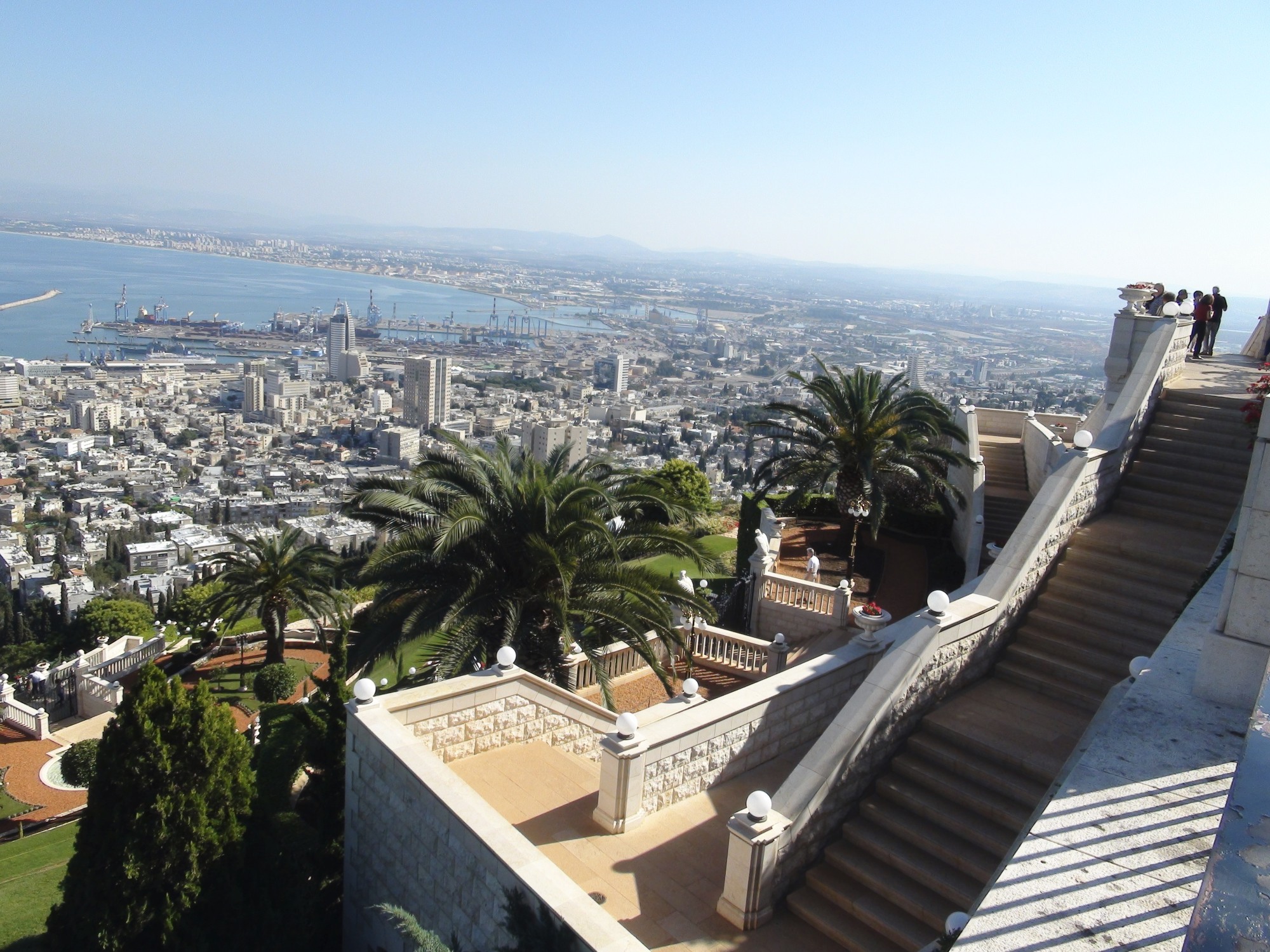
Today we drove from Tiberias to Carmel famous for its connection with the prophet Elijah,  stopping at Haifa, the main seaport of Israel and a place where Arabs and Jews live together peacefully, according to Joseph our guide. Here’s a picture of Haifa from above the B’hai gardens.

We then had Mass at Stella Maris, a Carmelite shrine above the sea. Fr. Carmelo, a Carmelite from Bergamo who spent 55 years in Japan graciously welcomed us. He told  me he was thinking of entering the Passionists but then joined the Carmelites. We taped the homily at Mass. The group sang like the Sistine choir, except for the Agnus Dei, which we have to work on. Maybe we will put my homily up on this blog shortly. I spoke about  Elijah and his relationship  to Jesus.

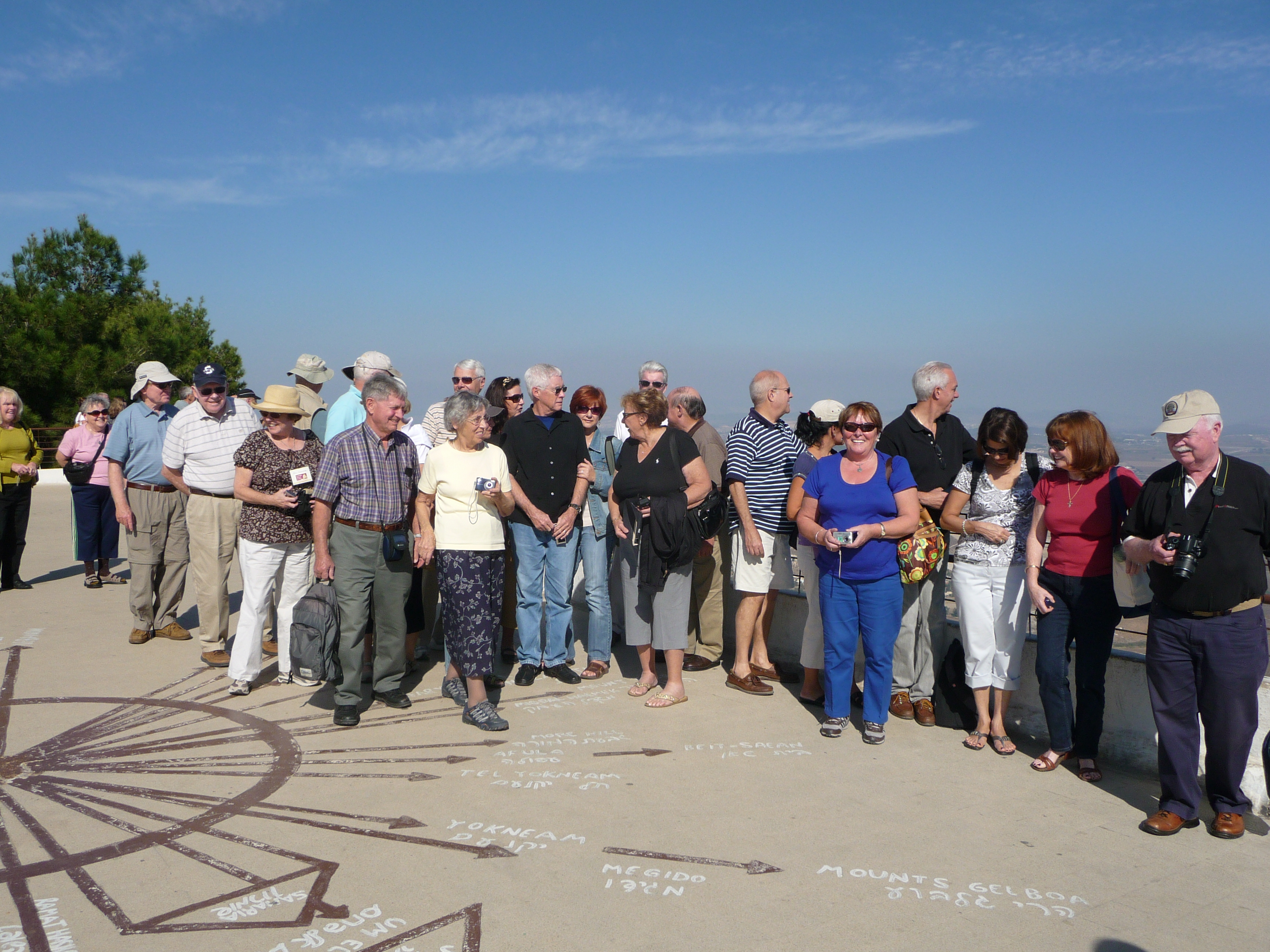
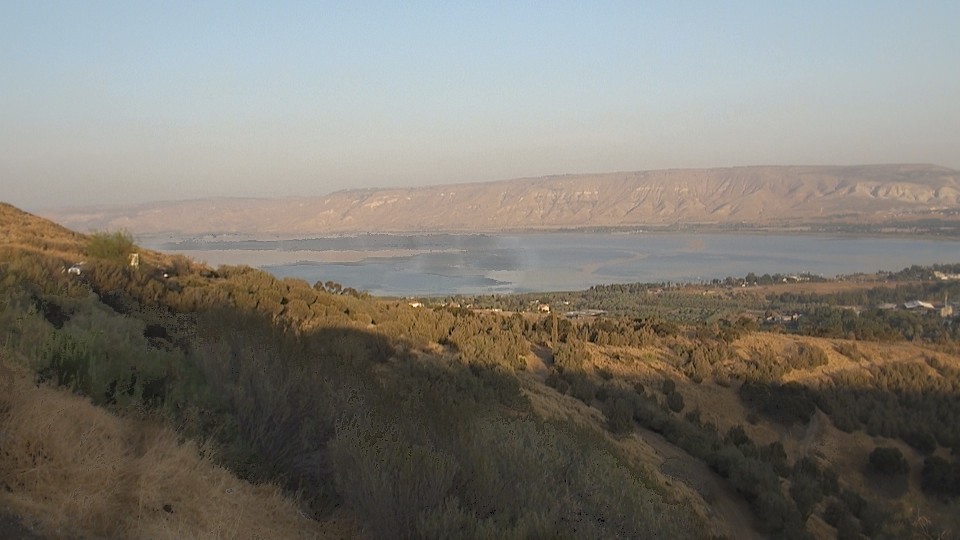
The view from  the top of Mount Carmel facing the Valley of Armageddon, on the the great battlefields of history, is spectacular.

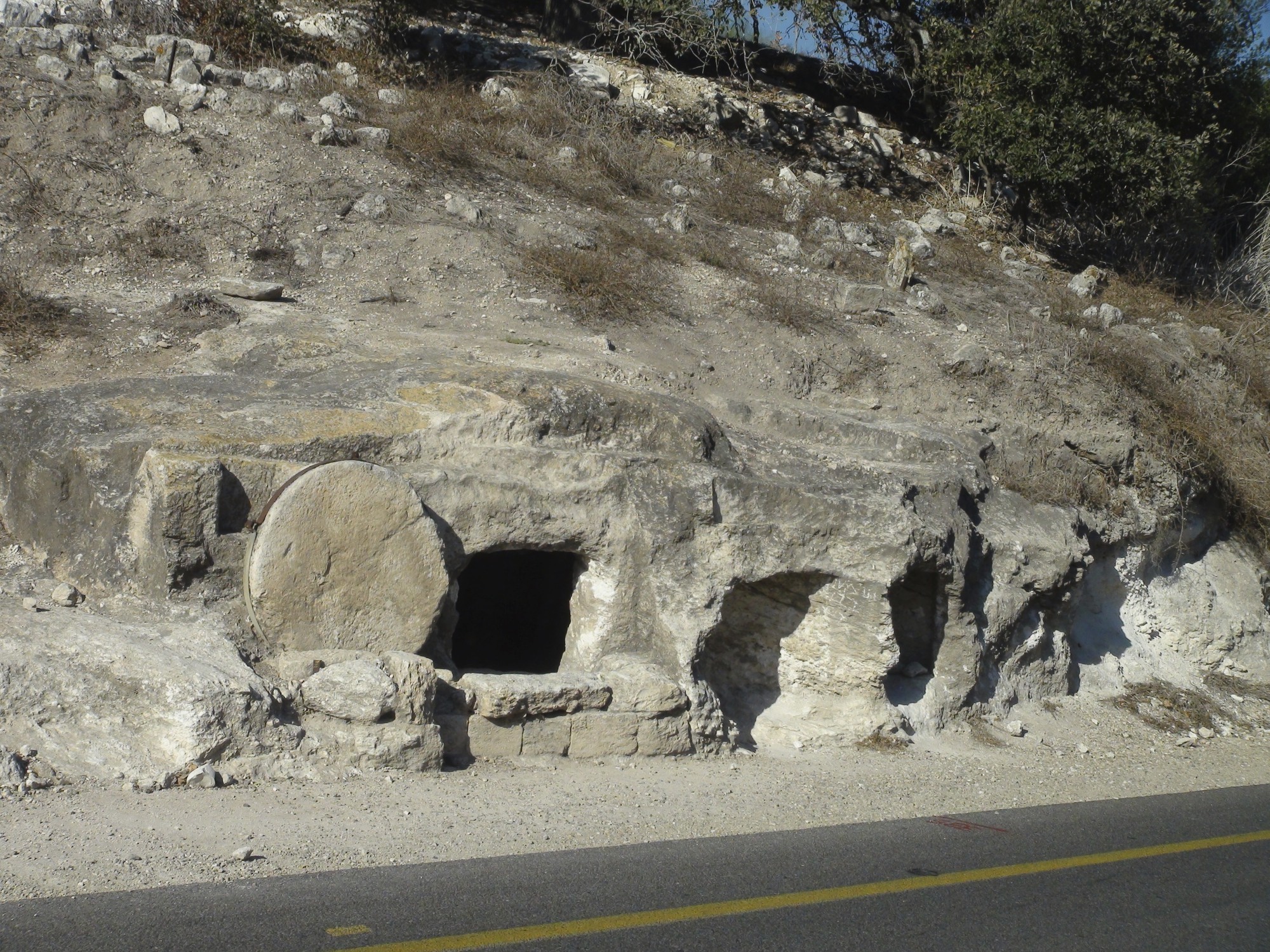
Coming down from the mountain, Joseph pointed out a tomb from the time of Jesus, recently discovered, that shows how burials were conducted then. It was discovered during a recent expansion of a highway near Carmel.

On the way back we passed Mount Tabor, which we will visit later, and Naim, where Jesus raised the son of the widow from the dead. Nearby Elijah raised a widow’s son from the dead also.

Finally, proof that an army marches on its stomach.

Safe and Sound

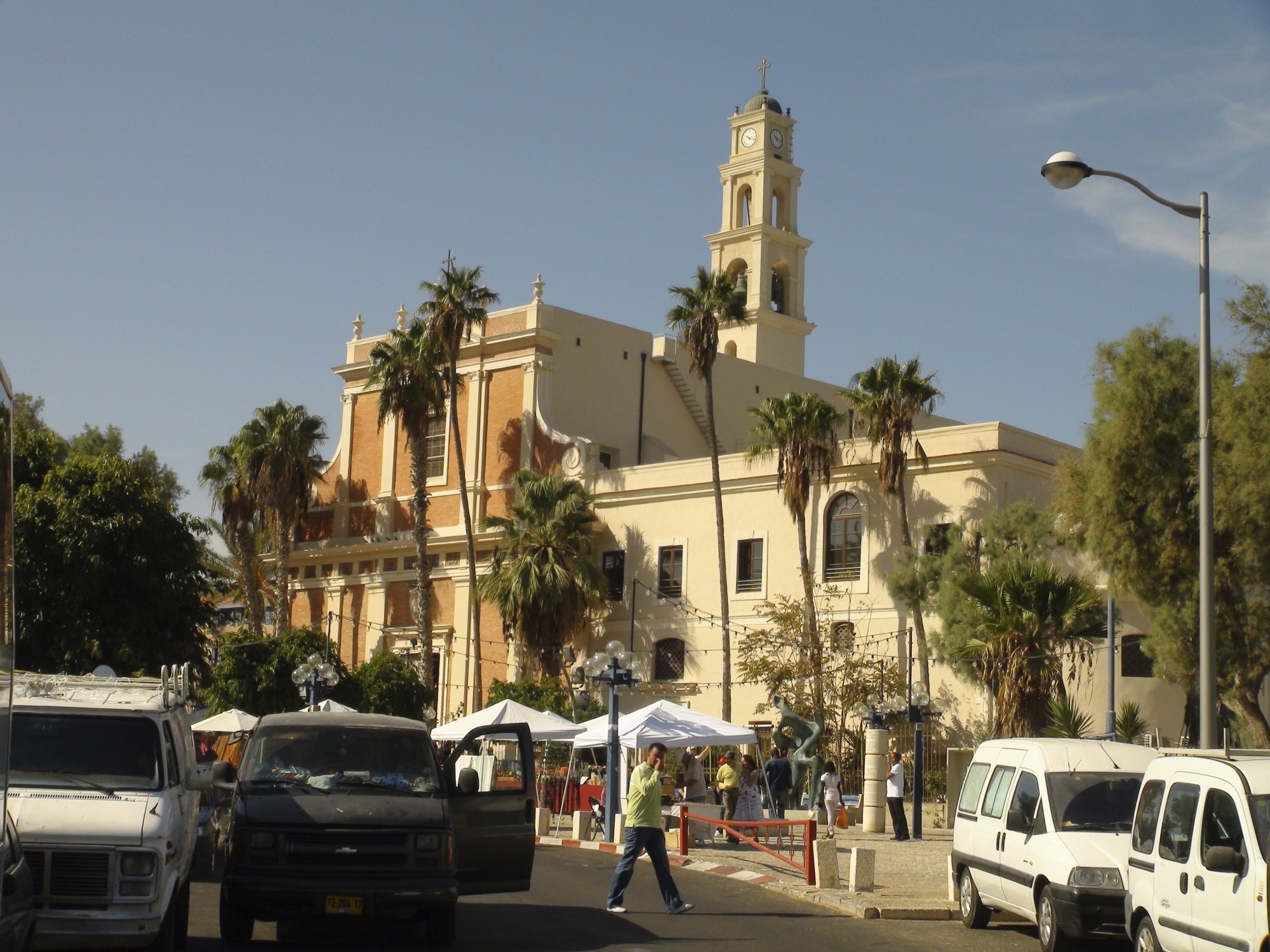
We are safe and sound on the Sea of Galilee, forty two weary pilgrims from St. Mary’s in Colts Neck. After an uneventful flight, (always appreciated) we were met my our guide, Joseph, a Palestinian Christian, and our driver, Eiz a Muslim from Bethany at about 8 AM this morning. Since our hotel rooms would not be ready till later because of the Sabbath, we toured Joppa, where a lovely Mass was taking place in French, and the ruins of Caesaria Maritima, where we saw Pilate’s  inscription and the great stadium and harbor of that important city. We finally made our hotel Gai Breach Hotel, in Tiberias, around 3 PM.

Joseph is a wonderful guide who explained the land and its development around Tel Aviv. He studied archeology at Drew University in Madison, NJ.

Tomorrow we go for Mass to Nazareth, then to Cana. If we have any energy left tomorrow, Joseph says he will take us somewhere else. Christians tourists are all over the area, from Houston, West Virginia, California, and of course New Jersey.

I have the homily tomorrow.

Going to Mount Carmel: the Prophet Elijah

The Bible Today, edited by Fr. Donald Senior, CP, is always worth reading, The current issue has some fine articles about Messianism written by top scripture scholars. “You are the Messiah, the Son of the Living God,” Peter says at Caesarea Philippi, when Jesus asks him who people say he is.  We may forget that Jesus was not born Jesus Christ; the appellation “Christ” meaning “Messiah” was added later to his name by his followers. Peter wasn’t alone in this declaration: “We have found the Messiah (which means Anointed,” his brother Andrews says. (Jn 1,41)

Jesus came into a Jewish world expecting a Messiah, but what kind of Messiah were they hoping for? Some Jews of the time expected a royal Messiah, the Son of King David. You see that expectation in the Gospel of Matthew which begins by tracing the human origins of Jesus back to David. “An account of the genealogy of Jesus the Messiah, the Son of David and Son of Abraham.”

Hope for a Messiah like the warrior King David who would free the land of Israel from its oppressors grew stronger among the Jews after the Roman occupation of Palestine by the Roman general Pompey in 63 BC. It can be seen in some of the Essene writings discovered from Qumran in recent times.

The Gospel of Matthew  indicates that ordinary people too were hoping for a kingly messiah at the time of Jesus. “Can this be the son of David,” the crowd says after he cured a man who could not see or speak. (Mt 12,23) “Hosanna to the son of David,” the crowd says as he enters Jerusalem on Palm Sunday. (Mt 21,9) That causes the leaders in Jerusalem to become angry, because a claim like that could fire revolution and they feared what would happen because of it. (Mt 21.15)

Jesus never claims to be a political revolutionary, however.  He refuses to fit neatly into that kind of messianic expectation. He will not lead an uprising against the Romans. He’s not John the Baptist come back from the dead. “Jesus is not confined to playing an already fixed role–that of Messiah– but he confers, on the notions of Messiah and salvation, a fullness which could not have been imagined in advance.” (Pontifical Biblical Commission)

If we ask what messianic expectation of his time Jesus comes closest to, we might find it in the hope for a prophetic messiah like Elijah.

Like Elijah, he will speak the truth against the powerful, he will help the poor, he will suffer persecution; he will raise the dead.

Our visit on November 8th to Mount Carmel, long associated with Elijah, will help us place Jesus in the context of his time.

Go, Tell It to the Mountains

Mountains were important for the ancient people of the Holy Land who lived at a time when maps were unreliable and directions from Google unavailable. The businesslike system of Roman roads didn’t reach everywhere. Going to distant places wasn’t easy, and so with no one to guide you, often the best you could do was to climb to high ground and get your bearings.

No wonder great mountains were considered sacred places. You could see far and wide from them. Yet, more important, mountains were also places for spiritual vision. The Jews knew that God had spoken to Moses on Mount Sinai and others experienced God on mountains too.

As a new Moses, Jesus taught on the Mount of Beatitudes, according to Matthew’s gospel.  (Mt 5-7) He called his disciples and after his resurrection sent them out to the whole world from a mountain in Galilee. (Mk 3,13; Lk 6,12, Mt 28,16)  He often prayed and reflected on a high place.(Lk 6,12)  As he set off for Jerusalem, he took his disciples up a high mountain and revealed his glory to prepare for the difficult journey that would lead to his sufferings and death. (Mt 17; Mk 9; Lk 9,28)

Mountains were places for making decisions and facing dangers. Early in his ministry, the devil tempted Jesus on a high mountain.(Mt 4,8) On the Mount of Olives as his disciples admired the beautiful buildings of the temple in Jerusalem, Jesus warned his followers that what they saw would be completely destroyed and wars and earthquakes and persecutions were coming besides. (Mk 13,3)  From that same mountain, as looked over at the moonlit city the night before he died, Jesus could see his own approaching death.

Mount Carmel: November 8th

We’re going to some of these holy mountains on our pilgrimage to the Holy Land this November. November 8th we will visit  Mount Carmel, where the Prophet Elijah, to whom Jesus is often compared in the gospels, communed with God and faced the cunning King Ahab, Queen Jezebel and the priests of Baal.

As Jesus preached and performed miracles, he reminded many Jews of the great prophet who worked mighty deeds and challenged the powerful.   Like Elijah, who was hounded by powerful leaders, Jesus was opposed by the powerful of his time. Was he the messenger of God’s coming kingdom?

This majestic mountain, set so prominently by the sea, was a place of worship for the  ancient Phoenicians, the Egyptians before the Jews and the Romans revered it as a holy place.

Mount of the Beatitudes: November 9th

The beautiful eight- sided church on the hillside outside the ruins of Capernaum, which we will visit, recalls the eight beatitudes summarizing the teaching of Jesus. “When Jesus saw the crowds he went up the mountain, and after he sat down, his disciples came to him. Then he taught them and began to speak…” (Mt 5, 1) His teaching, about prayer, forgiveness, reliance of God, patience, generosity, make his followers the salt of the earth and the light of the world. The “Sermon on the Mount” is found in chapters 5-7 of Matthew’s gospel.

Mount Tabor:November 10

None of the evangelists name the mountain where Jesus was transfigured, but Christian tradition gradually designated Mount Tabor, seven miles from Nazareth and close to other places where he ministered.  By the 5th century Christian scholars like St. Jerome had settled on the site.

From Tabor, rising like a great globe 1500 feet from the plains of Jezreel, you can see to the northeast Mount Hermon, Nazareth and the mountains that hide the Sea of Galilee To the southeast is the depression where the Jordan River winds its way to the Dead Sea. Mount Nebo, where Moses saw the Promised Land before his death, was there. Branching off the road along the Jordan River was the road to Jerusalem. As Jesus and his disciples stood on Tabor, the world they knew lay before them.

“This is my beloved Son, listen to him, ”  God says of Jesus, and his clothes become a dazzling white, anticipating his resurrection.  “It is good to be here,” the disciples say. In a transitory way, the mystery of the Transfiguration anticipates God’s promised kingdom, which comes through Jesus.

St. Luke in his gospel says that Jesus and his disciples went up the mountain of the transfiguration to pray. Painful and hard as the journey ahead will be, it will end in glory for them and for the whole world..

The Mount of Olives: November 13th

The Mount of Olives, overlooking the ancient eastern walls of Jerusalem, hold precious memories of  Jesus and his time in the city, especially the memory of his death and resurrection.  We’ll visit the Garden of Gethsemani on the lower slopes of the mountain, where he prayed and was arrested on Holy Thursday evening.

During the time of feasts, when the city was over-crowded, the Mount of Olives provided shelter for the overflow of pilgrims who came to the Holy City. The road leading to Bethany, where Jesus stayed with the family of Lazarus, winds over the mountain through the olive groves that still grow there.

“When he was sitting on the Mount of Olives, opposite the temple,” Jesus spoke of the destruction of the temple and various catastrophes that would mark “the birth pangs” of a new age. (Mk 13,3 ff)  According to the Acts of the Apostles, Jesus ascended into heaven from the Mount of Olives. (Acts 1,12)

In the Byzantine period, the Mount of Olives was a favorite place for Christian religious and pilgrims to stay while visiting the Holy Land.

Nov 6 Tel Aviv to Tiberias on the Sea of Galilee

The drive from the airport to Tiberias is about two hours. Israel and the occupied territories are about the size of New Jersey, so our trips to different sites will not be too long.

This is the land of Jesus and we’re going first to where he was raised and began his mission: Galilee. In the scriptures he’s called a Galilean, from Nazareth. Our hotel is in Tiberias on the Sea of Galilee, where we will be staying for four days. It’s not too far from Nazareth and Capernaum and other Galilean towns mentioned in the New Testament.

On a map of 1st century Palestine you can see where these places were.

Our official guide will tell us a great deal about Tiberias and the surrounding area, but let me say something about the city where we will be staying.  Today it’s a Jewish city of modern resorts, hotels and spas, but it’s also one of Judaism’s holy cities. Let’s look at it at the time of Jesus.

Herod Antipas

It was built by Herod Antipas,  Tetrarch of Galilee, around the year 20 AD. He made the city his capital and  named it after his patron, the Roman Emperor Tiberius.

Herod Antipas (4 BC-39 AD) is mentioned a number of times in the New Testament. Jesus called him “that Fox.”  He ordered John the Baptist beheaded and later wondered if Jesus might be John come back from the dead.

Pontius Pilate sent Jesus to Herod before sentencing him to death, but Jesus didn’t say a word to him. One other interesting connection to Herod: Johanna, wife of Herod’s steward Cusa, was a follower of Jesus who stood with Mary and the other women at his cross.

Like his father, Herod the Great, Herod Antipas loved to build, and his splendid Greco-Roman city of Tiberias arose from 20 and 27 AD, while Jesus lived in Nazareth. It had a Roman gate, stadium, spacious squares with marble statues,  a grand palace with a golden roof and a large synagogue. To pay for it, Herod relied on his tax-collectors in the cities and towns in his district–places like Capernaum and Nazareth– to squeeze the fishermen and farmers for whatever they could get.

The ruins of Herod’s city lie south of the present city of Tiberias.

Talmudic Judaism

After the destruction of Jerusalem and its temple by the Romans in 70 AD,  pharisees and scribes from the city flocked to Tiberias and made it a base for reconstituting Judaism. Instead of the temple, they made the synagogue the center of Jewish life and worship. Tiberias itself became the site of over 12 synagogues and an important place for Jewish learning.  A rabbinic school established in the city eventually produced the Palestinian Talmud, a written collection of rabbinic teachings on Jewish laws and traditions, around the beginning of the 4th century. Jewish historians describe the early centuries after the destruction of Jerusalem as the Time of Talmudic Judaism.

The Gospel of Matthew

Some scholars say the Gospel of Matthew, the most contentious and polemical of the gospels, may have been written near Tiberias around the year 90 AD. (Other places they suggest are Antioch in Syria and Sepphoris, not too far from Nazareth)  The gospel certainly reflects the struggles between the Jewish authorities in Tiberias and the Jewish Christians of Galilee over the future of Judaism. The sharp critique of the scribes and pharisees in the 23rd chapter of Matthew is an example of the contentious spirit that must have existed on both sides.

It would be good to keep Matthew’s gospel in hand as we travel around Galilee.

Peter’s confession at Caesaria Philippi that Jesus is “the Christ, the Son of the Living God”, the highpoint of the Matthew’s gospel, makes a claim that the Jewish authorities from Tiberias would fiercely dispute.  After all, Jesus came from nearby, inconspicuous Nazareth where his own neighbors rejected him.  Did he really rise from the dead? Rumors were that his disciples stole his body from the tomb. Perhaps he resembled Elijah, or John the Baptist, or one of the prophets, but he could be a false prophet too.

The Jewish authorities would also question the credentials of the chief followers of Jesus–  uneducated fishermen and unpopular tax-collectors. Could they be authentic teachers in Israel?

Modern scriptural studies point out the real life situations that influenced the creation of our gospels. They didn’t drop down from heaven, they came from people struggling over the questions Jesus asked Peter: “Who do people say that I am?” “Who do you say that I am?” They were written to answer his critics then, and we hear these old disputes even now.

For example, Matthew’s gospel speaks to questions about the origins of Jesus, born of a virgin and conceived through the power of the Holy Spirit.  Matthew’s Jesus speaks to the crowds from a mountain, like Moses, not in a synagogue like the Pharisees. The gospel is filled with Old Testament references backing up his claims. Matthew’s gospel  challenges the story that after his resurrection his body was stolen by his own disciples. Matthew takes on the task to disprove that story.

Finally, Peter, the fisherman, and Matthew, the tax-collector are star witnesses of Matthew’s gospel. “Flesh and blood” hasn’t revealed this to them, but the Father in heaven.

Did the Christians Lose?

I think the followers of Jesus lost the battle with the new Jewish establishment in Galilee at the end of the 1st century, and many moved on to other places. Only some  remained in Galilee. The final words of Jesus to his eleven disciples in Matthew’s gospel seem to indicate a call to other places.

“The eleven disciples went to Galilee, to the mountain to which Jesus had ordered them.  When they saw him they worshipped, but they doubted. Then Jesus approached and said to them, “All power in heaven and on earth has been given to me. Go, therefore, and make disciples of all nations, baptizing them in the name of the Father, and of the Son, and of the Holy Spirit, teaching them to observe all that I have commanded you. And behold, I am with you always, until the end of the age.”  Mt 28, 16-20

Fourth Century Christian Expansion

The Christian presence in the Holy Land increased when Constantine gained control of the Roman empire in the 4th century and favored the Christian Church. As Christians came to the Holy Land and built churches and shrines over the places where tradition said Jesus lived and ministered,  Galilee remained a Jewish stronghold.

When Muslims conquered the Holy Land in the 7th century, Christians and Jews alike came under their rule. Because of harsh Muslim rule under the Seljuk Turks and their destruction of the great Christian shrine of the Holy Sepulcher in Jerusalem in the 11th century,  Crusaders from Europe invaded Palestine and re-established a Christian presence again. Evidence of Crusader churches and fortresses can be seen today.

Muslims, Jews and Christians

Muslims regained control of the Holy Land in the 13th century and remained in power  till the 20th century. Under Ottoman rule, Jews were treated more favorably than Christians, but as the fortunes of the Ottoman Empire declined so did the economy of Palestine. By the 19th century , Jewish and Christian and Muslims saw a land that was poor and neglected.

As the nation states formed in Europe in the 17th century, persecutions of the Jews increased and Jewish aspirations to return to their ancestral lands strengthened. By the 19th century Jews from Russia and Poland were settling again in parts of Palestine, in Jerusalem as well as in Galilee. After the holocaust, the Jewish population dramatically increased.

The Christian presence today is small and increasingly limited to shrines at Christian holy places, sustained especially by religious like the Franciscans.

Tiberias Then and Now

An English visitor to Tiberias towards the end of the 19th century offers an interesting glimpse of this Jewish city at the time:

“The Jews are very numerous in Tiberias,  it and Safed being, after Jerusalem and Hebron, the two holiest towns; for the Messiah is one day, they believe, to rise from the waters of the lake and land at Tiberias, and Safed is to be the seat of his throne.

“Prayer must be repeated at Tiberias at least twice a week, to keep the world from being destroyed. The worship in the synagogue seems to be in some respects peculiar, since the congregation seek to intensify different parts of the service by mimetic enforcement of its words.  Thus, when the Rabbi recites the passage, “Praise the Lord with the sound of the trumpet,” they imitate the sound of the trumpet through their closed fists; when a tempest is mentioned , they puff and blow to represent a storm; and when the cries of the righteous in distress are spoken of in the Lesson, they all set up a loud screaming.

“The Israelites of Tiberias are chiefly from Russian Poland, and do not speak German. Poor, thin, and filthy, they are certainly far from attractive;  but the women are neatly dressed, many of them in white and look much better than the men. “  Cunningham Geikie, The Holy Land and the Bible,Vol 2, New York, 1890 p 543

Tiberias today little resembles the city the visitor describes then.
Haiti

Haiti: The God of Tough Places, the Lord of Burnt Men

Transaction Publishers, New Brunswick, NJ  2010   $29.95

Fr. Richard Frechette, CP, Passionist priest and medical doctor, has served the poor in the tough, burnt land of Haiti through floods, revolutions and the recent catastrophic earthquake of January 12, 2010 which left 200,000 dead.

There’s not much he hasn’t seen. But here’s a book of stories that reveal what all of us find hard to see: there’s a mighty, joyful goodness in that tough, burnt land. Frechette uncovers the graces of God in the chaos, violence and poverty of “Calvary hill,” Haiti today.

He has eyes that see in the dark, beyond the defeat most see. His stories of Haiti’s poor, especially its children in the pediatric hospital and slum schools he directs, reveal  goodness, spiritual strength and wisdom. Here the poor speak, whom Jesus called blessed.

The book’s twenty or so stories introduce us to a land that few of us have a heart to visit, but all of us should learn from.  Most are set in the context of the feasts of the Christian liturgical year, which Fr. Rick says,  “empowers us to make grace present, concretely in our world.”

With poetic insight and faith he tells us about grace present.

Available at www.crossplace.com

Passionist Press

526 Monastery Place

Union City, NJ  07087

201 867 6400

National Catholic Youth Conference

25,000 Catholic young people from all over the United States met in Kansas City, Kansas from November 19-21, 2009, for the National Catholic Youth Conference. A group of about 30 were there from St. Mary’s Parish in Colts Neck, NJ.

I think I was the oldest youth at the conference, which is an offshoot of the world youth days begun under Pope John Paul II. It was a lively, spirited event, combining traditional Catholic things, like preaching,sacraments and devotions with modern technology the young use to communicate today. I missed a day because I visited one of our priests who lived nearby, but I was impressed by what I saw.

A workshop for parents by Chris Weber explaining how young people use technology today–Twitter, text messaging, Facebook, Internet– was especially helpful.

If you want to communicate with your kids, he said, get to know as much as you can about the new media. True, also, for priests and others who want to communicate with the next generation.

He recommended a book by Joseph Allen and Claudia Worrell Allen entitled Escaping the Endless Adolescence, (Random House, October, 2009).

He quoted someone saying that adolescents inhabit a subterranean world where adults are unwelcome. All you can do is sit at the top of the stairs and wait for them to talk to you as they go down or come up.

The best speakers at the event, in my opinion, were some teenagers who spoke to the young people at Sprint Center on Saturday morning about their own spiritual searching in simple fresh words.  Is God sending young people to speak to that subterranean world?

Bishops and priests were there, but the main speakers for many of the events were laypeople. Maybe that says something too about who is going to speak to the next generation.

Honestly, some of the music was hard on my ears, but if these young people are the face of the future, I have hope for the days ahead.

Glorious Wounds: Three Missionaries from China

Today Passionists throughout the world celebrate the Feast of the Glorious Wounds of Christ. They are glorious wounds, marks of risen life, not of death. They are bathed in the light of the Resurrection. When Jesus showed his wounds to his disciples after he had risen, they “rejoiced at the sight of the Lord.”

Today marks the anniversary of the death in China of Fathers Walter Coveyou, Clement Seybold, and Godfrey Holbein on April 24, 1929. After taking part in a community retreat the three young Passionist priests were traveling to the mission at Yuanchow, Hunan. After spending the night at an inn they were attacked by Chinese bandits and murdered. They were the first three American Catholic missionaries to be killed in China.

Fr. Robert Carbonneau,CP

Fr. Robert Carbonneau,CP

We marked their death with a symposium organized by Rev. Robert E. Carbonneau, CP, Ph.D, of the  Passionist Historical Archives, here in Union City, NJ. Portraits of the three were exhibited and their legacy explored.

What did their lives and sacrifice accomplish? Six scholars looked at the time and circumstances in China when the missionaries were killed:

  • Dr. Jeffrey Kinkley, Ph.D, Professor of History, St. John’s University, NY
  • Dr. Joseph Lee, Ph.D, Professor of History, Pace University, NY
  • Dr. Kathleen Lodwick, Ph.D, Professor of History, Penn State University, Fogelville, Pa.
  • Rev. Marcel Marcil, SJ, US Catholic China Bureau, Seton Hall University, South Orange, NJ
  • Dr. Edward Mc Cord, Ph.D, Professor of History, George Washington University, Washington, DC.
  • Rev. Robert E. Carbonneau, CP, Ph.D.  Passionist Historical Archives, Union City, NJ.
Panel

Panel

Western Hunan was a dangerous, bandit-ridden place at the time, controlled by war lords and their roving armies. Central and regional governments had little power, especially in Hunan, probably the most lawless place in China.

Foreigners traveling in the area needed armed escorts to get from place to place. It was similar to Somalia today.  The missionaries who were killed were unarmed and unprotected.

The Passionists, like other missionaries at the time, brought needed food and medical help, but also some basic order to the troubled territory where they were and offered it a connection to the outside world. Reports of religious orders like the Passionists, found in their archives today, offer essential information about Chinese history, culture and political development. They were early ethnographers, as their descriptions of China found in articles in The Sign magazine, make clear.

The missionaries won converts to Christianity through families, usually through the elders, and Christianity became a strong community based movement  through family structures that remained even through the Communist era. The missionaries taught basic Christian beliefs, but they were tolerant when families used customary Chinese religious practices for funerals and weddings. The recent transferral of the graves of the three missionaries to an honorable resting place witnesses the reverence Chinese Christians have for these ancestors in the faith. The missionaries have become embedded in their family tree, so important for families in China.

The death of these three missionaries in 1929 came as North and South America were turning from their own continents to the world beyond. China was the first destination for American efforts. The tragedy shocked the Americas, where interest in China was high among American Christians.

Often enough in dire circumstances like those in Western Hunan, various Christian groups showed a surprising cooperation with each other and united to bring common relief.

We think of globalization as a recent movement, but we can forget the global effects Christian missionaries like the Passionists initiated.

Probably those who killed the missionaries were robbers looking for whatever valuables they had and had no religious or political motivation. But the heroism of these men, who left home and the world where they were born and grew up, and united themselves to troubled land and people has to be praised.

We rejoice in their wounds.

You can read more on the Passionist China missionaries at www.cpprovince.org/archives

You can see a video on the mission in Hunan at http://www.vimeo.com/3545520

Start Somewhere

I was happy to see the Vatican launch out onto Youtube.  The digital generation spends a lot a time there, so why not reach out to them? Maybe we don’t have all the whistles and bells, but let’s start somewhere.

At the Travel Show in the Javits Center in New York City last Sunday, crowds of people were looking for places to go and see around the world. Some of them may end up in churches and shrines, which have wonderful stories to tell.

Here’s a church in Rome I’ve always liked, and it tells a powerful story.  Saint Peter in Chains.

I have other clips on Youtube. Type vhoagland into the search box and see for yourself.

God Speaks

The reading from William of Saint Thierry in today’s Office of Readings is a simple reminder that God speaks to us in Christ.  But shouldn’t we also remind ourselves, as we listen to his beautiful words,  that God speaks in many ways? To many among us, in our fragmented world, Christ does not speak directly at all.

Listen to William:

“You alone are Lord. Your dominion is our salvation, for to serve you is nothing else but to be saved by you! O Lord, salvation is your gift and your blessing on your people; what else is your salvation except to receive from you the gift of loving you” which comes through Jesus Christ.

“He taught us to love him by first loving us, ‘even to death on a cross.’

“You first loved us so that we might love you–not that you needed our love, but because we could not be what we were created to be, except by loving you.”

“He ‘loved us and gave himself up for us.’ He is your Word to us, your powerful message: while all things were in midnight silence (that is, in the depths of error) he came as the conqueror of error and the apostle of gentle love.”

“Everything he did on earth, all that he said, even the insults, the spitting, the buffeting, the cross and the grave–were actually you speaking to us in your Son, appealing to us in your love and stirring up our love for you.”

God speaks to us in many ways–that’s something believers know to be true as we listen for the voice of Christ. Not everyone will hear him this season, but our holy time calls all people to listen, as they are able, for God speaks to them too.

Advent is a time when we hear the Word made flesh, but  also a time to listen for the many ways God speaks. It’s meant for a bigger audience than Christian believers.