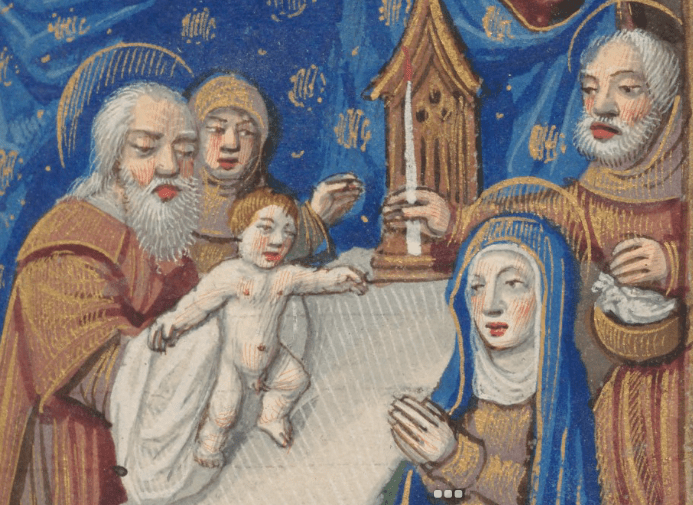
Two elderly Jews, Simeon and Anna, meet the Child, when Mary and Joseph take him to the temple, “to present him to the Lord.” Simeon joyfully takes the Child in his arms. “Now you can dismiss your servant in peace, Lord, because my eyes have seen your salvation.” No temple priests, no officials, no angels recognize the Child, according to Luke’s gospel, , just two old people. (Luke 2:36-40)
Anna, an 84 year temple regular and a widow after being married for only seven years doesn’t say anything when she sees the Child. In our picture above he stands behind Simeon gazing at the Child. “Coming forward at the very time,” Luke says, “she gave thanks to God and spoke about the child to all who were awaiting the salvation of Jerusalem.” She doesn’t keep word of him to herself. She speaks of him to all.
The Lord comes to the 84 year old woman, to Simeon, to Mary and Joseph, Elizabeth and Zechariah, the shepherds in the hills, the wise men from afar. He comes to all. John’s letter, which we read today at Mass, says that too. ( 1 John 2:11-17)
Anna gives thanks at the sight of the Child and goes out to speak about him to everyone she meets. “Let the heaven be glad and the earth rejoice. Go tell all the nations the Lord is King.” Our responsorial psalm says.
Jesus brings life to all, so even at his birth all are there. In today’s reading (Luke 2) Mary and Joseph bring Jesus to the temple where he meets Simeon and Anna, two elderly Jews. In the temple where God dwells, they offer him to his Father.
Luke’s account doesn’t dwell on the ritual – he may not know much about it. He doesn’t write about what the priest does, or even describe much of what Mary and Joseph do. God is at the heart of his story, revealing himself through the Infant to two elderly Jews, Simeon and Anna, who wait patiently for the Messiah.
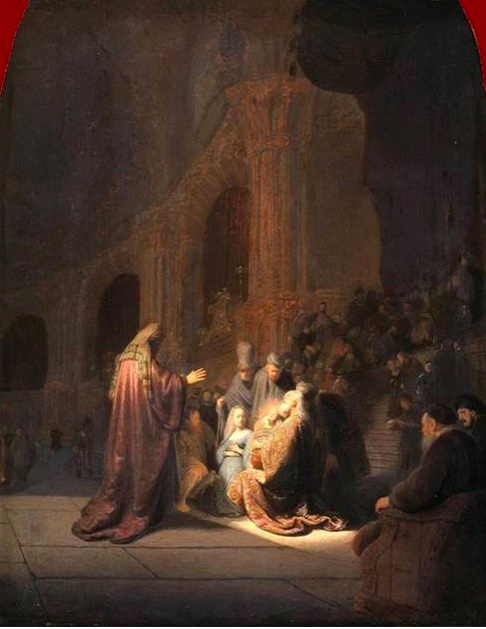
They’ve waited for years, and they are not alone. Rembrandt with his usual keen insight pictures them waiting in the dark, for they’re part of a great crowd of others in the temple. The long waiting and the darkness has not dulled their eyes. Waiting in the temple has made them sharper, for they see salvation in this little infant, ” a light of revelation to the gentiles, and the glory of your people Israel.”
In Luke’s gospel, the destiny of Jesus is revealed in the temple. He begins his journey to the Father there at his birth, and he already draws those who will accompany him on his journey, beginning with Simeon and Anna, and extending even to the gentile world who will receive his light.
Simeon’s prophecy offers a somber note as he turns to Mary. “Your own soul a sword shall pierce.” The glory of the Lord proclaimed by the angels at Jesus’ birth is not without the experience of sorrow. Mary will join Rachel and the other women who mourned for their innocent children.
We’re living in an aging society; our elderly population is increasing. The temptation is to see old age as a stage in life when all is over, but this gospel story makes us reconsider, doesn’t it? The Lord comes at every moment of life. He draws us to himself our whole life long. “ Old men (and women) ought to be explorers.” Exploring apostles.
Simeon and Anna not only wonder at the child they see and hold in their arms, but they speak about him to those “waiting for the redemption of Israel.” The great crowd waiting in the dark in Rembrandt’s painting represents all of us.
Who is Jesus Christ? The questions began with Mary and Joseph and were not settled in a day. He’s more than the Jewish Messiah, the Son of David. Jesus Christ is the Word of God who became flesh.
The early creeds state what we believe:
I believe in one Lord Jesus Christ,the Only Begotten Son of God,born of the Father before all ages.God from God,Light from Light,true God from true God,begotten, not made, consubstantial with the Father;through him all things were made.For us men and for our salvation he came down from heavenand by the Holy Spirit was incarnate of the Virgin Mary,and became man.
The feast of Christmas celebrates that same belief. .The earliest celebration of the feast appears in a Roman church calendar from 336. A 3rd century Roman theologian, Hyppolytus, describes his time as a supermarket of revelations about God, a pantheon of divine beings, all acceptably true. The Roman empire tolerated many beliefs and systems, as long as they did not threaten the empire and its institutions.
Christmas originated as a doctrinal celebration, not a devotional one. The gospel read on this feast early on was from St. John, “In the beginning was the Word…”
Hippolytus called Jesus Christ the unique Word of God. “He is the Word who made the universe, the Savior you sent to redeem us.” Those words are found today in our 2nd Eucharistic Prayer.
Addressing the Jews, the Roman theologian claimed the prophets spoke “dimly” about God’s Word. Now the Word made flesh speaks clearly through his humanity. To the gentile world, a world awash in various philosophies, Hippolytus spoke about the unique Word, Creator and Redeemer. Christmas celebrates this Christian belief.
By your Word you created the world and you govern all things in harmony. You gave us the same Word made flesh as Mediator and he has spoken your words to us and called us to follow him. He is the way that leads us to you, the truth that sets us free, the life that fills us with gladness.
Lets not turn Christmas into quaint story, with little meaning for our “real world.” Speak out, Hippolytus and those like you, even if you’re not heard. Truth must be told, and told continually..
When the magi had departed, behold,
the angel of the Lord appeared to Joseph in a dream and said,
“Rise, take the child and his mother, flee to Egypt,
and stay there until I tell you.
Herod is going to search for the child to destroy him.”
Joseph rose and took the child and his mother by night
and departed for Egypt.
He stayed there until the death of Herod,
that what the Lord had said through the prophet might be fulfilled,
Out of Egypt I called my son.
When Herod realized that he had been deceived by the magi,
he became furious.
He ordered the massacre of all the boys in Bethlehem and its vicinity
two years old and under,
in accordance with the time he had ascertained from the magi.
Then was fulfilled what had been said through Jeremiah the prophet:
A voice was heard in Ramah,
sobbing and loud lamentation;
Rachel weeping for her children,
and she would not be consoled,
since they were no more. (Matthew 2, 13-18)
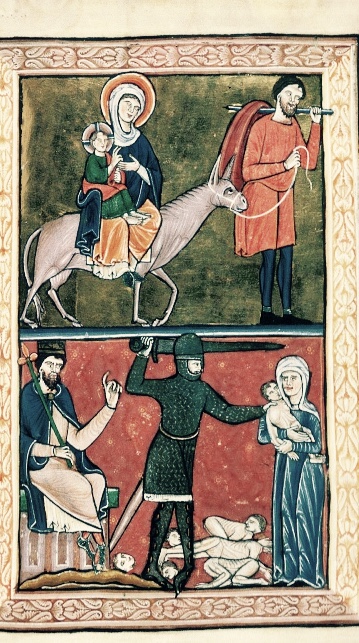
Matthew’s gospel alone describes the massacre of the Innocents and the flight into Egypt.. An angel tells Joseph in a dream to take the Child and his mother into the safety of Egypt to stay till the death of Herod.
Other children born in Bethlehem will not escape the ruler’s cruelty, who orders a massacre of all the boys in Bethlehem two years old and under.
What do we make of this story?. No historical source from the time mentions it, but the massacre isn’t inconceivable. Herod was a powerful ruler, notoriously cruel, especially if his own power was threatened. Fearing a coup, Herod killed his wife and three sons, historians of the time report. His massive fortress, the Herodian, just outside Bethlehem, guarded the southern approaches to his kingdom. There were countless innocent victims of his cruelty, so his massacre of little children is not unlikely.
New Herods still kill the innocent. Just listen to the daily news.
The Feast of the Holy Innocents reminds us evil is in our world, seeming to contradict the “great joy that is for you and all the people.” Why does God permit such things?
Joseph, warned in a dream, takes the Child and his mother into Egypt, Matthew says. The Child returns from Egypt unharmed, but later Jesus will stand innocent before Pontius Pilate who condemns him to a cruel death. Then, he rises from the dead, promising life to those who share in a death like his.
Our feast today sees the children of Bethlehem sharing in his resurrection, safe in God’s hands. Evil does not have the last word.
“Clothed in white robes, they will walk with me, says the Lord, for they are worthy.” (Antiphon for the Feast of the Holy Innocents)
Matthew’s story was directed, first of all, to Jewish Christians living after Jerusalem was destroyed in 70 AD,, when thousands of innocent people were killed by a massive Roman army. Why did God permit this? Where is the kingdom Jesus Christ promised, they must have asked? We ask this too.
Evil doesn’t triumph, though it strides the world seemingly unopposed, but God saves the weak, the small, the helpless through Jesus, his Son. Matthew’s story of the Magi promises God ‘s kingdom will come to all.
Still, Matthew recognizes those experiencing the suffering of the innocent.. He hears the sobbing and the loud lamentation: “Rachel weeping for her children, and she would not be consoled, since they were no more.”
“She would not be consoled, since they were no more.”
Tomorrow, we return to Luke’s Gospel to hear Simeon prophesy to Mary that a sword will pierce here heart. In the painting below she looks at her Child wondering what will happen to him.
A Christmas sermon by St. Augustine reflecting on the mystery of Jesus Christ, human and divine:
The Word of God, maker of time, becoming flesh was born in time. Born today, he made all days. Ageless with the Father, born of a mother, he began counting his years. Man’s maker became man; the ruler of the stars sucked at a mother’s breasts, Bread hungered, the Fountain thirsted, the way was wearied by the journey, the truth was accused by false witnesses, the life slept in death, the judge of the living and the dead was judged by a human judge, justice was condemned by injustice, the righteous was beaten by whips, the cluster of grapes was crowned with thorns, the upholder of all hung from a tree, strength became weak, health was stricken with wounds, life died. He humbled himself that we might be raised up. He suffered evil that we might receive good, Son of God before all days, son of man these last days, from the mother he made, from the woman who would never be, unless he made her. (Augustine, Sermon 191, 1; PL 38, 1010)
For this week’s homily please watch the video below.
The Feast of the Holy Family, first celebrated by the church in Canada, became a feast in the Christmas season of the universal church in 1920. The First World War had brought about a massive dislocation in family life all over the world. Like the Family in Matthew’s Gospel today, families were trying to escape violence, keep together and bring up children. The church placed this feast in her calendar to aid families challenged by war.
“Rise, take the child and his mother, flee to Egypt, and stay there until I tell you. Herod is going to search for the child to destroy him,” the angel says to Joseph. There’s a promise to every family in God’s promise to Joseph. It’s a promise so many immigrant families displaced by wars, political situations, climate change, need to hear now. God cares for them. Think of families in Ukraine and some war-torn parts of Africa, families on our southern borders escaping political instability.
The Family of this feast is not a model of a perfect family, safe in secure Nazareth, but an embattled family trying to find its way. It’s a model for embattled families today.
The Feast of the Holy Family also offers a promise young people in our society, afraid to get married and have children, need to hear. Don’t be afraid of the commitment that is marriage and the children that come to you. God will see you through.
Finally, it’s a promise we all must work to see fulfilled as much as we can.
More than we realize, feasts and seasons alert us to real situations in life. They are graces from God. We need to pay more attention to the feasts we celebrate on our church calendar.
“For people are instructed in the truths of faith, and brought to appreciate the inner joys of religion far more effectually by the annual celebration of our sacred mysteries than by any official pronouncement of the teaching of the Church. Such pronouncements usually reach only a few and the more learned among the faithful; feasts reach them all; the former speak but once, the latter speak every year – in fact, forever. The church’s teaching affects the mind primarily; her feasts affect both mind and heart, and have a salutary effect upon the whole of man’s nature” (Pius X.Encyclical Quas primas, 11 December 1925).”
The Feast of John the Apostle, like the feasts of Stephen and the Holy Innocents, immediately follows the birth of Jesus. The feasts help us understand the mystery of his Incarnation.
John’s Gospel is the earliest gospel read on the Christmas feast, answering the great question: Who is this Child? The Child is the Word of God. “In the beginning was the Word, and the Word was with God, and the Word became flesh and dwelt among us.”
John was one of the first disciples whom Jesus called. He knew Jesus from his early years in Nazareth; he knew his family; he accompanied Jesus on his ministry in Galilee and on his journey to Jerusalem. John saw him transfigured in glory on the mountain. he sat beside him at the Last Supper; he went into the Garden of Gethsemane with him, then he stood beside his cross with Mary, his mother. Jesus gave Mary into his care.
The gospel reading for his feast reminds us that John was a key witness to the resurrection of Jesus. At the empty tomb he recognized Jesus risen from the dead. “‘It is the Lord,’ he said to Peter”. At the Lake of Galilee he again recognized the Risen Christ.. (John 21, 7) John, “the disciple whom Jesus loved” knew Jesus, human and divine.
The 1st Letter of John is our lectionary reading during the Christmas season. It tells us to know Jesus Christ through his humanity, just as the apostles did. The One we know in his humanity is also the Word of God, who is God.
“What was from the beginning, what we have heard, what we have seen with our eyes, what we looked upon and touched with our hands concerns the Word of life —for the life was made visible; we have seen it and testify to it and proclaim to you the eternal life that was with the Father and was made visible to us—what we have seen and heard we proclaim now to you.” 1 John 1-4
The feast of John the Apostle is a feast for exploring the mystery of the Incarnation.
God, our Father, you have revealed the mysteries of your Word through John the apostle. By prayer and reflection may we come to understand the wisdom he taught. Grant this through our Lord Jesus Christ, who lives and reigns with you and the Holy Spirit, One God, forever and ever.
We follow Christmas Day with the feasts of St. Stephen and St. John. The two saints seem to interrupt the Christmas narrative, but actually they help us understand the Christmas mystery.
The martyr Stephen, whose death St. Luke describes in the 6th chapter of the Acts of the Apostles, faithfully followed Jesus into the mystery of his death and resurrection. He is the first of many faithful followers to come, imitating Jesus, the Savior, who prayed and gave his life to save his people from their sins. Stephen points to the destiny of the Child born of Mary.
St. Fulgentius explains his place in the Christmas mystery:
“Yesterday we celebrated the birth in time of our eternal King. Today we celebrate the triumphant suffering of his soldier. Yesterday our king, clothed in his robe of flesh, left his place in the virgin’s womb and graciously visited the world. Today his soldier leaves the tabernacle of his body and goes triumphantly to heaven.
” Our king, despite his exalted majesty, came in humility for our sake; yet he did not come empty-handed. He brought his soldiers a great gift that not only enriched them but also made them unconquerable in battle, for it was the gift of love, which was to bring men to share in his divinity. He gave of his bounty, yet without any loss to himself. In a marvellous way he changed into wealth the poverty of his faithful followers while remaining in full possession of his own inexhaustible riches.
“And so the love that brought Christ from heaven to earth raised Stephen from earth to heaven; shown first in the king, it later shone forth in his soldier. Love was Stephen’s weapon by which he gained every battle, and so won the crown signified by his name. His love of God kept him from yielding to the ferocious mob; his love for his neighbour made him pray for those who were stoning him. Love inspired him to reprove those who erred, to make them amend; love led him to pray for those who stoned him, to save them from punishment. Strengthened by the power of his love, he overcame the raging cruelty of Saul and won his persecutor on earth as his companion in heaven.
( St. Fulgentius of Ruspe, on the Feast of St. Stephen)
The Feast of Stephen and other martyrs were listed after the Feast of Christmas in the Roman calendar of 336, the earliest calendar mentioning the Christmas feast. The first feast days celebrated by the church were Sundays and Easter. Then, the feasts of martyrs, like Stephen, appear; then the Christmas feast was introduced.
The martyrs offer and important dimension to the Christmas feast. They tell us that the Messiah came to take on the burden of a suffering world. He would experience the mystery of the Cross. Martys, like Stephen and the Holy Innocents, witness to him.
In the Church of San Stephano Rotondo in Rome, pictures of the death of Jesus and Stephen are placed side by side. The church also honors martyrs like Stephen in paintings on its walls.
Christmas is over this week for many people: the tree taken down and decorations put away. But the mystery of incarnation is too big for a one day celebration. The church celebrates this mystery through the four weeks of Advent and continues through the days of the Christmas season till the Feast of the Epiphany.
The celebration of the day of Jesus’ birth may be over, but the mystery of his Incarnation is never over. We are reminded of that in the feasts following Christmas day.
December 26. From earliest times, the church celebrated the Feast of Stephen, the first Christian martyr on this day. Stephen imitated Jesus who came in human likeness and took the form of a slave, enduring death, even death on a Cross. ( Philippians 2) (Acts 6,8 ff). “The love that brought Christ from heaven to earth raised Stephen from earth to heaven,” St. Fulgentius says of Stephen.
December 27. The feast of St. John, the apostle, is another feast celebrated by the church from earliest times as part of the Christmas mystery. The Word became flesh and dwelt amongst us, John’s Gospel proclaims. Through the Son of God, the new Adam, we became children of God, made to share in God’s glory.
The shepherds heard angels bringing tidings of great joy to all the people at the birth of Jesus. (December 28) we hear cries of the Innocents put to death by Herod the Great so no rivals challenge his power and throne. The shepherds returned to the dark hills after seeings the Child in the arms of Mary. Evil persists after Jesus is born, but the mystery of the Incarnation promises sorrow turned into joy.
January 1, we celebrate the Solemnity of Mary, the Holy Mother of God,. Like Mary, we need to keep reflecting on this mystery in our hearts.
Luke begins his story of Jesus’ birth (Luke 2) with important historical dates. Jesus was born as Caesar Augustus, ruler of the Roman world, ordered a census of the whole world. The Romans saw Augustus a “savior,” a “god,” who brought peace and prosperity to the Roman world during his long reign. It was a “Golden Age,” the Roman Poet Virgil said.
For Luke, Jesus is the real savior who brings peace to the earth and a greater “Golden Age.” Augustus, for all the honors paid him, was only an agent in God’s plan preparing for the coming of the Son of God.
Jesus was born in Bethlehem during“…the first enrollment, when Quirinius was governor of Syria.” (Luke 2:2) See the notes to Luke’s Gospel in the New American Bible. https://bible.usccb.org/bible/luke/2?1 . Early Christian sources like Justin Martyr and Origen– and the evangelists themselves – uphold Bethehem as his birthplace.
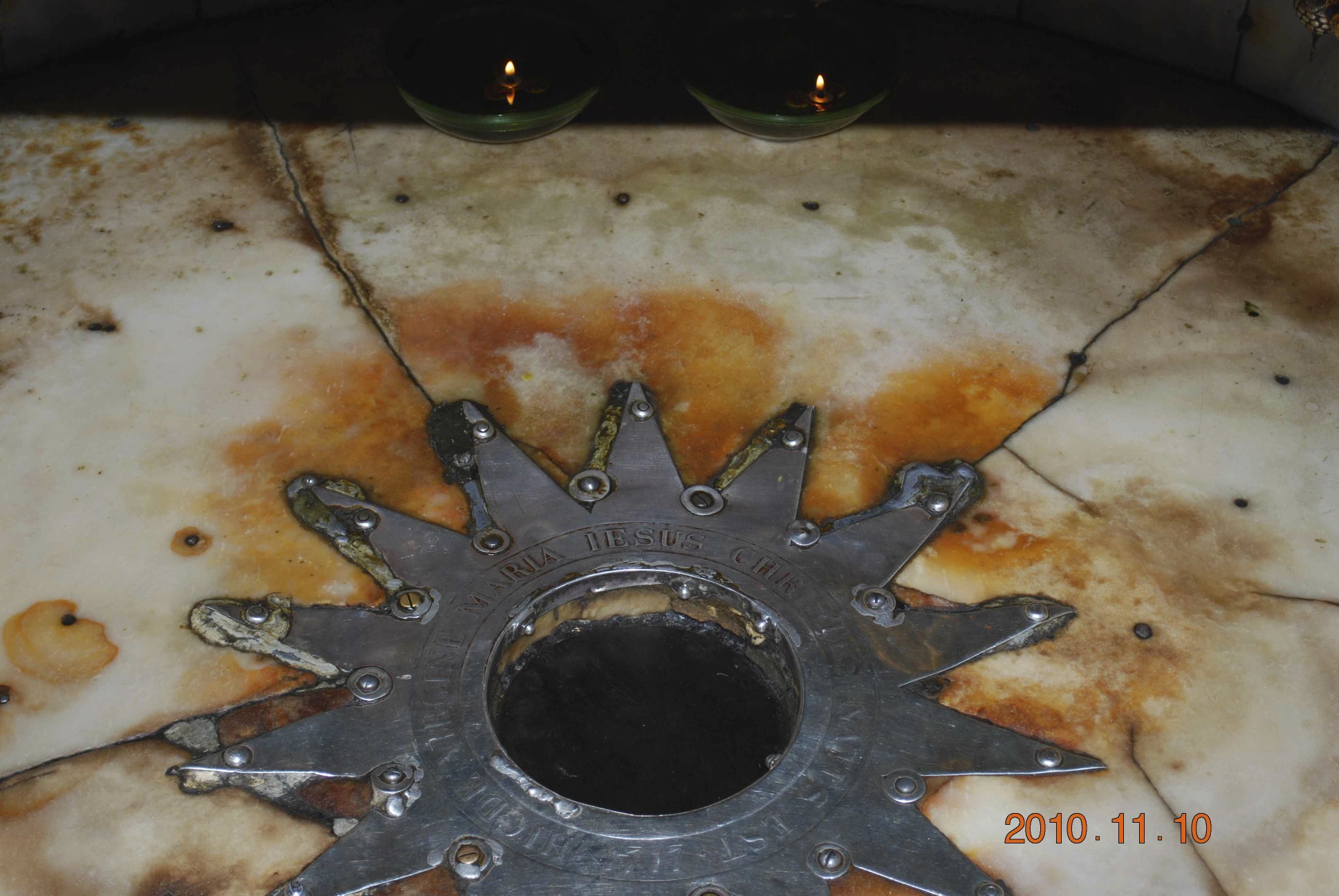
Pilgrims, BethlehemBasilica of NativityStar Marking Jesus BirthInterior of Basilica of Nativity
The historic reliability of the gospels is important. Just as important is their theology. God comes humbly into our world, Luke’s Gospel says. That’ s the lesson Jesus’ birth teaches.
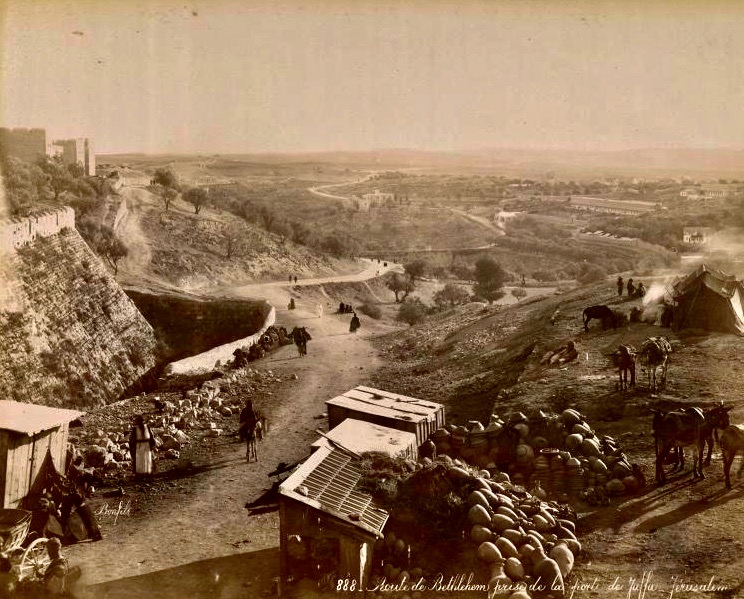
Mary, who was with child, and Joseph come to Bethlehem from Nazareth, at least a three day’s journey away, to take part in a government census. They’re ordinary people among many others. When they get to Bethlehem, there’s no room for them except a stable that’s been carved out from a hillside cave, and there Jesus is born.
Angels announce his birth and sing his praises in Luke’s story, but Jesus is born in the humblest way. “There is nothing glorious about the circumstances of the Messiah’s birth,” a recent commentator on Luke’s gospels says, and that’s what Luke wants to show. “God’s fidelity is worked out in human events, even when appearances seem to deny his presence and power.” ( Luke Timothy Johnson, The Gospel of Luke, Sacra Pagina, Collegeville, Minn. 1991, p 52.)
“Even when appearances seem to deny his presence and power,” even when there are no angels singing in the night, God is with us. That’s what the mystery of the Incarnation teaches. No angels sang when Jesus spent years living unknown in Nazareth . No angels sang when he was opposed and rejected and shunned in his ministry, when he was arrested and cruelly put to death on Calvary. Jesus took human form, the form of a slave, and went to death on a Cross. And from death God raised him to life.
The shepherds go in search of the sign, not a “sign” in the sense that God’s glory is visible and one might say unequivocally: this is the true Lord of the world. Far from it. In this sense, the sign is also a non-sign. God’s poverty is his real sign. But for the shepherds, who had seen God’s glory shining in their fields, this is sign enough. They see inwardly. They see that the angel’s words are true. So the shepherds return home with joy. They glorify God and praise him for what they have heard and seen (cf. Lk 2:20).” (Pope Benedict XVI. Jesus of Nazareth: The Infancy Narratives . The Crown Publishing Group. Kindle Edition.)
We share this mystery with the shepherds. We may not see his power and his presence, but he is with us and we are with him. The mystery of his birth, the mystery of his Incarnation, is our mystery too.
For the history of Bethlehem, the caves where Jesus was born, the ancient church of the Nativity, see The Holy Land. An Oxford Archeological Guide. Jerome Murphy-O’Connor, OP. New York 2008)






 The Victor's Place