Category Archives: Religion

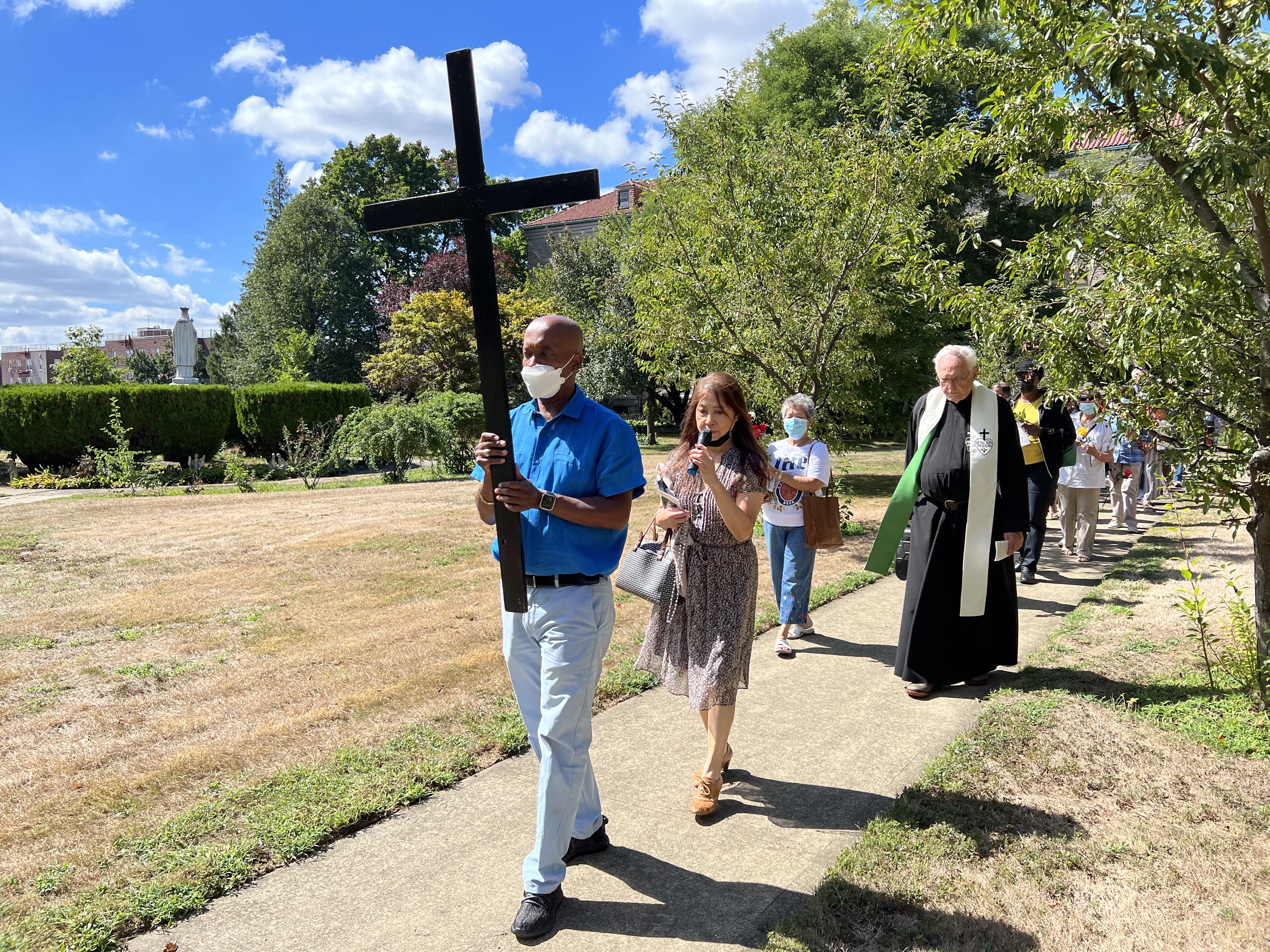
A Mary Garden Procession

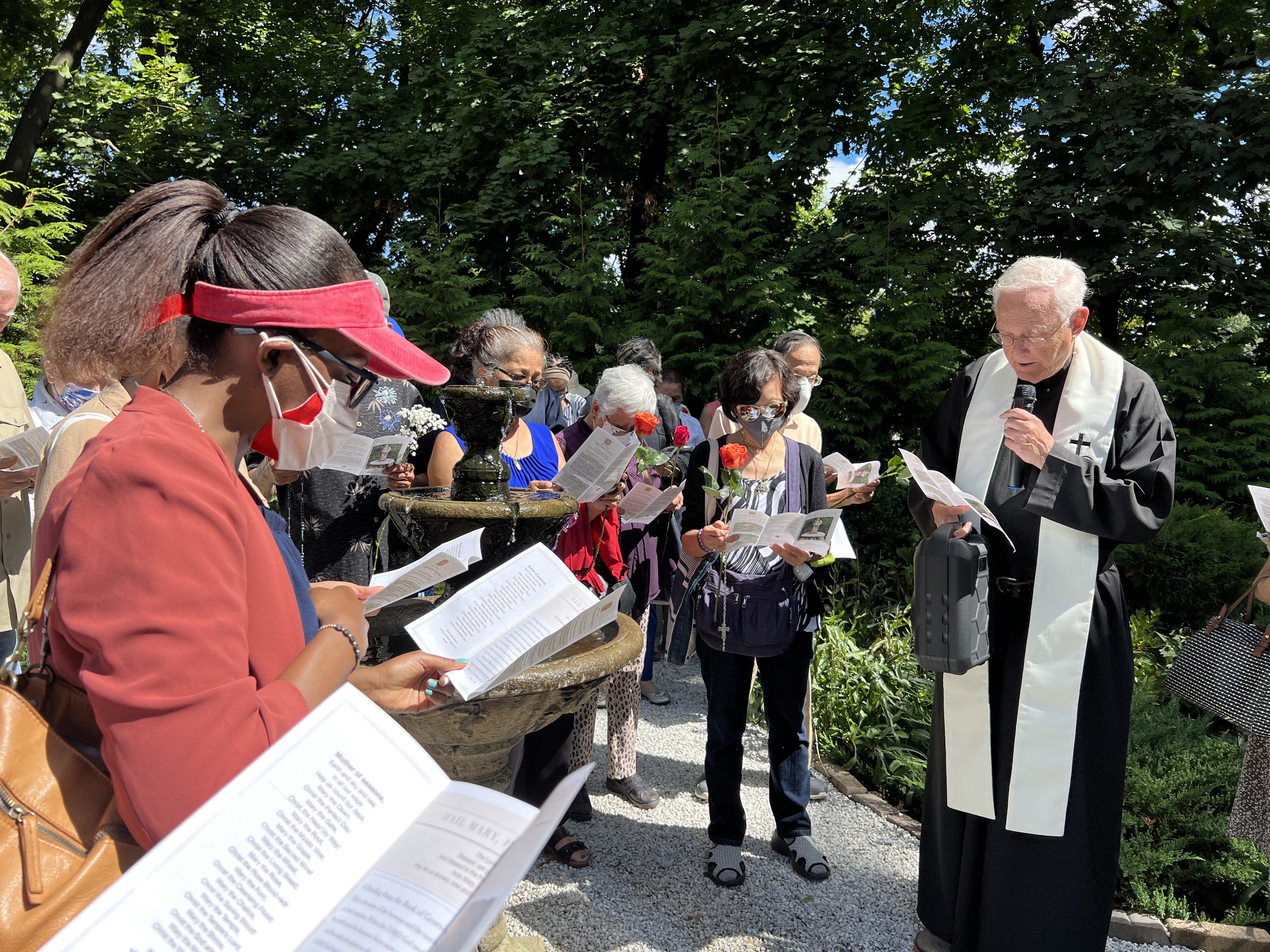
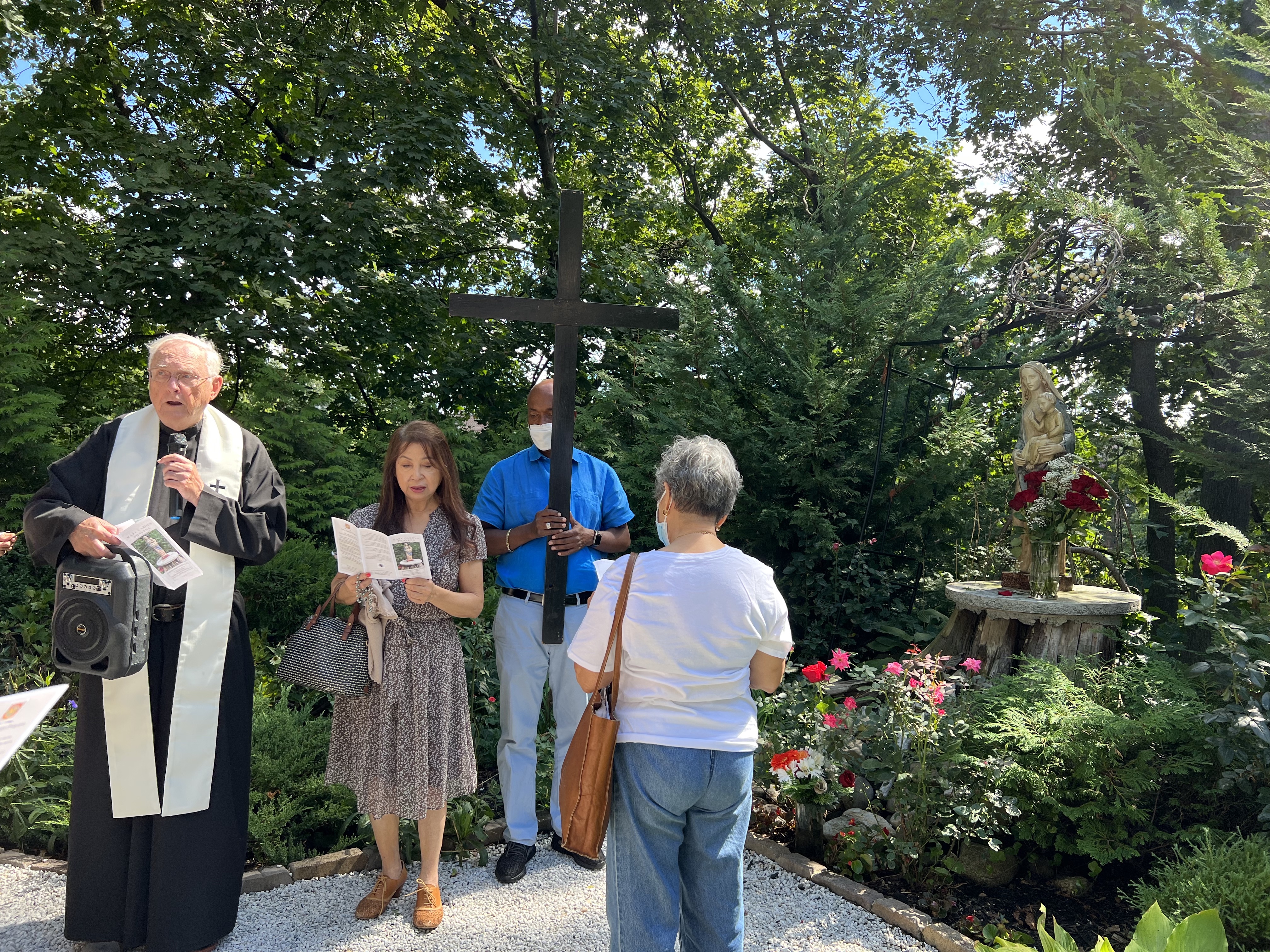
We had a procession to the Mary Garden today, the Feast of the Birth of Mary. A procession is so simple– walk, pray, sing, appreciate. We walked from the 11 AM Mass to the garden, not a long walk. We prayed a decade of the rosary, prayed some prayers from the scriptures and listened to a short reflection, then placed some flowers before the statue of Mary.

We were from all over, we represented the world, and we prayed for the world.

Hail Mary, full of grace…pray for us sinners, now and at the hour of our death. Amen.

23rd Sunday of the Year: Going to School

For this week’s homily please watch the video below.

The Season of Creation, September 1st -October 5th

1 September 2022, Pope Francis writes:

Dear brothers and sisters!

“Listen to the voice of creation” is the theme and invitation of this year’s Season of Creation.  The ecumenical phase begins on 1 September with the World Day of Prayer for the Care of Creation, and concludes on 4 October with the feast of Saint Francis.  It is a special time for all Christians to pray and work together to care for our common home.  Originally inspired by the Ecumenical Patriarchate of Constantinople, this Season is an opportunity to cultivate our “ecological conversion”, a conversion encouraged by Saint John Paul II as a response to the “ecological catastrophe” predicted by Saint Paul VI back in 1970. 

If we learn how to listen, we can hear in the voice of creation a kind of dissonance.  On the one hand, we can hear a sweet song in praise of our beloved Creator; on the other, an anguished plea, lamenting our mistreatment of this our common home.

The sweet song of creation invites us to practise an “ecological spirituality” (Laudato Si’, 216), attentive to God’s presence in the natural world.  It is a summons to base our spirituality on the “loving awareness that we are not disconnected from the rest of creatures, but joined in a splendid universal communion” (ibid., 220).  For the followers of Christ in particular, this luminous experience reinforces our awareness that “all things came into being through him, and without him not one thing came into being” (Jn 1:3).  In this Season of Creation, we pray once more in the great cathedral of creation, and revel in the “grandiose cosmic choir” made up of countless creatures, all singing the praises of God.  Let us join Saint Francis of Assisi in singing: “Praise be to you, my Lord, for all your creatures” (cf. Canticle of Brother Sun).  Let us join the psalmist in singing, “Let everything that breathes praise the Lord!” (Ps 150:6).

Tragically, that sweet song is accompanied by a cry of anguish.  Or even better: a chorus of cries of anguish.  In the first place, it is our sister, mother earth, who cries out.  Prey to our consumerist excesses, she weeps and implores us to put an end to our abuses and to her destruction.  Then too, there are all those different creatures who cry out.  At the mercy of a “tyrannical anthropocentrism” (Laudato Si’, 68), completely at odds with Christ’s centrality in the work of creation, countless species are dying out and their hymns of praise silenced.  There are also the poorest among us who are crying out.  Exposed to the climate crisis, the poor feel even more gravely the impact of the drought, flooding, hurricanes and heat waves that are becoming ever more intense and frequent.  Likewise, our brothers and sisters of the native peoples are crying out.  As a result of predatory economic interests, their ancestral lands are being invaded and devastated on all sides, “provoking a cry that rises up to heaven” (Querida Amazonia, 9).  Finally, there is the plea of our children.  Feeling menaced by shortsighted and selfish actions, today’s young people are crying out, anxiously asking us adults to do everything possible to prevent, or at least limit, the collapse of our planet’s ecosystems.

Listening to these anguished cries, we must repent and modify our lifestyles and destructive systems.  From its very first pages, the Gospel calls us to “repent, because the kingdom of heaven has come near” (Mt 3:2); it summons us to a new relationship with God, and also entails a different relationship with others and with creation.  The present state of decay of our common home merits the same attention as other global challenges such as grave health crises and wars.  “Living our vocation to be protectors of God’s handiwork is essential to a life of virtue; it is not an optional or a secondary aspect of our Christian experience” (Laudato Si’, 217).

As persons of faith, we feel ourselves even more responsible for acting each day in accordance with the summons to conversion.  Nor is that summons simply individual: “the ecological conversion needed to bring about lasting change is also a community conversion” (ibid., 219).  In this regard, commitment and action, in a spirit of maximum cooperation, is likewise demanded of the community of nations, especially in the meetings of the United Nations devoted to the environmental question.  

The COP27 conference on climate change, to be held in Egypt in November 2022 represents the next opportunity for all to join in promoting the effective implementation of the Paris Agreement.  For this reason too, I recently authorized the Holy See, in the name of and on behalf of the Vatican City State, to accede to the UN Framework Convention on Climate Change and the Paris Agreement, in the hope that the humanity of the 21st century “will be remembered for having generously shouldered its grave responsibilities” (ibid., 65).  The effort to achieve the Paris goal of limiting temperature increase to 1.5°C is quite demanding; it calls for responsible cooperation between all nations in presenting climate plans or more ambitious nationally determined contributions in order to reduce to zero, as quickly as possible, net greenhouse gas emissions.  This means “converting” models of consumption and production, as well as lifestyles, in a way more respectful of creation and the integral human development of all peoples, present and future, a development grounded in responsibility, prudence/precaution, solidarity, concern for the poor and for future generations.  Underlying all this, there is need for a covenant between human beings and the environment, which, for us believers, is a mirror reflecting “the creative love of God, from whom we come and towards whom we are journeying”.  The transition brought about by this conversion cannot neglect the demands of justice, especially for those workers who are most affected by the impact of climate change.

For its part, the COP15 summit on biodiversity, to be held in Canada in December, will offer to the goodwill of governments a significant opportunity to adopt a new multilateral agreement to halt the destruction of ecosystems and the extinction of species.  According to the ancient wisdom of the Jubilee, we need to “remember, return, rest and restore”.  In order to halt the further collapse of biodiversity, our God-given “network of life”, let us pray and urge nations to reach agreement on four key principles: 1. to construct a clear ethical basis for the changes needed to save biodiversity; 2. to combat the loss of biodiversity, to support conservation and cooperation, and to satisfy people’s needs in a sustainable way; 3. to promote global solidarity in light of the fact that biodiversity is a global common good demanding a shared commitment; and 4. to give priority to people in situations of vulnerability, including those most affected by the loss of biodiversity, such as indigenous peoples, the elderly and the young.

Let me repeat: “In the name of God, I ask the great extractive industries – mining, oil, forestry, real estate, agribusiness – to stop destroying forests, wetlands, and mountains, to stop polluting rivers and seas, to stop poisoning food and people”.

How can we fail to acknowledge the existence of an “ecological debt” (Laudato Si’, 51) incurred by the economically richer countries, who have polluted most in the last two centuries; this demands that they take more ambitious steps at COP27 and at COP15.  In addition to determined action within their borders, this means keeping their promises of financial and technical support for the economically poorer nations, which are already experiencing most of the burden of the climate crisis.  It would also be fitting to give urgent consideration to further financial support for the conservation of biodiversity.  Even the economically less wealthy countries have significant albeit “diversified” responsibilities (cf. ibid., 52) in this regard; delay on the part of others can never justify our own failure to act.  It is necessary for all of us to act decisively.  For we are reaching “a breaking point” (cf. ibid., 61).

During this Season of Creation, let us pray that COP27 and COP15 can serve to unite the human family (cf. ibid., 13) in effectively confronting the double crisis of climate change and the reduction of biodiversity.  Mindful of the exhortation of Saint Paul to rejoice with those who rejoice and to weep with those who weep (cf. Rom 12:15), let us weep with the anguished plea of creation.  Let us hear that plea and respond to it with deeds, so that we and future generations can continue to rejoice in creation’s sweet song of life and hope.

Rome, Saint John Lateran, 16 July 2022,  Memorial of Our Lady of Mount Carmel

Praying the Psalms

The psalms are prayers that never get old. Here’s Pius X, whose feast day was August 20, commenting on the psalms:

“Bless the Lord, O my soul.”

“The psalms are like a garden containing the fruits of all the other books of the Bible. Saints like Athanasius and Augustine recognized these powerful prayers. ‘The psalms seem to me to be like a mirror, in which the person using them can see himself, and the stirrings of his own heart; he can recite them against the background of his own emotions.”

Augustine says in his Confessions: “How I wept when I heard your hymns and canticles, being deeply moved by the sweet singing of your Church. Those voices flowed into my ears, truth filtered into my heart, and from my heart surged waves of devotion. Tears ran down, and I was happy in my tears. “

Pius X continues:  “Indeed, who could fail to be moved by those many passages in the psalms which set forth so profoundly the infinite majesty of God, his omnipotence, his justice and goodness and clemency, too deep for words, and all the other infinite qualities of his that deserve our praise?

Who could fail to be roused to the same emotions by the prayers of thanksgiving to God for blessings received, by the petitions, so humble and confident, for blessings still awaited, by the cries of a soul in sorrow for sin committed? Who would not be fired with love as he looks on the likeness of Christ, the redeemer, here so lovingly foretold? His was the voice Augustine heard in every psalm, the voice of praise, of suffering, of joyful expectation, of present distress.”

22nd Week of the Year: Readings and Feasts

29 Mon The Passion of St John the Baptist Memorial 1 Cor 2:1-5 (431)/Mk 6:17-29 

30 Tue Weekday 1 Cor 2:10b-16/Lk 4:31-37 

31 Wed Weekday 1 Cor 3:1-9/Lk 4:38-44 

SEPTEMBER 1 Thu Weekday 1 Cor 3:18-23/Lk 5:1-11 

2 Fri Weekday 1 Cor 4:1-5/Lk 5:33-39 

3 Sat St Gregory the Great, Pope, Doctor of the Church Memorial

1 Cor 4:6b-15/Lk 6:1-5 

4 SUN TWENTY-THIRD SUNDAY IN ORDINARY TIME

Wis 9:13-18b/Phlm 9-10, 12-17/Lk 14:25-33

This week we begin reading from the Gospel of Luke and we’ll continue reading from it  till the beginning of Advent. Takes the account of Jesus in the synagogue of Nazareth from Mark’s gospel (Mark 6:1-6),Luke places it at the beginning of Jesus’ ministry in Galilee as a summary of his whole ministry. Initially Jesus was received favorably, then rejected violently. 

From the 21st to the 24th week of this year we read extensively from Paul’s 1st Letter to the Corinthians, written about 51 AD.  It’s a church from Luke’s own time, with strengths and weaknesses. It offers better insight into early church life than any other book of the New Testament; Luke wrote his gospel with churches like the church in Corinth in mind.

The Passion of John the Baptist, August 29th, a feast from 5th century Jerusalem, was celebrated by the 6th century by the churches of the east and west. An ancient feast remembering the beheading of John, foreshadowing the death of Jesus. 

St. Gregory the Great, September 3, is one of the most important popes in the history of the church. “Servant of the Servants of God.” At a time when the Roman Empire was falling apart, Gregory not only kept the Roman church afloat but reached out to peoples afar to bring them the gospel. 

22nd Sunday of the Year c: Eating Together

For this week’s homily please watch the video below.

21st Week: Readings and Feasts

AUGUST 22 Mon Queenship of Mary Memorial 2 Thes 1:1-5, 11-12/Mt 23:13-22 

23 Tue Weekday [St Rose of Lima, Virgin] 2 Thes 2:1-3a, 14-17/Mt 23:23-26 

24 Wed St Bartholomew, Apostle Feast Rv 21:9b-14/Jn 1:45-51 

25 Thu Weekday [St Louis; Saint Joseph Calasanz, Priest] 1 Cor 1:1-9/Mt 24:42-51 

26 Fri Weekday 1 Cor 1:17-25/Mt 25:1-13

Blessed Dominic Barberi, CP  

27 Sat Saint Monica Memorial 1 Cor 1:26-31/Mt 25:14-30 

28 SUN TWENTY-SECOND SUNDAY IN ORDINARY TIME

Sir 3:17-18, 20, 28-29/Heb 12:18-19, 22-24a/Lk 14:1, 7-14 

Readings this week from the 23-24 chapters of St. Matthew describe the fierce opposition Jesus faced from the Pharisees and his condemnation of them.  Commentators remind us that these accounts reveal the conflict Matthew’s church had with the Pharisees, but what is said of the Pharisees can also be said of members of Matthew’s church as well.

We’re also reading from the 2nd Letter to Thessalonians the first few days of this week; then we will read extensively from Paul’s 1st Letter to the Corinthians till the 24th week of the year. Both letters are among the earliest documents describing the early church and are written before the gospels.

Paul’s letter to the Thessalonians answers some questions they raise about the 2nd Coming of Christ and warns against  other “teachers” using Paul’s name, who were deceiving people,  Paul urges the Thessalonians to be faithful to his oral teaching and letters. ( 2 Thessalonians 2: 1-17) 

In Paul’s letters we’re seeing the Pharisees in another way. They’re in the church of every age, including ours.

The Queenship of Mary, August 22, is a memorial related to the feast of the Assumption of Mary into heaven, August 15.

Bartholomew is the apostle celebrated in August. St. Rose of Lima and St. Monica, mother of St. Augustine, are also celebrated this month. 

August 26, the Passionists celebrate the feast of Blessed Dominic Barberi, who received St. John Newman into the Catholic Church.

Reflections on Desiderio Desideravi

In his recent letter Desiderio Desideravi, Pope Francis emphasizes the pastoral importance of the liturgy for the church today. “If the liturgy is ‘the summit toward which the activity of the Church is directed, and at the same time the font from which all her power flows,’ (Sacrosanctum Concilium, n. 10), well then, we can understand what is at stake in the liturgical question.” (DD 16)

The non-acceptance of the liturgical reform, as also a superficial understanding of it obstruct growing through the liturgy, Pope Francis says. “We are in need of a serious and dynamic liturgical formation.” (DD 31) That formation takes two forms; formation for the liturgy and formation by the liturgy. “The first depends on the second, which is essential.” (DDS 34)

Resources for formation for the liturgy have been provided by scholars from the beginning of the liturgical movement, the pope says.  “It is  important now to spread this knowledge beyond the academic environment, in an accessible way, so that each one of the faithful might grow in a knowledge of the theological sense of the Liturgy.”  (DD37)

Ordinary people should know what the texts and rites of the liturgy mean and “their anthropologic significance”.  The pope’s phrase “anthropologic significance” means

 that the whole of creation is at “the service of the encounter with the Word: incarnate, crucified, dead, risen, ascended to the Father.” (DD 35) The encounter happens in a sacramental way, the way of the Incarnation, through water, bread and wine, oil and simple human actions. The encounter also happens as we reach out in love to our brothers and sister and, indeed, to the earth itself. 

The church’s ministers and teachers form people for the liturgy, and for that reason the pope urges seminaries and other church institutions dedicate themselves to the work of liturgical formation. Yet, liturgical formation must be a step towards liturgical celebration– to be formed by the liturgy. “Ordained ministers carry out a pastoral action of the first importance when they take the baptized faithful by the hand to lead them into the repeated experience of the Paschal Mystery… The kind of knowledge that comes from study is just the first step to enter into the mystery celebrated. Obviously, to be able to lead their brothers and sisters, the ministers who preside in the assembly must know the way, know it from having studied it on the map of their theological studies but also from having frequented the liturgy in actual practice of an experience of living faith, nourished by prayer — and certainly not just as an obligation to be fulfilled.” (DD36)

In his letter the pope cites certain factors impeding participation in the liturgy today– neo-gnosticism and neo-pelagianism. He sees especially the loss of a sense of symbolism. Unlike St. Francis who saw the sun and recognized its likeness to God, we no longer gaze with wonder at creation. We approach creation in a utilitarian way. How can we regain this sense of wonder, the pope asks? 

“Above all we must reacquire confidence about creation. I mean to say that things — the sacraments “are made” of things — come from God. To Him they are oriented, and by Him they have been assumed, and assumed in a particular way in the Incarnation, so that they can become instruments of salvation, vehicles of the Spirit, channels of grace. ..we must arrange ourselves in their presence with a fresh, non-superficial regard, respectful and grateful. From the very beginning, created things contain the seed of the sanctifying grace of the sacraments.” (DD 46)

Desiderio Desideravi is closely related to Pope Francis’ letter on the environment, Laudato si’. Renewal of the liturgy and renewal of the earth both require respect and confidence in creation itself. Renewal of the liturgy and renewal of the earth go together.

What follows Desiderio Desideravi?

Desiderio Desideravi is not an exhaustive treatment of the liturgy. O2nly “some clues for reflection,” the pope claims. How can we as Christians build “confidence about creation” and recognize its relationship to the Incarnation?

A first step may be to look at our traditional prayers, especially the psalms, the prayerbook of Judaism and of the church. The psalms repeatedly explore the relationship of creation to God and to humanity.

An example is Psalm 148, last psalm for Sunday morning, week 3, in the liturgy of the hours, an anthem to the Creator, based on the cosmology of its day. The psalm praises God from the heavens above to the earth below, for “he commanded; they were made. He fixed them forever, gave a law which shall not pass away.” God is the Creator and Lord of heaven and earth.

The psalm calls all creation, from the greatest to the least, to praise the Creator. Humanity joins the song, from earth’s kings to “old men, together with children.” Humanity never sings God praise alone, separated from the rest of creation. We’re part of a greater song.

Praise the Lord from the heavens, alleluia.

Praise the Lord from the heavens,

praise him in the heights.

Praise him, all his angels,

praise him, all his host.

Praise him, sun and moon,

praise him, shining stars.

Praise him, highest heavens

and the waters above the heavens.

Let them praise the name of the Lord.

He commanded: they were made.

He fixed them for ever,

gave a law which shall not pass away.

Praise the Lord from the earth,

sea creatures and all oceans,

fire and hail, snow and mist,

stormy winds that obey his word;

all mountains and hills,

all fruit trees and cedars,

beasts, wild and tame,

reptiles and birds on the wing;

all earth’s kings and peoples,

earth’s princes and rulers,

young men and maidens,

old men together with children.

Let them praise the name of the Lord

for he alone is exalted.

The splendour of his name

reaches beyond heaven and earth.

He exalts the strength of his people.

He is the praise of all his saints,

of the sons of Israel,

of the people to whom he comes close.

Glory to the Father and to the Son,

and to the Holy Spirit:

as it was in the beginning, is now,

and will be for ever. Amen.
Life-giving Water

God promises to restore Israel from its exile, Ezekiel says in today’s first reading.( Ezekiel 36, 23-38 ) God’s honor and power have been shamed and questioned, not just Israel’s honor and power. And so God say: “I will prove the holiness of my great name, profaned among the nations in whose midst you have profaned it.”

Israel’s re-creation is undertaken by God’s initiative, not human initiative. The waters of Genesis flow again. “I will give you a new heart and place a new spirit within you, taking from your bodies your stony hearts and giving you natural hearts. I will put my spirit within you and make you live by my statutes, careful to observe my decrees.”

“I will sprinkle clean water upon you to cleanse you from all your impurities, and from all your idols I will cleanse you.”

Pope Francis remarked on the sacredness of water in his letter “Desiderio Desideravi.” Water is a pledge of God’s promise of life, to each of us in Baptism and to our world  through sacred history:

“He used water to regenerate humanity through the flood (Ge 6:1-9,29). He controlled it, separating it to open the way of freedom through the Red Sea (cf. Ex 14). He consecrated it in the Jordan, plunging into it the flesh of the Word soaked in the Spirit. (cf. Ma 3:13-17; Mk 1:9-11; Lk 3:21-22) At the end he blended it with the blood of his Son, the gift of the Spirit inseparably united with the gift of the life and death of the Lamb slain for us, and from his pierced side he poured it out over us. (Jn 19:34) And it is into this water that we have been immersed so that through its power we can be inserted into the Body of Christ and with him rise to immortal life. (cf. Ro 6:1-11)” (Desidero Desideravi 13) 

“I will sprinkle clean water upon you to cleanse you from all your impurities, and from all your idols I will cleanse you…This once-desolate land has become like the garden of Eden,” the nations that once ridiculed God’s power will say. The cities once ruined, laid waste and destroyed, are now resettled and fortified.”

God’s promise still stands. We’re reminded of it in the water.