Category Archives: ecumenism

5th Sunday of Easter: Bless them All

Audio homily here:

When we read the Acts of the Apostles in the easter season, we see another form of church. The church of Paul and Barnabas is certainly different in structure from the church we know today.

There were no parishes or dioceses then. In Rome, if you asked where the Vatican was, they’d point you to a race course on a hill on the fringe of the city where the emperor had his private games. There were no monasteries or religious communities or other Christian institutions.

When Paul and Barnabas went to different places, they went to the Jewish synagogues where they spoke about Jesus as the Messiah. The reaction to their message was mixed, at best. At times they were violently rejected, but some Jews and some “God-fearing gentiles” – non-Jews who appreciated Judaism and its spirituality– accepted their message about Jesus and his promise of salvation.

The synagogue was the normal “catechumenate” where early Christian missionaries like Paul and Barnabas found converts to the faith. No synagogues, as far as we know, became Christian churches.

Where, then, did new believers go? They gathered in the houses of other believers, in “house churches”, usually bigger houses belonging to merchants. The owners and their families lived in these houses, but they also conducted their business in part of the house. Their servants and slaves would live and work there too.

In his Letter to the Romans Paul sends his greeting to Prisca and Aquila and the “church in their house.” They were husband and wife, a couple of merchants who ran a leather business in Corinth. Paul lived with them for almost two years; he worked and taught in their house. After that, he lived in their house in Ephesus and founded the church in that city. He calls them “ my co-workers in Christ Jesus, who risked their necks for my life. I am grateful to them but also all the churches of the gentiles.”

In Rome there were no churches as we know them till the 4th century, but historians count 25 house churches where  Christians met in the early centuries in that city.

Our church structure developed since then, we can see  a development in our first reading today. Paul is appointing leaders in every church. But there’s something important this early time can teach us. At the end of his Letter to the Romans, after expounding on some of his most profound teachings, Paul remembers a number of people in Rome he wants to greet. Prisca and Aquila and all the church in their house are the first; they must have moved back to Rome.  Then there are  a number of other names that seem to come spontaneously to his mind. They’re the names of ordinary Christians, not just the owners of the houses where Christians meet and their families, but the servants, the slaves, the ordinary people whom Paul lived with and worked with and prayed with side by side.

Unfortunately, this section of his letter is never read in church. It should be; it breathes with affection and appreciation and love for all the people who are the body of Christ. Listen to it.

Greet Prisca and Aquila, my co-workers in Christ Jesus,
who risked their necks for my life, to whom not only I am grateful but also all the churches of the Gentiles; greet also the church at their house. Greet my beloved Epaenetus, who was the firstfruits in Asia for Christ.
Greet Mary, who has worked hard for you.
Greet Andronicus and Junia, my kinsmen and my fellow prisoners; they are prominent among the apostles and they were in Christ before me.
Greet Ampliatus, my beloved in the Lord.
Greet Urbanus, our co-worker in Christ, and my beloved Stachys.
Greet Apelles, who is approved in Christ. Greet those who belong to the family of Aristobulus.
Greet my kinsman Herodion. Greet those in the Lord who belong to the family of Narcissus.
Greet those workers in the Lord, Tryphaena and Tryphosa. Greet the beloved Persis, who has worked hard in the Lord.
Greet Rufus, chosen in the Lord, and his mother and mine.
Greet Asyncritus, Phlegon, Hermes, Patrobas, Hermas, and the brothers who are with them.
Greet Philologus, Julia, Nereus and his sister, and Olympas, and all the holy ones who are with them.
Greet one another with a holy kiss. All the churches of Christ greet you. ( Romans 3,3-16)

Paul doesn’t want to leave anybody out. You can hear his love for them all. That’s the love Jesus had for his disciples. “Love one another, as I have loved you.” That’s the love that should be in our church, no matter what its structure is.
Our Common Home

image1

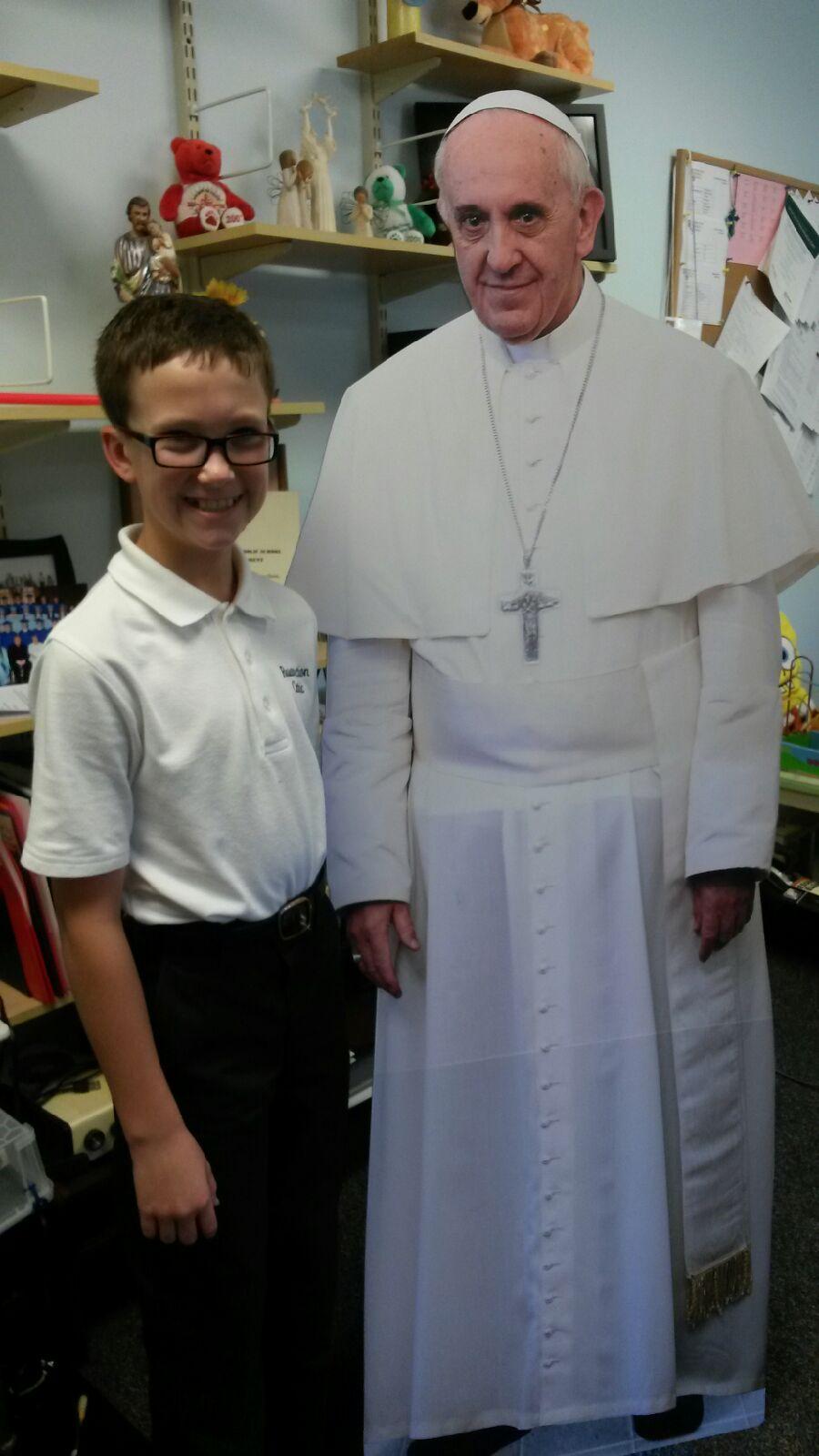
The pope went home to Rome yesterday evening. But I think he stretched the meaning of that word “home,” on his visit with us here in the United States. He spoke of “our common home.”

His final homily in Philadelphia at the World Meeting of Families was based the “word of God which surprises us with powerful and thought-provoking images. Images which challenge us, but also stir our enthusiasm.

“In the first reading, Joshua tells Moses that two members of the people are prophesying, speaking God’s word, without a mandate. In the Gospel, John tells Jesus that the disciples had stopped someone from casting out evil spirits in the name of Jesus. Here is the surprise: Moses and Jesus both rebuke those closest to them for being so narrow! Would that all could be prophets of God’s word! Would that everyone could work miracles in the Lord’s name!

“Jesus encountered hostility from people who did not accept what he said and did. For them, his openness to the honest and sincere faith of many men and women who were not part of God’s chosen people seemed intolerable. The disciples, for their part, acted in good faith. But the temptation to be scandalized by the freedom of God, who sends rain on the righteous and the unrighteous alike (Mt 5:45), bypassing bureaucracy, officialdom and inner circles, threatens the authenticity of faith. Hence it must be vigorously rejected.

“Once we realize this, we can understand why Jesus’ words about causing “scandal” are so harsh. For Jesus, the truly “intolerable” scandal consists in everything that breaks down and destroys our trust in the working of the Spirit!

“Our Father will not be outdone in generosity and he continues to scatter seeds. He scatters the seeds of his presence in our world, for “love consists in this, not that we have loved God but that he loved us” first (1 Jn 4:10). That love gives us a profound certainty: we are sought by God; he waits for us. It is this confidence which makes disciples encourage, support and nurture the good things happening all around them. God wants all his children to take part in the feast of the Gospel. Jesus says, “Do not hold back anything that is good, instead help it to grow!” To raise doubts about the working of the Spirit, to give the impression that it cannot take place in those who are not “part of our group”, who are not “like us”, is a dangerous temptation. Not only does it block conversion to the faith; it is a perversion of faith! “

We live in a bigger world than the home we live in, the church we live in, the country we live in. Thank you, Pope Francis.

Ecological Conversion

IMG_0943
Today, September 1st, Pope Francis asks Catholics and all people to pray for the care of creation, the subject of his recent encyclical “Laudato Si.” We may need to pray, if recent surveys are right that claim that American Catholics aren’t much interested in the pope’s recent encyclical. That might be true of Catholics elsewhere as well.

There’s an ecological crisis, the pope says in his letter, and we have to do something about it. Some may deny the crisis exists; some may claim it’s exaggerated; some may just throw up their hands thinking it’s too big to deal with. Some may think it can be easily fixed by the eventual play of “market forces.”

For the pope and many today the ecological crisis is real, it endangers the world and it has to be dealt with now. To meet it Francis recently urged Christians to “first rediscover in our own rich spiritual patrimony the deepest motivations for our concern for the care of creation.”

That’s important advice. The first step is not to immerse ourselves in conclusions of science, although the pope in his encyclical obviously respects scientific conclusions. The ecological crisis is not going to be taken care of with a few quick moves, like changing a couple of light bulbs at home. The first step, the pope says, is to undergo an “ecological conversion” guided by our spiritual patrimony.

Caring for creation isn’t going to be an easy task. People of faith are needed who, in the pope’s words, understand that “living our vocation to be protectors of God’s handiwork is essential to a life of virtue; it is not an optional or a secondary aspect of our Christian experience” (Laudato Si, 217).

In his encyclical the pope looks to the scriptures, from Genesis to the books of the New Testament, to provide wisdom for our steps. He looks to the sacraments, especially the Eucharist, as signs that creation itself figures in God’s plan.

An interesting feature in “Laudato Si” is the way Francis turns to the Eastern Church for guidance to ecological conversion, almost as if he recognizes the weakness of western theology and spirituality. A prayer suggested by the Vatican for today’s prayer service is inspired by the prayers of the Eastern Church:

We praise and bless you, O Lord,
for you are the King of all ages,
and through Christ your Son you have made all that is.
In the beginning of the beginning,
you breathed upon the waters of creation,
and filled the earth with life through your vibrant Spirit.
The heavens declare your glory, O Lord,
and the stars of the sky bring light to our darkness.
You spoke, and the earth burst forth in life,
you saw that it was good.
You called forth creation, and enlivened every creature on land and sea.
You made human beings in your image,
and set us over the whole world in all of its wonders.
You gave us share in your dominion,
and called us “to till and to keep” this garden, the work of your hands.
As day gives way to evening, we praise you for your manifold gifts.
May our adoration this night give glory to your name,
so that we may serve you with faithfulness and love.
May our daily care for your creation show reverence for your name,
and reveal your saving power in every creature under heaven.
We make this prayer in the name of Christ your Son,
in the unity of the Holy Spirit, One God forever and ever. Amen.

Day of Prayer for the Care of Creation

OLYMPUS DIGITAL CAMERA
Pope Francis is asking that September 1st be a world day of prayer for the care of creation. The Pontifical Council for Justice and Peace has provided suggestions for a 1 hour prayer service for the day:

Click to access PCJP_WorldDayPrayerCreation2015_PROPOSAL_ENG.pdf

September 1st marks the beginning of the Church Year for the Orthodox Church. Pope Francis quotes from the Orthodox tradition in his encyclical “Laudato Si”
We need a spiritual conversion, Pope Francis wrote to Cardinals Koch and Turkson. ( August 6, 2015)

“As Christians we wish to contribute to resolving the ecological crisis which humanity is presently experiencing. In doing so, we must first rediscover in our own rich spiritual patrimony the deepest motivations for our concern for the care of creation. We need always to keep in mind that, for believers in Jesus Christ, the Word of God who became man for our sake, “the life of the spirit is not dissociated from the body or from nature or from worldly realities, but lived in and with them, in communion with all that surrounds us” (Laudato Si’, 216). The ecological crisis thus summons us to a profound spiritual conversion: Christians are called to “an ecological conversion whereby the effects of their encounter with Jesus Christ become evident in their relationship with the world around them” (ibid., 217). For “living our vocation to be protectors of God’s handiwork is essential to a life of virtue; it is not an optional or a secondary aspect of our Christian experience” (ibid.).

On to the Rhine

Rhine

I’m going with a group on a cruise of the Rhine River leaving Wednesday. Here are a few notes about the trip for those on the cruise and those who may wish to follow us.

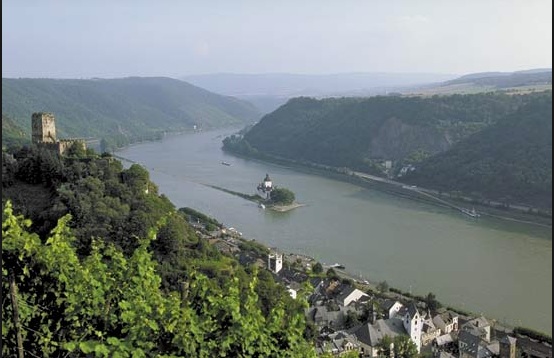
The Rhine River is a living history book as it winds its way 820 miles from the Swiss Alps to the North Sea.

Look for signs of Roman forts along the way. The ancient Romans tried to make the Rhine a kind of “Iron Curtain” to contain the barbarian tribes that wanted to enter the empire. They also found the fertile lands near the river good for growing grapes and other crops, so some of the forts became centers of trade, like Mainz.

After the Peace of Constantine (312 AD), Christianity brought the gospel to the lands along the Rhine. St. Boniface is an important figure. (c. 675 – 5 June 754 AD) A missionary from England he preached to the various Germanic tribes, became bishop of Mainz, and established monastic settlements along the river to fulfill his mission.

Boniface

Should he be our patron for the trip? “In her voyage across the ocean of this world the church is like a ship pounded by the waves of life’s different stresses. Our duty is not to abandon ship, but to keep her on course…Let us stand fast for what is right and prepare our souls for trial…Let us be neither like dogs that do not bark nor silent onlookers nor servants who run away before the wolf.”

In the 12th century with the growth of cities majestic cathedrals, like those in Strasbourg and Cologne, were built. Castles and buildings of local rulers line the river’s banks as defenses against invaders and symbols of power.

In the 14th century, the shrines and churches of the Franciscans and the mendicant orders appear. The 16th century brought the Reformation. We hope to sample some cathedrals and churches along the river.

The Rhine was a battleground through the centuries; the last two world wars have left their mark on the lands along the river.

We land in Basel, where John Calvin wrote his “Institutes” in 1536, a defense of Protestantism which he sent to Francis 1 of France. Francis kept France Catholic, however, and Calvin fled to Geneva and made it into a key Protestant center that had influence worldwide.

I hope to reflect particularly during our trip on the Reformation and the relationship of Protestants and Catholics today. Much has changed since the stormy beginnings in the 16th century. Pope Francis recently remarked to a group of European bishops that “Speaking about God has become more and more marginal” in Europe. The pope, a strong advocate of ecumenism, hopes all Christians will come together to face the challenge.

We will see many churches and signs of its Christian past on our trip down the Rhine from Basel to Amsterdam, but I don’t think we’ll hear much about God or see many signs of Christian practice. Europe is increasingly secularized.

Some books that I’ll bring along on the trip.

“A Brief History of Spirituality” by Philip Sheldrake, Blackwell Publishing, 2007. Sheldrake has a wonderful gift for summarizing spiritual movements like monasticism and relating them to the world in which they take place.

“The World of Catholic Renewal 1540-1770” by R. Po-Chia Hsia, Cambridge University Press. The Catholic Church responds to the Reformation. A good study in social history.

“Concise Dictionary of the Christian Church” E.A. Livingstone, Oxford 1977 Just what it says: a lot of concise information about the Christian Church.

I also mentioned the Rhine trip in a previous blog:

Visiting the Rhine River

Cologne

I’m going in October with a group from St. Mary’s, Colts Neck, NJ, on a river cruise on the Rhine. This river was a path Christian missionaries took to bring the gospel to all nations. We’ll visit cities like Strasbourg and Geneva, places connected to the Protestant Reformation in the 16th century.

In his book “Trent and All That: Renaming Catholicism in the Early Modern Era”, Harvard University Press, 2000, John W. O’ Malley, S.J. says that historians today are wary of using the words Reformation and Counter-Reformation to describe these historical periods. Recent historical research indicates the names don’t altogether fit the reality of the two movements.

“Reformation” means reform, the reform of something broken or in need of new life. In the case of the Catholic Church, it implies it was in shambles because of superstition and abuses of power. But recent social research indicates that the Catholic experience at the time was still quite vital, for the most part. True, the papacy was in need of reform, other abuses were present as they always are, but ordinary Catholic life was far from lifeless.

“Counter-Reformation,” or “Catholic Reform” usually mean that reform of the Catholic Church took place mainly through the efforts of the Council of Trent and a renewed papacy. But recent research questions the determining part played by the council and the popes in the life of the church at the time.

Historians in the past tended to see the Catholic Church then only in terms of the papacy and council bodies like Trent. They didn’t see its complexity exemplified by its confraternities, religious orders, saintly mystics and patterns of devotion. Social historians today are aware of the vitality in the Catholic Church that existed in its ordinary fabric. Its renewal didn’t just come from above, but from below.

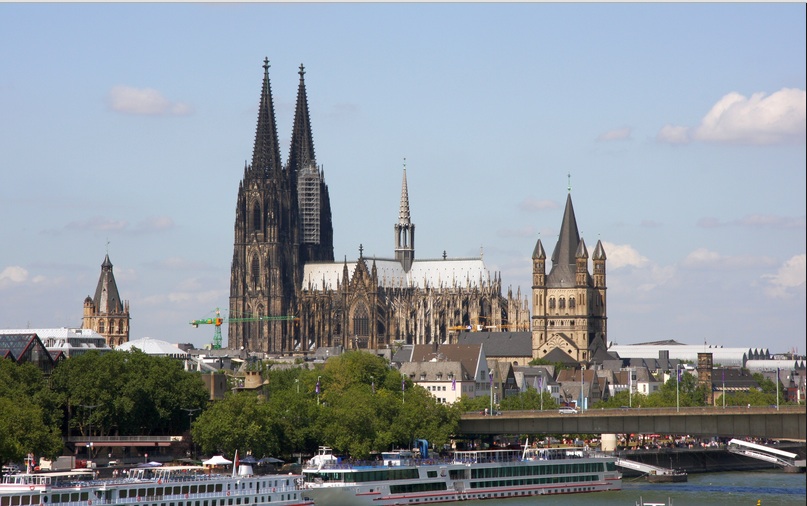
The medieval cathedrals at Strasbourg and Cologne, which we’re going to visit, are examples of the profound faith of the medieval church. They weren’t built to satisfy the vision of a powerful bishop or ruler; they expressed the faith of a dedicated people. We can read what they believed and how they thought about life in those great cathedrals.

One of the O’Malley’s insights I liked was his comment on the lecture on the Counter Reformation by H. Outram Evennett, an English historian, some years ago at Trinity College. Rejecting the thesis that the Reformation was solely a reaction to a decayed medieval church, Evennett opined that both the Reformation and Counter Reformation “were two different outcomes of the same general aspiration towards ‘religious regeneration’ that pervaded the 14th and 15th centuries.”

Does this indicate that both Catholicism and Protestantism are moving in sync towards a place together in the modern world? I hope so.

This Sunday we listen to one of the parables of the kingdom, the Workers in the Vineyard, from Matthew’s gospel. Like the workers, squabbling among themselves, we’re often blind to the larger patterns of God’s plan unfolding in history. In a post-modern society of questioning and doubt it’s also difficult to believe in a plan for the world. There’s a harvest on its way and it’s an abundant one. My homily’s on that.

Thomas Berry, CP, Funeral

Here are video excerpts from the funeral of Fr. Thomas Berry, CP, at Jamaica, NY. June 6,2009. The homilist was Fr. Stephen Dunn, CP , an associate of Fr. Berry. His niece, Ann Berry Somers, offered some remarks.