
I llive one block up from the 178th Street Subway, the “F” train, in Jamaica, New York City. Way back on old maps, this spot was called “Clover Hill”. Some clover still grows here but we’re surrounded now by tall buildings and crowded streets.
Clover Hill is part of the Harborhill terminal moraine left by the Laurentine Glacier that covered much of North American 22,000 years ago and stopped right here..

The Passionists, have been here since 1924. Our monastery, retreat center and parish are situated on Clover Hill. The city’s built up all around us, but we’re leaving a good part of our land to nature. St. Paul of the Cross, our founder, said that flowers and trees tell you about God, so listen. They’re preaching to you.
We have over 40 different kinds of trees here, our little forest remnant goes back in time. What sermons do they preach? They communicate with one another, scientists say. In fact, they don’t like growing alone. They like living together and helping one another, communicating through their roots. Even when they die, they nourish the next generation of plant life.
A good sermon for us humans, isn’t it?
Today, trees lessen the effects of climate change, and so we’re planting more trees on our land now for the cool shade they bring and the flood water they absorb. Cities need more trees now. Some years ago, New York City planted over 2 million trees along our streets for shade and drainage, and they’re planting more. We need all the trees we can get.
We’re planting vegetables on some of our land. They won’t give us all our food, but they remind us where our food comes from.
We’re also planting more flowers and native plants, not just because they’re beautiful and beauty draws us to God, but also they’re good pollinators for the many insects that make our land fruitful.
Like most people we have been mowing our lawns for years now. Yes, well kept lawns are respectable–and beautiful. But climate change is making us rethink that. It’s not just the energy expended on lawn mowers and fertilizers. We’re endangering the pollinators, the unseen army of insects that keep our lands healthy and fertile. So we are planting a pollinator garden.
We need more meadowlands, and meadowlands can be beautiful too. We’re moving towards that here on our hillside left by the glacier.
We’ve set solar panels over our parking lot. We need to move away from fossil fuels like oil and gas to alternate sources like solar power and geothermal energy to heat and cool and provide power for our homes and industries.
“Consider the lilies of the field”, Jesus said. “Learn a lesson from the fig tree and the other trees.” They have a sermon to preach, a sermon for today.
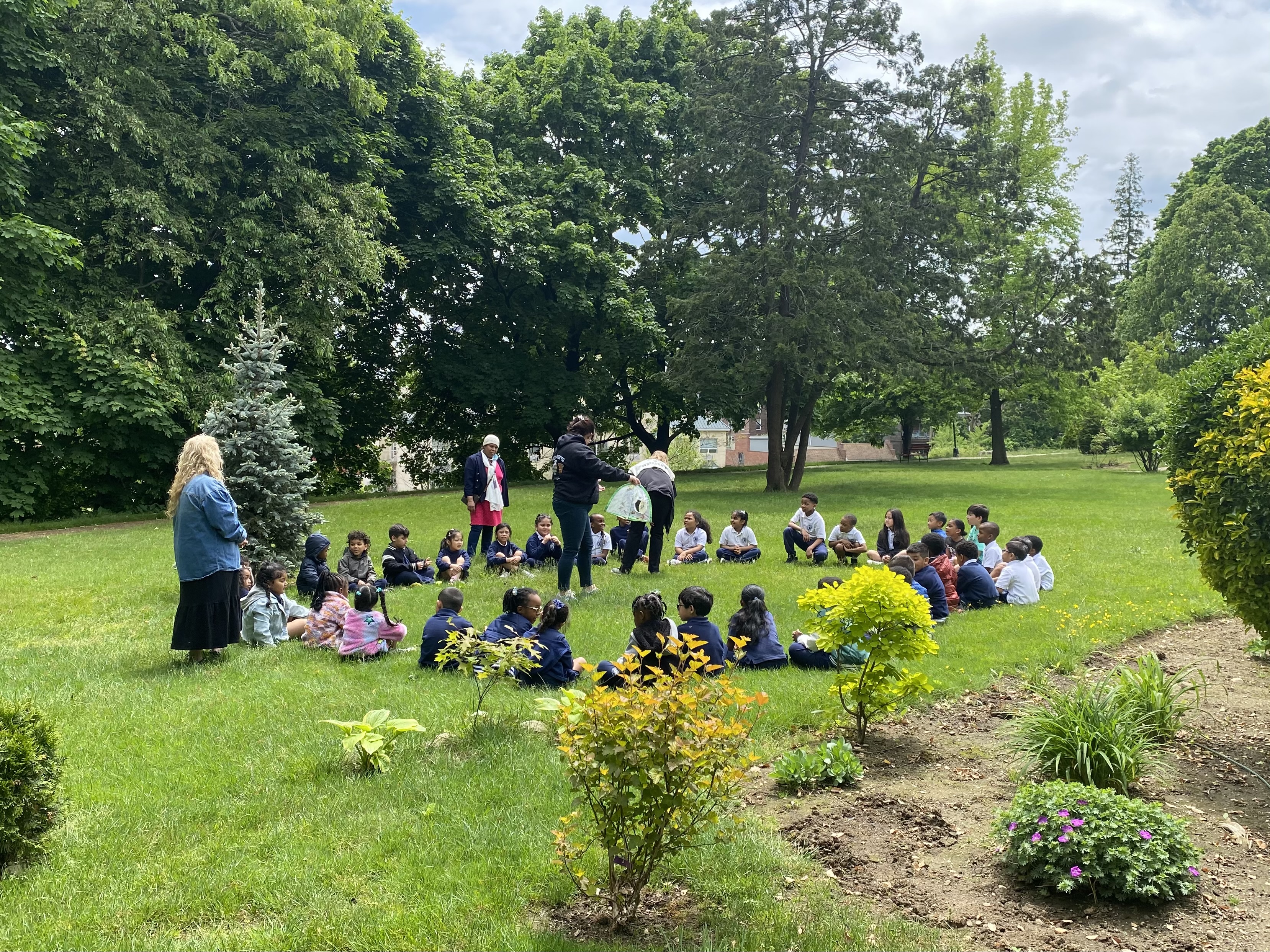
We live in Queens where we reside on part of the Harborhill terminal moraine left by the Laurentine Glacier that covered much of North American 22,000 years ago and stopped right here. There’s a high piece of land at the top of our road. It’s a steep climb. When I tell others about our hilly terrain, they are surprised because they don’t expect such in urban areas. How interesting that our land has ancient history! Even more so is the geology of the rock formations. Like many century-old homesteads here our foundation is made of many native large rocks. Our basement is present testimony to what the glacier pushed here. Lessons from the land are multiple. I learn that what is old still has purpose; continues to teach me about life. Most of all, nature lessons lead me to know our Creator.