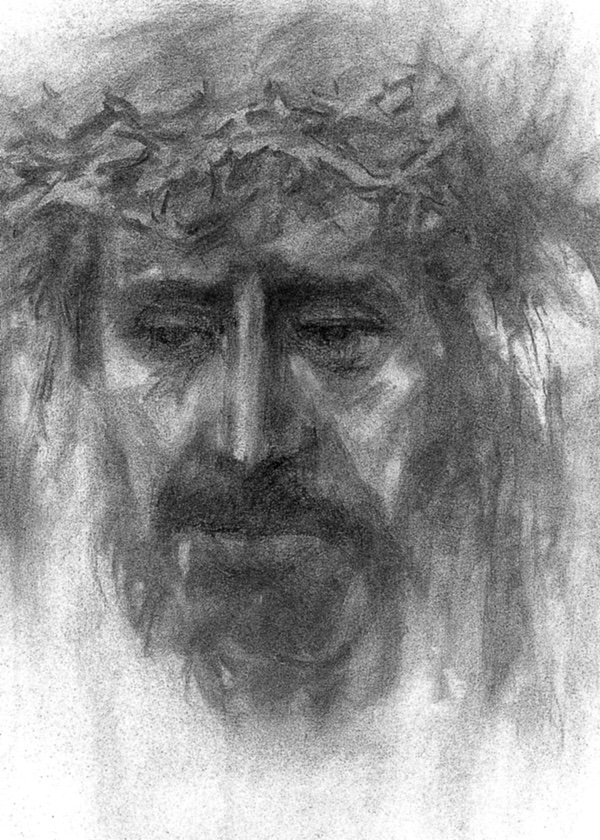
“After this Jesus, knowing that all was now finished, said (to fulfil the scripture), ‘I thirst.’” – John 19:28
After agonizing to the point of sweating blood, days spent in prison, being brutally whipped and crowned with thorns, and after the long road to Calvary carrying his cross, is it not too trivial to speak of thirst? I believe the Lord was calling our attention elsewhere, and the Church shows the way to us with the Scripture readings chosen for this holy season. This year, we were told on the second Sunday of Lent that, just before his Passion, Jesus was transfigured on Mount Tabor, shown together with Moses and Elijah in splendor, speaking of his coming Exodus.
On the following Sunday, we read from the book of Exodus. After having been delivered from slavery and brought through the Red Sea, the people of Israel grew increasingly weary from thirst and became angry that Moses ever led them into the desert. “Why did you ever make us leave Egypt? Was it just to have us die here of thirst with our children and our livestock?” they cry. Moses, tried but never abandoned by God, was instructed to take the same staff with which he parted the Red Sea, and to strike a rock from which came a stream of water for the people to drink. Here, we can see Jesus in both Moses and in the people. Like the Israelites, he himself was dying of thirst, perishing on the wood of the Cross like they were perishing in the desert. Just as Moses drew water from the rock, so did water come forth from Jesus’s pierced side. In his humanity, Jesus suffers exactly as we do, thirsting not just for water but for our love, for lost souls to return to him, and for a world healed from strife and division. In his divinity, he refreshes our spirit to strengthen us on our journey to Heaven. He brings us life through the waters of Baptism, in which catechumens across the world will be washed tomorrow night and raised to a new life of grace. Along with the water from his side came his precious blood, in which we are washed whenever we seek forgiveness in the sacrament of Confession.
Paired with the reading from Exodus is the Gospel passage of the Samaritan woman at the well, when Jesus asks her to give him water to drink. As though the Lord completely lost interest in his need for water, he tells her “If you knew the gift of God and who is saying to you, ‘Give me a drink,’ you would have asked him and he would have given you living water.” The one who drinks this water, he tells us, will never thirst again. Though Jesus is himself the source of this living water, he did not avail himself of it. “I thirst” – in his Passion, he drinks only from the cup of suffering given to him in Gethsemane. Though master of the universe, he is content to allow himself to be deprived not just of water, but of any feeling of comfort or relief. Our Lord chose to suffer in the greatest measure he could. He brought together in one act the suffering and longing of humanity with the mercy and compassion of God. On the Cross, he is both the Lamb of God and the Good Shepherd, both the sacrificial lamb and the high priest. The Passion is both the greatest revelation of the love of God for man, as well as the perfect expression of man’s love for God – a pure gift of self to bring about the Kingdom on earth.
We all thirst, if not for water then perhaps for understanding, compassion, or meaning, and above all we thirst for Christ. Our world certainly thirsts for peace and justice. In remembering this act of God’s immense love, we are reminded of the hope that comes with our longing. Today, we can turn to Jesus for this living water. Let us pray that in two days, we may rise to new life with him, and that we can bring this water to those close to us and to a world which is ever thirsting for the coming of Christ’s Kingdom.
Daniel Ogulnick
 The Victor's Place