

The liturgy of the church leads us into the mystery of Jesus Christ. It’s also leads us into the mystery of the Church, especially as we celebrate the saints over the church year. .
August is a month for celebrating a variety of saints from different times and places. There’s Lawrence from late 3rd century Rome, and Clare from 12th century Italy , Jane Chantal from 17th century France and Teresa Benedicta and Maximilian Kolbe from our own time. Each one sheds light on the mystery of the church through time.
St. Lawrence was a deacon who served the poor in a turbulent time. What does he tell us? He is a witness to the enduring command of the church to serve the poor. He also reminds us that the church, like Jesus Christ, dies and rises again.
Four days before his death on August 10, 258, Pope Sixtus and four deacons were seized and executed in the catacombs of St. Callistus. Their death, followed by Lawrence’s death and the Roman government’s appropriation of church’s resources deprived the church of its leaders and left it penniless. Yet the church emerged from that critical time stronger and attracting more members than ever before.
The church shares in the mystery of Jesus Christ, dying and rising. The church also shares in that mystery in our time.
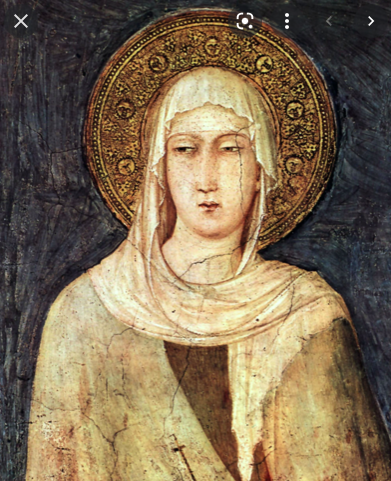
What does St. Clare tell us? She founded a religious community in the 13th century that drew together women from all ranks of society; from royalty to the poorest peasants. Historians see an early advocate of women’s rights in her.
What can we learn from her? The church engages the society it lives in. It gets involved in its issues and brings it her gifts.
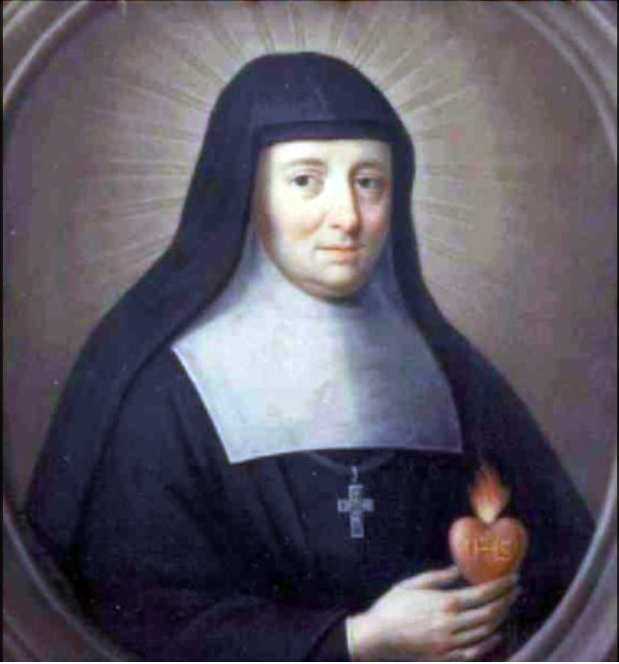
What does Saint Jane Frances de Chantal tell us? Like Clare of Assisi, she founded a religious community for women, the Visitandines, influenced by St. Francis de Sales and his spiritual teaching. As a widow with children she wished to explore a new model for religious life, one less rigorous than older models, where women together could pursue a devout life and serve their neighbor. Though she had to settle for a more structured church model, Jane Frances de Chantel brought new life to the church.
She tells us that the church is meant to explore new ways and new structures in its path through this world.
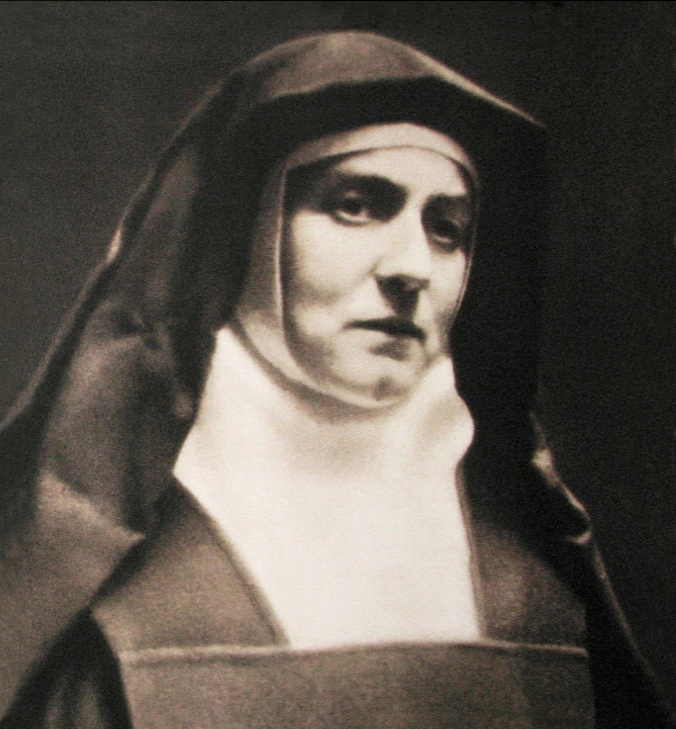
What do SaintsTeresa Benedicta and Maximilian Kolbe, who died in a Nazi concentration camp in 1942, tell us? The church always enters the suffering of its time, no matter how unexplainable or evil it is.
Our feasts and our saints connect us to the times we live in. Atomic bombs were dropped on Hiroshima and Nagasaki on August 6th, the Feast of the Transfiguration of Jesus on the mountain, and August 9, the memorial of Edith Stein, Sister Teresa Benedicta.
On the mountain Jesus appeared in a blinding light of glory, heralding glory for all creation. On August 6th a blinding light of destruction appeared at Hiroshima threatening the glory promised to creation. Humanity itself shares in that threatening event. The concentration camps of the 2nd World War, which we remember with Sister Teresa Benedicta, are also signs of endangered human life. We cannot take the promise of glory lightly. We must pray for it.
The saints open the mystery of the church and the mystery of our world to us.
 The Victor's Place
Dear Father Victor, in order to understand the breadth and depth of what you said in your reflection, I turned to Pope Francis in prayer and found these words of his: “May the Church live in the concreteness of everyday life and also in that ‘concreteness’ of the mystery. Entering into the mystery is not about dreaming. Entering into the mystery is precisely this: to adore. Entering into the mystery is doing today what we will do in the future. When we will have arrived in God’s presence: adore. May the Lord grant His Church this grace.“ Viva Papa Francis and Priests like you!
LikeLike
The saints have much to teach us about the ever resounding vitality of the Church.
LikeLike
The saints teach us that the Church is ever resilient. Thank you.
LikeLike
Thanks, Andre, the saints give us wisdom.
LikeLike