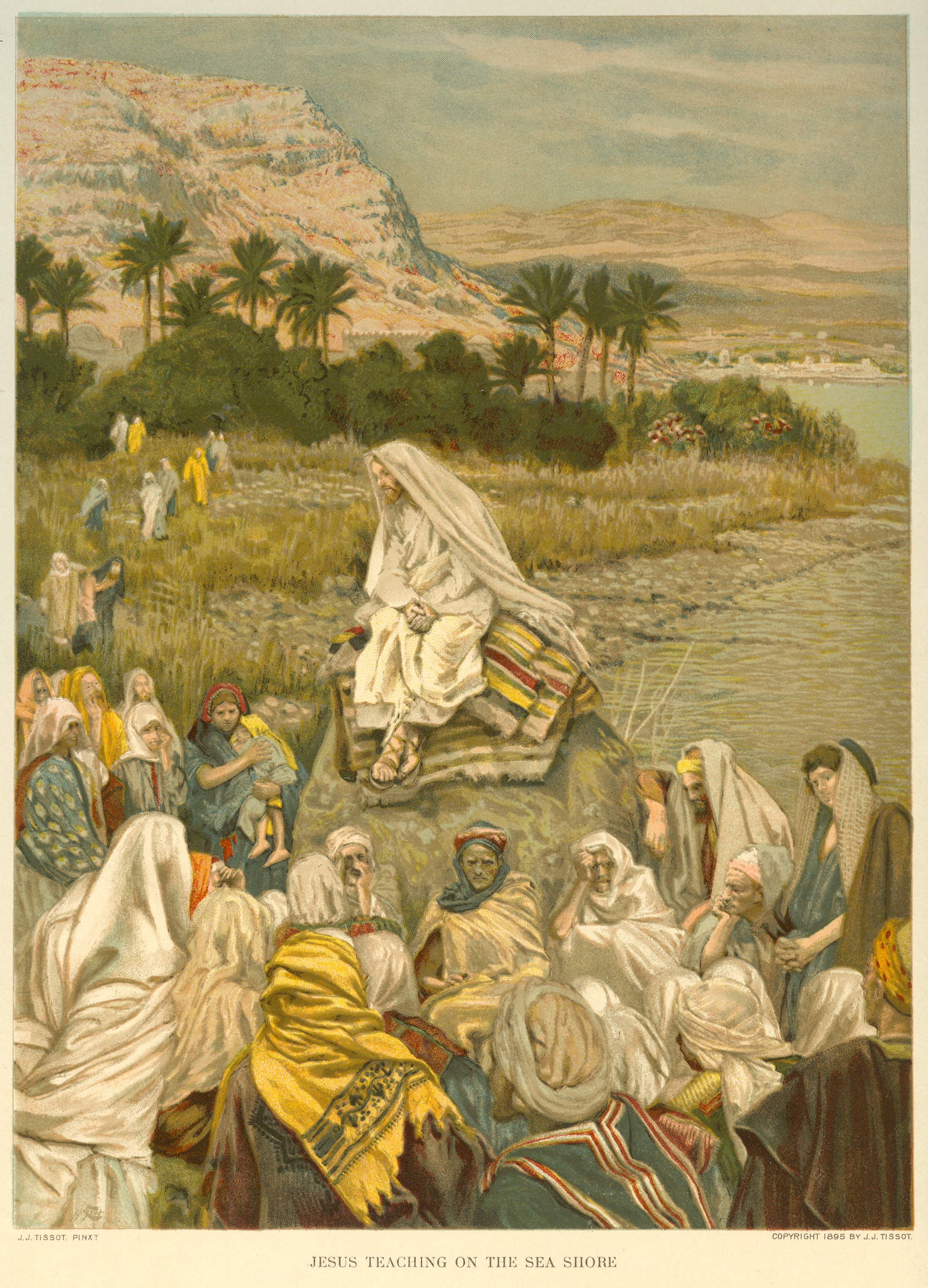
“Explain to us the parable of the weeds in the field, ” his disciples ask Jesus. (Matthew 13:36-37) Why do they want him to explain this parable about the weeds in the field before any other parable, we wonder ? What’s so important about it?
The parable, about a man and his servants who plant wheat, immediately follows Jesus’ opening parable of the sower in Matthew’s gospel. Once the wheat’s planted, they’re ready to go to sleep. All’s done; they have only to wait for the harvest.
But it won’t be so: an enemy comes and plants weeds in the wheat field. You can hear the servants’ distress as they wake up to it. They weren’t expecting this. Their immediate response is to go and pull the weeds up.
Like the rocky ground Jesus describes in the parable of the sower, they hear the word and receive it with joy, but “when some tribulation or persecution comes because of the word” they fall away. (Matthew 13:20-21) They’re overwhelmed by the sight of weeds.
Were Jesus’ disciples like them at this point in Matthew’s gospel? The pharisees are bent on putting Jesus to death. They’ re joined by the Herodians, the followers of Herod, ruler in Galilee. The cities that first received Jesus with joy now are rejecting him now. His own family wish him to abandon his mission.
His disciples envisioned a wheat field; now they see a world of weeds. And so their first request of Jesus: what’s this is all about?
Not just Jesus’ immediate disciples wonder about what they’re seeing, others do as well. As we celebrated the Feast of the Apostle James recently, Matthew described the mother of James and John appealing to Jesus for a privileged place in his kingdom. She saw a wheat field on the horizon. Jesus reminded her and her sons of a field of weeds as well.
Perhaps Matthew’s gospel also has the Galilean world of his day in mind, where the disciples of Jesus become overwhelmed by a resurgent Judaism led by the pharisees? One step more; as we see today a church in decline and a world split into factions, do we have a similar vision of things? We live in a field of weeds!
Parables raise questions and give answers. The parable of the weeds and the wheat proclaims, first of all, God’s confidence in the seed he has sown. Our world will never be a perfect wheat field, but it won’t become a field of weeds. We can’t eradicate every evil we see. As Jesus teaches today: we have to leave this world to the judgment of God.
The parable calls into question the way we look at life. Just weeds? No wheat? Or do we see both. Do we trust in the Sower who has sown wheat?
We read this parable at Mass today. The Lord comes to us as wheat. Ignatius of Antioch once said “I am God’s wheat.” And so are we.
 The Victor's Place
Trusting in the Sower is such an important aspect of faith. Do I look around, shake my head, and see only weeds? How do I resist negativity? Only by relying on God’s grace will I keep hope alive, seeing promise and possibilities around me. It’s not easy to do in our weedy world!
LikeLike
What in this weedy world can I do
Against evil cultural trends?
Are there places I ought to bloom,
Bring beauty, make amends?
Send me where you want me, Lord,
Let me help you harvest,
Show me where I need to be planted.
Surely you know what’s best!
LikeLike