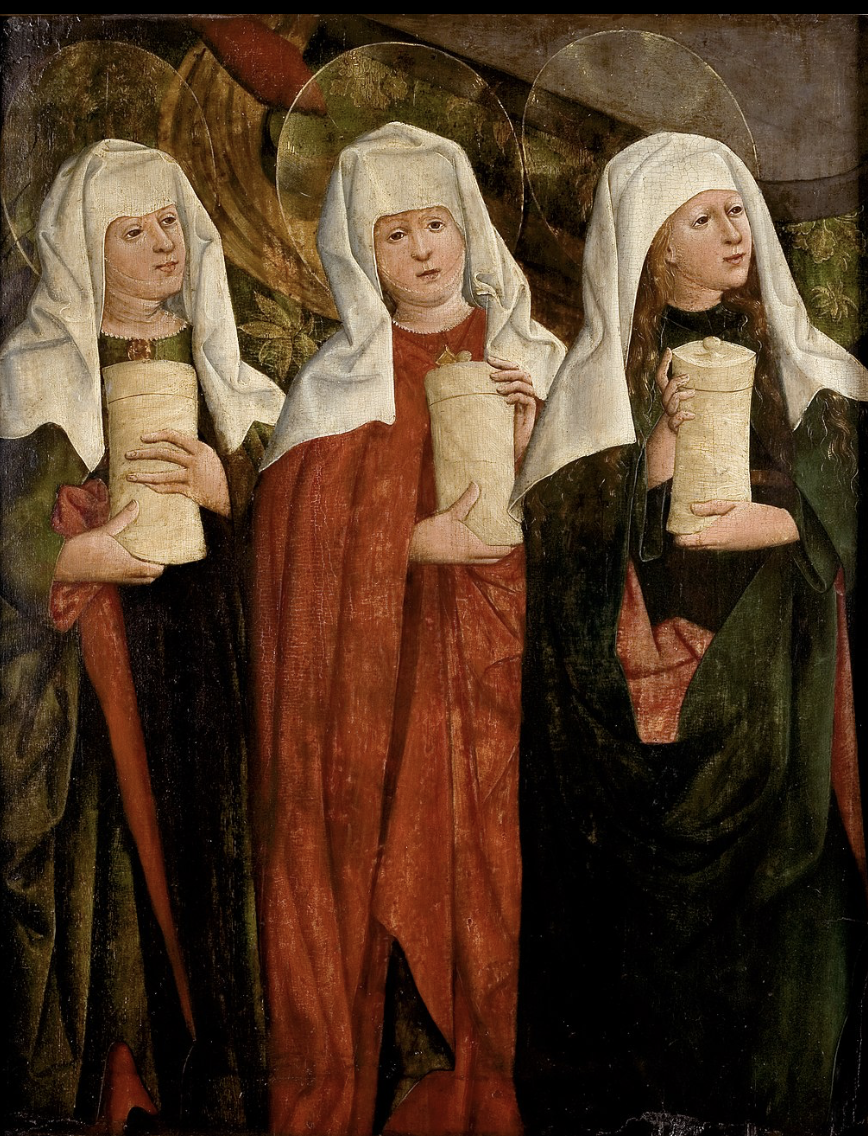
The revised readings and prayers at Mass for the Feast of St. Mary Magdalene reflect beautifully on this great saint.
All the gospel writers give a prominent place to women in their narratives of Jesus’ resurrection, but John’s gospel singles out Mary Magdalene especially. John 20: 1-2;11-16, Omitting some verses describing Peter and the other disciple visit to the tomb, our gospel today ends: “Mary Magdalene went and announced to the disciples, ’I have seen the Lord,’ and then reported what he told her.’
On the first day of the week, Mary Magdalene came to the tomb early in the morning, while it was still dark, and saw the stone removed from the tomb. So she ran and went to Simon Peter and to the other disciple whom Jesus loved, and told them, “They have taken the Lord from the tomb, and we don’t know where they put him.”
Mary stayed outside the tomb weeping. And as she wept, she bent over into the tomb and saw two angels in white sitting there, one at the head and one at the feet where the Body of Jesus had been. And they said to her, “Woman, why are you weeping?” She said to them, “They have taken my Lord, and I don’t know where they laid him.” When she had said this, she turned around and saw Jesus there, but did not know it was Jesus. Jesus said to her, “Woman, why are you weeping? Whom are you looking for?” She thought it was the gardener and said to him, “Sir, if you carried him away, tell me where you laid him, and I will take him.” Jesus said to her, “Mary!” She turned and said to him in Hebrew, “Rabbouni,” which means Teacher. Jesus said to her, “Stop holding on to me, for I have not yet ascended to the Father. But go to my brothers and tell them, ‘I am going to my Father and your Father, to my God and your God.’” Mary Magdalene went and announced to the disciples, “I have seen the Lord,” and then reported what he told her. John 20: 1-2;11-16
Mary is an Apostle to the Apostles, announcing to them and to us that the risen Jesus said he was ascending to “my Father and your Father, my God and your God.” Her journey to the tomb early Easter morning is described in the Song of Songs:
On my bed at night I sought him whom my heart loves. I sought him but did not find him. I will rise then and go about the city: in the streets and crossings I will seek him whom my heart loves.
“My soul is thirsting for you, my God.” The responsory psalm proclaims.
Though she came with other women, Mary stayed at the tomb, weeping, and then the dark garden was filled with light when Jesus spoke her name, “Mary.”
“Before all others” God called Mary to announce the great joy of the resurrection, the opening prayer of her feast says. May we “through her intercession and example proclaim the living Christ and come to see him reigning in glory.”
The preface for her feast day gives thanks:
“In the garden he appeared to Mary Magdalene, who loved him in life, who witnessed his death on the cross, who sought him as he lay in the tomb ,who was the first to adore him when he rose from the dead and whose apostolic duty was honored by the apostles that the good news of life might reach the ends of the earth.”
“May the holy reception of your mysteries, Lord, instill in us that persevering love with which Saint Mary Magdalene clung resolutely to Christ her Master” (Prayer after Communion}
 The Victor's Place