
In the days before Christmas Luke’s gospel linked the birth of John the Baptist closely to the birth of Jesus, carefully noting Jesus was superior to John. At the same time Luke indicates that John has a privileged role in announcing Jesus as the Messiah. He alone mentions John and Jesus are related.
In these day’s after Christmas John’s gospel offers the Baptist’s testimony to Jesus. “I am not the Christ,” John responds to the Jewish leaders who question him about his ministry at the Jordan River. “I am the voice of one crying out in the desert,‘Make straight the way of the Lord.’”
The lower Jordan valley where John preached and baptized was a place hallowed by heroic events and figures of the Jewish past. There, for example, Joshua led the Israelites over a river ford of the Jordan to conquer the city of Jericho and enter the “land flowing with milk and honey.”
Late in the 8th century B.C., the prophet Elijah began preaching reform here as Israel turned to worship the false gods of the wicked Queen Jezebel. God sent ravens to the Wadi Cerith near the Jordan to feed Elijah in a terrible drought. Returning to the lower Jordan at the end of his life, Elijah disappeared mysteriously on a mountain nearby.
Later Jewish tradition said that Elijah would return – most likely to the same river area – to announce the Day of the Lord, God’s final coming. And so, when John came dressed in a rough camel hair cloak, like Elijah of old, and preached with great power at this memorable spot, people wondered: “Has Elijah returned?”
For the Jews this was a place to recapture the ancient faith of their forebears. The desert air was purer and life more simpler in the hard, memorable land bear the Jordan that seemed to belong to God alone.
Strongly religious people, like the communities of Qumran, preferred living in the desert to Jerusalem, rejecting what they saw as the compromise and spiritual lukewarmness of smainstream Judaism. Living there, they hoped for a Messiah and Teacher to bring renewal to their people.
Besides the communities of Qumran, Jewish revolutionaries were also associated with the Judean wilderness. In 6 A.D. after the failure of a bloody revolt led by Judas the Galilean against Roman rule, bands of his followers waged a guerrilla campaign for Jewish independence from these barren hills.
And so, the Roman authorities and their local allies kept a wary eye on anyone like John the Baptist preaching in a place so significant, a major pilgrim road to Jerusalem.
Pilgrims from Galilee came this way. Jesus himself and some of his followers were among them, John’s gospel points out. I suspect the authorities watching John the Baptist also associated Jesus and his followers with him. They needed to be watched too.
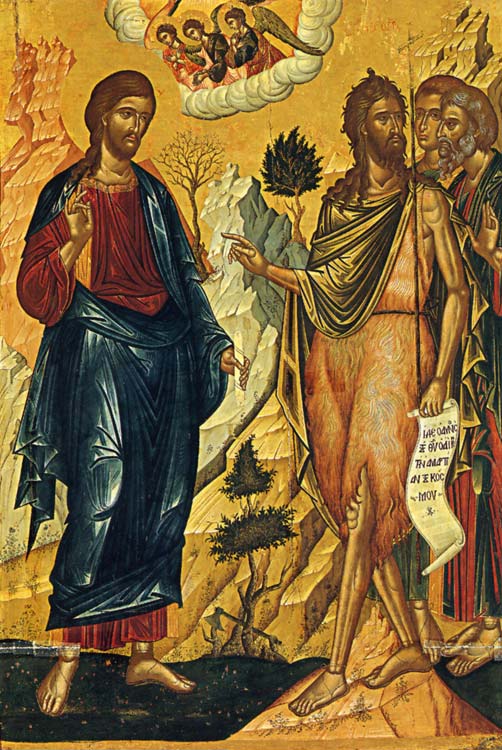
 The Victor's Place
“Roman authorities and their local allies kept a wary eye on anyone like John the Baptist coming from the desert, a place so significant, a major pilgrim road to Jerusalem.”
Likewise Christians are being watched today and censored when witness to Christ doesn’t align with authorities’ policies. May those who are persecuted for being Christ followers be strong in the Holy Spirit!
LikeLike
Pope Francis used his New Year’s Day address to highlight concern over the worsening situation of the Catholic Church in Nicaragua as a result of a protracted crackdown by the government of President Daniel Ortega, which has detained clerics, expelled missionaries, closed Catholic radio stations and limited religious celebrations.
“Let us pray for Nicaragua today”, he said.
https://www.msn.com/en-us/news/world/pope-raises-concerns-about-church-in-nicaragua/ar-AA1mk6fJ?ocid=msedgdhp&pc=U531&cvid=1cfa136d38db47e29ea95d409b43c61c&ei=28
LikeLike
Thanks for that timely notice. cenaclemary.
LikeLiked by 2 people