Those who compiled our lectionary of scriptural readings after the 2nd Vatican Council had some decisions to make. The most important was how much of the scriptures should we read in the liturgy. One suggestion was to keep the one year lectionary we had and simply increase the yearly readings.
Catholics weren’t used to the scriptures, some said, so it would be better not to give them too much. The one year lectionary existed for centuries and it wasn’t unfamiliar to the people.
But the committee – about 20 or 30 experts in liturgy, scripture and catechetics– decided that wasn’t what the Second Vatican Council had in mind. It wanted the treasures of the scriptures opened up to the people of God in their fulness, and so they presented the three years lectionary we have today.
Another decision they had to face was how much of the Old Testament should we read. If Catholics were not familiar with the New Testament, they were less familiar with the Old Testament. There is a lot of “unedifying” material in the Old Testament and so whatever readings chosen should be “edifying.” if you look at our Old Testament readings, like the stories of Jacob, his wives and his sons– our readings this week– you can see they chose the more edifying stories of Jacob and his clan.
The committee also recognized that priests were less likely to make the Old Testament the subject of their homilies.
And so we began the story of Jacob last Saturday as Jacob steals the blessing of his father Isaac from his brother Esau, with the help of his mother, Rebekah. Then, this week we read about his dream of God showing him a stairway to heaven at Bethel, and his struggle in the dark wrestling with a mysterious stranger, then his son Joseph’s rises to power in Egypt after being betrayed by his brothers, then Jacob enters Egypt with his sons, finally on Saturday we read about his death and burial.
The readings tend to be edifying.
I quoted Robert Alter in a previous blog, who describes the unedifying ways of Jacob, his wives and his sons. Yet “God is the God of Abraham, Isaac and Jacob,” Alter concludes.
Can the Jewish scriptures help us face our own times, complicated and unedifying as they are? I think they can. God engages humanity, sinful as it is, and mercifully guides it towards the Promised Land. “In you and your descendants all the nations of the earth shall find blessing. Know that I am with you; I will protect you wherever you go, and bring you back to this land. I will never leave you until I have done what I promised you.”
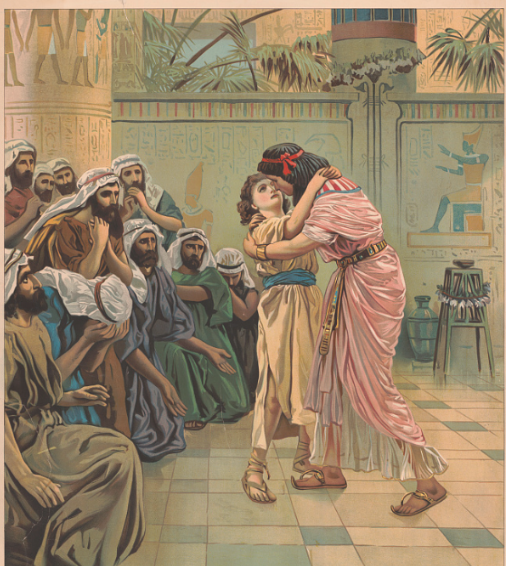
You can see too why Christian tradition saw the story of Joseph so important in the story of the Passion of Christ. In today’s reading, instead of disowning his lethal family, Joseph embraces them. “I am Joseph, your brother.” That’s what Jesus said to the world in the days of his passion, death and resurrection. “I am Jesus, your brother.” And he embraces us.
 The Victor's Place