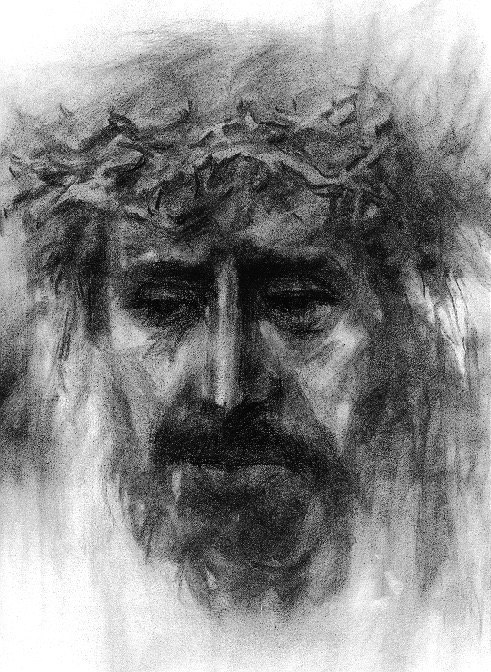
Since the days of St. Paul of the Cross, the Passionists have turned to the Cross and asked “Who is this?” and “Why is he here?”
Paul did this in the 18th century in the squares of poor little Italian towns of the Tuscan Maremma where he would preach for a number of days before going on to the next town. He preached and prayed before this image and told his hearers to keep in mind the Passion of Jesus. Many were illiterate so crucifixes and pictures in their churches and homes, as well as wayside shrines, were ways they related to the life, death and resurrection of Jesus.
In the early church there were no crucifixes, of course. At least for the first five centuries there were no realistic portrayals of Jesus on the Cross. Why? Because crucifixion was a common form of execution in the Roman world and people found it too horrible to speak about or visualize.
That reticence appears, for example, in St. Luke’s account of the disciples on the way to Emmaus after Jesus was crucified. A mysterious stranger asks why they’re sad. “One of them, named Cleopas, said to him ‘Are you the only visitor to Jerusalem who does not know of the things that have taken place there in these days?’And he replied to them, ‘What sort of things?’ They said to him, ‘The things that happened to Jesus the Nazarene, who was a prophet mighty in deed and word before God and all the people, how our chief priests and rulers both handed him over to a sentence of death and crucified him.’”
All they say about “the things that happened is “… Our chief priests and rulers handed him over to a sentence of death and crucified him.”
Jesus tells them then to take a look at these things in another way: through the scriptures. Through Moses and the prophets, he describes what happened to him. Later, the Passion accounts of the four gospels rely heavily on these same scriptures for framing the story of the crucifixion and events around it.
So many of our media portrayals today, like Mel Gibson’s The Passion of the Christ, Bill O’Reilly’s Killing Jesus, the specials from CNN and the other networks seem to me to be interested more in the historical aspects of the gospels than their meaning.
The great questions still are: “Who is this?” and “Why is he here?”
Who is he who cries out “My God, my God why have you forsaken me?” God made flesh?
Then why did he come, why did he die in such a way? Questions that send us to the scriptures and bring us before God and cause us to wonder and praise.
 The Victor's Place
To those who need historical facts, figures, proof, I say:
What Matters
It doesn’t matter
when You were born
the time of year doesn’t matter
the temperature doesn’t matter
It doesn’t matter
where you were born
whether angels sang
whether shepherds and Magi
followed the same star
For those who need proof
it matters that the census
is recorded in history
the star is in the record books
Your death has been recorded
What really matters is that we live the story
over and over again
down through the centuries
What matters is that You came among us
that you lived to love us
and died that we might live forever
Gloria Ziemienski 2006
LikeLike
That’s wonderful advice, Gloria.
LikeLike