
Reading from the Gospel of Matthew this evening, we follow Jesus Christ from Bethany, the town where he stayed when visiting Jerusalem, to the Upper Room in the city where he celebrates the Last Supper, to the Garden of Gethsemane where he prays in deep distress and is identified by Judas with a kiss and arrested. We come to learn from him.
Our gospel reading begins.
When Jesus finished all these words,* he said to his disciples, “You know that in two days’ time it will be Passover, and the Son of Man will be handed over to be crucified.” Then the chief priests and the elders of the people assembled in the palace of the high priest, who was called Caiaphas, and they consulted together to arrest Jesus by treachery and put him to death. But they said, “Not during the festival,* that there may not be a riot among the people.”
Jesus is finished speaking, now his actions are his message. He calmly announces that he will be handed over “to be crucified.” The Jewish leaders also announce their plans, but the divine plan is far greater than theirs. Their plan to eliminate Jesus because of the resurrection of Lazarus and Jesus’ symbolic action of cleansing the temple is based on political expediency–common enough in the world of politics– but it will serve God’s greater plan.
God’s plan is there. It’s always there underneath, sometimes not seeming to be there at all, but it’s there. God’s plan is good, even though it’s goodness may be hidden. God’s plan is wise, even though it may not always seem wise. As he enters his Passion Jesus asks that “God’s will be done.”
This is an important lesson Jesus would have us learn: to trust in God’s plan and pray that “God’s will be done.” That’s what he did.
Notice that Jesus speaks “to his disciples,” in this passage. When Matthew’s gospel mentions disciples, it often means all those who will follow Jesus, not just those whom he called in his lifetime. So, he’s speaking to us as well as to them; we’re there in the stories we hear. We must recognize ourselves in the disciples who followed Jesus then.
A Gospel for Changing Times
Matthew’s gospel was written about the 80 AD, possibly in Galilee or Syria, where the followers of Jesus, mostly Jewish-Christians, were facing hard times. The temple and Jerusalem had been destroyed by the Romans in 70 AD and many Jews fled into Galilee and Syria to build up Judaism again. They saw the followers of Jesus as a fringe group opposed to Jewish restoration and they started to drive Christians out of the Jewish synagogues.
At the same time, gentiles were accepting the message of Jesus; Jewish Christians wondered what to do in changing times. Matthew gospel reminds them that God’s plan is at work underneath. Jesus recognized it in that uncertain time of his quick arrest, his unfair sentence and brutal death.
Bethany
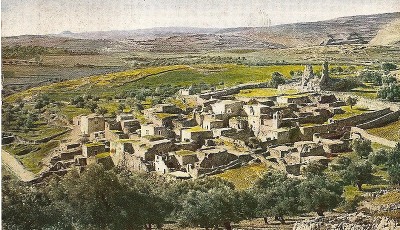
BETHANY 19th Century
Bethany’s on the eastern slope of the Mount of Olives, about “two miles from Jerusalem” ( Jn, 11,18). It was Jesus’ home away from home. The town’s on the outskirts of Jerusalem, up the road from Jericho and the Jordan Valley. I spent two week at the Passionist house in Bethany last November, and from the roof you can see down to the Dead Sea and the Judean desert. It’s the road Jesus would have walked to Jerusalem.
Bethany was the first place Galilean pilgrims came to as they approached the city to celebrate their feasts. They camped among the olive groves. They say the Mount of Olives was sometimes called the Mount of Galilee because of the many Galilean encampments there.
Martha, Mary and Lazarus welcomed Jesus to their home in Bethany. Along with his Galilean followers, they made Bethany a Galilee of believers.
Followers like them shouted “Son of David” as Jesus rode into Jerusalem on a donkey. They accompanied him in temple. They provided Jesus with a protective shield so that, even though the Jewish leaders wanted to put him to death, they were “afraid of the people.” That’s why the leaders welcomed Judas, an insider, who could lead them to Jesus ‘when there was no crowd present.” (Luke 22, 6)
The Anointing at Bethany.
Now when Jesus was in Bethany in the house of Simon the leper,
a woman came up to him with an alabaster jar of costly perfumed oil, and poured it on his head while he was reclining at table.
When the disciples saw this, they were indignant and said, “Why this waste? It could have been sold for much, and the money given to the poor.”
Since Jesus knew this, he said to them, “Why do you make trouble for the woman? She has done a good thing for me. The poor you will always have with you; but you will not always have me.
In pouring this perfumed oil upon my body, she did it to prepare me for burial.
Amen, I say to you, wherever this gospel is proclaimed in the whole world, what she has done will be spoken of, in memory of her.”
Bethany Mk 14,3-9; Mt 26, 6-13, Jn 12,1-8
The meal Jesus had in Bethany in the house of Simon the Leper “six days before Passover” was a meal with friends who believed in him and supported him. Did Jesus make Simon clean? Martha, Mary and Lazarus were there. Martha served and Lazarus sat at table with him. Mary took costly ointment and anointed his head, according the Matthew. John’s gospel says he anointed the feet of Jesus and wiped his feet with her hair,” and the room was filled with the fragrance.
Like her sister Martha, Mary believed in resurrection. She knows the danger Jesus faces. The ointment is a human attempt to ward off the ravages of death, but it’s also a sign of hope and love. “She’s preparing my body for burial; she will never be forgotten for this.” Jesus says.
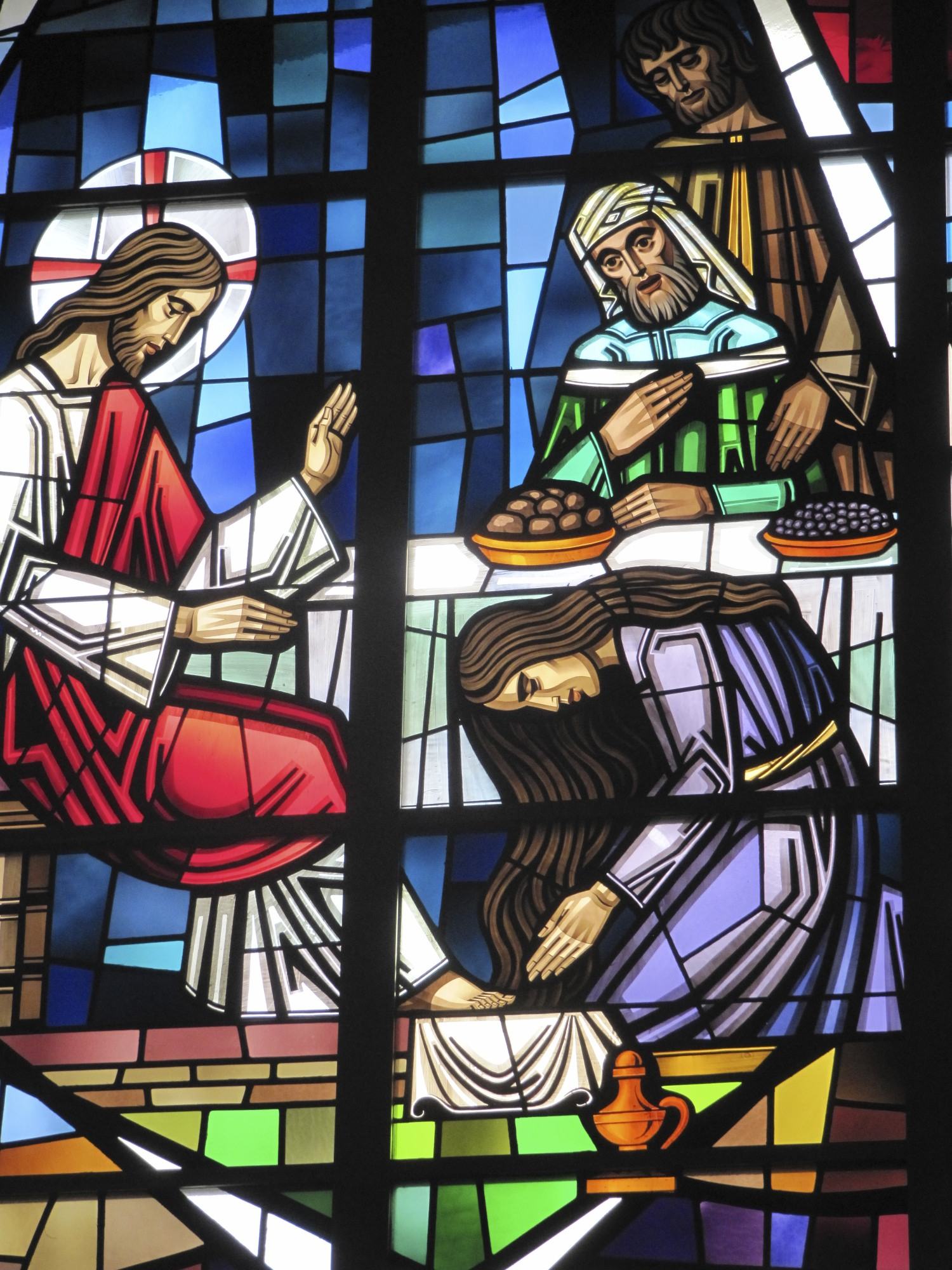
The Bethany meal prepares for the resurrection of Jesus. After raising Lazarus from the dead, Jesus goes forth to defeat death itself. His resurrection will be different from that of Lazarus, sitting beside him at table. Lazarus came from the tomb the same man who was buried four days earlier, and he’ll die again. But the Risen Jesus will know a more complete resurrection and will not die again.
The meal at Bethany points to resurrection. But a dark side is here too. “Then one of the twelve, Judas Iscariot, went to the chief priests and said, ‘What will you give me if I betray him to you?’ And they gave him thirty pieces of silver.”
Judas isn’t alone at the meal in Bethany. He’s not an isolated villain. There are rumblings of doubt and disagreement from “all” the disciples, as the woman anoints Jesus. “They were angry and said ‘ Why this waste? This ointment could be sold for much and given to the poor.’”
The woman’s faith is much stronger than theirs. As the gospels note, the women who were considered weak were the strongest believers in him. Later, after Jesus is risen, his male disciples will not believe the women who announce “He is alive!” The women were disciples who believed, the gospels say.
The Last Supper
The Meal at Bethany describes the love of a woman. The Last Supper is about the love of Jesus for his weak disciples.
“His appointed time” had come; Jesus chooses to eat this supper at the time and place God gives him. The Passover Feast is near. We don’t know exactly where they ate the Last Supper, but a reliable early tradition says it was on Mount Zion, near the present location of the Cenacle. That puts the supper room close to the Jewish temple, and the time of the meal approximately before the time when the lambs for the Passover were to be slaughtered nearby.
At table Jesus becomes the new temple, the new presence of God in this world, the Lamb of God, replacing the temple sacrifices with the sacrifice of himself. He would would offer himself to his Father through the signs of bread and the wine, which we take and eat and drink. How closer could God come to us than this?
Later, at his trial before the Jewish leaders, witnesses say he threatened to destroy the temple and rebuild it. His mission was not to destroy the temple, however, but to replace it as the Presence of God among us. Matthew’s gospel gives a condensed account of the Last Supper, reducing it to its essentials.
Matthew 26, 26-30
While they were eating, Jesus took bread, said the blessing, broke it, and giving it to his disciples said, “Take and eat; this is my body.”* kThen he took a cup, gave thanks,* and gave it to them, saying, “Drink from it, all of you, for this is my blood of the covenant, which will be shed on behalf of many for the forgiveness of sins. I tell you, from now on I shall not drink this fruit of the vine until the day when I drink it with you new in the kingdom of my Father.”
Just as at the meal in Bethany, the disciples hardly understand this mystery of love.

From the Supper Room Matthew’s gospel takes us to Gethsemane and as disciples we enter the story. “Then, Jesus came with them to the place called Gethsemane and he said to his disciples, ‘Sit here while I go over there and pray.’” Then, three disciples accompany Jesus deeper into the garden; we are to look on from our distance.
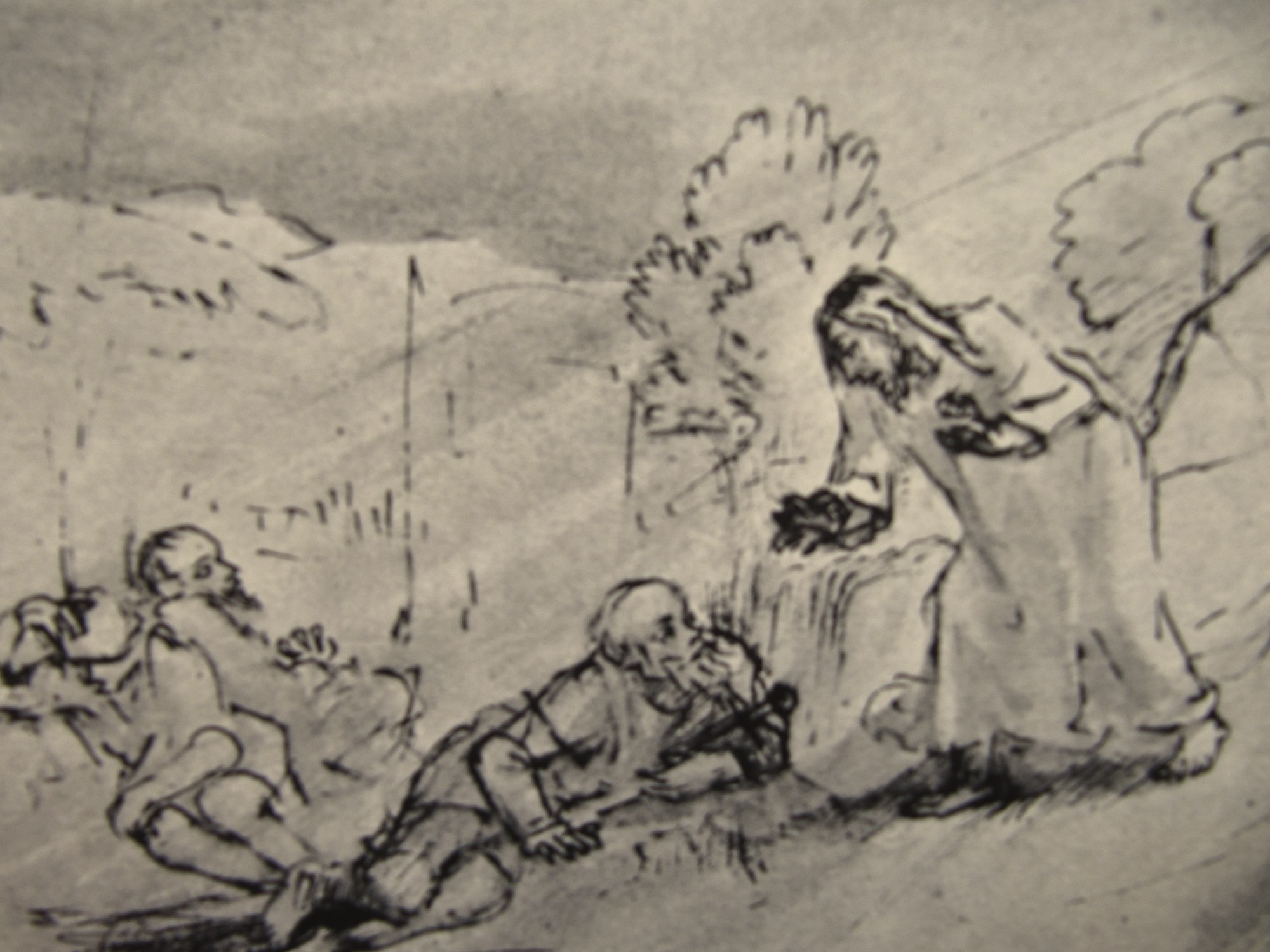
“My soul is sorrowful even to death.* Remain here and keep watch with me. ”He advanced a little and fell prostrate in prayer, saying, “My Father,* if it is possible, let this cup pass from me; yet, not as I will, but as you will.”
The Mount of Olives was a place of prayer in Jewish tradition. King David went thee to pray after his betrayal in the city by his son Absalom. Jesus, the Son of David, now goes to pray on this mountain. Across the valley, he could see the temple of God and the walls of Jerusalem. He wept over these places before from this mountain.
Here Jesus faces death as all of us do, and he experiences it in all its force. The disciples fall sleep, and so he loses all human support. His death comes, not from old age, or a chance accident, but from human injustice and malice. His death will be death of the worst kind. Prostrate on the ground, emptied of everything, alone, he prays to his Father that this cup pass from him and yet “not what I will, but what you will.”
By entering the mystery of death, Jesus changed death forever.
We wonder where death comes from. We want to live. But in death we seem to lose life and everything we know and love. Even God seems to abandon us at death. “My God, my God, why have your abandoned me?” Jesus says from the cross.
St. Paul’s Letter to the Romans (Chapters 4-5) connects death with sin. Death is where we experience our distance from God and from the life that God gives. That’s also what sin does.
And so, when Jesus comes as our Savior and Redeemer, he comes to save us from sin and death. He enters that the same dark moment that we experience; he fears it as we do; and he changes to a moment of salvation. “Dying, you destroyed our death; Rising, you restored our life.”
We believe that Jesus Christ, our Savior and Redeemer, is with us when we die. He experienced that same mystery we experience. He is there at that moment as our merciful Lord, who welcomes poor sinners like ourselves.
Let’s not forget the disciples in this account. They remind us of ourselves. They are not onlookers. Jesus calls them to pray with him, for they’re facing trials too. As disciples, we must pray too. Jesus prayed for heavenly strength, more so must we pray, or else or we can fail when trials come.
The drowsiness, the sleep of the disciples, a sign of their forgetfulness of this mystery is a sign of our forgetfulness too. “Stay awake!” Jesus says in the gospel.
“Nowhere else in sacred Scripture do we gain so deep an insight into the inner mystery of Jesus as in the prayer on the Mount of Olives.” (Benedict XVI}
 The Victor's Place